

Results 1 to 6 of 6
 7Likes
Thread Information
Users Browsing this Thread
There are currently 1 users browsing this thread. (0 members and 1 guests)
 LinkBack URL
 About LinkBacks
Hybrid View


-
07-25-2017, 01:09 PM #1Administrator


- Join Date
- May 2006
- Location
- California
- Posts
- 65,444
‘We are shot! We are shot!’ ICE agent’s final moments resound in U.S. court
By Spencer S. Hsu July 25 at 12:00 PM
(audio at source link)
The call shattered the calm at the switchboard of the U.S. Embassy in Mexico City.
“This is Victor Avila from ICE! We are shot! We are shot!” a man screamed. “We are at a highway in Mexico, we’ve been shot and attacked on the highway!”
It was shortly after 2 p.m., Feb. 15, 2011, and Avila’s partner, U.S. Immigration and Customs Enforcement special agent Jaime J. Zapata, lay dying in the driver’s seat of their armored, State Department-issued SUV.
The blue Chevy Suburban was under attack from Los Zetas drug cartel hit men.
“Jaime! Look at me, stay awake. Please don’t die,” Avila pleaded in vain.
The death of Zapata, the first U.S. law enforcement officer killed in the line of duty in Mexico since 1985, drew widespread attention at the time. But only now, in a federal courtroom in Washington, are the agonizing details emerging from Avila, the agent who survived, in his first public account.
The shooting of Zapata, 32, occurred as deaths tied to drug violence in Mexico reached an all-time peak and marked a watershed in Mexico’s war against the cartels, contributing to increased U.S. sanctions and aid that helped speed the downfall of Los Zetas, once the country’s most sophisticated and violent drug organization.
Six years later, the trial for the last of his accused killers, which could go to a jury Wednesday, comes as cartel-related homicides are surging again, putting pressure on Mexican leaders to reduce the violence at a time when extraditions are emerging as a test of the U.S.-Mexico security partnership.
The accused
The two now at the defense table are Jose Emanuel Garcia Sota, known as “Safado,” 35, and Jesus Ivan Quezada Piña, known as “Loco,” 29.
They are the last of a set of nine men connected to the ambush identified by federal prosecutors.
Five others were extradited and pleaded guilty earlier in the United States with assistance from Mexican authorities, including one who was not present as two carloads of attackers rolled down that highway but was captured later with the weapons. Two others died in Mexico.
Garcia Sota and Quezada Piña have pleaded not guilty to murder, attempted murder and firearms counts, after being extradited to the United States in 2015 and 2016.
Their lawyers argue that no physical evidence ties them to the shooting and that they are being linked only by the sometimes conflicting accusations of former squadmates who pleaded guilty and are cooperating to avoid life without parole in U.S. prisons when they are sentenced.
Robert A. Feitel, Garcia Sota’s court-appointed attorney, told jurors that Mexican federal police never asked Avila — who Mexican police have said was in shock and in no condition to talk — to describe who or what vehicles attacked him, leaving the case to hinge on the word of Zeta against Zeta.
“They have every reason in the world — and every reason in their lives — to lie,” Feitel said.
The two men on trial were “expendable” and given up “to protect someone else” higher in the cartel, said Quezada Piña’s attorney, Elita C. Amato.
A 12-person jury is expected to receive the case this week before U.S. District Judge Royce C. Lamberth.

The armored, State Department-issued vehicle driven by U.S. Immigration and Customs Enforcement agents Jaime Zapata and Victor Avila. (U.S. Attorney's Office for the District of Columbia)
The path to trial began within days of the ambush.
On Feb. 23, 2011, Mexican forces raided a home in San Luis Potosi in the north-central part of the country, capturing six men and six weapons, in arrests announced by Mexico’s president.
U.S. law enforcement experts matched three of the recovered military-style, AK-47 and AR-15 semiautomatic rifles to some of the 90 shell casings and bullet fragments recovered from the scene on Federal Highway 57, one of Mexico’s busiest highways, about 200 miles north of Mexico City.
One of those captured, Julian Zapata Espinoza, 37, called “El Piolin,” or “Tweety Bird,” confessed in Washington in 2013 to leading two, four-man hit squads.

ICE special agent Jaime Zapata (U.S. Attorney's Office for the District of Columbia)
In his plea and again on the witness stand, he testified Zapata was the victim of a botched carjacking, and that his men wanted the SUV, not the agents.
He pointed out two defendants, saying they were part of the hit squads.
“He has a red tie and right now he’s fat,” he told jurors through an interpreter, identifying Garcia Sota as the second squad commander who sat at a table next to Quezada Piña.
Over the two-week trial, testimony in Spanish and English has traced a litany of errors, mishaps and coincidences that day.
On the stand, Espinoza cited a standing Zetas order to steal vehicles to replace ones lost in a barbaric war with a rival cartel. He was trying do just that, he testified, when he ordered his and Garcia Sota’s team in a Dodge Ram truck and a GMC Yukon to box in the ICE agents and force them off the road.
Espinoza said he did not recognize the Chevy Suburban’s diplomatic plates, or understand Avila’s shouts that they were with the U.S. Embassy and internationally protected diplomats.
What happened when the agents’ $160,000 armored Suburban was brought to a halt — blocked by the hit squads — was stunning.
The SUV was built to withstand high-velocity gunfire, grenades and land mines. Yet it also came with a consumer convenience: when put in park, its doors unlocked automatically, a flaw previously unaddressed by the U.S. Bureau of Diplomatic Security worldwide.
When Espinoza yanked the handle, the heavy driver’s side door creaked open.
“I think we were all surprised,” the surviving agent, Avila, testified as he spoke publicly for the first time about the assault.
The shock all around gave Zapata time to pull shut his door. But surrounded at gunpoint, confused and perhaps fumbling to relock the doors, Avila testified, the bulletproof window near him somehow lowered two inches.
“They stuck in two barrels, two guns, an AR-15 rifle and a hand gun, right here,” Avila told the jury, holding one hand in front of his head and the other inches from his right temple. The attackers kept telling the agents to open the door, he said. “At that moment, they opened fire.”
The attack
The bullets struck Zapata immediately.
“I could see it leave a mark in his chest. Jaime said, ‘I’m hit. I’m shot,’ ” Avila testified.
Six bullets hit Zapata, including one that cut the femoral artery of his left leg. Avila, crouching, was shot in the thigh and ankle and grazed by two other bullets.
“I got my left hand on the barrel of the handgun, trying to push it out,” the window. “It burned my hand,” Avila said. “I remember the smell of the gunpowder. ”
Avila was able to raise the window and call the embassy. By chance, Avila’s wife was working there that day as a contractor handling background interviews.
“Victor’s wife had come out of her office and she heard it,” testified Special Agent Jason Kephart, who answered the call and made out Avila’s words through what he thought was static.
Then, Kephart said, he realized what he was hearing. “Gunfire hitting the armored vehicle. I realize they’re in their car. They’re trapped.”

ICE special agent Victor Avila (U.S. Attorney's Office for the District of Columbia)
“I need you to drive. I need you to move him,” Kephart said he told Avila, who answered, “I can’t. He’s too slippery. I can’t move him.”
Kephart said Avila went on: “I can’t find the place to put pressure. . . . He’s dying.”
Zapata was still in the driver’s seat. Avila pushed Zapata’s leg down on the accelerator, escaping the snare of the attackers by crashing through a truck blocking them from the front, Avila testified.
The agents’ Suburban bounded across lanes and stalled in a median.
The cartel made one more pass, spraying the windshield but not piercing the armored exterior.
Only then, Avila told a hushed courtroom, did the shooters leave.
The aftermath
While they wait for the last of the criminal verdicts, the agents’ families also have gone to civil court.
They’ve been rebuffed by a federal judge in Texas over their suit seeking $75 million in damages from the government.
The judge said the families did not have enough evidence — and events did not rise to the extreme levels needed — to overcome the government’s immunity.
But the judge also said the family could persist in court trying to seek more information in the face of what they deem as stonewalling.
The families have asked why the agents were sent on a day’s notice without an escort up a notorious highway, where gangs were known to roam, in a Suburban whose doors unlocked, to retrieve “sensitive electronic equipment” from other ICE agents that could have been moved in other ways.
“The Zapata and Avila families have made many sacrifices in the service of this country,” U.S. District Judge Andrew S. Hanen, of Brownsville, Tex., wrote in July 2015. “The Zapatas still do not know the full story regarding how and why their son died, nor does Agent Avila have the full story about what led to his injuries.”
Congress has also pressed for answers during inquiries into the U.S. Bureau of Alcohol, Tobacco, Firearms and Explosives botched “Fast and Furious” anti-gun smuggling operation, in which the agency lost track of hundreds of firearms it was supposed to be monitoring after allowing straw buyers to traffic them into Mexico.
In March, the Justice Department’s inspector general found that two of the weapons used in Zapata’s killing were trafficked by suspects whom ATF in Dallas had under surveillance but hadn’t arrested.
As the criminal trial moves toward a close for the last of the suspects brought to the United States, some former U.S. officials hope it will not be the last major Zetas prosecution.
Miguel Angel Treviño Morales, known as Z-40 and the reported leader of Zetas, has been suspected in the ambush of the ICE agents and other Americans and is under indictment in Washington, New York City and Texas.
Michael S. Vigil, former Drug Enforcement Administration chief of international operations, said the trial could boost pressure to extradite the reputed boss who was captured in 2013 and is held in Mexico.
‘Jaime loved his job’
“Jaime loved his job. He loved investigations,” his mother, Mary Zapata, told the jury.
At 66, she still lives in Brownsville, Tex., where Jaime was born and raised.
Two more of her sons also work for the Department of Homeland Security, one as a U.S. Customs and Border Protection officer and the other as an ICE contractor.
Jaime was nine days into a temporary embassy assignment for which the ambitious young agent had volunteered, his mother testified.
And on the day they last spoke, he reassured her: “He said he would be traveling in an armored vehicle, so he would be safe.”
https://www.washingtonpost.com/local...=.8cd6aee6aaf2Support our FIGHT AGAINST illegal immigration & Amnesty by joining our E-mail Alerts at https://eepurl.com/cktGTn
-
07-25-2017, 01:29 PM #2Senior Member

- Join Date
- Aug 2005
- Posts
- 55,877
Oh my goodness, how sad is that.
A Nation Without Borders Is Not A Nation - Ronald Reagan
Save America, Deport Congress! - Judy
Support our FIGHT AGAINST illegal immigration & Amnesty by joining our E-mail Alerts at https://eepurl.com/cktGTn
-
07-25-2017, 02:09 PM #3Senior Member

- Join Date
- Jan 2006
- Location
- Redondo Beach, California
- Posts
- 6,763
Terrible, just terrible.
Support our FIGHT AGAINST illegal immigration & Amnesty by joining our E-mail Alerts athttp://eepurl.com/cktGTn
-
07-25-2017, 02:16 PM #4Administrator


- Join Date
- Nov 2004
- Location
- Gheen, Minnesota, United States
- Posts
- 69,210
I wonder if any of the guns used to attack these agents were Fast and Furioius scandal guns Obama used 5 federal agencies and our taxpayer resources to provide to the drug cartels?
WJoin our efforts to Secure America's Borders and End Illegal Immigration by Joining ALIPAC's E-Mail Alerts network (CLICK HERE)
-
07-25-2017, 05:00 PM #5Administrator
- Join Date
- May 2006
- Location
- California
- Posts
- 65,444
Article above mentions the Fast and Furious scandal. Originally Posted by ALIPAC

Congress has also pressed for answers during inquiries into the U.S. Bureau of Alcohol, Tobacco, Firearms and Explosives botched “Fast and Furious” anti-gun smuggling operation, in which the agency lost track of hundreds of firearms it was supposed to be monitoring after allowing straw buyers to traffic them into Mexico.
In March, the Justice Department’s inspector general found that two of the weapons used in Zapata’s killing were trafficked by suspects whom ATF in Dallas had under surveillance but hadn’t arrested.Support our FIGHT AGAINST illegal immigration & Amnesty by joining our E-mail Alerts at https://eepurl.com/cktGTn
-
07-31-2017, 02:54 PM #6Administrator
- Join Date
- May 2006
- Location
- California
- Posts
- 65,444
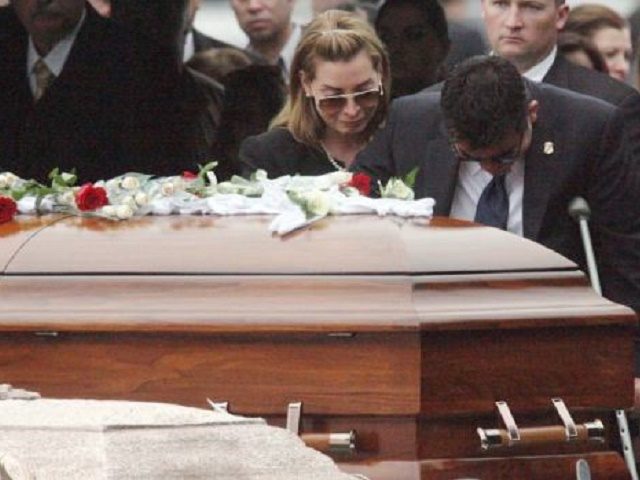
Two Los Zetas Gunmen Convicted of Killing ICE Agent in Mexico
by ROBERT ARCE
31 Jul 2017
Two Los Zetas cartel members were found guilty by a federal jury for the ambush and murder of a U.S Immigration and Enforcement on a Mexican highway.
Gunmen with Los Zetas murdered ICE Special Agent Jaime Zapata on February 2011 while he and another agent were traveling in Central Mexico near the town of Santa Maria del Rio in San Luis Potosí. The second ICE Agent, Victor Avila, was seriously wounded by gunfire but later recovered from his wounds.
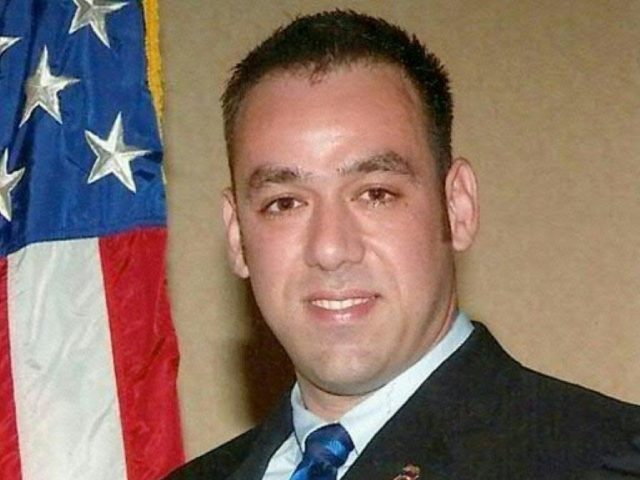
Both agents Zapata and Avila were returning to Mexico City after meeting up with personnel from the U.S. Consulate Monterrey to conduct a transfer of surveillance equipment at a pre-arranged location on highway 57. Both were ordered to make this trip by their supervisors despite their objections, even though this stretch of highway was known to be patrolled and controlled by dangerous criminal organizations. Both agents had voiced their concerns due to a recent travel warning that had been issued by the Regional Security Office (RSO) in Mexico City prohibiting travel in this area indicating, “it is not worth the risk.” This U.S. Department of State travel warning (No. 2011-3) was issued on January 18, 2011, less than one month before the murder of Agent Zapata.
The verdicts came at the end of a 15-day trial for Jesus Ivan Quezada Piña and Jose Manuel Garcia Sota who were found guilty of four federal offenses: murder of an officer or employee of the United States; attempted murder of an officer or employee of the United States; attempted murder of an internationally protected person; and using, carrying and brandishing and discharging a firearm during and in relation to a crime of violence causing death. The defendants are among seven Mexican nationals extradited to the U.S. on federal charges in the case related to the murder of Special Agent Zapata and the wounding of Special Agent Avila. The five previous defendants have already pled guilty in this case.
According to the government’s evidence at trial, Garcia Sota and Quezada Piña were members of two Los Zetas hit squads and were on a mission on the day of the shootings to steal vehicles for use in the cartel’s operations. Agents Zapata and Avila were traveling in a government-issued Suburban with diplomatic plates and it’s believed that they were attacked by their assailants in a case of mistaken identity. During the ambush, the cartel members fired at and into the agents’ vehicle with handguns and semiautomatic assault weapons, including AK-47 and AR-15 type assault rifles. Investigators later found approximately 90 shell casings at the scene, a U.S. Department of Justice news release revealed.
It was later determined that a weapon used for the murder of Special Agent Zapata was traced back to a U.S. government (ATF) gun-walking operation run out Texas similar to the infamous “Fast and Furious” case based out of Phoenix, Arizona. In the Phoenix case, it was later discovered that two rifles found at the murder scene of Border Patrol Agent Brian Terry in southern Arizona originated from the ATF, “Fast and Furious” gun-walking operation.
http://www.breitbart.com/texas/2017/...-agent-mexico/Support our FIGHT AGAINST illegal immigration & Amnesty by joining our E-mail Alerts at https://eepurl.com/cktGTn


 Reply With Quote
Similar Threads
-
603 shot, 103 dead in 2016 in Chicago: 32 Shot, Five Fatally in Weekend Violence
By JohnDoe2 in forum Other Topics News and IssuesReplies: 1Last Post: 03-14-2016, 04:13 PM -
Two rappers shot, killed — among 10 shot over weekend in four boroughs
By JohnDoe2 in forum Other Topics News and IssuesReplies: 0Last Post: 08-17-2014, 03:18 PM -
ICE agent shot in Texas (updated)
By JohnDoe2 in forum illegal immigration News Stories & ReportsReplies: 12Last Post: 01-31-2013, 12:01 AM -
Alien shot by agent sneaked into U.S. before
By Virginiamama in forum illegal immigration News Stories & ReportsReplies: 0Last Post: 01-05-2006, 10:32 AM -
Border Patrol agent shot
By Charlesoakisland in forum illegal immigration News Stories & ReportsReplies: 5Last Post: 06-04-2005, 09:59 AM


5th Circuit: Illegal Alien Detentions Can Continue Before...
07-24-2026, 10:25 AM in ALIPAC In The News