

Results 1 to 6 of 6
 9Likes
Thread Information
Users Browsing this Thread
There are currently 1 users browsing this thread. (0 members and 1 guests)
 LinkBack URL
 About LinkBacks
Threaded View


-
12-18-2017, 08:08 AM #1Senior Member


- Join Date
- Jan 2006
- Location
- Redondo Beach, California
- Posts
- 6,763
Anti-Immigration Fervor Is Different This Time
Anti-Immigration Fervor Is Different This Time
Americans now are much more welcoming than they were in the last outbreak of xenophobia.
December 18, 2017, 2:00 AM PST
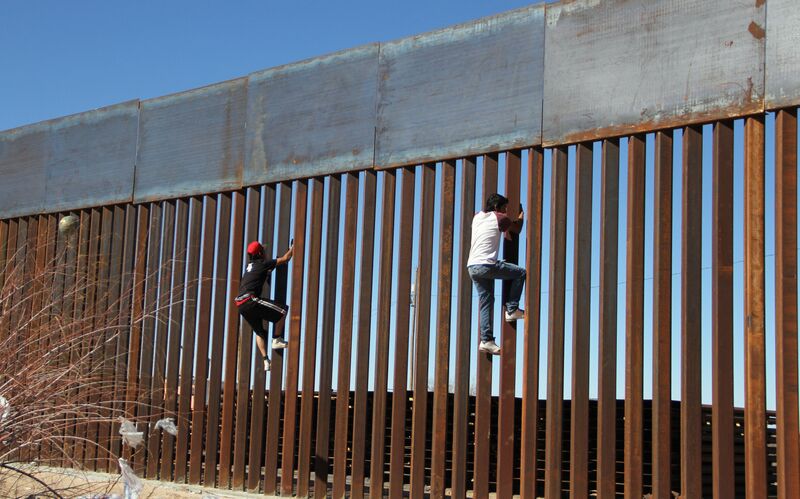
The wave of anti-immigration sentiment that boosted the presidential campaign of Donald Trump has eerie historical parallels. In 1955, historian John Higham wrote a book entitled, “Strangers in the Land: Patterns of American Nativism, 1860-1925.” The restrictionist movements, ideas and legislative efforts chronicled in Higham’s history bear a distinct resemblance to those that have emerged in the present day. But there are good reasons to think that this time is different because economic and cultural changes make it unlikely the U.S. will go down the same isolationist path that it trod in the early 20th century.
“Strangers in the Land” traces three distinct kinds of American nativism. The first, anti-Catholic sentiment, mostly died out after Irish immigration trailed off. But the recurrent bouts of panic over a papist fifth column bear an interesting resemblance to modern fears of Islam:
Catholic meetings were spied upon for evidence of military preparations. In Toledo the mayor, the police commissioner, and others bought Winchester rifles to repel an anticipated invasion, and many … were afraid to go to bed at night. … A rural schoolteacher in Minnesota went about heavily armed for weeks to defend himself against the anticipated massacre [of Protestants].
Higham’s second type of nativism is anti-radicalism -- basically, early anti-communism. The third type, however, which became dominant in the 1920s, was racial nativism, or the belief that people of Northern and Western European descent were superior to others, and that the U.S. would collapse if they didn’t remain a majority. It was this sentiment that ultimately led to the restrictive Johnson-Reed Act of 1924, which severely limited immigration and set quotas ensuring that most immigration would come from the racially favored countries.
The 1924 law was recently praised by Trump’s attorney general, Jeff Sessions. Meanwhile, the idea of preventing racial demographic change is central to the ethos of the alt-right activists who have been at the vanguard of agitating for immigration restriction. As in the early 20th century, a panic over changing demographics is leading to calls for the U.S. to close the gates. Higham’s history seems to be repeating itself.
But things might not turn out the same way as they did 100 years ago. In the 1910s and 1920s, public pressure for immigration restriction was intense -- now, it’s supported only by a shrinking minority of Americans. Polls find that support for decreased immigration has fallen in the last decade:
Restrictionism Falls Out of Favor
Shares of Americans supporting reduced immigration:
* Use link to see chart
Trump’s election hasn't sparked a general hardening of attitudes against immigrants, as occurred in the 1910s and 1920s. In fact, Americans of all political persuasions say more positive things about immigrants in 2017 than they did in previous years:
* Use link to see chart
Americans are even less militant toward illegal immigrants. Polls show increasing support in 2017 for giving unauthorized immigrants a path to citizenship rather than deporting them:
* Use link to see chart
Why are Americans so pro-immigration, even in the age of Trump? One possible reason could be that they’re more comfortable with diversity than their forebears were in the age Higham writes about. Americans certainly express fewer reservations about diversity than do people in Europe:
* Use link to see chart
A second reason could be that some -- though not all -- of the changes restrictionists want have already happened on their own, with no need for new legislation. Illegal immigration, long the chief target of restrictionists’ ire, has effectively stopped -- since 2007, the unauthorized immigrant population has fallen. Immigration from Mexico, the main source of population inflow during the 1990s and early 2000s, has been in reverse for a decade, with more Mexicans going south than coming north. Overall, low-skilled immigration to the U.S. is trailing off -- the main group now coming into the U.S. are educated people, mostly from East and South Asia.
A third reason, though, is that the economy of 2017 is simply much different from the economy of 1917. In the days of rapid industrialization, immigrants mostly supplied cheap labor, working in factories and mines. Unions were afraid that immigrants would hold their wages down, while business owners were worried that foreign workers would come bearing radical anti-capitalist sentiment. This meant that both sides of the class divide were comfortable with the 1924 laws.
Today, however, the U.S. economy has transitioned from one based on low-wage manufacturing to one based on knowledge work and innovation. Whether immigrants ever threatened the jobs and wages of the native-born once upon a time, they probably don’t threaten them now. There’s plenty of evidence that knowledge workers complement each other, so that high-skilled foreigners raise the wages of high-skilled and low-skilled native-born workers alike.
In other words, enacting new laws and regulations against immigration -- such as the RAISE Act now being considered by Congress, or various other moves by the Trump administration -- would strike directly at the heart of U.S. economic leadership. Rather than boosting incomes for the native-born, it would lower them, by weakening American dominance in innovative industries.
So there’s a good chance that history won’t repeat itself. The 2010s and 2020s may not prove to be an echo of the xenophobic moment of 100 years ago. Even if Trump does enact some measures to keep out immigrants, it’s likely that there will be pressure from both the public and from business groups for Trump’s successor to reverse these measures.
https://www.bloomberg.com/view/artic...rent-this-time
Support our FIGHT AGAINST illegal immigration & Amnesty by joining our E-mail Alerts athttp://eepurl.com/cktGTn


 Reply With Quote
Similar Threads
-
'Illegal Alien' costume stokes anti-Latino fervor -- poll
By usatime in forum illegal immigration News Stories & ReportsReplies: 4Last Post: 10-22-2009, 03:05 PM -
Rivera Takes on Anti-Immigrant Fervor and Book Excerpt
By Mayday in forum illegal immigration News Stories & ReportsReplies: 1Last Post: 03-05-2008, 06:49 PM -
NYC: Anti-immigration fervor casts city out
By zeezil in forum General DiscussionReplies: 1Last Post: 01-06-2008, 11:55 PM -
Anti-Immigration Fervor Keep Tancredo in the Race?
By jimpasz in forum General DiscussionReplies: 4Last Post: 08-11-2007, 12:59 PM -
Anti-immigration fervor rooted in culture
By Brian503a in forum illegal immigration News Stories & ReportsReplies: 0Last Post: 02-23-2006, 01:41 AM


In Brussels, Italian PM Meloni Challenges Spain’s Sánchez Over...
06-19-2026, 08:53 PM in illegal immigration News Stories & Reports