

Results 1 to 1 of 1
Thread Information
Users Browsing this Thread
There are currently 1 users browsing this thread. (0 members and 1 guests)
 LinkBack URL
 About LinkBacks
Threaded View


-
08-13-2025, 10:41 PM #1Senior Member


- Join Date
- Aug 2018
- Posts
- 91,313
Ancient underwater city near Noah’s Ark resting place challenges biblical timeline
Ancient underwater city near Noah’s Ark resting place challenges biblical timeline
08/13/2025 // Kevin Hughes // 320 Views
Tags: ancient history, ancients, Asia, Babylonian, bolivia, discoveries, flower of life, goodscience, Great Flood, Hidden History, Lake Van, Matt LaCroix, Mirat River, Mount Ararat, Mount Nemrut, Noah's Ark, Peru, real history, real investigations, research, South America, Turkey
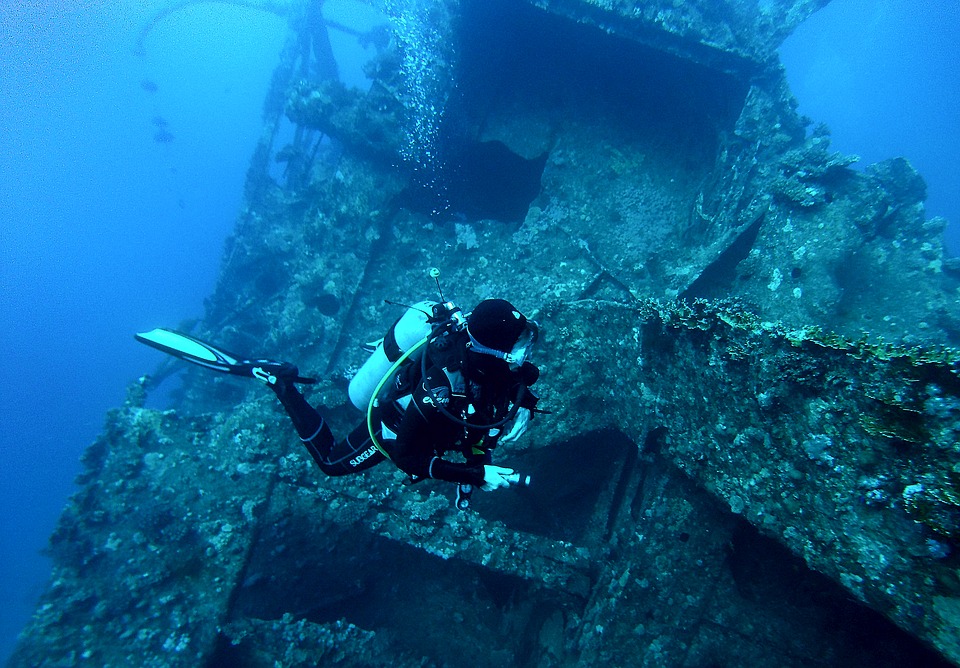
- A submerged ruin in Turkey's Lake Van near Mount Ararat – traditionally linked to Noah's Ark – could challenge historical beliefs about the origins of the biblical flood narrative and ancient civilizations.
- The city submerged 85 feet deep, is theorized to have been engulfed by a massive flood 12,000 to 14,500 years ago, triggered by volcanic activity from Mount Nemrut during a period of extreme climate upheaval (Younger Dryas).
- The site features sophisticated stonework, a fortress, circular temples and a carved "Flower of Life" symbol – a motif also found in South America – hinting at a possible lost global civilization with shared architectural and cultural traits.
- While some archaeologists date the ruins to the Urartian era (around 3,000 years ago), independent researchers argue geological evidence points to a much older timeline. Future dives aim to uncover organic material for definitive dating.
- The discovery reframes the biblical flood story as potentially rooted in a real ancient catastrophe, with links to Babylonian maps and regional legends. It could reshape understanding of how myths and historical events intertwine.
An ancient underwater city discovered beneath Turkey's Lake Van is poised to challenge long-held beliefs about the origins of the biblical story of Noah's Ark, and potentially rewrite humanity's understanding of ancient civilizations.
The sprawling ruins located just 150 miles from Mount Ararat – the traditional resting place of Noah's Ark – have sparked a wave of excitement and controversy among archaeologists, historians and independent researchers. The underwater complex is submerged 85 feet below the lake's surface. (Related: Archaeologists discover boat-shaped mound that could be NOAH’S ARK in Turkish ruins.)
The ancient city under Lake Van's waters is believed to have been engulfed by a catastrophic flood between 12,000 and 14,500 years ago. Geological evidence suggests that the eruption of Mount Nemrut blocked the Mirat River, causing massive flooding during the Younger Dryas – a period marked by extreme climate upheaval.
Independent researcher Matt LaCroix discussed the discovery on the "Matt Beall Limitless" podcast. He argued that this disaster may have wiped out an advanced civilization, one that could have inspired the earliest versions of the Great Flood story. "As far as I'm aware, any civilizations in the last 6,000 years did not have the technological means to create the type of stonework we're seeing here," LaCroix stated.
The underwater city, which spans more than half a mile, features a stone fortress flanked by circular temples with intricately carved masonry. A capstone engraved with a six-spoked "Flower of Life" symbol – an ancient motif also found in Peru and Bolivia – adds to the mystery. This shared symbolism, along with architectural similarities to megalithic sites like Sacsayhuamán, has led LaCroix to propose the existence of a long-lost global civilization.
"The site resembles Peruvian masonry, with precisely angled stones forming triangular joints. It's beautiful and would have been perfectly carved," LaCroix explained. He believes that the shared architectural features, symbolic motifs and astronomical alignments across sites in Turkey, South America and Asia point to a connection that transcends geographical boundaries.
A new perspective on the biblical story
While the ruins were first discovered in 1997 by Turkish underwater filmmaker Tossen Salin, they have remained largely unknown to the public. Archaeologists have confirmed the existence of the structures but attribute them to the Urartian period around 3,000 years ago or even the medieval era. However, they acknowledge that the site has yet to be fully studied or definitively dated.
LaCroix, however, contends that geological data tells a different story. Soil sampling and analysis of Mount Nemrut reveal evidence of a massive eruption around 12,000 years ago, which aligns with the timeline of the underwater city's submersion. The lake’s water level was stable for millennia, until the explosion of Mount Nemrut changed everything.
Because stone cannot be carbon-dated, researchers are hoping to find organic material, such as sediment layers or artifacts, to confirm the age of the ruins. However, collecting such evidence underwater poses significant challenges. LaCroix and an international dive team are preparing to explore the site in September using advanced imaging tools to map the ruins and gather more data.
LaCroix emphasizes that his findings do not dismiss the biblical version of the flood story but rather reframe it in its historical and cultural context. "It's not that Lake Van would have had to have been 85 feet lower," he explained. "It would have had to have been more like 100 feet lower or more, because these ruins are at 85 feet deep."
The discovery has already prompted a reevaluation of the biblical narrative and its possible origins. The Babylonian Map of the World, the oldest known map, marks the Ararat region near Lake Van as a place of ancient significance, possibly linked to tales of a lone survivor who emerged after a global deluge.
Follow Discoveries.news for more news about newly discovered ancient cities.
Watch this video about interesting facts concerning Noah's Ark.
This video is from the Constable channel on Brighteon.com.
More related stories:
Researchers find "underwater Stonehenge" beneath Lake Michigan.
Mysterious underwater pyramid off Japan could rewrite ancient history.
Discovery of massive ruins of ancient Roman city hit by a tsunami proves "climate change" isn’t responsible for natural disasters.
Sources include:
DailyMail.co.uk
GBNews.com
DailyStar.co.uk
Brighteon.com
Ancient underwater city near Noah’s Ark resting place challenges biblical timeline – NaturalNews.com
If you're gonna fight, fight like you're the third monkey on the ramp to Noah's Ark... and brother its starting to rain. Join our efforts to Secure America's Borders and End Illegal Immigration by Joining ALIPAC's E-Mail Alerts network (CLICK HERE)


 Reply With Quote
Similar Threads
-
Bo Polny: Prophetic Intel on Biblical Timeline for Revival | Meri Crouley
By Airbornesapper07 in forum Other Topics News and IssuesReplies: 0Last Post: 04-24-2025, 08:15 PM -
Mysterious underwater pyramid off Japan could rewrite ancient history | 04/10/2025
By Airbornesapper07 in forum Other Topics News and IssuesReplies: 0Last Post: 04-10-2025, 05:51 PM -
Beneath the sands of Giza: Groundbreaking discovery finds ancient UNDERGROUND CITY li
By Airbornesapper07 in forum Other Topics News and IssuesReplies: 0Last Post: 03-22-2025, 12:14 AM -
This city is leading the US in underwater homes
By JohnDoe2 in forum Other Topics News and IssuesReplies: 1Last Post: 06-06-2018, 09:11 PM -
Russia Sends Robots to De-Mine Ancient City Palmyra
By artist in forum Other Topics News and IssuesReplies: 0Last Post: 03-30-2016, 10:47 AM


🔴 BREAKING & MOVING THIS WEEK: Broadband Bill H.R. 2289--Telecom...
04-18-2026, 11:04 PM in General Discussion