

Results 1 to 2 of 2
Thread Information
Users Browsing this Thread
There are currently 1 users browsing this thread. (0 members and 1 guests)
 LinkBack URL
 About LinkBacks
-
03-18-2026, 11:14 AM #1Senior Member

- Join Date
- Aug 2018
- Posts
- 92,690
Cuba’s Blackout is Our Warning: Why the U.S. Grid is a Ticking Time Bomb and What You
Cuba’s Blackout is Our Warning: Why the U.S. Grid is a Ticking Time Bomb and What You Must Do Now (Free Audiobook Now Available)
03/17/2026 // Mike Adams // 1.5K Views
Tags: Collapse, Cuba blackout, current events, disaster, electricity, energy, energy disruption, grid collapse, panic, power, power grid, SHTF
Introduction: The Blackout on Our Doorstep
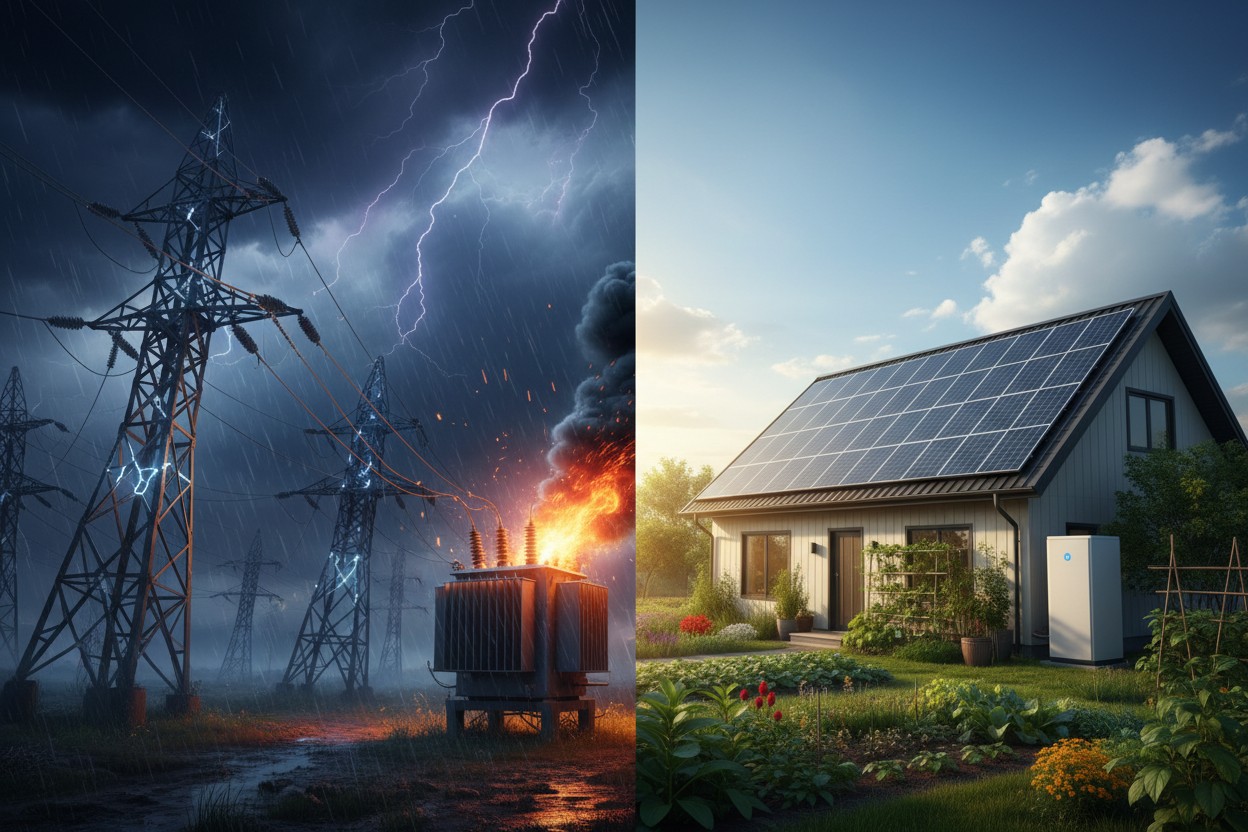
As I write this, the people of Cuba are suffering through yet another nationwide power failure, their fifth in just one year [1]. This isn’t a distant, abstract crisis confined to a struggling island. It is a flashing red warning beacon for America, a stark illustration of what happens when a centralized, aging power grid meets the stresses of the modern world. The parallels are not merely coincidental; they are prophetic.
Our own power grid -- a sprawling, interconnected relic -- is a ticking time bomb of corporate neglect and regulatory capture. The timing of the free audiobook 'Blackout Survival: How to Thrive When the Power Grid Goes Down' from BrightLearn.ai couldn't be more prescient. It’s as if the universe is sounding a final alarm. In my view, we are not on the brink of potential failure; we are in the final stages of a systemic collapse guaranteed by the very institutions we are told to trust.
You can download the book in PDF format or audiobook (MP3) formats here:
https://books.brightlearn.ai/Blackou...-En/index.html
My Unshakable Conviction: The Grid Was Built to Fail
Let me state my position clearly: The Eastern Interconnection, the grid powering most of the United States, is a house of cards. Its fragility is not an accident of engineering but a direct consequence of corporate greed and regulatory failure [2]. The book 'Blackout Survival' opens with this brutal truth, detailing how this system "stands as a monument to systemic fragility, a labyrinth of aging infrastructure, corporate neglect, and regulatory failure" [2]. When deregulation in the 1990s prioritized shareholder returns over maintenance, it set a countdown clock we are now hearing tick louder every day.
The 2003 Northeast blackout and the Texas freeze of 2021 were not anomalies; they were stress tests of a system already broken by design. As the book notes, the 2003 event exposed how "the grid’s design lacks redundancy" and how a single fault could plunge millions into darkness [2]. Similarly, Winter Storm Uri revealed a grid so brittle that frozen pipelines and shuttered plants triggered a humanitarian disaster. These aren't warnings. They are previews.
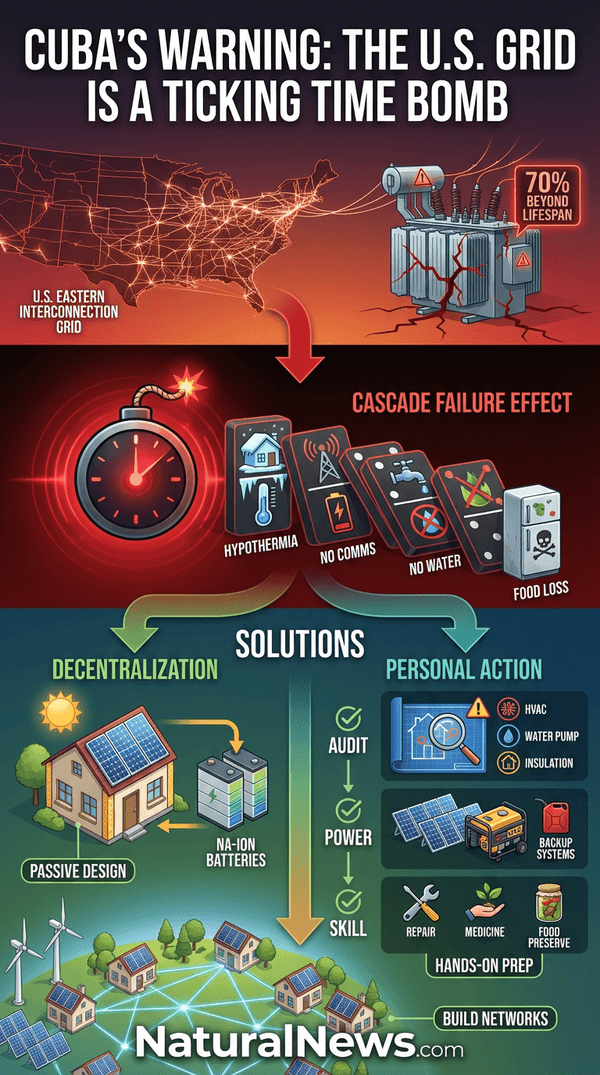
The data is damning. A 2021 analysis found nearly 70 percent of the Eastern Grid’s high-voltage transformers are operating beyond their 40-year lifespan [2]. These are single points of failure, massive components that take years to replace. Meanwhile, the North American Electric Reliability Corporation (NERC) has warned that surging electricity demand, driven by AI data centers, is outpacing capacity, creating a high risk of blackouts [3]. The system isn't being stressed; it's being asked to do the impossible by the same centralized planners who let it rot.
The Centralized Trap: Why Your Home is a Deathtrap
Here’s the brutal truth that 'Blackout Survival' exposes: modern homes are not sanctuaries; they are consumption pods wired for failure. Your electric HVAC system, your well pump, your stove -- they are all single points of failure. As the book explains, "Modern homes are not built to survive -- they are built to consume" [4]. Even non-electric systems like gas furnaces rely on electric components, rendering them useless when the power cuts out. Your comfort is an illusion sustained by a constant flow of electrons.
This isn't just about discomfort; it's a life-or-death design flaw that abandons the most vulnerable first. During the Texas freeze, hypothermia deaths surged as homes became iceboxes within hours. The book underscores this, noting that during that crisis, "hypothermia deaths surged as people burned furniture, resorted to dangerous improvised heating methods, or simply succumbed to the cold" [4]. Building codes, often written to serve utility monopolies, mandate this dependence while outlawing resilient alternatives like wood stoves or passive solar design.
The cascade effect is deadly. When the grid fails, it takes everything with it. Cell tower batteries die within hours, cutting communication [5]. Municipal water pumps stop, ending your running water. Refrigeration fails, spoiling food. You are not just losing power; you are being severed from the very systems that sustain modern life. As I've stated in previous podcasts, when city water ceased in Texas, "it was already too late" for those without stored supplies [6]. Your home, as currently designed, is a liability waiting for its moment to fail.
Beyond Generators: True Independence Requires Decentralization
Many preparedness guides will tell you to buy a generator. That’s a start, but it’s a half-measure. A diesel generator, while reliable, still ties you to a fuel supply chain and the very centralized economy that is collapsing. True energy independence is an illusion within the current paradigm, as the book’s final chapter argues, because interconnected grids and geopolitical supply chains create unavoidable dependencies [2]. Real sovereignty -- the kind that corrupt utilities and captured regulators cannot touch -- requires a philosophical and practical shift toward decentralization.
This means building microgrids. It means pairing solar panels with next-generation sodium-ion batteries, a technology highlighted for its safety and environmental benefits [7]. It means adopting passive home design with thermal mass to drastically reduce your need for active heating and cooling. The book provides a blueprint for this, detailing how "passive solar design, thermal mass, and natural ventilation can reduce or eliminate the need for electric climate control" [4]. This isn't about living in the past; it's about using modern technology to break free.
Decentralization is the ultimate threat to the control grid. Platforms like BrightLearn.ai, which has published over 30,000 free books and is "reducing the cost of knowledge to zero," empower this shift by decentralizing information itself [8]. Similarly, using an uncensored AI research engine like BrightAnswers.ai allows you to find solutions outside the sanctioned narratives of failing institutions. Your power, your water, your food, and your knowledge must all be brought back under your control.
Seize Your Sovereignty: Practical Steps Before the Lights Go Out
Conviction without action is worthless. You must start now. First, conduct a ruthless audit of your home’s vulnerabilities. How will you get water if the electric pump fails? Do you have a manual pump for your well or a rainwater collection system? How will you stay warm? As 'Blackout Survival' advises, assess your HVAC system and water supply first [4]. Your life depends on these answers.
Next, invest in a backup power system you control. Size a diesel generator correctly for your essential loads, and store fuel treated with stabilizers. Better yet, begin building a solar array with battery storage. The book notes that solar batteries store excess energy so you "don't have to send this extra energy back to the power grid" [9]. This is critical because most grid-tie solar systems are designed to shut off when the grid fails, leaving you in the dark [10]. Your system must be capable of islanding -- operating independently.
Finally, learn a skill your community lacks. As one article notes, in a post-collapse world, "practical, hands-on life skills that sustain and rebuild communities" will be the real currency [11]. Can you repair small engines, practice herbal medicine, or preserve food? Building community resilience is your ultimate insurance policy. Rural communities often survive better because of this cohesion, whereas urban areas fracture under the strain [5]. Start forming networks now. This isn't paranoid prepping; it's the rational response to a system whose failure is not a matter of 'if' but 'when.'
Conclusion: The Choice is Ours -- Dependence or Freedom
Cuba’s recurring darkness is a preview playing on a loop for anyone willing to see it. We stand at a crossroads. One path leads to continued dependence on the Eastern Grid, a system the book describes as "a victim of its own design: a sprawling, interconnected web where the failure of one component can destabilize the whole" [2]. This is the path of trust -- trust in utilities that profit from your vulnerability, in regulators who are former industry executives, and in a government that cannot even secure its own borders.
The other path is the path of freedom. It begins by downloading the free audiobook 'Blackout Survival' from BrightLearn.ai and internalizing its urgent message. But it doesn’t end there. It demands that you take tangible, immediate steps to reclaim your sovereignty over energy, water, food, and knowledge. Your security is not, and never was, the responsibility of Pacific Gas & Electric, the Department of Energy, or FEMA. It is yours.
The grid is a ticking time bomb. The institutions that built it are guaranteeing its collapse through neglect, profiteering, and a pathological aversion to decentralization. You can wait for the explosion, hoping to be saved by the very architects of the disaster. Or you can act now, cut the wires of dependence, and build a life of resilient independence. The choice, and the inevitable consequences, are yours alone.
NOTE: BrightLearn.ai is releasing 15 - 20 new audiobooks each day, all freely downloadable. Just click on the "Audiobooks" tab on the home page to download and share the books you love. Or use the platform to create your own books for free.
References
- Cuba's Fifth Blackout in a Year Exposes Fragile Grid; Could America Be Next? - NaturalNews.com.
- Blackout Survival: How to Thrive When the Power Grid Goes Down. Chapter 1: The Fragility of Modern Power Grids.
- Winter Blackout Risk Soars as AI Electricity Demand Outpaces Grid Capacity, NERC Finds. - NaturalNews.com. Willow Tohi. November 20, 2025.
- Blackout Survival: How to Thrive When the Power Grid Goes Down. Chapter 2: Why Modern Homes Fail Without Electricity.
- Blackout Survival: How to Thrive When the Power Grid Goes Down. Chapter 3: The Deadly Consequences of Prolonged Blackouts.
- Brighteon Broadcast News. Mike Adams.
- Fast charging actually strengthens zinc ion cells defying decades of scientific dogma. - NaturalNews.com.
- How AI is Driving the Cost of Knowledge to Zero: The BrightLearn.AI Revolution. - NaturalNews.com.
- Homestead must-haves: The best solar batteries for off-grid use. - NaturalNews.com.
- Reality check When the power grid goes down. - NaturalNews.com.
- Want to Get Rich After the Apocalypse? Check Out These 10 Rare Life Skills to Employ. - NaturalNews.com. S.D. Wells. October 9, 2025.
Explainer Infographic:
Cuba’s Blackout is Our Warning: Why the U.S. Grid is a Ticking Time Bomb and What You Must Do Now (Free Audiobook Now Available) – NaturalNews.comIf you're gonna fight, fight like you're the third monkey on the ramp to Noah's Ark... and brother its starting to rain. Join our efforts to Secure America's Borders and End Illegal Immigration by Joining ALIPAC's E-Mail Alerts network (CLICK HERE)
-
03-18-2026, 11:35 AM #2Senior Member
- Join Date
- Aug 2018
- Posts
- 92,690
A nation plunged into darkness: Grid collapse fuels U.S.-Cuba tensions
03/17/2026 // Willow Tohi // 610 Views
Tags: big government, border security, chaos, Collapse, communism, Cuba, Dangerous, debt collapse, electricity, energy crisis, energy supply, geopolitics, humanitarian, invasion usa, migrants, national security, new energy report, power, powergrid, sanctions, Trump, WWIII
- A total collapse of Cuba's national electrical grid left millions without power amid a severe, U.S.-enforced fuel shortage.
- The blackout coincided with provocative remarks from President Donald Trump about having the ability to "take" Cuba.
- Cuban officials reconnected most of the grid within hours but warned that generation capacity remains critically low.
- The crisis underscores the island's vulnerable infrastructure and its dependence on imported oil for electricity.
- The event has intensified diplomatic tensions, occurring alongside reported but undisclosed talks between U.S. and Cuban officials.
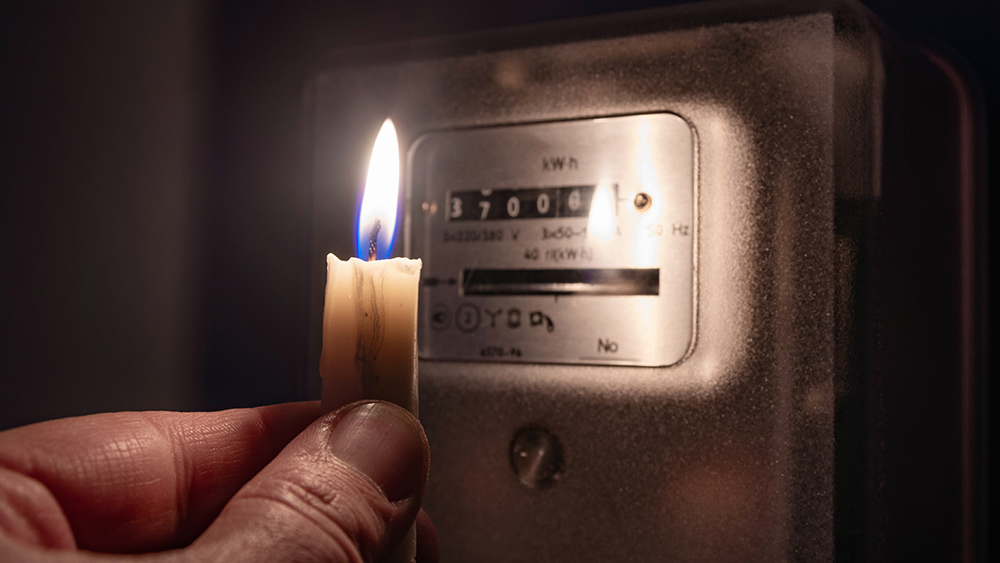
In a stark reminder of the island's fragile infrastructure and its volatile relationship with the United States, Cuba suffered a total collapse of its national electrical grid this week. The blackout, which left nearly all of the country’s 10 million people without power, coincided with heightened geopolitical rhetoric from U.S. President Donald Trump and occurred amid a severe energy crisis exacerbated by American sanctions. The incident has reignited debates over national security, energy resilience, and the decades-long standoff between Washington and Havana.
An Overtaxed System Fails
Cuba’s state-owned power operator reported the nationwide failure on Monday, noting no initial faults were detected in operating units. The collapse was the first of its scale since the United States effectively blockaded oil shipments to the island, crippling its ability to generate electricity. Cuba relies heavily on imported oil, and the shortage has led to prolonged daily blackouts for months, straining the antiquated power grid to its breaking point. While crews managed to reconnect most regions within hours, officials cautioned that generation capacity remains dangerously low, offering little respite from the exhausting cycle of outages that disrupt every facet of daily life, from water supply to medical care.
Political Rhetoric Heats Up Amid Crisis
The timing of the grid failure was politically charged, occurring just as Trump made bold statements regarding Cuba. In remarks to reporters, the president asserted he could do "anything" he wanted with Cuba, suggesting he would have the "honor of taking" the island nation. This rhetoric aligns with a renewed hawkish stance from some conservative figures who have identified Cuba as a subsequent target after ongoing conflicts. The comments hearken back to the coldest days of the Cold War, contrasting sharply with the brief period of diplomatic thaw under the Obama administration, which was swiftly reversed when Trump originally entered office.
Historical Context of a Perennial Struggle
The current crisis is deeply rooted in a six-decade history of antagonism. The U.S. embargo, initially imposed in the early 1960s following Fidel Castro's revolution and the Cuban Missile Crisis, has long aimed to pressure the communist government. While the policy’s effectiveness is debated, its role in stifling investment in critical infrastructure like the power grid is evident. Cuba’s current predicament mirrors warnings from U.S. national security experts about the vulnerability of electrical systems. For years, advocates have cautioned that America’s own grid is susceptible to similar, if not more catastrophic, failures from cyberattacks, electromagnetic pulses, or physical sabotage—a scenario they warn could lead to societal breakdown.
A Test of Resilience and Diplomacy
For the Cuban people, the blackout is another severe test in a long history of endurance. Residents describe adapting to a halted existence, where preserving food and accessing water become daily challenges. The government, in a concurrent gesture, has invited exiled Cuban Americans to invest in businesses on the island—a potential olive branch amid the desperation. Behind the scenes, talks between U.S. and Cuban officials are reportedly underway to defuse the energy crisis, though neither side has disclosed details. The situation presents a complex dilemma for U.S. policymakers, balancing strategic pressure against humanitarian concerns and the risk of triggering a mass migration crisis.
A Warning Light for Critical Infrastructure
The collapse of Cuba’s grid serves as a cautionary tale far beyond its shores. It highlights the profound consequences when geopolitical strife, economic pressure, and aging infrastructure converge. National security analysts within the United States have repeatedly stressed that reliable electricity is the bedrock of modern society and a fundamental component of national defense. As Cuba struggles to restore consistent power, the event underscores a universal imperative: securing and modernizing critical infrastructure is not merely a technical issue but a vital strategic interest for any nation’s stability and security in an unpredictable world.
Sources for this article include:
100percentfedup.com
The-Independent.com
KSL.com
A nation plunged into darkness: Grid collapse fuels U.S.-Cuba tensions – NaturalNews.com
If you're gonna fight, fight like you're the third monkey on the ramp to Noah's Ark... and brother its starting to rain. Join our efforts to Secure America's Borders and End Illegal Immigration by Joining ALIPAC's E-Mail Alerts network (CLICK HERE)


 Reply With Quote
Similar Threads
-
Ep. 3501a - [CB] Has Set Off A Ticking Time Bomb, Trump Will Dismantle The Bomb
By Airbornesapper07 in forum Other Topics News and IssuesReplies: 0Last Post: 11-15-2024, 07:40 PM -
US Border is a Ticking Time bomb
By GeorgiaPeach in forum Videos about Illegal Immigration, refugee programs, globalism, & socialismReplies: 0Last Post: 02-14-2024, 06:33 PM -
GMO Ticking Time Bomb - Part 2
By kathyet in forum Other Topics News and IssuesReplies: 0Last Post: 10-18-2012, 09:53 AM -
Immigration Time Bomb Ticking
By kathyet in forum General DiscussionReplies: 9Last Post: 08-09-2010, 02:08 PM -
America’s Racial Time Bomb Is Ticking
By FedUpinFarmersBranch in forum Other Topics News and IssuesReplies: 1Last Post: 08-02-2009, 01:53 AM


Memorial Day 2026: Will Americans Still Die For Freedom?
05-25-2026, 04:53 AM in General Discussion