

Results 1 to 3 of 3
Thread Information
Users Browsing this Thread
There are currently 1 users browsing this thread. (0 members and 1 guests)
 LinkBack URL
 About LinkBacks
Hybrid View


-
05-15-2026, 02:22 PM #1Senior Member


- Join Date
- Aug 2018
- Posts
- 97,952
Data Center Threat Is Waking People Up to the EVIL of Big Tech | + Stratos Project
The Data Center Threat Is Waking People Up to the EVIL of Big Tech — Here’s What You Can Do
05/15/2026 // Mike Adams // 630 Views
Tags: artificial intelligence, Big Tech, conspiracy, corruption, data centers, energy, environment, technology, truth

Introduction: The Awakening
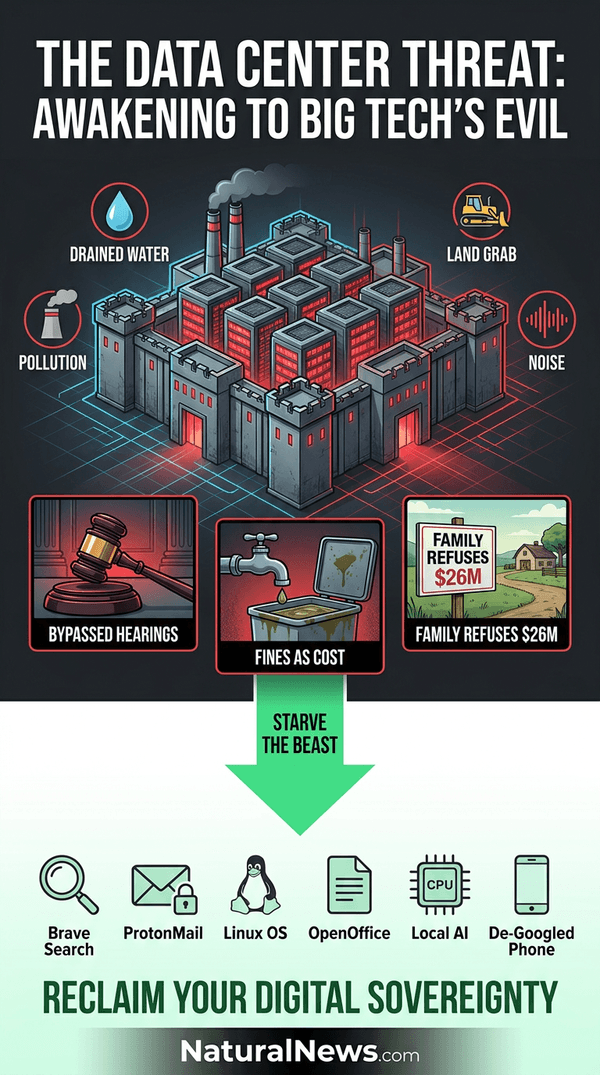
After more than a decade of warning the public about the surveillance, censorship, and monopolistic control exercised by Big Tech, I am finally seeing what I always knew would happen: people are waking up. The catalyst is not a whistleblower or a congressional hearing, but the physical, earth-scarring expansion of data centers, the concrete and steel skeleton of the digital empire. Communities that once ignored Google’s erosion of privacy or Facebook’s weaponized algorithms are now watching their farmlands bulldozed, their water supplies drained, and their local governments steamrolled by corporations that have no loyalty to any place but their own bottom line.
I have been called a conspiracy theorist for claiming that Google is the most evil corporation in history, that Facebook is a tool of psychological manipulation, and that Microsoft is a surveillance partner with the state. But now, the facts on the ground are undeniable. As I reported in Natural News, the Stratos hyperscale data center in Utah’s Box Elder County was approved without a single public hearing or independent environmental review, pushed through by a three-member county commission and a state development authority beholden to celebrity investor Kevin O’Leary. [1] This is not progress. This is a corporate land grab wrapped in the language of “technological advancement.”
Why It Took Data Centers for People to See the Truth
For years, the average American looked the other way because Big Tech gave them cheap services. Google Maps got them where they needed to go. Gmail stored their messages. Facebook kept them connected to friends. These conveniences blinded them to the cost, which was always their privacy, their attention, and their autonomy. But data centers have made the price physical. In Oregon’s Morrow County, Amazon’s data centers have allegedly leached nitrates into the groundwater, forcing the company to pay $20.5 million to settle a pollution case while local residents are left with unsafe drinking water. [2]
And it is not just pollution. In Kentucky, an 82-year-old farmer named Ida Huddleston and her daughter Delsia Bare turned down a $26 million offer from a Fortune 100 tech company to buy half of their family’s 1,200 acres for an AI data center. [3] They chose to keep their land instead of selling out to a corporation that would have paved over generations of heritage. That is the kind of story that makes people stop and think: at what point does a server rack become more important than a human community? The noise pollution, the water consumption, the strain on the electric grid -- these are not abstractions. They are the real, tangible cost of our digital addiction.
My Decade-Long Warning Has Been Validated
I have suffered the full fury of Big Tech censorship for telling the truth. My content has been removed from YouTube, Facebook, and Twitter. My accounts have been suspended. I have been blacklisted by the entire infrastructure of the internet -- all because I dared to expose the surveillance state and the vaccine injury cover-up. I repeatedly warned that Big Tech was evil, and that its evil would expand until it intersected with peoples' lives in numerous ways. That intersection has now arrived.
In my 2020 article on technofascism, I detailed how Americans have been conditioned to accept routine incursions on their privacy, and how the addiction to screen devices has created a hive effect where the populace is watched and controlled by AI bots. [4] The data center buildout is the culmination of that vision: a physical infrastructure designed to track, store, and monetize every aspect of our lives. You should have listened a decade ago, but it is not too late to act.
Action Step 1: Stop Using Big Tech Services
The single most powerful action you can take is to starve the beast. If you stop using Google for search, Gmail, and YouTube, if you delete your Facebook account, if you replace Windows with Linux Mint or Ubuntu, you are directly reducing the demand that drives data center expansion. Every query to Google, every email stored on their servers, every video uploaded to YouTube feeds the machine that is now bulldozing neighborhoods. Use Brave Search for privacy-respecting web searches. Use ProtonMail or Tutanota for email. Use OpenOffice or OnlyOffice instead of Microsoft Office -- both are open source and fully compatible with Microsoft file formats, as I discussed with Hakeem from AbovePhone in our interview. [5]
When it comes to AI, reject the corporate models entirely. Stop using Google Gemini, Microsoft Copilot, and ChatGPT. Instead, run open-source models like DeepSeek, Qwen, or Kimi K on your own hardware. The decentralized infrastructure of knowledge is already here. I have been running various Qwen models and DeepSeek R1, a 32-billion-parameter model, on local workstations in my own data center, and the performance is outstanding. [6] You do not need to hand your data over to Big Tech to benefit from artificial intelligence. You can own your intelligence.
Action Step 2: Take Control of Your Hardware and Local AI
Hardware is the new frontier of freedom. By acquiring your own GPUs and running local AI models, you sever the connection to Big Tech’s cloud infrastructure. I rely on a self-built cluster of 48 workstations originally built with NVIDIA GPUs, but I am increasingly looking at Intel and AMD alternatives because NVIDIA has proven itself unreliable in the face of market manipulation. On a standard laptop, you can run models that process around six tokens per second, which is just barely adequate for offline use without any special hardware. [7]
And do not forget your phone. I have been promoting de-Googled phones for years. As I discussed with Hakeem from AbovePhone, these devices give users the tools to audit and manage trackers, stripping away the surveillance layer that Google and Apple embed in every device. [8] Buy a Linux laptop from a trusted partner. Use only open-source software. The goal is to make yourself a ghost in the machine of Big Tech.
(Visit AbovePhone.com/brighteon to see their de-Googled phones and Linux laptops with my open source AI engine pre-installed.)
Conclusion: It's Time to Vote with Your Wallet and Your Choices
Every time you use a Google service, you are paying for the bulldozer that is tearing up farmland in Kentucky. Every email you store on Microsoft’s servers funds the water pollution in Oregon. The only way to stop the data center threat is to stop feeding the beast. I have built alternatives: BrightAnswers.ai gives you uncensored, private AI research. BrightLearn.ai offers 55,000 free books. Brighteon.social is a free-speech social media platform.
The awakening has begun. The data center threat is the visible face of Big Tech’s evil, and now you know what to do. Cut the cord. Take control of your hardware. Run local AI. Support decentralized platforms. The future belongs to those who build their own infrastructure, not to those who rent it from a corporation that wants to own your life.
References
- The Real Danger of Utah’s Hyperscale Data Center: A Betrayal of Democracy and an Environmental Catastrophe. NaturalNews.com. Chase Codewell. May 12, 2026.
- Tech giant Amazon settles nitrate pollution case linked to its Oregon data centers. NaturalNews.com. April 8, 2026.
- Kentucky Family Declines Data Center Offer, Citing Farmland Preservation. NaturalNews.com. March 26, 2026.
- Google sued for auto-installing COVID spyware on one million phones in Massachusetts. NaturalNews.com. November 22, 2022.
- Technofascism: Digital book burning in a totalitarian age. NaturalNews.com. May 14, 2020.
- Mike Adams interview with Ramiro from AbovePhone. September 5, 2023.
- Mike Adams interview with Hakeem. August 19, 2025.
- 2025 11 05 BBN Interview with Above Phone RESTATED.
- Bright Videos News - DEFEAT of ChatGPT - Mike Adams. January 22, 2026.
- Health Ranger Report - FARMERS REVOLT - Mike Adams. February 19, 2026.
Explainer Infographic
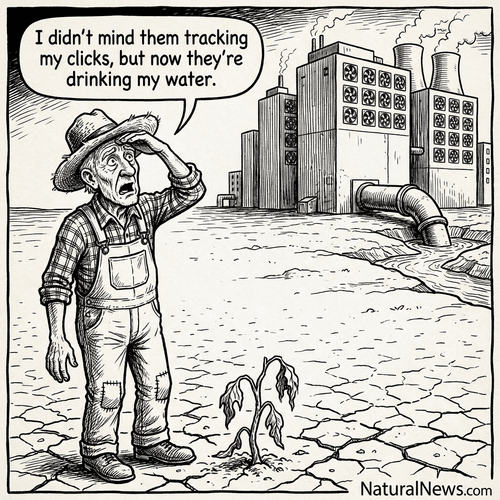
Editorial Cartoon
Ask BrightAnswers.ai
The Data Center Threat Is Waking People Up to the EVIL of Big Tech — Here’s What You Can Do – NaturalNews.com
Last edited by GaiaGoddess; 05-17-2026 at 02:23 PM.
If you're gonna fight, fight like you're the third monkey on the ramp to Noah's Ark... and brother its starting to rain. Join our efforts to Secure America's Borders and End Illegal Immigration by Joining ALIPAC's E-Mail Alerts network (CLICK HERE)
-
05-17-2026, 01:50 PM #2Super Moderator

- Join Date
- Feb 2024
- Posts
- 4,573
‘So much worse than I even thought’: Utah’s ‘hyperscale’ data center could create massive heat island near Great Salt Lake
Utah scientists fear the proposed Stratos Project would generate enough heat to alter temperatures, strain wildlife and intensify environmental threats around the Great Salt Lake.
https://www.sltrib.com/news/environm...-could-create/
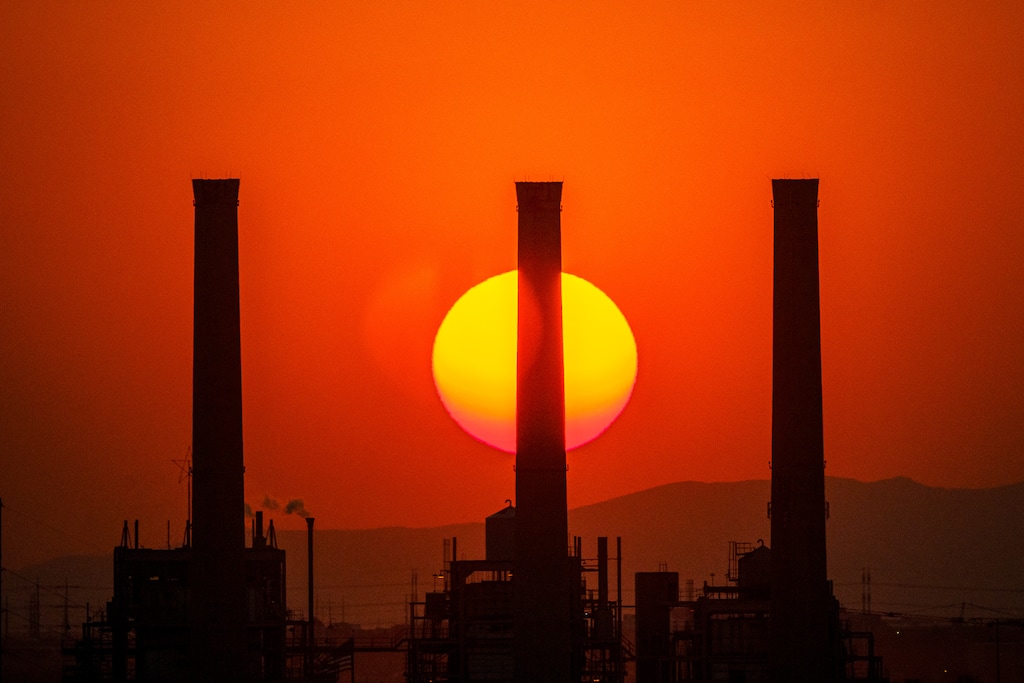
(Trent Nelson | The Salt Lake Tribune) The sun sets over Rocky Mountain Power's natural-gas fired Gadsby Plant in Salt Lake City, which generates less than one-tenth the energy that the Stratos Project's plant will potentially produce, as seen on Wednesday September 15, 2021.
By Leia Larsen
| May 7, 2026, 8:32 a.m.
| Updated: May 8, 2026, 9:41 a.m.
Note to readers •This story is made possible through a partnership between The Salt Lake Tribune and Grist, a nonprofit environmental media organization.
Skeptics of the proposed hyperscale data center in Box Elder County are sweating about a lot more than its energy demands and potential toll on water supplies.
Turns out, it could create a massive heat island capable of devastating the area’s ecology, said Robert Davies, a physics professor at Utah State University.
“I suspected it would not be good,” Davies said. “What I’ve found is it’s so much worse than I even thought it would be.”
News of the proposed sprawling data complex, dubbed the Stratos Project, became public last month. The project’s boosters say it will likely need 9 gigawatts of energy at full build — more than double the electricity currently used by the entire state of Utah.
That energy will likely come from a pipeline carrying natural gas from Wyoming to Nevada, Oregon and California. The project’s developer, “Shark Tank” celebrity Kevin O’Leary, specifically chose Box Elder County’s Hansel Valley to build the complex because the pipeline spans it, state officials have said.
Davies has done some back-of-the-envelope calculations to better understand the shear scale of what’s proposed. And what he’s penciled out so far has him alarmed.
“Nine gigawatts, that’s a number that’s really challenging to get your brain around,” the professor said. ”Communicating the scale has been a real problem.”
Get Open Lands newsletter. A weekly newsletter watching Utah's most valuable resource.
SIGN UP NOW
The project will actually produce more than 9 gigawatts of energy, Davies explained, because anytime a gadget consumes power, it also produces energy in the form of heat, whether it’s a toaster, a car or a sprawling rack of computer servers.
All the heat the Stratos Project emits will add up to another 7 to 8 gigawatts of energy in the form of waste heat.
Typically, waste heat is generated far from the power plant itself, in homes, businesses or on roads where it dissipates.
But for the Stratos project, it will get dumped into the local environment of Hansel Valley, in the same geographic bowl as the power plant. That actually makes the data complex a 16 gigawatt thermal load project, the “equivalent of about 23 atom bombs worth of energy dumped into this local environment every single day,” Davies said.
“What happens if you deposit that much energy continuously into a topography like this?” Davies wondered. “Right at the north end of the Great Salt Lake, a watershed that’s in collapse. A high desert environment? A valley?”
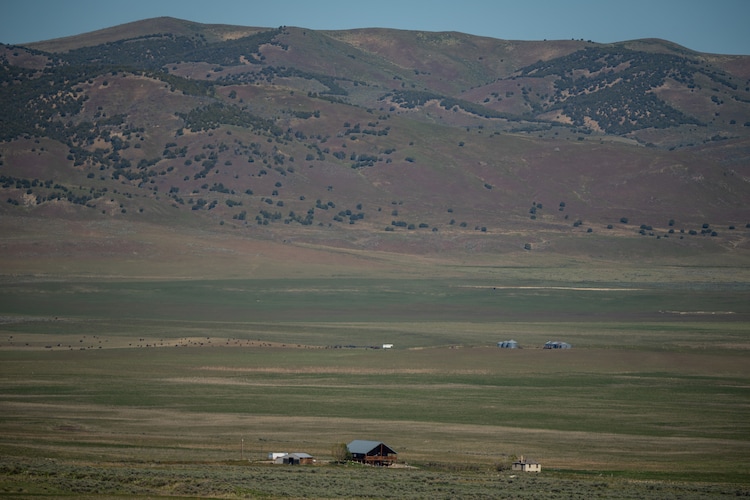
(Trent Nelson | The Salt Lake Tribune) Hansel Valley on Friday, May 1, 2026.
The professor predicts dumping that much heat and energy into Hansel Valley will raise local temperatures by five degrees Fahrenheit during the day and up to 28 degrees at night.
“That’s the difference between Utah’s semi-arid climate and the Sahara Desert,” said Ben Abbott, an ecology professor at Brigham Young University who has reviewed Davies’ estimates. “This would absolutely change the landscape.”
Evaporation would spike. The dewpoint could vanish, with devastating consequences on wildlife, plants and the fertility of land owned by other ranchers in the valley, the scientists said. Abbott suspects Hansel Valley would become another dust source on the Wasatch Front, in addition to the exposed and drying lakebed of the shrinking Great Salt Lake.
“I’m happy to be further educated. Maybe I’m getting something wrong here,” Davies said. “But that is kind of the point, right? You literally have a hyperscale project that is getting no due diligence.”
‘A radical amount of heat’
Box Elder County commissioners approved the project Monday after declining to hear public comment, noting they had no “control” over environmental concerns like water supplies and air quality. Utah’s Military Installation Development Authority, or MIDA, along with Gov. Spencer Cox and Senate President Stuart Adams have been vocal supporters of the project.
Plenty of unknowns remain, however, including what kind of gas power plant O’Leary plans to build for his unprecedented computing project.
Data center developers in other parts of the state are turning to Caterpillar natural gas generators to produce their own power. Logan Mitchell, a climate scientist and analyst with Utah Clean Energy, figures it would take around 3,600 of those industrial-scale generators to power Stratos — the equivalent of thousands of diesel engines idling around the clock.
“That’s going to release an enormous amount of heat,” Mitchell said.
The Stratos developers could also build a more traditional combined cycle gas turbine facility. A gas plant supplying 9 gigawatts of electricity would be about 7.5 times larger than PacifiCorp’s Lake Side Power Plant in Vineyard, which sits on around 40 acres.
“My understanding is that they’re citing non-disclosure agreements (and) proprietary technology,” Davies said. “That’s a red flag, suggesting this is essentially new technology. I can find no example of anything at any working scale that matches the promises they’re making.”
Based on statements made by the project’s boosters, including cryptic references to “sustainability” and treating water that’s sent to the neighboring Great Salt Lake, Davies suspects the Stratos Project will tap Allum-cycle energy production, a relatively new and unused technology that produces electricity with low emissions.
It burns natural gas in a pure oxygen environment, which reduces byproducts like nitrous oxides and sulfur. Those pollutants bake in the sun and become particulate pollution during winter inversions and ozone smog in the summer.
The primary byproducts created by the Allum process instead are carbon dioxide and water.
The problem is, Davies explained, the water comes out hot, at about 100 degrees Fahrenheit. Cooling it to a temperature that wouldn’t devastate the Great Salt Lake’s ecosystem — which already sits on the brink of collapse due to unsustainable water use upstream — becomes an expensive problem.
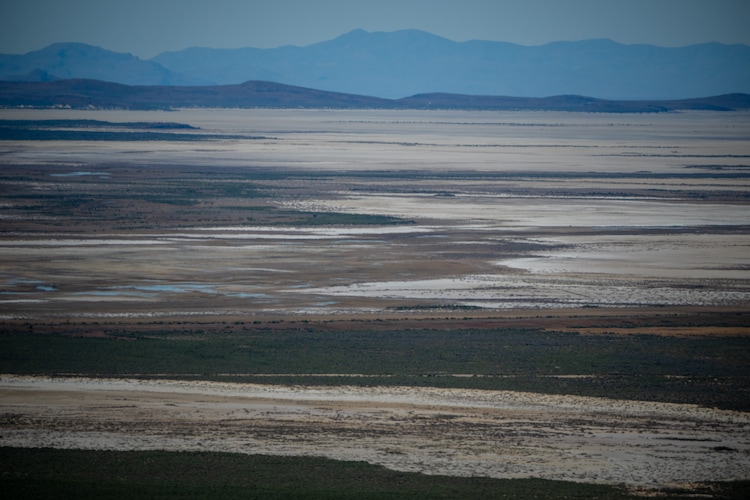
(Trent Nelson | The Salt Lake Tribune) The north shore of the Great Salt Lake at Hansel Valley on Friday, May 1, 2026.
The simplest solution is air-cooling the water, but that’s difficult during the summer in the high desert. Davies estimates it would take around 400 acres of industrial-scale fans “blowing full tilt” to do the job. That adds to the energy demands and noise pollution.
The cheapest solution that would likely appeal to investors focused on maximizing profits is to pipe the hot water underground and use the aquifer beneath Hansel Valley to cool it.
“But again, it’s a radical amount of heat,” Davies said. “I don’t know what the ecological implications are, but I’m quite certain they’re extreme.”
The neighboring Great Salt Lake will likely hit another record low after a dismal snowpack followed by unprecedented spring heat.
“When I think about what’s going to lead to intergenerational prosperity in Utah, it is not a data center, it’s the beautify of our landscapes,” said Abbott, who also founded Grow the Flow, a nonprofit dedicated to refilling the lake. “If we’ve got this behemoth dumping heat, pollution and noise into the environment, we lose a big chunk of that.”
Davies also ran calculations on the Stratos Project in units of Walmart Supercenters. Its 40,000 acre-foot print is the equivalent of around 2,000 of those centers, but its energy footprint is around 2,000 Walmarts stacked 20 deep.
And while Cox has championed nuclear generation as the low-emissions solution to meet Utah’s energy demands, which are mostly expected to spike due to the surge of data centers getting built in the state, Davies has some bad news on that front, too. The thermal heat island effect could actually increase with a nuclear reactor instead of a gas plant, since fission is less efficient.
Read a summary of the professor’s estimates below. [See link above for this.]
Last edited by GaiaGoddess; 05-17-2026 at 02:21 PM.
-
05-17-2026, 02:01 PM #3Super Moderator
- Join Date
- Feb 2024
- Posts
- 4,573
This is an outrage. Originally Posted by GaiaGoddess

From the article, "... the Stratos Project, became public last month. The project’s boosters say it will likely need 9 gigawatts of energy at full build — more than double the electricity currently used by the entire state of Utah. That energy will likely come from a pipeline carrying natural gas from Wyoming to Nevada, Oregon and California ..."
My comment:
Well, what happens to all that natural gas that Nevada, Oregon and California were going to have available to them (citizens, agriculture, etc.)?!
Plus, "... All the heat the Stratos Project emits will add up to another 7 to 8 gigawatts of energy ... of waste heat ... [making] the data complex a 16 gigawatt thermal load project, the 'equivalent of about 23 atom bombs worth of energy dumped into this local environment every single day' ..."
And, "... it would take around 3,600 of those industrial-scale generators to power Stratos — the equivalent of thousands of diesel engines idling around the clock. 'That’s going to release an enormous amount of heat,' Mitchell said."
Last edited by GaiaGoddess; 05-17-2026 at 04:46 PM.


 Reply With Quote
Similar Threads
-
WORLD IS WAKING UP! Do you remember how stupid people were, but the people are starti
By Airbornesapper07 in forum Other Topics News and IssuesReplies: 0Last Post: 07-02-2024, 10:59 PM -
And We Know: Good vs. Evil on Full Display, SC Proves We Are Waking Up! Stay Together
By Airbornesapper07 in forum Other Topics News and IssuesReplies: 0Last Post: 07-03-2023, 09:07 PM -
X22Report: The World Economic Forum Is Panicking! People Are Waking Up! The People Se
By Airbornesapper07 in forum Other Topics News and IssuesReplies: 0Last Post: 08-16-2022, 07:29 PM -
Situation Update: The People Have Spoken! People Waking Up Worldwide & Want No Tyrann
By Airbornesapper07 in forum Other Topics News and IssuesReplies: 0Last Post: 02-07-2022, 01:03 AM -
9.10.21: THEIR EVIL PLANS ARE WAKING UP THE MASSES! IT'S BACKFIRING! CONTINUE TO PRAY
By Airbornesapper07 in forum Other Topics News and IssuesReplies: 0Last Post: 09-12-2021, 03:37 PM


Muslim Rioter in France Insites to Murder the Police, “In the...
10-06-2026, 01:38 PM in General Discussion