

Results 1 to 10 of 77
 1Likes
Thread Information
Users Browsing this Thread
There are currently 1 users browsing this thread. (0 members and 1 guests)
 LinkBack URL
 About LinkBacks
Hybrid View


-
01-11-2014, 07:39 PM #1Senior Member


- Join Date
- Aug 2008
- Location
- PARADISE (San Diego)
- Posts
- 99,038
Defying Japan, Rancher Saves Fukushima’s Radioactive Cows
By MARTIN FACKLERJAN. 11, 2014
 Launch media viewer
Mr. Yoshizawa in his barn. Ko Sasaki for The New York Times
NAMIE, Japan — His may be one of the world’s more quixotic protests.
Angered by what he considers the Japanese government’s attempts to sweep away the inconvenient truths of the Fukushima nuclear disaster, Masami Yoshizawa has moved back to his ranch in the radioactive no-man’s land surrounding the devastated plant. He has no neighbors, but plenty of company: hundreds of abandoned cows he has vowed to protect from the government’s kill order.
A large bulldozer — meant to keep out agricultural officials — stands at the entrance to the newly renamed Ranch of Hope like a silent sentinel, guarding a driveway lined with bleached cattle bones and handwritten protest signs.
“Let the Cows of Hope Live!” says one. Another, written on a yellow-painted cow skull, declares: “Nuclear Rebellion!” Inside the now overcrowded ranch, bellowing cows spill from the overflowing cattle sheds into the well-worn pasture, and even trample the yard of the warmly lit farmhouse.
“These cows are living testimony to the human folly here in Fukushima,” said Mr. Yoshizawa, 59, a gruff but eloquent man with a history of protest against his government. “The government wants to kill them because it wants to erase what happened here, and lure Japan back to its pre-accident nuclear status quo. I am not going to let them.”
 Launch media viewer
At Masami Yoshizawa’s newly renamed Ranch of Hope, which is in the evacuation zone created by the 2011 disaster at Fukushima Daiichi nuclear plant. Mr. Yoshizawa returned to take care of the abandoned cows on his own and other ranches in the area. Ko Sasaki for The New York Times
Mr. Yoshizawa is no sentimentalist — before the disaster, he raised cows for slaughter. But he says there is a difference between killing cows for food and killing them because, in their contaminated state, they are no longer useful. He believes the cows on his ranch, abandoned by him and other fleeing farmers after the accident, are as much victims as the 83,000 humans forced to abandon their homes and live outside the evacuation zone for two and a half years.
He is worried about his health. A dosage meter near the ranch house reads the equivalent of about 1.5 times the government-set level for evacuation. But he is more fearful that the country will forget about the triple meltdowns at the plant as Japan’s economy shows signs of long-awaited recovery and Tokyo excitedly prepares for the 2020 Olympics — suggesting his protest is as least as much a political statement, as a humanitarian one.
“If authorities say kill the cows,” he said, “then I resolved to do the opposite by saving them.”
The cows at the Ranch of Hope are what is left of a once-thriving beef industry in the towns around the plant.
Entire herds died of starvation in the weeks after the residents left. The cows that survived escaped their ranches to forage for food among the empty homes and streets, where they became traffic hazards for trucks shuttling workers and supplies to and from the stricken plant. Proclaiming the animals “walking accident debris,” officials from the Ministry of Agriculture ordered them to be rounded up and slaughtered, their bodies buried or burned along with other radioactive waste.
Outraged, Mr. Yoshizawa began returning to his ranch soon after to feed the remnants of the herd he had been tending. He eventually decided to return full time to turn the ranch into a haven for all of the area’s abandoned cows. Of the approximately 360 cows at his 80-acre spread, more than half are ones that others left behind.
Although he describes his protest in mainly political terms, his explanation for returning despite the possible danger is tinged with a hint of emotion. He describes his horror on visiting abandoned farms where he found rows of dead cows, their heads fallen into food troughs where they had waited to be fed. In one barn, a newborn calf hoarsely bawled next to its dead mother. He said his spur-of-the-moment decision to save the calf, which he named Ichigo, or Strawberry, was his inspiration for trying to save the others left behind.
He still searches the evacuation zone for the often emaciated survivors, which he often has to pull by their ears to get them to follow him home. He tries to dodge police roadblocks; it is technically illegal for anyone to live inside the evacuation zone. Nonetheless, he has been caught a half-dozen times and forced to sign prewritten statements of apology for entering the zone. He has done so, but only after crossing out the promises not to do it again.
Mr. Yoshizawa is no stranger to challenging authority, having protested against nuclear power before. But he says he felt particularly bitter after the Fukushima accident, which he fears could permanently ruin the ranch that he inherited from his father.
It does not help that his town, Namie, felt especially deceived by its leaders. After he heard the explosions at the plant, whose smokestacks and cranes are visible from his kitchen, he and many other townspeople ended up fleeing into the radioactive plume because the government did not disclose crucial information about the accident.
“I needed to find a new philosophy to keep on living,” said Mr. Yoshizawa, who is unmarried and lives alone on the ranch. “Then I realized, why is Japan being so meek in accepting what authorities are telling them? I decided to become the resistance.”
On a recent cold morning, Mr. Yoshizawa used a small bulldozer to carry bales of yellow rice stalks to feed the cows, about two to three times the number that he says his ranch can sustainably support. The cows, mostly a breed known as Japanese Black prized for its marbled wagyu-style beef, hungrily mooed as they jostled one another to get a mouthful.
Mr. Yoshizawa says one fear is running out of feed. With the oversized herd having already grazed his pastureland to stubble, he now relies on contributions of feed and money. Another worry is what living amid the contamination is doing to the cows, and to him.
A checkup soon after the accident showed high levels of radioactive cesium in his body, though he said the number had decreased over the last two years. He tries to keep his contamination as low as possible by using filtered water and buying food on trips out of the area.
The cows, however, are constantly ingesting radioactive materials that remain in the soil and grass; since most of the donated feed he receives is from the region, it, too, is contaminated.
Ten of the cows have developed small white spots on their heads and flanks that he thinks are a result of exposure to radiation. Experts said they had never seen such spots before, but they said other causes were also possible, including a fungal infection from the overcrowding.
Mr. Yoshizawa has attracted a small following of supporters, but has his critics, too, who say he is keeping the animals alive in less than humane conditions in order to make a political point.
“Looking at the over-concentration of animals, I personally don’t think this is very humanitarian,” said Manabu Fukumoto, a pathologist at the Institute of Development, Aging and Cancer at Tohoku University who studied the white spots.
Mr. Yoshizawa notes wryly that the cows are living much longer than they would have if they had been led off to slaughter.
For now, the local authorities have come up with a very Japanese solution to Mr. Yoshizawa’s defiance: turning a blind eye. Town officials in Namie deny knowledge of him or anyone else living inside the evacuation zone — despite the fact that they have restored electricity and telephone service to the ranch.
Mr. Yoshizawa does not make himself easy to ignore. He continues to appear in Japanese news media, maintains a blog with a live webcam of the ranch and holds occasional one-man protests in front of the headquarters of the plant’s operator, Tokyo Electric Power Co.
“Not all Japanese are passive,” Mr. Yoshizawa said. “My cows and I will show that there is still a chance for change.”
http://www.nytimes.com/2014/01/12/wo...s.html?hp&_r=0NO AMNESTY
Don't reward the criminal actions of millions of illegal aliens by giving them citizenship.
Sign in and post comments here.
Please support our fight against illegal immigration by joining ALIPAC's email alerts here https://eepurl.com/cktGTn
-
01-12-2014, 01:51 AM #2Senior Member
- Join Date
- Aug 2008
- Location
- PARADISE (San Diego)
- Posts
- 99,038
This invited post is authored by Chris Mah, a Smithsonian National Museum of Natural History researcher. Chris is one of the world’s leading experts on starfish and echinoderms in general. He created and writes for Echinoblog, a one stop reading place for everything echinoderm. You can find him at Twitter at @echinoblog.
In September 2013, I broke the story about a mass sunflower starfish (Pycnopodia helianthoides) die-off in British Columbia. This developed into further accounts of Starfish Wasting ‘disease’ which is now recognized as “Starfish Wasting Syndrome” (because the nature of the causative agent is unknown) and since been reported from California and now Washington state.
The “disease” causes white lesions and tissue necrosis (death and decomposition), eventually resulting in arm loss and overall body collapse (the “wasting” part of the disease’s name). The disease has been observed in multiple starfish species but seems to have been noticed most heavily in sunflower starfish (Pycnopodia helianthoides) and ochre stars (Pisaster ochraceus).
Some have become concerned that there is a direct influence from Fukushima. Much of this seems unlikely. Deep-Sea News (among many other sources) have presented excellent reviews of data that can help the rational person make sense from some of the confusing deluge of misinformation.
Here, I continue this theme. Addressing a concern that has been brought up by many. But really, three simple observations discount any direct relationship….
- Starfish Wasting Disease/Syndrome (SWD/SWS) pre-Dates Fukushima by 3 to 15 years. This is probably the most self-evident of reasons. One of the earliest accounts of starfish wasting disease was recorded from Southern California (Channel Islands) in 1997 (pdf). The account of SWS in British Columbia was first documented by Bates et al. in 2009, and their data was collected in 2008. Fukushima? March 2011.
- Starfish Wasting Syndrome Occurs on the East Coast as well as the Pacific. Many of the accounts alleging a Fukushima connection to Starfish Wasting Syndrome forget that there are also accounts of SWS on the east coast of the United States affecting the asteriid Asterias rubens. There is no evidence (or apparent mechanism) for Fukushima radiation to have reached the east coast and therefore the Fukushima idea is again not supported.
- No other life in these regions seems to have been affected. If we watch the original British Columbia Pycnopodia die-off videos, and the later Washington state die-off vidoes, one cannot help but notice that other than the starfish, EVERYTHING else remains alive. Fish. Seaweed, encrusting animals. etc.
the WA video
A survey of Washington state released recently. Note the sea anemones, algae, and crabs. All in apparent good health.
Viewing ANY of the pictures or videos from other accounts shows that only the sea stars are affected. If there were waves of Fukushima radiation pouring onto the coast-and “melting” all the starfish as some folks would suggest, EVERYTHING would be dead. Not just the sea stars. Note also that all the divers involved in these surveys have reported NO ill effects.
Unfortunately, we have no data on the actual agent that causes SWS. Within the grand realm of possibility there is always a (slim?) possibility there is a connection with Fukushima, but nothing we’ve seen gives us any reason to think that.
More Likely Reasons?
Speculation has suggested bacterial or viral sources. But invertebrate diseases can be complicated. The disease only seems to affect sea stars. Nothing else. This implies a biological cause with a very specific relationship. Possibly a bacteria or virus. But just as possibly some other type of infection resulting from a protist or fungi?
It also seems possible that it could be a disease similar to coral bleaching, where subcuticular bacteria of sea stars (as documented here) might be affected adversely. Or perhaps a combination? In conjunction with some environmental change, such as water temperature? The original series of papers by Amanda Bates indicated there was an association of the diseae with water temperature.
Our study of this event has just begun. Ongoing data collection and research have started. We shall see where it takes us…
Share the post "Three Reasons Why Fukushima Radiation Has Nothing to Do with Starfish Wasting Syndrome"
http://deepseanews.com/2013/12/three...ting-syndrome/Last edited by JohnDoe2; 01-12-2014 at 01:58 AM.
NO AMNESTY
Don't reward the criminal actions of millions of illegal aliens by giving them citizenship.
Sign in and post comments here.
Please support our fight against illegal immigration by joining ALIPAC's email alerts here https://eepurl.com/cktGTn


 Reply With Quote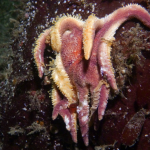


Mamdani Thought "Banning Sewer Repairs" Worked UNTIL FLOODS...
07-21-2026, 09:03 PM in Videos about Illegal Immigration, refugee programs, globalism, & socialism