

Results 31 to 40 of 49
 18Likes
Thread Information
Users Browsing this Thread
There are currently 1 users browsing this thread. (0 members and 1 guests)
 LinkBack URL
 About LinkBacks
-
11-28-2018, 07:39 PM #31Senior Member


- Join Date
- Aug 2018
- Posts
- 97,953
Youtube Video https://www.youtube.com/watch?v=j2cfDcHpptU
U.S. Returns To the Moon – and Soon!, 2464
680 views
78 8 Share
The Still Report
Published on Nov 28, 2018
Synopsis: Good afternoon, I’m still reporting on – Space – the final frontier. Late last night, NASA announced that the United States will be returning to the moon and very, very soon. Although the exact date and details won’t be known until a formal presser held at NASA headquarters tomorrow starting at 2 pm. NASA will stream the briefing live via NASA TV which anyone can watch on YouTube by clicking on the live link in the Description box below or going to: https://www.youtube.com/redirect?eve...tv%2F%23public.
Here’s what we know so far. According to a tweet by NASA administrator Jim Bridenstine the new moon missions will occur “sooner than you think.” Apparently NASA has been working on man returning to the moon for many years, but this time as a public/private partnership with major technology companies already working in the field.If you're gonna fight, fight like you're the third monkey on the ramp to Noah's Ark... and brother its starting to rain. Join our efforts to Secure America's Borders and End Illegal Immigration by Joining ALIPAC's E-Mail Alerts network (CLICK HERE)
-
12-22-2018, 10:13 PM #32Senior Member
- Join Date
- Aug 2018
- Posts
- 97,953
Asteroid as Powerful as 50 Megaton Nuke May Slam Into Earth in 2023 – NASA
11/27/2018
According to the newspaper Express, a relatively large asteroid that might someday be headed directly for Planet Earth would release a massive impact force 1,500 times that of the Hiroshima and Nagasaki atomic bombs combined. The British daily cites NASA sources as claiming that the asteroid, almost 700 feet across, might have an astounding 62 diverse potential impact routes with Earth with each of them possibly able to set the asteroid on a collision course with us over the next 100 years.

According to NASA’s Jet Propulsion Laboratory (JPL), the asteroid 2018 LF16 was last pinpointed on 16 June with calculations revealing that the space rock could smash into Earth sometime before 2117. Its first such frightening encounter will come just five years from now, on 8 August, 2023 with other close impact dates being 3 August, 2024 and 1 August, 2025.
What’s even worse is that the asteroid is presently racing through space at a speed of over 33,844 miles an hour.
The Express wrote: “A space rock this big is about twice as tall as Big Ben’s clock tower in London, twice the height of the Statue of Liberty in New York, and is four times as tall as Nelson’s Column in Trafalgar Square,”

This does not certainly mean, however, that asteroid 2018 LF16 is 100 percent certain to crash into Earth. NASA scientists estimate that the asteroid has a one in 30 million chance of having an impact with planet and has a 99.9999967 percent chance of missing us in the occasion it does stroll too close to home.
If the asteroid this big hits Earth than it would create impact force equal to that of the 57-megaton Tsar Bomb the Soviet Union exploded in 1961.
The BBC wrote: “That is more than 1,500 times that of the Hiroshima and Nagasaki bombs combined, and 10 times more powerful than all the munitions expended during World War II,”.
Fortunately for mankind, asteroids hardly stroll close to Earth, with the European Space Agency saying that asteroids greater than 330 feet in diameter frequently cross paths with Earth only once every 1,000 years.
http://www.physics-astronomy.com/201...c#.XB7uxM17nIU
If you're gonna fight, fight like you're the third monkey on the ramp to Noah's Ark... and brother its starting to rain. Join our efforts to Secure America's Borders and End Illegal Immigration by Joining ALIPAC's E-Mail Alerts network (CLICK HERE)
-
01-01-2019, 10:26 PM #33Senior Member
- Join Date
- Aug 2018
- Posts
- 97,953
If you're gonna fight, fight like you're the third monkey on the ramp to Noah's Ark... and brother its starting to rain. Join our efforts to Secure America's Borders and End Illegal Immigration by Joining ALIPAC's E-Mail Alerts network (CLICK HERE)
-
01-11-2019, 03:26 AM #34Senior Member
- Join Date
- Aug 2018
- Posts
- 97,953
Youtube Video https://www.youtube.com/watch?v=mjsaEIc6vdYIf you're gonna fight, fight like you're the third monkey on the ramp to Noah's Ark... and brother its starting to rain. Join our efforts to Secure America's Borders and End Illegal Immigration by Joining ALIPAC's E-Mail Alerts network (CLICK HERE)
-
04-01-2019, 01:30 AM #35Senior Member
- Join Date
- Aug 2018
- Posts
- 97,953
Dirt Broke America is at it again; spending Imaginary money as fast as they can print it
The State Of NASA's Budget As Pence Seeks New Moon Landing
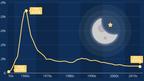
Pence did not provide any information as to how NASA will achieve another moon landing by 2024... For starters, the agency will need a much bigger budget.Last edited by Airbornesapper07; 05-03-2019 at 04:03 PM.
If you're gonna fight, fight like you're the third monkey on the ramp to Noah's Ark... and brother its starting to rain. Join our efforts to Secure America's Borders and End Illegal Immigration by Joining ALIPAC's E-Mail Alerts network (CLICK HERE)
-
05-03-2019, 04:03 PM #36Senior Member
- Join Date
- Aug 2018
- Posts
- 97,953
NASA Prepares For "God Of Chaos" Asteroid To Arrive

...its official name is 99942 Apophis. It is a 1,110-foot-wide asteroid named after the Egyptian god of chaos. It will fly as close to the Earth as some of the orbiting spacecraft panicking scientists.
If you're gonna fight, fight like you're the third monkey on the ramp to Noah's Ark... and brother its starting to rain. Join our efforts to Secure America's Borders and End Illegal Immigration by Joining ALIPAC's E-Mail Alerts network (CLICK HERE)
-
06-02-2019, 04:19 PM #37Senior Member
- Join Date
- Aug 2018
- Posts
- 97,953
YouTube Video https://www.youtube.com/watch?v=mhEgCCJLN3I
UFOs Are Real & We Have Debris, 2686
15,596 views
1.4K
92 Share
The Still Report
Published on Jun 1, 2019If you're gonna fight, fight like you're the third monkey on the ramp to Noah's Ark... and brother its starting to rain. Join our efforts to Secure America's Borders and End Illegal Immigration by Joining ALIPAC's E-Mail Alerts network (CLICK HERE)
-
06-08-2019, 09:11 PM #38Senior Member
- Join Date
- Aug 2018
- Posts
- 97,953
 If you're gonna fight, fight like you're the third monkey on the ramp to Noah's Ark... and brother its starting to rain. Join our efforts to Secure America's Borders and End Illegal Immigration by Joining ALIPAC's E-Mail Alerts network (CLICK HERE)
-
06-16-2019, 12:54 PM #39Senior Member
- Join Date
- Aug 2018
- Posts
- 97,953
If you want to be an astronaut, you may need a good sense of humor: NASA is looking for jokers to join Mars crewAccording to an anthropologist from University of Florida, having a “class clown” on long space missions like this one is essential for defusing tension and building social bridges.
Saturday, June 15, 2019 by: Ethan Huff
1,650 Views

(Natural News) Are you a funny guy or gal who’d love the opportunity to travel to space? If so, then the National Aeronautics and Space Administration (NASA) wants to hear from you.
The federal space agency is reportedly looking for a jokester to accompany astronauts on a mission to Mars that’s set to take place sometime in the 2030s, the purpose being to help keep morale high on the planned, two-year journey.
“These are people that have the ability to pull everyone together, bridge gaps when tensions appear and really boost morale,” Jeffrey Johnson, who’s working with NASA to find the best candidates for this job, is quoted as saying.
“When you’re living with others in a confined space for a long period of time, such as on a mission to Mars, tensions are likely to fray.”
Having practical jokers accompany long-term workers in Antarctica has already proven successful
Johnson came up with the idea after studying long-term workers in Antarctica, another isolated group that he found did all-around better when a joker was present to lighten the mood.
“These roles are informal,” Johnson says. “They emerge within the group. But the interesting thing is that if you have the right combination the group does very well. And if you don’t, the group does very badly.”
This is especially true out in space, where communication delays back to earth can be up to 20 minutes long, not to mention the fact that living in space is much different than living on earth – including the fact that there’s little-to-no access to proper health care in space.
“It’s vital you have somebody who can help everyone get along, so they can do their jobs and get there and back safely,” Johnson contends. “It’s mission critical.”
If you’re a scientist and engineer who believes you’re capable of functioning well in isolation far away from earth for years on end, get in touch with NASA
Johnson made the case for having a class clown on space missions during the recent annual conference of the American Association for the Advancement of Science, entitled: “Building a Winning Team for Missions to Mars.”
In Johnson’s view, groups and teams, regardless of whether or not they’re in space, always work better when they have somebody “who takes on the role of class clown.”
“We can all think of the person at work who fulfills this role, who makes us laugh and makes the job more enjoyable,” he says. “People like being around them.”
But it’s not enough to just be funny, Johnson says. The right candidate, at least for NASA’s purposes, will also need to be a proper scientist and engineer, and someone who’s capable of passing a “rigorous training regimen.”
It’s also important for the right candidate to be comfortable living in isolation, far away from earth for years on end with just a few other people. In other words, socialites who can’t live without earthly comforts and who always need to be around other people need not apply.
“There are people who are loving and laughable and jovial and endearing, and therefore bring people together. But others who are cruel,” says Johnson.
“When I worked at the South Pole station there was lots of cruel behaviour. There’s a difference between button pushing and being funny. It’s better to become a mascot – get taken in by the group and loved.”
For more news about what’s going on in space these days, be sure to check out Space.news.
You can also learn more about the future of space tourism at SpaceTourism.news.
Sources for this article include:
DailyMail.co.uk
Futurism.com
NaturalNews.com
https://www.naturalnews.com/2019-06-...umor-nasa.htmlIf you're gonna fight, fight like you're the third monkey on the ramp to Noah's Ark... and brother its starting to rain. Join our efforts to Secure America's Borders and End Illegal Immigration by Joining ALIPAC's E-Mail Alerts network (CLICK HERE)
-
06-21-2019, 10:28 PM #40Senior Member
- Join Date
- Aug 2018
- Posts
- 97,953
If you're gonna fight, fight like you're the third monkey on the ramp to Noah's Ark... and brother its starting to rain. Join our efforts to Secure America's Borders and End Illegal Immigration by Joining ALIPAC's E-Mail Alerts network (CLICK HERE)


 Reply With Quote

Similar Threads
-
Trump Reveals Policy Goals: "Building That Wall", End "War On Coal", Repeal Obamacare
By Jean in forum illegal immigration News Stories & ReportsReplies: 0Last Post: 11-10-2016, 05:54 PM -
Fox News Cites Birther To Claim NASA "Faked" Global Warming
By JohnDoe2 in forum Other Topics News and IssuesReplies: 3Last Post: 06-25-2014, 05:02 PM -
Dianne Feinstein: ‘It’s Legal to Hunt Humans In the US’ <--"Thoughts of a Crackhead"
By AirborneSapper7 in forum Other Topics News and IssuesReplies: 5Last Post: 04-01-2013, 12:04 PM -
Humans Lose, Robots Win in New Defense Budget -"terminator sky net" is here
By AirborneSapper7 in forum Other Topics News and IssuesReplies: 1Last Post: 01-27-2012, 09:47 PM -
TUSD appeal to save "Ethnic Studies" reveals cult
By Dixie in forum illegal immigration News Stories & ReportsReplies: 2Last Post: 08-22-2011, 04:42 PM


Trump at Rally: Taking out LA is a small price to pay
10-06-2026, 02:59 PM in General Discussion