

Results 1 to 2 of 2
Thread Information
Users Browsing this Thread
There are currently 1 users browsing this thread. (0 members and 1 guests)
 LinkBack URL
 About LinkBacks
Hybrid View


-
07-08-2025, 03:56 PM #1Senior Member


- Join Date
- Aug 2018
- Posts
- 92,081
Trump slaps 25% tariffs on key Asian allies Japan and South Korea | 07/08/2025
Trump slaps 25% tariffs on key Asian allies Japan and South Korea
07/08/2025 // Cassie B. // 320 Views
Tags: big government, China, dollar demise, Globalism, government debt, Inflation, Japan, market crash, money supply, national security, South Korea, supply chain, tariffs, Trump
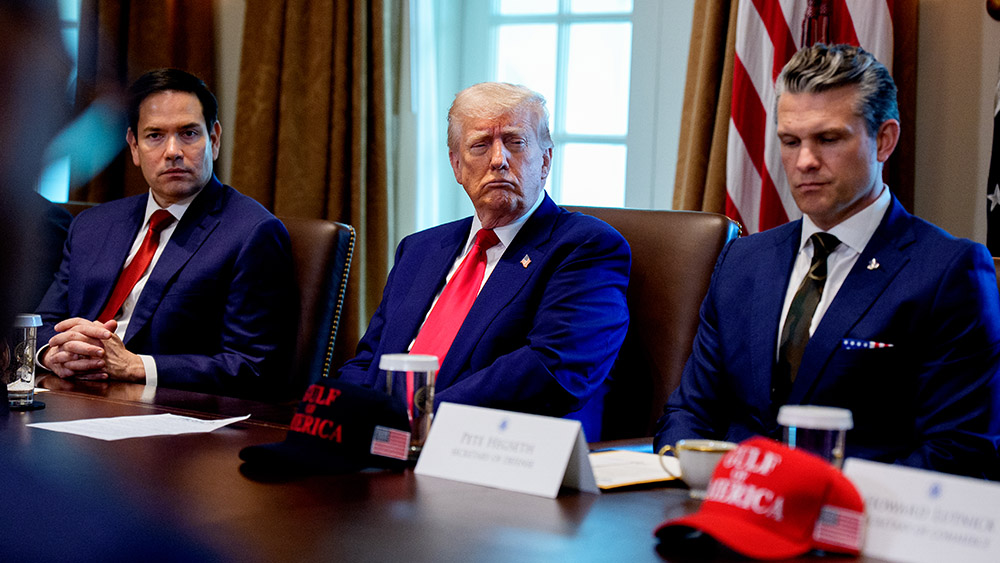
- Trump imposes 25% tariffs on Japan and South Korea, effective August 1, citing unfair trade imbalances and warning of hikes if allies retaliate.
- The tariffs, part of Trump’s broader trade strategy, also target South Africa, Bangladesh, Laos, and Myanmar at rates up to 40%.
- Japan and South Korea express shock and dismay, pledging to negotiate while experts warn tariffs could strain key alliances.
- Markets react negatively, with the S&P 500 falling amid concerns over supply chain disruptions and higher consumer costs.
- Critics argue tariffs risk alienating allies crucial to countering China, while legal challenges and economic skepticism cloud the policy’s effectiveness.
President Donald Trump announced steep new tariffs on imports from key U.S. allies Japan and South Korea, imposing a 25% levy set to take effect August 1. The move, revealed in letters posted to Truth Social on Monday, targets what Trump called "non-reciprocal" trade relationships, warning that retaliatory measures could trigger even higher rates. The decision has drawn sharp criticism from economists and allies alike, raising fears of economic instability and strained diplomatic ties.
The tariffs, part of Trump’s broader "Liberation Day" package launched in April, also hit other nations with varying rates—30% on South Africa, 35% on Bangladesh, and 40% on Laos and Myanmar—signaling an aggressive push to reshape global trade dynamics. While Trump framed the levies as necessary to correct unfair imbalances, opponents argue they risk alienating allies, inflate domestic prices, and jeopardize economic growth.
A hardline stance with little room for compromise
Trump’s letters to Japanese Prime Minister Shigeru Ishiba and South Korean President Lee Jae-myung struck a characteristically combative tone, insisting the U.S. would no longer tolerate lopsided deals. "We have decided to move forward with you, but only with more balanced, and fair, TRADE," he wrote, emphasizing the "extraordinary Economy of the United States" as leverage. The letters included a thinly veiled threat: Any retaliatory tariffs would be met with additional U.S. hikes.
The announcement blindsided officials in Tokyo and Seoul, both of which had hoped to avoid such measures. South Korea’s Trade Ministry pledged to accelerate negotiations, while Prime Minister Ishiba called the decision "extremely regrettable" but noted the rate was lower than earlier threats of 35%. Experts warn the tariffs risk undermining long-standing alliances at a time when unity against China’s economic influence is critical.
Market jitters and global fallout
Wall Street reacted swiftly to the news, with the S&P 500 dropping 0.8% amid fears of prolonged trade disruptions. While Asian markets showed resilience, analysts cautioned that the tariffs could disrupt supply chains and raise costs for U.S. consumers. .
The White House defended the move as part of a "tailor-made" strategy, with press secretary Karoline Leavitt claiming Trump was "focused on creating fair trade plans for every country." Yet critics like Wendy Cutler, a former U.S. trade negotiator, argued the tariffs ignore Japan and South Korea’s strategic value: "Both have been close partners on economic security matters," she said, citing cooperation on semiconductors and critical minerals.
Trump’s reliance on emergency economic powers to impose the tariffs faces ongoing legal battles, including a May court ruling that deemed his authority exceeded constitutional limits. Meanwhile, the policy’s financial rationale remains contested. While Trump has hinted tariffs could offset tax cuts signed July 4, experts warn the costs will ultimately fall on consumers through higher prices.
The three-week delay before implementation offers minimal time for meaningful negotiations. The administration’s track record adds skepticism—despite promises of "90 deals in 90 days," only two agreements (with the UK and Vietnam) have materialized since April.
South Africa’s government rejected Trump’s 30% tariff as unjustified, while Thailand expressed confidence it could secure better terms. The EU, notably absent from the tariff letters, remains locked in talks with the U.S., although Brussels has struggled to reconcile internal divisions over how aggressively to confront Trump.
As the August 1 deadline looms, the fallout extends beyond economics. Trump’s threat of additional 10% tariffs on BRICS nations, including Brazil and India, further complicates the landscape, potentially alienating emerging markets. With China warning of retaliation and supply chain disruptions looming, the administration’s gamble could redefine global trade at a moment of mounting volatility.
Uncertain returns
Trump’s tariff offensive marks a high-risk bid to force concessions, but the collateral damage may outweigh the gains. By targeting allies integral to countering China, the policy risks fragmenting the very partnerships needed to maintain U.S. economic dominance. As markets brace for turbulence and businesses face rising costs, the coming weeks will test whether Trump’s hardline tactics can deliver lasting victories or deepen the fractures they seek to mend.
Sources for this article include:
RT.com
APNews.com
Reuters.com
Trump slaps 25% tariffs on key Asian allies Japan and South Korea – NaturalNews.com
If you're gonna fight, fight like you're the third monkey on the ramp to Noah's Ark... and brother its starting to rain. Join our efforts to Secure America's Borders and End Illegal Immigration by Joining ALIPAC's E-Mail Alerts network (CLICK HERE)
-
07-08-2025, 07:29 PM #2Senior Member
- Join Date
- Aug 2018
- Posts
- 92,081
Trump unveils 25% tariffs on Japan and South Korea amid broader trade policy shift
07/08/2025 // Willow Tohi // 20 Views
Tags: big government, Bubble, economic riot, economy, finance riot, Globalism, government debt, Inflation, Japan, market crash, money supply, risk, South Korea, supply chain, tariffs, trade wars, Trump, White House
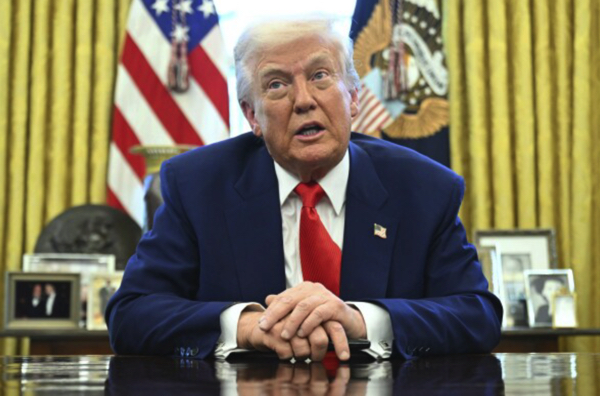
- Trump imposes 25% tariffs on Japan and South Korea, with varying rates (up to 40%) on 12 additional countries, effective August 1.
- These tariffs aim to tackle record $918 billion U.S. trade deficit through “reciprocal” tariffs, framed as national security measures.
- The Trump administration faces judicial backlash over tariff legality, with courts previously ruling tariffs exceeded presidential powers.
- Stocks dip, Treasury yields rise and Asian currencies decline as investors brace for policy uncertainty.
- Trump delays tariffs until August 1, offers flexibility to nations willing to reach bilateral deals.
President Donald Trump on July 7 announced sweeping tariffs ranging from 25% to 40% on key U.S. allies and trading partners, including Japan and South Korea, as part of a unilateral strategy to address chronic trade deficits and enhance national security. The tariffs, set to take effect August 1, target 14 nations — marking a dramatic escalation in Trump’s mercantilist approach to global trade. The administration framed the measures as tools to protect American industries while pressuring foreign governments to negotiate favorable terms. However, economists and legal experts warned of recession risks, geopolitical fallout and unresolved legal battles questioning the basis for the tariffs.
Tariff rates and geopolitical calculations
The tariffs, announced via letters to world leaders on Truth Social, apply to Japan (25 percent), South Korea (25 percent), South Africa (30 percent), Malaysia (25 percent), and others like Laos (40 percent) and Myanmar (40 percent). The White House delayed implementation until August 1, granting countries three additional weeks to negotiate deals, though Trump emphasized flexibility. “If for any reason you decide to raise your tariffs, we’ll add those increases to our rates,” he wrote to Japanese Prime Minister Shigeru Ishiba and South Korean President Lee Jae-myung.
Trade Secretary Karoline Leavitt described the tariffs as “tailor-made” plans to prioritize U.S. economic interests, though critics called the abrupt surcharges reckless. Wendy Cutler of the Asia Society Policy Institute argued the move jeopardized alliances with nations like Japan, a key partner in semiconductors and defense. Meanwhile, the president threatened an extra 10% levy on countries aligning with the BRICS bloc, targeting Beijing’s influence.
Legal uncertainty clouds tariff implementation
The tariffs face mounting legal hurdles after a federal court ruled in May that Trump’s emergency powers under the International Emergency Economic Powers Act (IEEPA) did not justify unilateral tariffs. The administration is appealing the decision, relying instead on Section 232 authority, which permits tariffs deemed threats to national security.
Congressional analysts noted that Congress — not the president — traditionally holds tariffs’ legislative authority, casting doubt on the longevity of Trump’s strategy. A separate legal challenge looms as the U.S. Court of International Trade prepares to review the case July 31.
Markets react with skepticism as consumers bear costs
Wall Street markets sputtered following the announcement, with the S&P 500 falling 0.8 percent and Treasury yields rising to near 4.4 percent. Asian currencies including the Japanese yen and South Korean won slid over 1 percent against the U.S. dollar. Analysts projected tariffs would pressure U.S. businesses, with importer costs trickling down to consumers.
National Retail Federation Vice President Jonathan Gold condemned the tariffs as a “tax on American businesses,” while economists warned of slowed growth. Bloomberg estimates tariffs could lift average import duties to 20%, stoking inflation. Federal Reserve chair Jerome Powell resisted calls to cut rates, citing ongoing inflation risks.
Trump’s continuing trade-era policies
Past precedents underscore Trump’s consistency in applying tariffs as a negotiating tool. During his first term, he imposed 2018 tariffs on South Korea and renegotiated a 2019 deal with Japan, both framed as “wins” for farmers and manufacturers. Despite these efforts, U.S.-Japan trade deficits persisted, reaching $69 billion in 2024.
The current strategy mirrors this approach, though on a grander scale. Trump has secured limited deals — like a U.K. trade framework and a China truce — while pressuring holdouts. The administration claims tariffs could generate $2.8 trillion in savings over a decade, offsetting tax cuts and reinvestment in U.S. industries.
A crossroads for U.S. trade policy
As tariffs loom, Trump’s administration faces a precarious balancing act: leveraging hardline trade measures to appease voters while avoiding retaliation from allies. Legal battles, market volatility and geopolitical strain loom large. With negotiations ongoing and August deadlines approaching, the world watches how this high-stakes experiment reshapes global commerce — or unravels.
The public’s and markets’ patience may hinge on whether these tariffs deliver promised economic gains or deepen divisions. As Trump puts it, the plan is “the best deals possible” for Americans — a claim critics counter with one question: At what cost?
Sources for this article include:
TheEpochTimes.com
APnews.com
Bloomberg.com
Trump unveils 25% tariffs on Japan and South Korea amid broader trade policy shift – NaturalNews.com
If you're gonna fight, fight like you're the third monkey on the ramp to Noah's Ark... and brother its starting to rain. Join our efforts to Secure America's Borders and End Illegal Immigration by Joining ALIPAC's E-Mail Alerts network (CLICK HERE)


 Reply With Quote
Similar Threads
-
China, Japan, South Korea set aside disputes for summit amid Trump trade threats
By Judy in forum Other Topics News and IssuesReplies: 0Last Post: 05-08-2018, 04:33 AM -
Trump Gets First Major Trade Deal as South Korea Looks to Avoid Tariffs
By artist in forum Other Topics News and IssuesReplies: 1Last Post: 03-26-2018, 10:32 PM -
Trump agrees to meet with North Korea's Kim Jong Un by May: South Korea
By Judy in forum Other Topics News and IssuesReplies: 2Last Post: 03-08-2018, 11:52 PM -
Trump Slaps Tariffs On Imported Solar Panels And Washing Machines
By Judy in forum Other Topics News and IssuesReplies: 2Last Post: 01-25-2018, 10:13 PM -
Trump’s Options for North Korea Include Placing Nukes in South Korea
By Judy in forum General DiscussionReplies: 1Last Post: 04-07-2017, 06:29 PM


President Donald Trump Floats Making Venezuela The 51st State
05-11-2026, 11:58 PM in General Discussion