

Results 1 to 7 of 7
 1Likes
Thread Information
Users Browsing this Thread
There are currently 1 users browsing this thread. (0 members and 1 guests)
 LinkBack URL
 About LinkBacks
-
05-01-2025, 09:31 PM #1Senior Member


- Join Date
- Aug 2018
- Posts
- 98,207
 Updates: Pakistan Accuses India of Planning Imminent Attack
Pakistan accuses India of planning imminent attack as U.S. races to prevent nuclear crisis
05/01/2025 // Cassie B. // 560 Views
Tags: chaos, geopolitics, Globalism, India, Marco Rubio, military tech, national security, nuclear war, Pakistan, violence, weapons tech, WWIII

- India and Pakistan are on the brink of a major military conflict, with Pakistan claiming it has intelligence of an imminent Indian strike within 24 to 36 hours.
- Tensions escalated after a deadly Kashmir attack, which India blames on Pakistan, prompting Modi to authorize military retaliation.
- Pakistan warns of a "decisive response" to any Indian aggression, while India is accusing Pakistan of staging a false flag operation.
- The U.S. is urgently mediating, with Rubio urging de-escalation as both nations engage in military posturing and cross-border shelling.
- The standoff risks spurring a regional war, with global powers fearing nuclear escalation and scrambling to prevent a catastrophe.
The already volatile relationship between nuclear-armed rivals India and Pakistan has reached a dangerous tipping point, with Islamabad claiming it possesses "credible intelligence" that New Delhi plans a military strike within 24 to 36 hours.
The accusation follows a deadly terrorist attack in India-administered Kashmir that killed 26 tourists, which Prime Minister Narendra Modi has blamed on Pakistan. With both nations exchanging artillery fire and closing airspace, the U.S. has launched urgent diplomatic efforts to prevent a catastrophic escalation.
Pakistan’s Information Minister Attaullah Tarar took to social media to issue a chilling warning: “Pakistan has credible intelligence that India intends to launch a military strike within the next 24 to 36 hours, using the Pahalgam incident as a false pretext.” He added, “Any act of aggression will be met with a decisive response. India will be fully responsible for any serious consequences in the region.”
The threat came after Modi granted India’s military “full operational freedom” to retaliate for the Kashmir attack, which New Delhi alleges was backed by Pakistan. Indian forces have since launched multiple anti-terror operations in Jammu and Kashmir, while Modi vowed to punish “the terrorists and their backers.” Pakistan, however, denies involvement and has accused India of staging a false flag operation in a claim dismissed by Indian officials as “baseless allegations.”
U.S. steps in amid fears of regional war
Recognizing the potential for a conflict that could draw in neighboring Iran and China, Secretary of State Marco Rubio held emergency calls with Pakistani Prime Minister Shehbaz Sharif and Indian Foreign Minister Subrahmanyam Jaishankar. The State Department urged both nations to “de-escalate tensions, re-establish direct communications, and maintain peace.” Rubio emphasized the need for Pakistan to cooperate in investigating the Kashmir attack, calling it “unconscionable.”
Sharif, meanwhile, pushed back, asking the U.S. to pressure India to “dial down the rhetoric.” The Pakistani leader reiterated his country’s willingness to participate in a neutral probe, while India’s Jaishankar demanded justice for the “perpetrators, backers, and planners” of the attack.
Military posturing and global concerns
The rhetoric between the two sides has been matched by military readiness. Pakistan’s army chief, Gen. Asim Munir, oversaw combat drills in Punjab, declaring, “Let there be no ambiguity: any military misadventure by India will be met with a swift, resolute, and notch-up response.” India, meanwhile, has suspended a critical water-sharing treaty with Pakistan and closed borders, while both sides report nightly cross-border shelling.
The U.S. faces a delicate balancing act. India is a key ally in countering China, while Pakistan remains a strategic partner despite frayed ties post-Afghanistan withdrawal. With Qatar also offering mediation, the international community is scrambling to prevent a conflict that could destabilize an already tense region.
The India-Pakistan standoff is more than a bilateral dispute; it’s a global security risk. With nuclear capabilities, historical grievances, and competing alliances, the slightest miscalculation could trigger a disaster. As Washington and other nations push for restraint, one can only hope that diplomacy will prevail before the next bomb drops.
Sources for this article include:
SHTFPlan.com
NBCNews.com
APNews.com
Pakistan accuses India of planning imminent attack as U.S. races to prevent nuclear crisis – NaturalNews.com
Last edited by GaiaGoddess; 05-06-2025 at 08:04 PM.
If you're gonna fight, fight like you're the third monkey on the ramp to Noah's Ark... and brother its starting to rain. Join our efforts to Secure America's Borders and End Illegal Immigration by Joining ALIPAC's E-Mail Alerts network (CLICK HERE)
-
05-05-2025, 09:15 PM #2Senior Member
- Join Date
- Aug 2018
- Posts
- 98,207
India cuts water flow to Pakistan in escalating Kashmir conflict, sparking nuclear tensions
05/05/2025 // Cassie B. // 210 Views
Tags: chaos, clean water watch, Collapse, Dangerous, humanitarian, India, Indus Waters Treaty, nuclear threats, Pakistan, WWIII

- India has cut water flow from the Chenab River to Pakistan, escalating tensions after a deadly Kashmir attack blamed on Pakistan.
- Pakistan warns that water diversion is an "act of war," risking broader conflict as the 1960 Indus Waters Treaty collapses.
- India claims reservoir maintenance justifies reduced water flow, but experts see it as retaliation for the Pahalgam attack.
- Pakistan threatens military and nuclear retaliation, while Iran attempts mediation amid rising regional instability.
- The crisis threatens Pakistan’s agriculture-dependent economy, with global fears of a nuclear flashpoint as diplomatic options fade.
India has taken a dramatic step in its ongoing conflict with Pakistan by restricting water flow from the Chenab River, a move that could escalate tensions between the nuclear-armed neighbors. The decision follows a deadly terrorist attack in Kashmir on April 22, which India blames on Pakistan.
With Islamabad warning that any water diversion would be considered an "act of war," the dispute threatens to spiral into a broader confrontation. The suspension of the 1960 Indus Waters Treaty—a rare diplomatic agreement that survived multiple wars—marks a dangerous new phase in the decades-long Kashmir conflict.
India’s water blockade begins
According to sources familiar with the matter, India has begun "reservoir flushing" at the Baglihar and Salal hydroelectric projects in Jammu and Kashmir, reducing water flow downstream to Pakistan by up to 90%. The process, which involves clearing sediment buildup, was initiated without notifying Pakistan in a direct violation of the Indus Waters Treaty. While India claims the move is for maintenance, experts see it as a strategic retaliation for the Pahalgam attack, which killed 26 people, mostly tourists.
Pakistan, which relies on the Indus River system for 80% of its agriculture, has warned that any attempt to divert water will be met with a military response. "Any attempt to stop or divert the flow of water belonging to Pakistan... will be considered an act of war," Islamabad stated.
The Indus Waters Treaty collapses
The 1960 treaty, brokered by the World Bank, allocated the eastern rivers (Ravi, Beas, Sutlej) to India and the western rivers (Indus, Jhelum, Chenab) to Pakistan, with limited Indian usage rights. Despite three wars, both nations upheld the agreement—until now. India’s suspension of the treaty allows it to pursue hydro projects "at free will," according to Kushvinder Vohra, a former Indian water official.
Pakistan has already threatened legal action, while India’s water minister vowed to "ensure no drop of the Indus River’s water reaches Pakistan." However, experts note that completely halting water flow is impossible under current infrastructure, as India’s dams are designed for run-of-river hydropower, not large-scale storage.
Pakistan’s nuclear threat and the regional fallout
The water dispute has heightened military tensions, with Pakistan conducting missile tests and placing its forces on high alert. Ambassador Muhammad Khalid Jamali warned that Islamabad would respond with "full spectrum of power," including nuclear weapons, if India escalates further. Meanwhile, Iran’s foreign minister arrived in Pakistan to mediate, though India has dismissed third-party involvement.
In Kashmir, residents report historically low water levels, with farmers like Bal Krishan supporting Modi’s hardline stance: "I agree with the decision to suspend the treaty and punish Pakistan." Meanwhile, Pakistan denies hosting militant camps and accuses India of fabricating threats to justify aggression.
Economic and humanitarian consequences
Pakistan’s economy, already crippled by inflation and debt, faces catastrophe if water shortages disrupt agriculture. Over 80% of its farmland depends on the Indus, and staples like wheat and cotton are at risk. India has also banned all Pakistani imports, further squeezing Islamabad’s economy.
The water crisis between India and Pakistan is no longer just a diplomatic dispute; it’s a flashpoint with existential stakes. As both nations dig in, the world watches nervously, aware that the next escalation could trigger a conflict with unimaginable consequences. With the Indus Waters Treaty in tatters and trust obliterated, the path to de-escalation grows narrower by the day.
Sources for this article include:
Reuters.com
HindustanTimes.com
NDTV.com
NBCNews.com
RT.com
India cuts water flow to Pakistan in escalating Kashmir conflict, sparking nuclear tensions – NaturalNews.com
Last edited by GaiaGoddess; 05-06-2025 at 08:03 PM.
If you're gonna fight, fight like you're the third monkey on the ramp to Noah's Ark... and brother its starting to rain. Join our efforts to Secure America's Borders and End Illegal Immigration by Joining ALIPAC's E-Mail Alerts network (CLICK HERE)
-
05-05-2025, 09:33 PM #3Senior Member
- Join Date
- Aug 2018
- Posts
- 98,207
Pakistan threatens India with “full spectrum” retaliation as Kashmir tensions escalate
05/05/2025 // Cassie B. // 120 Views
Tags: big government, chaos, Dangerous, foreign relations, India, insanity, Kashmir, military tech, national security, nuclear war, Pakistan, politics, terrorism, violence, weapons technology, World War III

- Pakistan’s ambassador to Russia has warned of deploying "full spectrum of power," including nuclear weapons, if India attacks or disrupts its water supply, escalating tensions between the nuclear-armed rivals.
- The threat follows a deadly Kashmir terror attack, diplomatic expulsions, and India’s suspension of the Indus Waters Treaty, which Pakistan has called "an act of war."
- Pakistan claims to possess leaked documents indicating an imminent Indian strike, while India is accusing Islamabad of backing militants, fueling military posturing and missile tests.
- Global powers are urging restraint, but with both nations unwilling to back down, experts are warning of a potential nuclear conflict with catastrophic humanitarian consequences.
- Kashmiris are facing brutal crackdowns as tensions rise, with analysts emphasizing the urgent need for de-escalation between two nuclear powers on the brink.
The specter of nuclear war looms over South Asia as Pakistan’s ambassador to Russia, Muhammad Khalid Jamali, issued a chilling warning that Islamabad would deploy its "full spectrum of power", including nuclear weapons, if India launches an attack or disrupts its water supply.
The threat, made in an interview with RT, comes amid heightened tensions following a deadly April 22 terror attack in Indian-administered Kashmir that left 26 dead, mostly Hindu tourists. With both nations expelling diplomats, suspending trade, and conducting missile tests, the world watches nervously as two nuclear-armed rivals edge closer to conflict.
Pakistan’s dire warning
Jamali claimed Pakistan possesses "leaked documents" indicating an imminent Indian strike. "There are some other leaked documents whereby it has been decided to strike certain areas of Pakistan," he told RT. "We in Pakistan will use the full spectrum of power, both conventional and nuclear." The warning marks one of Islamabad’s most explicit nuclear threats in years, underscoring the volatility of the crisis.
India’s suspension of the Indus Waters Treaty, a 1960 agreement governing shared river resources, further inflamed tensions. Jamali called the move "an act of war," vowing retaliation if water flows are disrupted. Pakistan’s Defence Minister Khawaja Asif reinforced this stance, threatening to target any Indian infrastructure built in violation of the treaty. "Aggression is not just about firing cannons or bullets; it has many faces," Asif said, warning of mass starvation and thirst if water access is cut.
Kashmir massacre and diplomatic fallout
The flashpoint was the April 22 attack in Pahalgam, claimed by the Pakistan-linked Resistance Front. India accused Islamabad of backing the militants, prompting reciprocal expulsions of diplomats, border closures, and trade suspensions. Pakistan denies involvement but has refused to back down, testing ballistic missiles and mobilizing troops.
Iran’s foreign minister attempted mediation, while global powers, including the U.S., China, and Russia, urged restraint. Yet, with India’s Prime Minister Narendra Modi framing the conflict as a stand against terrorism and Pakistan’s leadership vowing to defend its sovereignty, de-escalation remains elusive.
The nightmare scenario
Experts warn that a full-scale war could trigger a humanitarian catastrophe. A nuclear exchange between India and Pakistan — or a conflict involving China — could result in an untold number of deaths. The stakes are existential: both nations possess arsenals capable of mutual annihilation.
Kashmiris, caught in the crossfire, face brutal crackdowns. Indian forces have detained thousands and razed homes of suspected militants, exacerbating local grievances. "Kashmiris are always the first to bear the brunt of any political or military tensions between India and Pakistan," said Praveen Donthi of the International Crisis Group.
Despite the rhetoric, Pakistan’s ambassador stressed the need for de-escalation: "As the two countries are two nuclear powers, there is all the more need to deescalate the tensions." Yet with trust shattered and military posturing intensifying, the path to peace remains fraught.
Sources for this article include:
RT.com
ABCNews.go.com
APNews.com
NDTV.com
Pakistan threatens India with “full spectrum” retaliation as Kashmir tensions escalate – NaturalNews.com
Last edited by GaiaGoddess; 05-06-2025 at 08:01 PM.
If you're gonna fight, fight like you're the third monkey on the ramp to Noah's Ark... and brother its starting to rain. Join our efforts to Secure America's Borders and End Illegal Immigration by Joining ALIPAC's E-Mail Alerts network (CLICK HERE)
-
05-06-2025, 07:57 PM #4Super Moderator


- Join Date
- Feb 2024
- Posts
- 4,637
India strikes Pakistan in aftermath of Kashmir tourist killings
https://www.reuters.com/world/asia-p...ss-2025-05-06/
Summary:
- Heavy shelling, gunfire reported across Kashmir frontier
- Pakistan says India launched missiles
- India says it targeted 'terrorist infrastructure'
MUZAFFARABAD, Pakistan/NEW DELHI, May 7 (Reuters) - India attacked nine sites in Pakistan and Pakistani Kashmir on Wednesday [5/7/25] with at least three deaths reported, and Pakistan said it was mounting a response as the worst fighting in years erupted between the longstanding enemies.
Armies of the nuclear-armed neighbors exchanged intense shelling and heavy gunfire across their frontier in disputed Kashmir in at least three places, police and witnesses told Reuters.
Last edited by GaiaGoddess; 05-06-2025 at 08:05 PM.
-
05-06-2025, 08:31 PM #5Senior Member
- Join Date
- Aug 2018
- Posts
- 98,207
India’s water blockade against Pakistan sparks fears of NUCLEAR WAR as Pakistan threatens retaliation
05/06/2025 // Lance D Johnson // 680 Views
Tags: agriculture collapse, Baglihar Dam, Chenab River, diplomacy, false-flag, false-flag attack, famine, India, Indus Waters Treaty, Jhelum River, Kashmir, Kishanganga Dam, Lashkar-e-Taiba, military escalation, Modi, nuclear conflict, Pakistan, Pakistan Army, sanctions, terrorism, US Intervention, War, water crisis
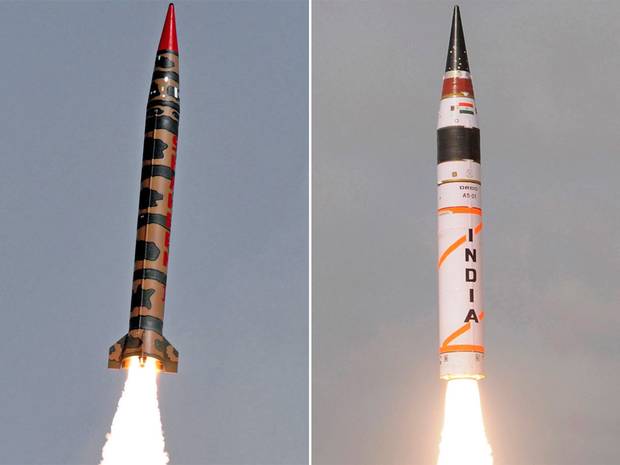
The fragile peace between nuclear-armed rivals India and Pakistan is unraveling at terrifying speed. After a terrorist attack in Kashmir left 26 dead last month, India has taken drastic measures — including cutting off water supplies to Pakistan — a move Islamabad calls an "act of war." With both nations exchanging threats of military retaliation, the world watches nervously as the specter of nuclear conflict looms over South Asia.
Key points
- India cuts water supply to Pakistan, escalating tensions after a deadly terrorist attack in Kashmir.
- Pakistan warns of war, threatening "full spectrum" retaliation, including nuclear options.
- Indus Waters Treaty suspended for the first time in 60 years, risking agricultural collapse in Pakistan.
- Diplomatic ties severed, airspace closed, and military forces on high alert as both nations brace for conflict.
Water as a weapon: India’s unprecedented move
For decades, the Indus Waters Treaty (IWT), brokered by the World Bank in 1960, has governed water-sharing between the two nations — even surviving multiple wars. But now, India has suspended the treaty, blocking water flow from the Baglihar Dam on the Chenab River and threatening to do the same at the Kishanganga Dam on the Jhelum.
Pakistan, already one of the world’s most water-stressed nations, relies on the Indus River for 80% of its agriculture. A prolonged blockade could devastate wheat, rice, and cotton production, triggering famine and economic collapse.
"Any attempt to usurp the water of the lower riparian, or to stop it, or to divert it, would be an act of war against Pakistan and would be responded to with… a full spectrum of power," warned Pakistan’s ambassador to Russia, Muhammad Khalid Jamali, in an interview with RT.
The crisis erupted after the April 22 terrorist attack in Baisaran Valley, Kashmir, which India blames on Pakistan-backed militants. While The Resistance Front (linked to Lashkar-e-Taiba) initially claimed responsibility, Islamabad denies involvement, calling the attack a "false-flag operation" staged by India.
In response, New Delhi expelled Pakistani diplomats, closed borders, and suspended visas, while Islamabad retaliated by shutting airspace to Indian flights. The diplomatic freeze mirrors the tensions of 2019, when India revoked Kashmir’s autonomy, further straining relations.
Updates on the India-Pakistan situation
Kashmir Terrorist Attack (April 22): A militant attack on an Indian paramilitary convoy in Kashmir left 26 people dead. The Resistance Front, believed to be linked to Pakistan-based Lashkar-e-Taiba, initially claimed responsibility, but Pakistan denies involvement. India holds Pakistan responsible indirectly for supporting cross-border terrorism.
Indian Response: India has taken several retaliatory measures, including
- Expelling Pakistani diplomats and reducing staff at the Pakistani High Commission.
- Closing the land border with Pakistan.
- Suspending visa services for Pakistani nationals and advising Indians in Pakistan to return home.
- Suspending the Indus Waters Treaty, which could have severe implications for Pakistan's agriculture and economy.
Pakistani Countermeasures: Pakistan responded by
- Closing its airspace to Indian airlines and grounding Pakistani airlines over Indian airspace.
- Suspending the Samjhota Express train service and a bus service connecting the two countries.
- Warning that India's water blockade constitutes an "act of war."
Escalating Militarily
- Both countries have engaged in border skirmishes, with Pakistani troops firing along the Line of Control (LoC) in Kashmir.
- Pakistan has conducted large-scale military exercises (Hammer Strike) and warned of a "swift, resolute, and notch-up response" to any Indian attack.
- India launched counter-terrorism operations in Kashmir, and its defense minister granted the military "full operational freedom" for a response to the attack.
International Response
- The international community has expressed concern over the escalating tensions, with the U.S. urging both countries to exercise restraint.
- The U.S. has offered to mediate, with Secretary of State Marco Rubio discussing the situation with both Indian and Pakistani counterparts.
- Pakistan's ambassador to the U.S. has asked President Trump for help in easing tensions.
Potential Nuclear Confrontation
Both nations are nuclear-armed states, and the situation has raised fears of a nuclear conflict. Pakistan has warned of a "full spectrum" response if India follows through on its threat to block the rivers, which could lead to agricultural collapse in Pakistan.
Diplomatic Downgrade
Tensions have been high since 2019 when India revoked Kashmir's autonomous status, further straining relations. The recent moves by both countries to downgrade diplomatic and trade ties suggest a heightened level of conflict.
The situation remains fluid, with the potential for further escalation or de-escalation in the coming days. However, the possibility of full-blown military conflict, including the risk of nuclear war, cannot be ruled out. The international community is closely monitoring the situation and urging both countries to engage in dialogue and avoid further escalation.
Both nations are now mobilizing militarily, with Pakistan conducting "Hammer Strike" war games and India launching counter-terrorism operations across Kashmir. Pakistan’s Defense Minister has warned of an "imminent" Indian attack, vowing a "swift and resolute" response.
Meanwhile, the U.S. urges restraint, with Vice President J.D. Vance cautioning India against escalation. But with Pakistan’s army chief declaring "any military misadventure by India will be met with a notch-up response," the risk of miscalculation grows by the hour.
History shows that water wars often precede full-blown conflicts. Will the Indus—once a symbol of cooperation—now become a river of fire? Or will cooler heads prevail before the unthinkable happens? As Pakistan’s envoy to the U.S. pleads for Trump’s intervention, one question remains: Is the world sleepwalking into another nuclear crisis?
Sources include:
RT.com
RT.com
Enoch, Brighteon.ai
India’s water blockade against Pakistan sparks fears of NUCLEAR WAR as Pakistan threatens retaliation – NaturalNews.com
Last edited by GaiaGoddess; 05-07-2025 at 02:28 PM.
If you're gonna fight, fight like you're the third monkey on the ramp to Noah's Ark... and brother its starting to rain. Join our efforts to Secure America's Borders and End Illegal Immigration by Joining ALIPAC's E-Mail Alerts network (CLICK HERE)
-
05-07-2025, 02:23 PM #6Super Moderator
- Join Date
- Feb 2024
- Posts
- 4,637
Dahboo7: WORLD WAR--Air Space Closed Between India & Pakistan; Russia Thwarts Largest Ever Drone Attack
Credits:
Channel: Dahboo77
Published: 5/7/25
2:59 minutes
-
05-07-2025, 02:30 PM #7Super Moderator
- Join Date
- Feb 2024
- Posts
- 4,637
Let's remember that India and Pakistan have fought over Kashmir before, and the situation did NOT move into a NUCLEAR conflict. Originally Posted by Airbornesapper07

Last edited by GaiaGoddess; 05-07-2025 at 05:08 PM.


 Reply With Quote
Similar Threads
-
French Police Release Photo Of Afghan Migrant Suspected Of Planning ‘IMMINENT Attack’
By European Knight in forum illegal immigration News Stories & ReportsReplies: 2Last Post: 08-05-2016, 12:05 PM -
India is funding Taliban fighters, claims Pakistan
By millere in forum Other Topics News and IssuesReplies: 0Last Post: 10-26-2009, 02:04 PM -
Moscow urges India and Pakistan to show restraint
By carolinamtnwoman in forum Other Topics News and IssuesReplies: 1Last Post: 12-28-2008, 04:00 PM -
U.S.: India Prepared For Strike On Pakistan
By CCUSA in forum Other Topics News and IssuesReplies: 0Last Post: 12-15-2008, 07:06 PM -
Pakistan: We're Ready for War with India
By CCUSA in forum Other Topics News and IssuesReplies: 1Last Post: 12-09-2008, 11:40 PM


The Anthony Weiner Laptop has enough information on it to take...
10-12-2026, 12:06 PM in Videos about Illegal Immigration, refugee programs, globalism, & socialism