

Results 11 to 12 of 12
Thread Information
Users Browsing this Thread
There are currently 1 users browsing this thread. (0 members and 1 guests)
 LinkBack URL
 About LinkBacks
-
11-04-2006, 04:41 PM #11Senior Member

- Join Date
- Jan 1970
- Location
- NJ
- Posts
- 12,855
http://www.blackfive.net/
"We support those not as smart as John Kerry" - At the Army-Air Force Game
Posted By Blackfive
A West Point Cadet sends this along with the photo below:
I'm a cadet at West Point, and tonight at our game against the Air Force Academy, a big sign emerged, and it was shown to the Corps of Cadets, who cheered wildly, and then shown to the Air Force cadets, who also cheered.
 Join our efforts to Secure America's Borders and End Illegal Immigration by Joining ALIPAC's E-Mail Alerts network (CLICK HERE)
-
11-08-2006, 06:09 PM #12Senior Member
- Join Date
- Apr 2006
- Location
- reno, nev
- Posts
- 1,902
Re: pic
Kerry didn’t need to apologize for what he said; If you don't stay in school and study hard you will end up in Iraq. He could have worded it differently and still meant the same. Originally Posted by ladyofshallot
The right wingers can take anything and twist it around to fit anything to give them an excuse to
complain.
Kerry did not say the troops are illiterate and stupid. What he said and it is a fact is that most men and women who don't get an education could end up in Iraq, because many drop out or are high school graduates some do not have the "smarts" to get into college or cannot afford to go the college. Instead they enlist in the military, not to fight wars, but to get an education. They end up in combat when those who do go to college and enlist have some kind of trade that the military can use and do not end up in combat but in other non-combative jobs.
Most of those in combat do come from poor, uneducated and minorities who have not gone on to college after high school. Proof is that is that many 19 year old and early 20's have lost their lives in the war in the middle east. They have not had time to attend college at that age. They enlist because high school have not prepared them for the work force. I saw it during the Vietnam era and I see it now.
Kerry is not to be blamed because they end up in the military. To whom and why should he apologize? Bushites are trying to twist things to mean that he meant those in the military are stupid. Sound like desperation to me of the Bushites.
This war, in that way, is very much like the Vietnam war in that most of those who were enlisted or was drafted and died were poor and minorities. Read "The Vietnam Reader"by Walter Capps and the testimonies of Blacks, Native Americans and Hispanics who were most likely in the front lines and lost of lives were the most. The same goes for the present war.
The Average Soldier
The average age of the military man is 19 years. He is a short haired, tight-muscled kid who, under normal circumstances is considered by society as half man, half boy. Not yet dry behind the ears, not old enough to buy a beer, but old enough to die for his country. He never really cared much for work and he would rather wax his own car than wash his father's; but he has never collected unemployment either.
He's a recent High School graduate; he was probably an average student, pursued some form of sport activities, drives a ten year old jalopy, and has a steady girlfriend that either broke up with him when he left, or swears to be waiting when he returns from half a world away. He listens to rock and roll or hip-hop or rap or jazz or swing and 155mm howitzer. He is 10 or 15 pounds lighter now than when he was at home because he is working or fighting from before dawn to well after dusk.
He has trouble spelling, thus letter writing is a pain for him, but he can field strip a rifle in 30 seconds and reassemble it in less time in the dark. He can recite to you the nomenclature of a machine gun or grenade launcher and use either one effectively if he must. He digs foxholes and latrines and can apply first aid like a professional. He can march until he is told to stop or stop until he is told to march.
He obeys orders instantly and without hesitation, but he is not without spirit or individual dignity. He is self-sufficient. He has two sets of fatigues: he washes one and wears the other. He keeps his canteens full and his feet dry. He sometimes forgets to brush his teeth, but never to clean his rifle. He can cook his own meals, mend his own clothes, and fix his own hurts. If you're thirsty, he'll share his water with you; if you are hungry, his food. He'll even split his ammunition with you in the midst of battle when you run low.
He has learned to use his hands like weapons and weapons like they were his hands. He can save your life - or take it, because that is his job. He will often do twice the work of a civilian, draw half the pay and still find ironic humor in it all. He has seen more suffering and death then he should have in his short lifetime.
He has stood atop mountains of dead bodies, and helped to create them. He has wept in public and in private, for friends who have fallen in combat and is unashamed. He feels every note of the National Anthem vibrate through his body while at rigid attention, while tempering the burning desire to 'square-away' those around him who haven't bothered to stand, remove their hat, or even stop talking. In an odd twist, day in and day out, far from home, he defends their right to be disrespectful.
Appy, Christian G. Working-Class War: American Combat Soldiers and Vietnam. Chapel Hill: The University of North Carolina Press, 1993.
Christian Appy’s Working-Class War is a must on any reading list. In prose, often eloquent, troubling, provocative, statistic-laden, and graphic, the author translated his conclusions about America’s War in Vietnam. Appy argued that the war was fought largely by young Americans from the ranks of the laboring classes. Approximately 80% of the 2.5 million enlisted men who served in Vietnam came from “working-class and poor backgrounds.” These sons of “waitresses, factory workers, truck drivers, secretaries, firefighters, carpenters, custodians, police officers, salespeople, clerks, mechanics, miners, and farmworkers” went to war. Unlike the sons of the more prosperous Americans, these youth were not able to avoid the draft. Of those who served, few volunteered. They were “channeled” to Vietnam by their government, by their educational institutions, and by the job market. Like the workers who did America’s “dirty work,” the Vietnam soldier labored under strict authority with little reward. Vietnam was a blue collar war, a war where service largely depended not on race, education, or region, but class.
Appy framed his argument around topical questions. Who fought in Vietnam? What were their lives like before the war? How was basic training carried out; and what were their first impressions of Vietnam? How was war waged? And, what were their thoughts when they left the war zone? The author’s study also evaluated the morality of the war. Appy felt more needed to be done for the 58, 152 Americans who died than merely grieving the dead and acknowledging the countless others who served. He insisted on understanding and knowing.
The process began with Appy’s interviews of 100 Vietnam veterans. He conducted personal individual interviews as part of his doctoral dissertation. He attended weekly veterans’ rap cessions in Massachusetts for seven years, 1981-1988. The 100 veterans interviewed resided largely in Massachusetts; but approximately 24 additional oral histories represented ex-soldiers from five other states (“Alabama, Texas, California, Illinois, and Virginia”).


 Reply With Quote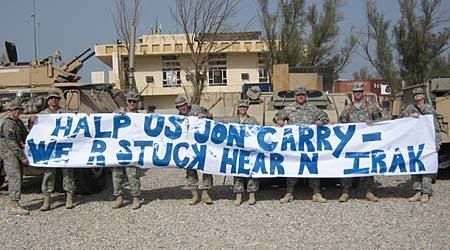


Scandal of epic proportions’: Ceuta invasion triggers mass...
09-07-2026, 06:37 PM in Videos about Illegal Immigration, refugee programs, globalism, & socialism