

Results 12,091 to 12,099 of 12099
 227Likes
LinkBacks (?)
-
12-26-2016, 11:32 AM
-
09-02-2016, 05:39 PM
-
whole garden made with pallets!! Love it!! | Pallets | Pinterest | Pallets, Pallets Garden and Wooden Pallets
Refback This thread03-06-2016, 11:30 AM -
10-20-2015, 05:29 PM
-
06-12-2015, 08:00 PM
-
02-26-2015, 01:58 PM
-
01-05-2015, 04:13 PM
-
12-19-2014, 10:19 AM
-
EMERGENCY: HUGE FEMA PANDEMIC EXERCISE IN USA IN NOVEMBER, INTERNET SHUT DOWN PART OF EXERCISE | Prepare4Survival
Refback This thread12-03-2014, 10:39 PM -
Off Grid World ? Ugly Duckling Shipping Container Home Built by Artist Is a Beautiful Swan on the Inside
Refback This thread11-25-2014, 03:10 PM -
11-17-2014, 10:59 PM
-
11-13-2014, 11:18 AM
-
11-09-2014, 02:54 PM
-
10-28-2014, 11:38 PM
-
10-26-2014, 05:54 AM
-
10-16-2014, 11:28 AM
-
10-03-2014, 01:25 PM
-
10-02-2014, 09:16 PM
-
09-26-2014, 07:00 PM
-
09-26-2014, 01:56 PM
-
09-19-2014, 04:46 PM
-
09-13-2014, 05:49 AM
-
09-05-2014, 01:52 PM
-
09-01-2014, 09:39 AM
-
08-30-2014, 06:29 PM
-
08-10-2014, 06:29 AM
-
08-04-2014, 05:07 PM
-
07-23-2014, 11:14 AM
-
New Evidence on Expiration Dates | Medical Preparedness | Doom and Bloom (TM) | Doom and Bloom (TM)
Refback This thread07-22-2014, 10:10 AM -
07-18-2014, 08:37 PM
-
07-15-2014, 04:57 PM
-
07-11-2014, 01:40 AM
-
04-22-2014, 11:14 AM
-
04-18-2014, 12:57 PM
-
04-18-2014, 10:10 AM
-
04-14-2014, 12:18 AM
-
04-12-2014, 02:28 AM
-
03-02-2014, 11:43 PM
-
12-24-2013, 11:59 PM
-
12-07-2013, 11:04 PM
-
kitchen | Cob
Refback This thread11-25-2013, 03:24 PM -
10-22-2013, 10:25 PM
-
Apple Pie Braid | Sweets
Refback This thread09-26-2013, 07:58 AM -
09-02-2013, 04:44 PM
-
5 Reasons Why You May have to Bug Out Even Though You Don’t Want to | The Apartment Prepper's Blog
Refback This thread08-23-2013, 03:20 PM -
06-27-2013, 06:30 AM
-
06-23-2013, 08:11 PM
-
06-17-2013, 11:21 PM
-
05-24-2013, 05:06 PM
-
To Eat / BASIC LIST / SUGGESTED ITEMS FOR LONG TERM SURVIVAL - Page 275 - ALIPAC
Refback This thread05-01-2013, 03:49 AM
Thread Information
Users Browsing this Thread
There are currently 3 users browsing this thread. (0 members and 3 guests)
 LinkBack URL
 About LinkBacks
-
11-13-2026, 08:01 PM #12091Senior Member


- Join Date
- Aug 2018
- Posts
- 99,308
Survival navigation: How to find your way back to civilization if you get lost in the wild
05/07/2024 // Zoey Sky // 5.2K Views
Tags: bug out, Collapse, disaster, environment, navigation, off grid, preparedness, prepper, prepping, prepping skills, SHTF, survival, survival skills, Survival Tips

Getting lost in the wilderness can be a terrifying experience. So many things can go wrong, especially if you're alone.You could get hurt and it might take a long time for someone to find you when you're lost.
But if you do get lost, staying in one spot is one of the best ways to ensure your safety. This can also improve your chance of being rescued. (h/t to Survivopedia.com)
Always inform someone before you go outdoors
If you get lost in the woods while on a hike, don't wander aimlessly. This can make you tired, which will reduce your chance of finding your way back to civilization.
You don't have to be a prepping and survival expert to enjoy communing with Mother Nature, but you can learn important skills to improve your chances of surviving if you do get lost.
Get basic navigational tools and learn how to use them properly.
The following tools can help you find your way if you get lost:
- Detailed topographic maps
- Compass
- Phone apps that can show topographic maps
- A handheld GPS unit
After learning how to read your maps, don't forget to inform others about your destination and how long you will be gone.
This ensures that if something goes wrong, they can quickly raise the alarm if you are gone beyond your expected return time or date. (Related: Survival navigation: Using trees, insects and birds to navigate.)
Look for signs of human activity
Signs of civilization include any indicators that one person or a group of people have inhabited, worked or passed through an area.
These signs include:
- Bridges
- Roads (even poorly maintained ones)
- Tire tracks
- Buildings
- Domesticated animals/livestock
- Vegetation destruction from chopping
- Camping sites
- Abandoned fire pits
You may also encounter dumping grounds in certain areas where people dispose of their trash.
If you find any signs of human activity, there's a chance that you can also find someone who can help you get to safety or alert the authorities for your rescue, depending on your condition.
And even if the area seems deserted at first, you must look closely for signs of human activity. Even if there's no one there, humans may visit the area in the near future.
Search for bodies of moving water
Human settlements usually gravitate toward bodies of water for survival. Choosing to establish homes near water sources was a strategic decision for conserving precious resources while also optimizing time and energy expenditure.
People usually gravitate toward traveling downhill, as it offers a path of least resistance and conserves energy.
Following a body of water also offers crucial survival advantages. Aside from being a source of water for hydration, bodies of water also give you a chance to fish for food.
Look for a clearing, then make a rescue signal
If you plan to spend time outdoors, you need to learn how to make a rescue signal for emergencies.
Clearings offer a vantage point for gaining a better understanding of your surroundings, allowing you to assess your next course of action more accurately.
Clearings may also include signs of human activity, offering potential resources and opportunities for rescue. You may see domesticated animals or evidence of human presence, whether for professional endeavors like logging or recreational activities such as camping.
Some clearings can also be used as makeshift landing zones for low-flying aircraft.
When signaling for help, creating a fire is one of the most effective methods. Adding green vegetation to a fire generates thick smoke, which serves as an easy-to-spot emergency signal.
You can also enhance visibility through reflective surfaces, such as mirrors or bright-colored clothing.
Look for high vantage points in unfamiliar terrain
Gaining a high vantage point can give you a better understanding of your surroundings, particularly when you are navigating unfamiliar terrain.
From elevated positions, such as hilltops or tree canopies, you get an extended field of view, making it easier to identify potential paths or signs of human activity that may be concealed from ground level.
Note that heading to a high vantage point also carries inherent risks, so it is important to follow proper safety measures. Don't climb a tree if you are unsure that you can get down on your own safely.
Don't risk an injury if there are other ways to confirm your current location.
If possible, use effective security measures to mitigate risks before climbing a higher vantage point. Improvise safety harnesses using paracord.
Be careful and avoid injury, which can make your situation worse.
Go down when traveling
Once you've found a higher vantage point, it's time to travel downwards.
If possible, head to a location with a body of water. Even if a water source isn't immediately visible, the natural gravitational flow ensures that watercourses are often found downhill.
Descending downhill offers several advantages, such as expedited travel toward civilization and energy conservation. The terrain usually becomes less steep as you descend, making travel easier and minimizing physical exertion, which can help if you're weaker due to a lack of food or water.
Following a body of water can also help guide you to other signs of civilization.
Before you head to the wilderness, arm yourself with essential prepping and survival skills like navigation and emergency signals so you can safely enjoy your time in nature.
If you know how to navigate and look for signs of civilization, you can improve your chances of being found if you do get lost.
Visit Preparedness.news for more articles about other important prepping and survival skills. You can also go to Health Ranger Store and Brighteon Store to browse essential gear for your various prepping needs.
Watch the video below to learn about 10 items you need for your wilderness survival kit.
This video is from the Daily Videos channel on Brighteon.com.
More related stories:
Survival skill: How to predict the weather without any instruments.
Survival tools for your go bag: WHAT you should have and WHY.
Prepper fitness: Why is physical health important for survival?
Basic survival and prepping skills that your kids should learn ASAP.
Sources include:
Survivopedia.com
MissAdventurePants.com
Brighteon.com
Survival navigation: How to find your way back to civilization if you get lost in the wild – NaturalNews.comIf you're gonna fight, fight like you're the third monkey on the ramp to Noah's Ark... and brother its starting to rain. Join our efforts to Secure America's Borders and End Illegal Immigration by Joining ALIPAC's E-Mail Alerts network (CLICK HERE)
-
11-14-2026, 09:37 PM #12092Senior Member
- Join Date
- Aug 2018
- Posts
- 99,308
Survival Tips
NaturalNews.com

08/24/2023 / By Zoey Sky
Prepper first aid: 10 Must-haves for your natural medicine first aid kit
When SHTF, whether due to societal collapse or a large-scale natural disaster, you will realize that going on a quick trip to the nearest store or...
16.1K Views // Share

08/22/2023 / By Olivia Cook
Tsunami preparedness: Tips on how to survive monster waves
Preparation is key for communities that live in high-risk coastal regions. It’s best to always be aware of your surroundings if you live on the...
7.1K Views // Share

07/28/2023 / By Zoey Sky
Survival basics: Tips for finalizing a homestead evacuation plan
If you're one of the preppers worried about wildfire season approaching in California or other states, it might be time to finalize a homestead...
11.5K Views // Share

06/28/2023 / By Zoey Sky
Prepping for collapse, famine and nuclear war: 12 Tips that will help you be more resilient when SHTF
There are many things you must anticipate as a prepper. and these include emergency scenarios like societal collapse, famine or even nuclear...
13.6K Views // Share

05/25/2023 / By Zoey Sky
SHTF bartering must-haves: 13 Things that will be in demand after an EMP attack
You might already be familiar with common disaster scenarios that you need to prepare for, such as natural disasters or societal collapse. One of the...
33.7K Views // Share

05/24/2023 / By Zoey Sky
Prepper fitness: Why is physical health important for survival?
Whether you're worried about a natural disaster or a terrorist attack, you must be always be prepared for any kind of emergency. Your preparation...
6.4K Views // Share
05/15/2023 / By Zoey Sky
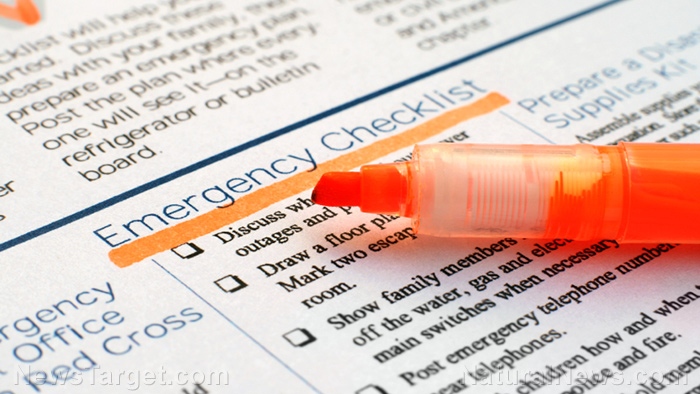
Medical preparedness: Supplies to stock up on when preparing for nuclear war
Due to the actions of some authoritarian regimes, the risk of an attack by a nuclear-capable nation may soon include the detonation of a...
9.9K Views // Share
05/10/2023 / By Zoey Sky
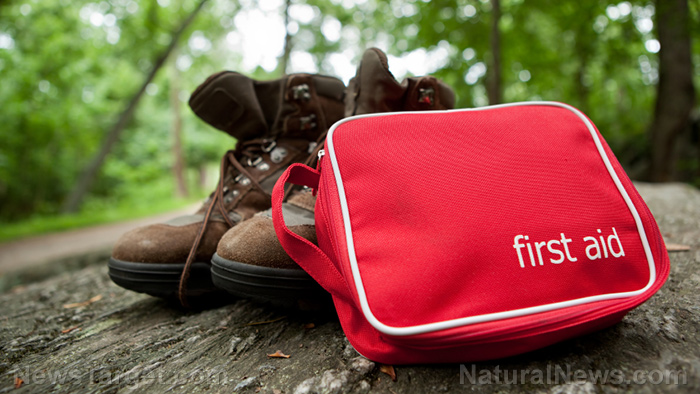
Survival first aid: How to handle different trauma scenarios
When dealing with an emergency situation, you may sometimes need to treat common traumatic injuries like burns, concussions or even gunshot wounds...
8.2K Views // Share

05/05/2023 / By Zoey Sky
Survival 101: How to protect your family during civil war
Unlike natural disasters, which can happen without warning, a civil war won't occur without advance notice. If you know the signs to watch out...
20.4K Views // Share

05/04/2023 / By Zoey Sky
280 Million Americans are NOT prepared for common SHTF scenarios
Prepping may be lesser known in your area and there's a chance that you have no idea how important it is to be prepared for an emergency or...
21.4K Views // Share

05/02/2023 / By Zoey Sky
Survival essentials: 5 Bushcraft skills for preppers
There are many bushcraft skills that can benefit preppers. Detailed below are five skills that can help you survive when SHTF. (h/t...
10.3K Views // Share

04/28/2023 / By Zoey Sky
Survival skills: Tips for building an improvised fallout shelter
Are you prepared to deal with something as catastrophic as nuclear war? Protect yourself and your family in the event of nuclear war by learning...
12.1K Views // Share
04/21/2023 / By Zoey Sky
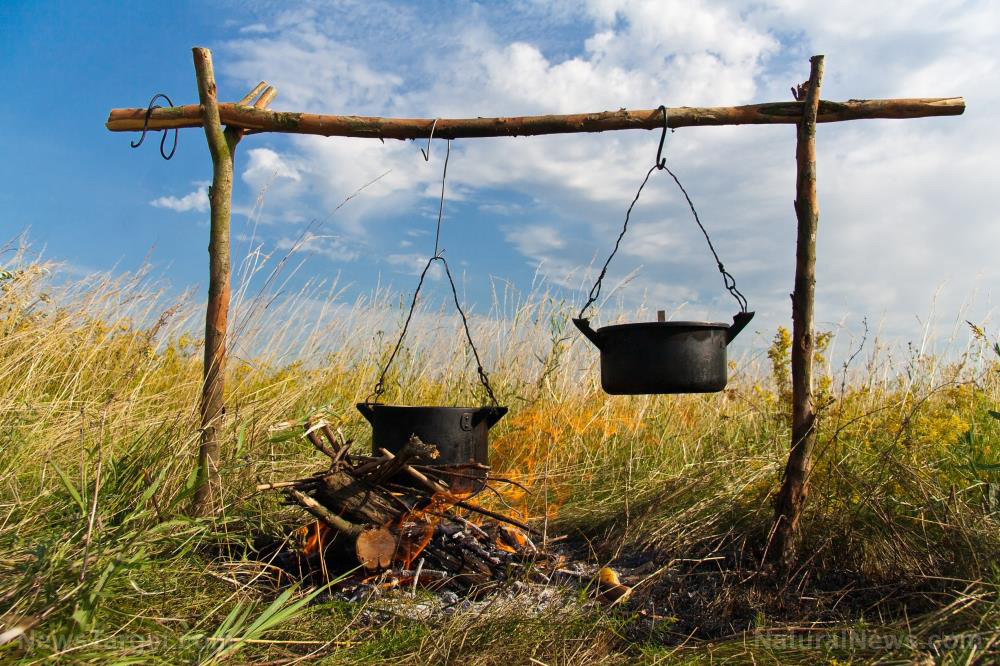
Basic outdoor survival skills that will help you when SHTF
Spending time learning different skills can help you survive in the wilderness when SHTF. Prepare by learning basic outdoor survival skills like...
11.9K Views // Share

04/17/2023 / By Zoey Sky
Emergency preparedness: How to charge your smartphone during a power outage
When preparing for a power outage, you may spend a lot of time stocking up on supplies like food, water and fuel for your backup power or cooking...
14K Views // Share

04/11/2023 / By Zoey Sky
8 Forgotten skills that helped the Native Americans survive harsh times
Prior to the arrival of European settlers, American Indians had a thriving culture. They lived in harmony with nature and used what they had to...
13.3K Views // Share

04/04/2023 / By Zoey Sky
Bug out survival planning: How to get out of the city after SHTF
Evacuating a major city after a natural or man-made disaster can be a logistical problem for local authorities, mostly due to the lack of personnel...
20.1K Views // Share

03/24/2023 / By Zoey Sky
Water safety: Preserve water using silver coins
When stockpiling supplies for your home, you should prepare enough water for your family. Keep in mind that you will need water for drinking and...
21.9K Views // Share

03/23/2023 / By Zoey Sky
Prepper must-haves: 17 Items a college student needs for spring break
Throngs of college students from all over America gather every year on beaches to celebrate spring break. While vacations are supposed to be fun and...
9.3K Views // Share

03/17/2023 / By Zoey Sky
Survival basics: 7 Essential skills for modern preppers
Non-preppers might take modern conveniences for granted, but experienced preppers know that it's also important to learn and practice different...
12.6K Views // Share

03/13/2023 / By Zoey Sky
Home defense tips: 7 Ways to protect your garden from looters and intruders
Many preppers devote their resources, time and effort to their home gardens to provide food for their family or to sell fruits and vegetables at the...
11.3K Views // Share
If you're gonna fight, fight like you're the third monkey on the ramp to Noah's Ark... and brother its starting to rain. Join our efforts to Secure America's Borders and End Illegal Immigration by Joining ALIPAC's E-Mail Alerts network (CLICK HERE)
-
11-15-2026, 06:31 PM #12093Senior Member
- Join Date
- Aug 2018
- Posts
- 99,308
79 Yards of Concrete! Building the Ultimate Driveway & Patio
79 Yards of Concrete! Building the Ultimate Driveway & Patio
Diesel Creek
1.07M subscribers
55K
646,902 views
Nov 14, 2026
#dieselcreek
If you're gonna fight, fight like you're the third monkey on the ramp to Noah's Ark... and brother its starting to rain. Join our efforts to Secure America's Borders and End Illegal Immigration by Joining ALIPAC's E-Mail Alerts network (CLICK HERE)
-
11-16-2026, 10:00 AM #12094Senior Member
- Join Date
- Aug 2018
- Posts
- 99,308
Decentralize to Survive: Why Resilience Beats Efficiency in a Collapsing System
11/16/2026 // Mike Adams // 110 Views
Tags: centralized system, Collapse, continuity of government, continuity of household, decentralization, electricity, freedom, government, grid collapse, Liberty, point of failure, politics, power grid, preparedness, supply chain warning, survival
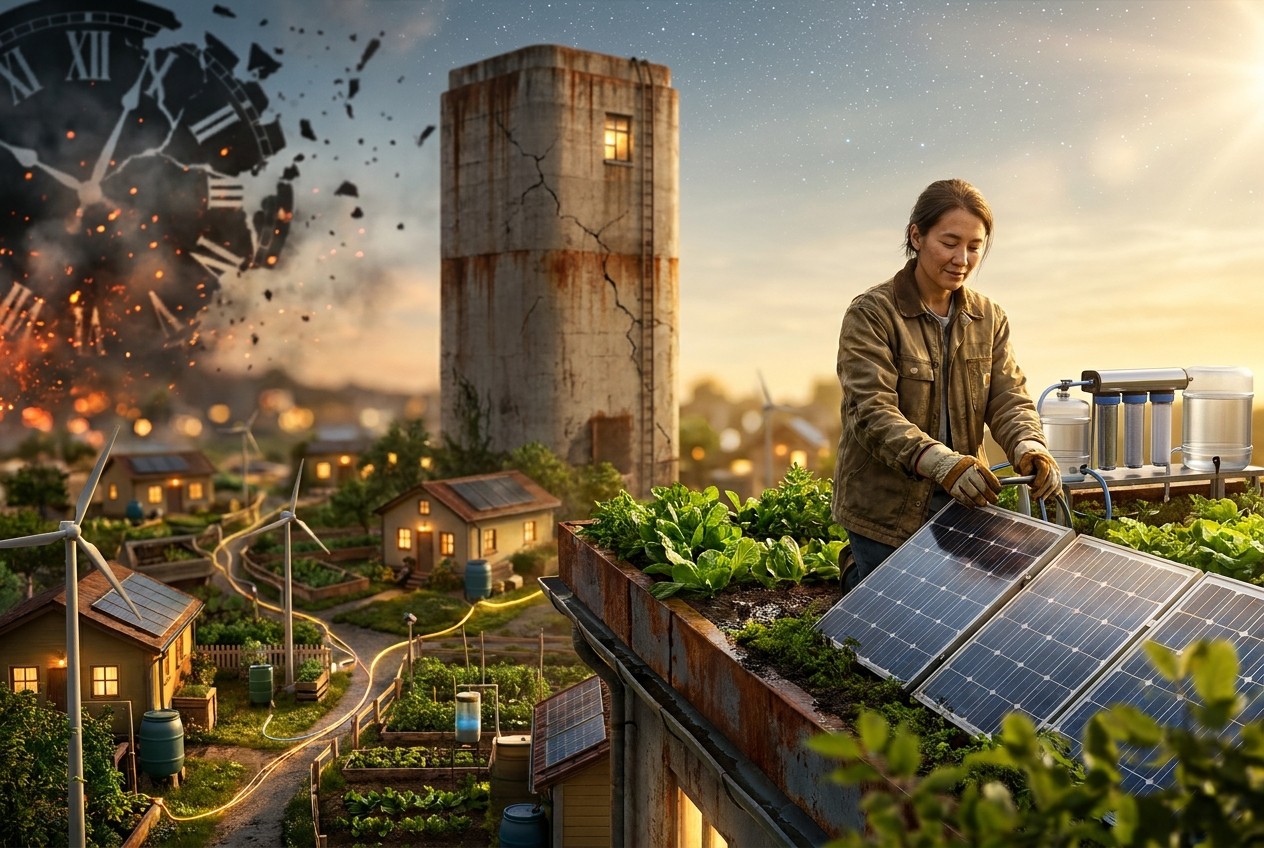
Decentralize to Survive
I believe we are entering an era where complex centralized systems fail faster than the institutions running them can understand, diagnose, or repair. The outages we keep seeing in aviation, payroll, medicine, and finance are not random anomalies. They are previews -- early tremors of cascading failures that will grow more frequent and more severe as the systems themselves grow more entangled.
I've warned about the vulnerabilities of complex systems for years. In April of this year, I wrote that the world was unraveling in real time before our eyes, driven by fragile supply chains and single-point-dependent systems that no institution fully comprehends. [1] I believe that assessment has only become more urgent. My thesis here is simple: decentralization is not a hobby, a buzzword, or a political slogan. It is the single best protection an individual family can build against systems collapse -- and it is the difference between being a victim of the next failure and being a survivor of it.
Complexity Is Easy; Understanding Is Hard
Building complexity is easy. You simply add nodes -- another agency, another router, another department, another cloud provider, another dependency. What is hard is understanding the emergent interactions those nodes create. As the authors of The Age of Decentralization observe, network behavior can produce emergent properties not apparent when examining individual components; these are characteristics that arise from collective interactions and are not predetermined by any single element. [2] That is precisely why cascading failures are so often a surprise to the very institutions that built the systems in question.
We have watched this play out repeatedly. A faulty CrowdStrike Falcon security update caused millions of Windows systems worldwide to crash into a Blue Screen of Death loop, paralyzing hospitals, airlines, banks, and supply chains -- the largest IT outage in history -- because CrowdStrike bypassed standard rollout protocols and pushed the update globally. [3] Centralized architecture makes that kind of blast radius possible. A decentralized security operation, by contrast, consists of a distributed workforce, including security managers and asset protection managers, whose functions and authority are spread out rather than concentrated at a single choke point. [4]
Governments and large corporations have built systems they cannot comprehend, yet we depend on those systems to survive. I am not describing incompetence alone. I am describing a structural condition: the more centralized the system, the less any single human being -- or any single institution -- can actually grasp what is happening inside it. When failure comes, nobody can explain it, and nobody can fix it fast enough.
Centralized Systems Are Efficient Until They Aren't
Centralized systems look efficient from the top down. They concentrate resources, standardize processes, and produce tidy cost curves. But they also concentrate risk. One switch, one server, one payment processor, or one air traffic control system can ground flights and freeze payrolls across an entire nation. The grid prioritizes efficiency over resilience, which makes it vulnerable to cascading failures from cyberattacks, electromagnetic pulses, or sabotage that could collapse water, food, healthcare, and communication systems. [5] Decentralized systems, on the other hand, reduce reliance on any single entity for operations, minimizing the risks associated with single-point failures and vendor dependency. [6]
Wealth does not buy resilience when the underlying infrastructure is centralized. Even private aviation depends on the same air traffic control system as commercial flights, which means a single point of failure can ground everybody regardless of how much money they have. Yet decentralized systems stay running when a single point fails because authority and data are spread across many nodes instead of one central hub. [7] That is not a technical curiosity; it is the fundamental design difference between a system that fails gracefully and a system that fails catastrophically.
Efficiency is not the same as survivability. A system optimized for the lowest possible cost in normal times is often the least prepared for abnormal times. The Age of Decentralization notes that recovering from system failures is challenging in centralized architectures due to vulnerabilities like single points of failure. [2] Redundancy and local control matter more than top-down optimization, because redundancy is what keeps a failure local instead of letting it propagate. When we optimize away the slack, we optimize away the very thing that would have saved us.
What Decentralization Actually Looks Like
Decentralization means food, water, medicine, energy, and knowledge that do not depend on a fragile grid or a distant supply chain. It means a water filter you own, food you have stored, backup antibiotics on hand, a local AI model running on your own machine, solar panels on your roof, or a PTO generator that can power the essentials when the utility fails. These are practical, concrete things -- not abstractions. The Age of Decentralization describes the benefits of blockchain oracles, smart contracts, decentralized identity, decentralized storage, and decentralized data science as part of a broader decentralization layer that spans banking, health data sharing, government services, identity, and media management. [2] The same logic applies at the household level.
Simple skills matter too. Stewardship of your own food supply -- preserving what you grow, sealing tires, repairing what breaks, learning basic first aid and herbal protocols -- reduces dependence on supply chains that can be severed by a single event. A decentralized approach allows specific needs and individual circumstances to be taken into account, integrating different capabilities rather than forcing every situation through one standardized funnel. [8] That is what decentralization looks like in practice: not a single grand solution, but a thousand small redundancies that add up to resilience.
Decentralization is fundamentally structural. You are not just acquiring supplies; you are removing yourself from the blast zone of catastrophic centralized failures. When authority and data are distributed, no single point of failure can take down the whole. [7] That is the whole point of local redundancy: solar panels, heirloom seeds, water filters, and precious metals. [9] Distributed systems are inherently more resilient than centralized ones. Every item I have named is a variance of that principle -- move the critical function closer to you, and you move the failure point farther from your family.
Continuity of Household: Your Personal COG
Government has continuity of government plans. I believe households need continuity of household plans. While agencies prepare for the worst with designated successors and backup facilities, most families have no written plan for how food, water, medicine, energy, and money will flow if the usual systems stop working. That asymmetry is dangerous, because the failure of centralized systems does not announce itself in advance. The disruption that affected everything from banks and airports to hospitals exposed the fragility of a world increasingly reliant on centralized digital systems with apparent single points of failure -- and it raises the question of what happens one day when systems do not come back online as easily. [10]
Prepare now for the slow erosion of civil society, not just a sudden apocalypse. Fragility compounds over time. To mitigate the risks associated with centralized platforms, businesses are adopting a multicloud approach, utilizing services from multiple cloud providers for redundancy and flexibility -- though even that strategy does not eliminate the risk of a single point of failure, since the management systems coordinating multiple clouds can themselves become vulnerable. The household version of this is diversification: local open-source AI, barter goods, silver, practical skills, and community sharing that create redundant knowledge and mutual aid rather than a single point of dependence.
One financial caution: do not take on debt expecting collapse to erase it. Own what you can free and clear, and build resilience step by step. Know what you own, keep it simple, reduce counterparty exposure, and build in layers. Resilience is a habit, not a single purchase.
The Choice Is Decentralize or Depend
It's now abundantly clear that centralized systems will keep failing, and dependence on them is a real-world liability -- not just a theoretical one. History shows that reliance on centralized systems leads to vulnerability, and decentralization is survival: reclaiming control over food, water, energy, finances, and community is how people resist systemic collapse. [11]
You can still use hospitals, airlines, and pharmacies as last resorts. I am not telling anyone to live in a cave. But they should not be your first or only plan. Start small: store food, filter water, learn skills, and connect with trustworthy neighbors. Build local redundancy with solar panels, heirloom seeds, water filters, and precious metals.
Decentralize while you can. Resilience is not paranoia. It is survival -- the calm, disciplined decision to hold a piece of your future directly in your own hands. When the next centralized system fails, you will either be waiting for it to come back online, or you will already be living in something better.
References
- How Local Redundancy and Decentralization Can Save You from the Coming Collapse - NaturalNews.com, April 29, 2026. by NaturalNews.com
- The Age of Decentralization. by Sam Ghosh And Subhasis Gorai
- Blue Screen of Death How CrowdStrikes global meltdown exposed the deadly flaws of centralized control - NaturalNews.com, March 10, 2026. by NaturalNews.com
- Centralized vs Decentralized Security Operations. 2022-02-16T00:00:00Z. https://www.dataminr.com/resources/b...hich-to-adopt/
- Off Grid Survival How centralized power systems threaten civilization - NaturalNews.com, January 07, 2026. by NaturalNews.com
- Increasing Operational Resilience Through Decentralization. 2024-11-26T00:00:00Z. https://cardanofoundation.org/blog/i...centralization
- Decentralized Systems Resilience to Centralized Failures. https://www.facebook.com/fb-answers/...ized-failures/
- Why centralized and decentralized security is essential for .... https://newvoiceinternational.com/wh...for-companies/
- How Local Redundancy and Decentralization Can Save You from the Coming Collapse - Activist Post. 2026-05-14T00:00:00Z. https://www.activistpost.com/how-loc...ng-collapse-2/
- Single Point of Failure: Security Risks and the Need To Decentralize - Ankr. 2024-07-23T00:00:00Z. https://www.ankr.com/blog/single-poi...-decentralize/
- Prep Like Noah: Decentralizing for survival in the days of chaos – NaturalNews.com. 2026-02-10T00:00:00Z. https://www.naturalnews.com/2026-02-...ays-chaos.html
Explainer Infographic

Ask BrightAnswers.ai
Decentralize to Survive: Why Resilience Beats Efficiency in a Collapsing System – NaturalNews.com
If you're gonna fight, fight like you're the third monkey on the ramp to Noah's Ark... and brother its starting to rain. Join our efforts to Secure America's Borders and End Illegal Immigration by Joining ALIPAC's E-Mail Alerts network (CLICK HERE)
-
11-16-2026, 10:03 AM #12095Senior Member
- Join Date
- Aug 2018
- Posts
- 99,308
Why Being Prepared Is Just Common Sense
11/16/2026 // Mike Adams // 200 Views
Tags: centralization, Collapse, electricity, food collapse, food freedom, food independence, food rationing, Food storage, food supply, grid collapse, Grid down scenario, hunger, off grid, personal preparedness, personal readiness, power, power grid, preparedness, prepping, society, starvation, survival
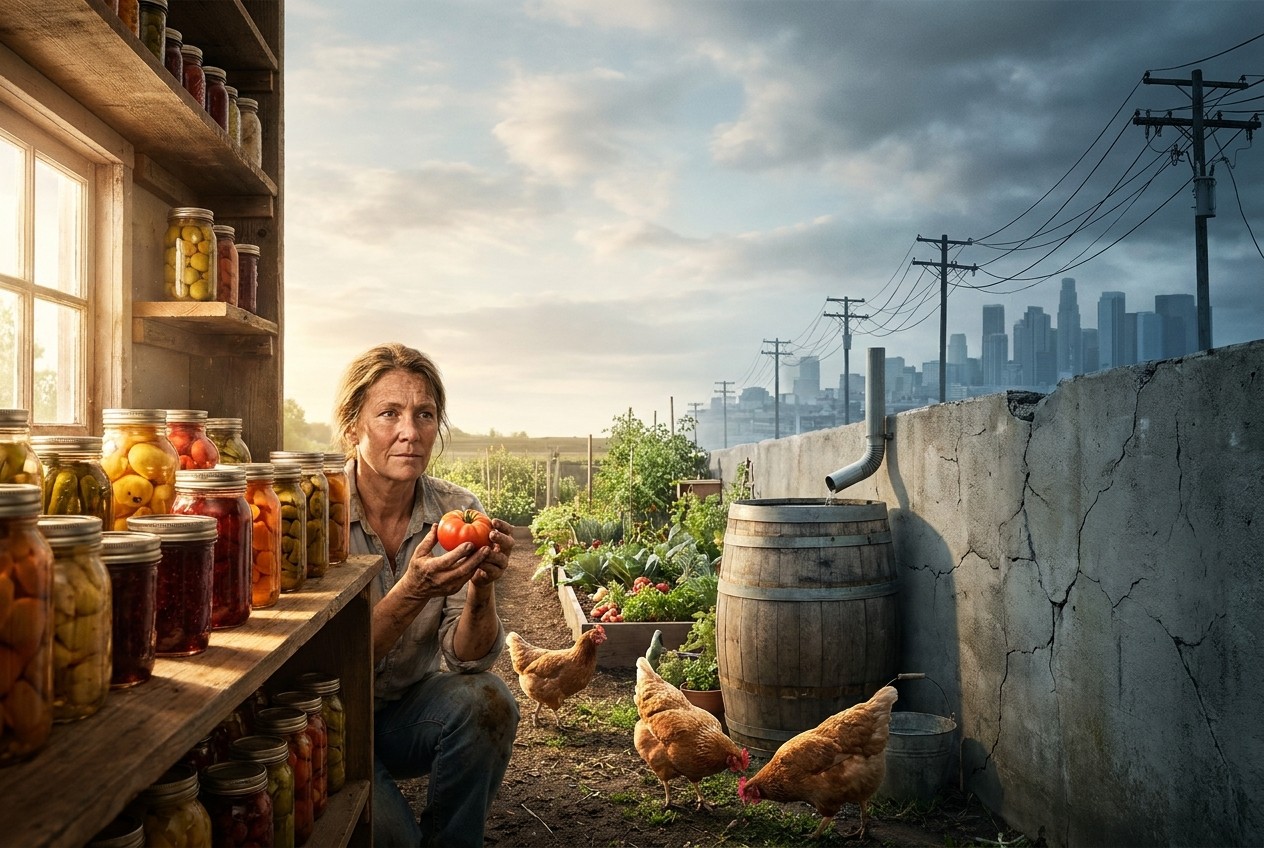
It's Wise to Be Prepared
Preparedness is not a fringe conspiracy or a psyop cooked up to sell buckets of beans and rice; it is a basic life strategy, the same kind of thinking that made our ancestors keep a root cellar, a rain barrel, and a well-stocked pantry without ever calling themselves preppers.
When a society centralizes everything it needs to survive, the case for personal redundancy becomes stronger, not weaker. Every single point of failure--one grid, one grocery chain, one water treatment plant--multiplies the value of a family that can stand at least thirty days on its own. The math is not complicated.
It was never a fringe idea. The reason preparedness looks suspicious to some people has nothing to do with the practice itself and everything to do with who has been carrying the banner lately.
We Live in a Radically Centralized Society
Our food supply is corporatized and dependent on monoculture and just-in-time grocery stores. The Haber-Bosch process is a single chemical reaction that feeds roughly half the world, and it functions as the most important chemical process on Earth--one that maps population growth directly onto synthetic nitrogen fertilizer [1]. When that system wobbles, so does everything downstream.
Similarly, trucking already faces a triple crisis of diesel prices, regional scarcity, and automation pressures; Saudi Arabia shut down its East-West Pipeline after multiple drone attacks, and the ripple effects hit refineries and ports around the world, impacting diesel availability [2].
Most people get water from municipal systems and power from a centralized grid, which creates single points of failure across an entire region. When Hurricane Isaias intensified toward Category 3 in the Gulf and threatened refineries, ports, trucking capacity, and diesel prices, every household that depended on the weekly grocery run was exposed [3]. Local governments themselves are not prepared for a systemic collapse in which banks fail, power grids halt, and grocery deliveries stop [4].
When those systems fail, the logical response is not panic but preparation. The goal is to survive off-grid and sustain yourself for at least 30 days and beyond. The Off-Grid Survival Bible makes the argument well: centralized food, energy, and medical infrastructures are vulnerable to cyberattacks, supply chain failures, and government control--and true safety comes from personal preparedness [5].
It Was Normal Before the 1970s
Ask your parents or grandparents. They likely grew food, kept chickens, gardened, fixed things, sewed, and canned. In modern times, Mormons, Mennonites, Amish, and even our grandparents lead or have led lives based on being prepared for unexpected hard times, as Backwoods Home Magazine put it [6]. That was not extremism; that was Tuesday.
Men repaired bicycles, plumbing, electrical, and welding. Women preserved food and mended clothing. An entire generation grew up with skills that are now sold back to us as specialty services. The book Advanced Survival captures the difference between a collectivist, centralized society and a self-reliant one: in the latter, the power of choices starts at the bottom with the individual and the family instead of with bureaucrats [7].
What used to be ordinary self-reliance has become rare, especially in cities, which is why preparedness now seems odd to some people. Permaculture pioneer David Holmgren has pointed out that current high-yield agriculture is addicted to inputs that maintain yields even while destroying the future productive base [8]. We did not just lose skills; we lost a culture that once made those skills ordinary.
What Happens When the Grid Goes Down
If the power goes out for a week, you need to heat or cool your home, prevent pipes from freezing, and have water to flush toilets. These are not survivalist fantasies. They are the most common chore of every winter storm. Preparedness guides from the field are direct about this: planning in advance what you will do in an emergency and using common sense and whatever you have on hand to take care of yourself is the actual plan [9].
Sewage treatment depends on power. Without it, waste backs up based on elevation, and the lower ground gets ugly fast. Local vulnerabilities compound when the suppliers themselves are strained. Texas declared a diesel emergency in 2026 while its governor issued a statewide disaster declaration over shortages, and a farmer living in rural Texas has been preparing for exactly this kind of fuel chaos for years [10].
With fuel scarcity, higher prices, global energy shocks, and wrecked supply chains, having supplies is the reasonable answer. The 'leaving every decision to the system' model is not a plan; it is a bet that nothing ever breaks.
Be Ready Without Freaking Out
Refusing to prepare just to resist a supposed psyop is crazy and dangerous. The people who would laugh at you for owning a week of shelf-stable food are the same people who will knock on your door when their pantry runs dry. Real prepping is closer to the sane-prepper mantra than the doomsday stereotype: know your risk, build a plan, pack an emergency kit, learn core skills, and keep adjusting [11].
My upcoming free course at brightu.com, the Health Ranger Guide to surviving war, famine, pandemics and grid-down scenarios, covers this in detail. My conversation with Seth Holehouse also touched on how "Prep Like Noah" approaches the topic as a practical guide for non-traditional preppers who feel overwhelmed by the complexity of preparedness or want a more structured approach [12].
You can also get certified organic, lab-tested storable food at healthrangerstore.com/food-kits and simply be ready in a reasonable way. This has nothing to do with fear and everything to do with freedom. Preparedness is not a fringe conspiracy; it is the oldest form of insurance human beings have ever written for themselves, and it has never gone out of style.
References
- The Haber Bosch House of Cards Why The One Chemical Reaction that Feeds Half the World is About to Go Offline - NaturalNews.com, March 20, 2026. by NaturalNews.com
- Trucking's Triple Crisis: Diesel Prices, Regional Scarcity, and the Autonomous Threat - NaturalNews.com, September 18, 2026. by NaturalNews.com
- Hurricane Isaias: Category 3 Threat to Gulf & Supply Chain. 2026-10-07T21:26:57.000Z. https://www.freightwaves.com/news/hu...f-supply-chain
- Health Ranger Report - Why your local government isnt ready - Mike Adams - BrightVideos.com, May 03, 2024. by Mike Adams - BrightVideos.com
- The Off Grid Survival Bible A blueprint for resilience in uncertain times - NaturalNews.com, January 31, 2026. by NaturalNews.com
- Commonsense preparedness just makes sense. 2022-06-21T00:00:00Z. https://www.backwoodshome.com/common...t-makes-sense/
- Advanced Survival. by James C. Jones
- Permaculture Principles and Pathways Beyond Sustainability. by David Holmgren
- Preparing Makes Sense. Get Ready Now.. https://our.ric.edu/documents/homela...paration-guide
- Texas Declares Diesel Emergency as Fuel Supply Chain Strains. 2026-09-30T06:00:00.000Z. https://www.naturalnews.com/2026-09-...n-strains.html
- The 7 Prepping Essentials. https://mind4survival.com/prepping/
- Bright Videos News - with Seth Holehouse - Mike Adams - BrightVideos.com, March 19, 2026. by Mike Adams - BrightVideos.com
- Why Prepping Is Just Common Sense - David Avocado Wolfe. 2025-09-19T00:00:00Z. https://davidavocadowolfe.substack.c...g-common-sense
- Japan’s Emergency Appeal Is a Wake-Up Call: Every Japanese Citizen Should Be a Prepper. 2026-10-27T06:00:00.000Z. https://www.naturalnews.com/2026-10-...e-up-call.html
Explainer Infographic

Ask BrightAnswers.ai
Why Being Prepared Is Just Common Sense – NaturalNews.com
If you're gonna fight, fight like you're the third monkey on the ramp to Noah's Ark... and brother its starting to rain. Join our efforts to Secure America's Borders and End Illegal Immigration by Joining ALIPAC's E-Mail Alerts network (CLICK HERE)
-
11-16-2026, 03:33 PM #12096Senior Member
- Join Date
- Aug 2018
- Posts
- 99,308
Spirulina as a Food Source During Famines
11/16/2026 // Coco Somers // 220 Views
Tags: #nutrition, alternative medicine, emergency food, food cures, food is medicine, food science, Food storage, food supply, functional foods, goodfood, goodhealth, goodmedicine, goodscience, healing foods, health science, natural cures, natural health, natural medicine, Naturopathy, nutrients, phytonutrients, research, spirulina, starvation, superfoods, supplements
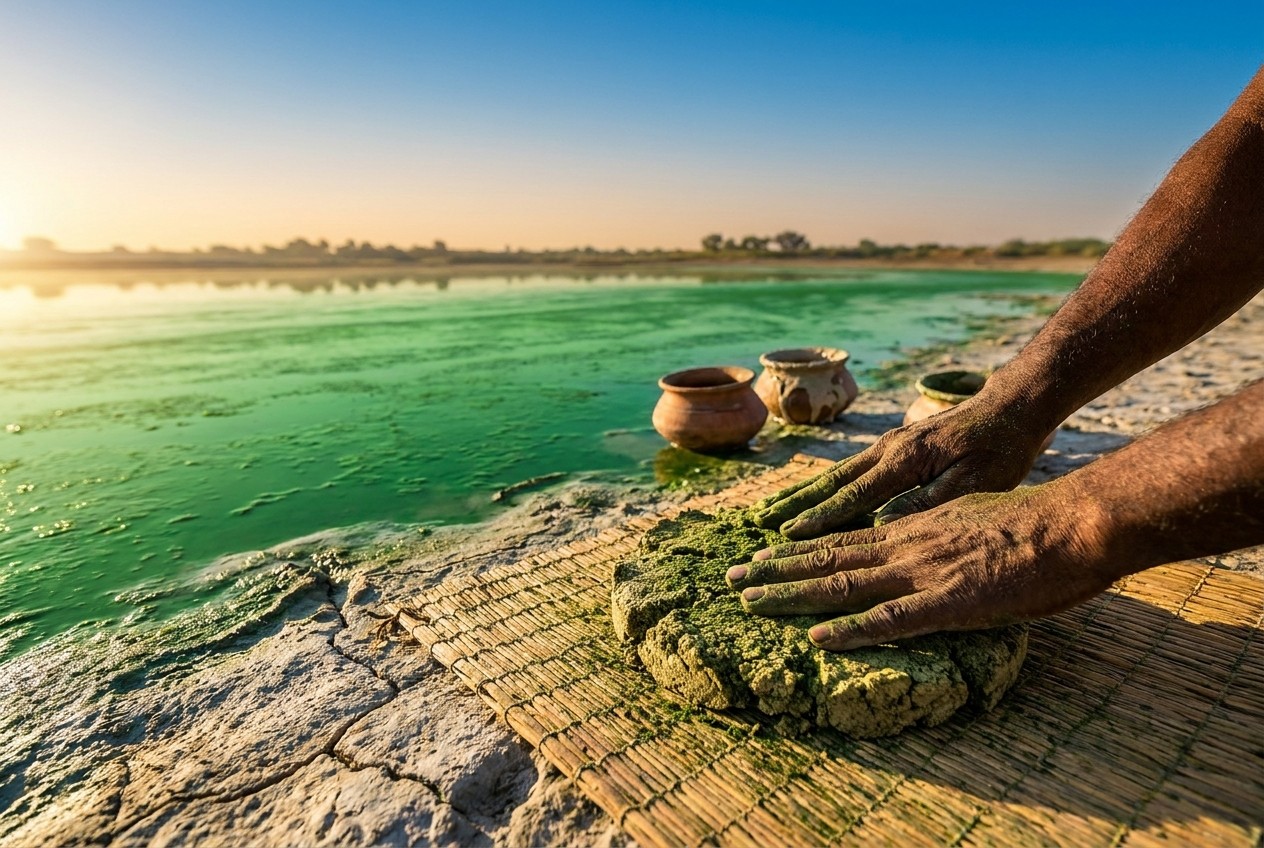
The United Nations declared spirulina "the best food for the future" at its World Food Conference in 1974, a designation the organization has since been cited for repeatedly. Spirulina is a type of microscopic blue-green algae that naturally grows in warm, alkaline lakes. It was harvested by the Aztecs from lagoons around what is now Lake Texcoco in Mexico, and the Kanembu people living along the banks of Lake Chad in Africa still harvest it from the lake as they have for centuries.Reports examining the food source describe analysis focused mainly on its nutritional use, with the microalga's rich composition cited for its valuable nutritional and therapeutic properties [1].
Nutritional Profile and Historical Use
Compared to other foods by weight, spirulina is described as one of the most nutritious foods on the planet, high in protein and containing all essential amino acids and high in B vitamins, iron, magnesium, potassium and a wide range of other vitamins, minerals and antioxidants.
The Kanembu people dry spirulina into cakes, which are then crumbled and included in the majority of their meals, according to accounts of traditional use. As spirulina is a very simple organism, its proteins and nutrients are described as easily digested and absorbed. The World Health Organization has predicted that spirulina will become one of the most curative and prophylactic foods of the twenty-first century, according to the same accounts.
Ancient Aztec practice reflects a similar tradition. According to one account, Aztec messengers harvested the algae from Lake Texcoco, which surrounded what became Mexico City, and sun-dried it into flat cakes, giving them the energy they needed for their exhaustive marathon runs [2].
Health Benefits and Malnutrition
A 2016 scientific review concluded that spirulina can be used as a source for alleviating hidden hunger or micronutrient deficiencies, according to reporting on the findings. The same reporting states that eating as little as one gram of spirulina per day is proven to correct malnutrition in a small child in a few weeks, and that international spirulina supplementation programs have helped rehabilitate many malnourished adults affected by HIV/AIDS with only two grams of spirulina per day. Malnutrition in some form is estimated to affect almost 11% of the earth's population, and hidden hunger is estimated to affect up to 85% of Americans.
Research suggests spirulina can help prevent or treat many different conditions, including age-related brain degeneration, anemia, cancer, diabetes and pre-diabetes, fibromyalgia, hay fever, heavy metal toxicity, herpes, high blood pressure, high cholesterol, HIV infection, inflammation, malnutrition and obesity, according to the same reporting. Separate research has examined spirulina feeding in rats, where Spirulina platensis feeding inhibited the anemia- and leucopenia-induced lead and cadmium [3].
The United Nations' 1974 declaration and the World Health Organization's prediction are cited together in the reporting as key institutional markers of spirulina's potential. The World Food Program's executive director, David Beasley, told a meeting with the World Economic Forum in Davos, Switzerland, that "We have no choice but to take food from the hungry to feed the starving" [4].
Growing Spirulina and Contamination Concerns
Growing spirulina is described as a straightforward process used successfully by many families and small growers throughout the world. Commercial dehydration may reduce nutritional properties, and research comparing fresh and dried spirulina found that fresh spirulina has more bioactive compounds, which makes it easier to digest and absorb, according to reporting on the study. Commercial spirulina may also be grown overseas in open ponds, where contamination with heavy metals and other pollutants is described as common, and a Chinese study reported that 95% of spirulina supplements in the country contained serious liver toxins known as microsystins.
The Medical Center at the University of Maryland recommends that consumers always check the source of any spirulina supplements they buy, according to the reporting. Growing spirulina at home is presented as a way to avoid these risks and ensure a safe, sustainable supply of the food source for years to come.
Production research has examined ways to improve yields.
Conclusion
The United Nations and the World Health Organization have highlighted spirulina's potential as a food source, according to reports. The alga is described as nutritionally dense and can be grown with a small ecological footprint, because it grows in water and does not require fertile land, and the water it grows in can be reused.
Accounts describing spirulina's value in a food crisis state that if there were ever a serious global crash, spirulina would be an exceptionally valuable food source [5]. Those same accounts describe the food as offering a way for families to maintain a safe, sustainable supply for years to come.
References
- Spirulina—An Invaluable Source of Macro- and Micronutrients with Broad .... https://pmc.ncbi.nlm.nih.gov/articles/PMC11596570/
- A green food that's key to ending malnutrition worldwide. https://news-decoder.com/a-green-foo...ion-worldwide/
- Spirulina platensis feeding inhibited the anemia- and leucopenia-induced lead and cadmium in rats. Elsevier. Journal of Hazardous Materials 164 (2009) 1304–1309
- WFP executive director_ We have no choice but to take food from the hungry to feed the starving - NaturalNews.com, May 27, 2022.
- Why Spirulina Is An Extraordinary Food Source During Famines – Survivopedia. https://www.survivopedia.com/spiruli...ylactic-foods/
Ask BrightAnswers.ai
Spirulina as a Food Source During Famines – NaturalNews.comIf you're gonna fight, fight like you're the third monkey on the ramp to Noah's Ark... and brother its starting to rain. Join our efforts to Secure America's Borders and End Illegal Immigration by Joining ALIPAC's E-Mail Alerts network (CLICK HERE)
-
11-16-2026, 06:02 PM #12097Senior Member
- Join Date
- Aug 2018
- Posts
- 99,308
Multiple playlists

11 videos
1957 Autocar Truck
Diesel Creek
Playlist
View full playlist

16 videos
1950's Galion 503 Road Grader Resurrection!! (Christine)
Diesel Creek
Playlist
View full playlist

17 videos
Dream Shop Build!
Diesel Creek
Playlist
View full playlist

91 videos
Heavy Equipment Revivals
Diesel Creek
Playlist
View full playlist

12 videos
1980 Autocar "Construcktor" Semi Revival.
Diesel Creek
Playlist
View full playlist

7 videos
$700 Auction Crane Truck
Diesel Creek
Playlist
View full playlist
Last edited by Airbornesapper07; 11-17-2026 at 08:03 PM.
If you're gonna fight, fight like you're the third monkey on the ramp to Noah's Ark... and brother its starting to rain. Join our efforts to Secure America's Borders and End Illegal Immigration by Joining ALIPAC's E-Mail Alerts network (CLICK HERE)
-
11-16-2026, 07:11 PM #12098Senior Member
- Join Date
- Aug 2018
- Posts
- 99,308
I Bought a MASSIVE 100 TON American Crane!!! (Useful? or $5500 Flag Pole!)
I Bought a MASSIVE 100 TON American Crane!!! (Useful? or $5500 Flag Pole!)
1.07M subscribers
80K
1,161,661 views
Apr 5, 2025
#dieselcreek
If you're gonna fight, fight like you're the third monkey on the ramp to Noah's Ark... and brother its starting to rain. Join our efforts to Secure America's Borders and End Illegal Immigration by Joining ALIPAC's E-Mail Alerts network (CLICK HERE)
-
11-16-2026, 07:13 PM #12099Senior Member
- Join Date
- Aug 2018
- Posts
- 99,308
They Wanted $90,000 to Sandblast Our Abandoned Mansion
They Wanted $90,000 to Sandblast Our Abandoned Mansion
Ambition Strikes
1.26M subscribers
44K
992,434 views
Nov 15, 2026 ✪ Members first on November 14, 2026
3 products
If you're gonna fight, fight like you're the third monkey on the ramp to Noah's Ark... and brother its starting to rain. Join our efforts to Secure America's Borders and End Illegal Immigration by Joining ALIPAC's E-Mail Alerts network (CLICK HERE)


 Reply With Quote


WAYNE ROOT: Once Again GOP Leadership Has No Clue What Their Own...
11-18-2026, 12:22 PM in General Discussion