

Results 1 to 10 of 137
 5Likes
Thread Information
Users Browsing this Thread
There are currently 1 users browsing this thread. (0 members and 1 guests)
 LinkBack URL
 About LinkBacks
Hybrid View


-
08-01-2014, 04:36 PM #1Senior Member


- Join Date
- Aug 2008
- Location
- PARADISE (San Diego)
- Posts
- 99,038
Health Officials: No Ebola Outbreak in U.S., but We're Prepping Anyway
CDC and WHO are trying to contain the outbreak in West Africa and are ready if it hits the U.S., where one case has been confirmed.
 Doctors put on protective gear at a hospital in Guinea, where ebola victims are being treated. The virus is not a threat to the U.S., and would not spread if it were found here, officials say.
By Kimberly LeonardJuly 31, 2014 | 6:46 p.m. EDT+ More
The risk of an Ebola outbreak in the U.S. is unlikely, but health officials say they are responding anyway, sending advisories to hospitals, preparing to quarantine those who may have been infected, discouraging travel to certain countries and pouring funds into West Africa to contain the outbreak.
In a Centers for Disease Control and Prevention press briefing Thursday, Dr. Tom Frieden, director of the agency, says 50 staff members, including health communications experts and epidemiologists, are being sent to affected areas. While he stresses the virus shows little threat to the U.S., he says it is worsening in West Africa. "This is the largest most complex [Ebola] outbreak that we know if in history," he says, adding that it may take as much as six months to contain.
Only a few hours after the CDC briefing, Emory University, in conjunction with the CDC, released a statement saying it is preparing to treat the first Ebola patient here in the United States. Staff members at Emory Hospital in Atlanta, where the CDC is headquartered, were not able to confirm the identity or current whereabouts of the patient, or when the patient would arrive, but said he or she will be treated in an isolation unit.
[READ: Emergency Declared Over Ebola Outbreak]
Ebola patients headed to Atlanta
Ebola patients headed to Atlanta


The West African nations affected by the Ebola outbreak are plagued by violence and have weak, scarce health care systems. Fruit bats are considered by the World Health Organization to be the host of the virus, which can also infect monkeys, gorillas, chimpanzees, antelope and porcupines – animals with which some West Africans have frequent contact through hunting and handling infected, raw meat. During this particular outbreak, however, WHO says Ebola has spread mostly from human to human. It has swept Liberia, Sierra Leone and Guinea, killing 729 people as of July 31.
According to Frieden, about 10,000 people in the past three to four months have traveled from these countries to the U.S. – a number he says is tiny. Rep. Alan Grayson, D-Fla., requested a travel ban in a Tuesday letter to Department of Homeland Security Secretary Jeh Johnson and Secretary of State John Kerry.
[READ: Congressman: Close Border to Ebola Countries.]
News of the disease caught the public's attention when Dr. Sheik Humarr Khan, who has been lauded as national hero for treating the disease in Sierra Leone, died Tuesday while quarantined in a hospital.
Though it is not spread as easily as airborne diseases, like the flu, Ebola's fatality levels can be as high as 90 percent.
There is no specific treatment for Ebola, and the National Institutes of Health will not be entering trial stages for a new vaccine until the fall.
Doctors and nurses help control patients' dehydration through intravenous fluids and keep them isolated from others. The virus spreads through direct contact of bodily fluids like saliva, sweat, stool, blood, urine and semen. It also can spread when the virus touches clothing, bed linen or needles, according to WHO. A person who is buried after dying of the disease is still contagious, and anyone who has contact with the corpse can get the virus.
CDC officials say they are confident that there will be no significant spread of Ebola in the United States even if the virus is found here.
"Any hospital with an intensive care unit has the chance to isolate patients," Frieden says. The CDC this week sent an advisory about Ebola to state and local health departments, says Jennifer Schleman, a spokeswoman for the American Hospital Association. "Hospitals coordinate closely with their public health departments to monitor and respond to these situations," she says. "As part of their 24/7 standby role, every hospital has an emergency plan that they regularly exercise and update. When there is a greater risk, hospitals increase their surveillance for signs of symptoms associated with the specific disease."
If a patient comes into a hospital with a fever and has traveled to West Africa recently, the CDC recommends immediate quarantine, contacting local health officials and the CDC, and carrying out rapid testing, Frieden says. Other signs of infection are headache, joint and muscle aches, diarrhea and vomiting; it takes anywhere from two to 21 days from the time of infection for a person to show symptoms of the disease. Someone who is infected but does not yet have symptoms is not yet contagious, health officials say.
Stopping an outbreak is possible, "but it takes meticulous work," Frieden says. "It's like putting out a forest fire."
As of July 30, WHO has not recommended any travel restrictions or closing orders, though some organizations, like the Peace Corps, have withdrawn personnel from some areas. "It is highly unlikely that someone suffering such symptoms would feel well enough to travel," says a press release from the International Air Transport Association.
The CDC recommends at this time avoiding all nonessential travel to Liberia, Guinea and Sierra Leone so that it can begin to contain the disease there. It issued a "Level 3" warning, which indicates a high risk to people who travel to those countries. "We're not telling people who are essential to leave," Frieden says, referring to state department officials and health care workers. "We want to support the countries in terms of their ability to control the disease."
Direct flights from affected countries to the United States are connected through Houston, Atlanta and New York. If a patient is ill on a plane, the CDC is called to assess the condition, and if appropriate will track or trace the people around them on the plane, Frieden says.
The president of Sierra Leone has declared a state of emergency, and WHO has pledged $100 million to help bring the outbreak under control.
"It will not be quick or easy but we do know how to stop Ebola," Frieden says. "This is a marathon, not a sprint."
Sierra Leone's Top Ebola Doctor Dies From Virus
The doctor leading Sierra Leone's fight against the worst Ebola outbreak on record died from the virus on Tuesday, the country's chief medical officer said. The death of Sheik Umar Khan, who was credited with...

http://www.usnews.com/news/articles/...repping-anywayNO AMNESTY
Don't reward the criminal actions of millions of illegal aliens by giving them citizenship.
Sign in and post comments here.
Please support our fight against illegal immigration by joining ALIPAC's email alerts here https://eepurl.com/cktGTn
-
08-01-2014, 04:50 PM #2Senior Member
- Join Date
- Aug 2008
- Location
- PARADISE (San Diego)
- Posts
- 99,038
Ebola Outbreak 'Not in the Cards' for U.S., CDC Director Says
BY MAGGIE FOX
International health experts are preparing to “surge” into West Africa to fight the raging outbreak of Ebola virus, and say they are confident they can keep it from spreading to countries like the United States and eventually stamp it out.
The Centers for Disease Control and Prevention stepped up a travel alert for West Africa Thursday, saying nonessential people should put off travel there for now. But CDC director Dr. Thomas Frieden said that was more to keep people out of the way of emergency work than to prevent the spread of Ebola.
“It is not a potential of Ebola spreading widely in the U.S. That is not in the cards,” Frieden told reporters on a conference call. “We are not telling people who are essential to leave.”
CDC Issues Highest-Level Travel Warning as Ebola Spreads
Ebola has infected 1,323 people and killed 729 people in the current outbreak, which spans Liberia, Guinea and Sierra Leone.
The World Health Organization says it is still out of control in some places and announced a $100 million plan Thursday for stepping up efforts against it.
As part of the plan, CDC will send 50 people to the region over the next month, Frieden said.
“This is a tragic, painful, dreadful, merciless virus. It is the largest, most complex outbreak that we know of in history,” Frieden said. “We at CDC are surging our response along with others. Although it will not be quick and it will not be easy, we do know how to stop Ebola.”“Although it will not be quick and it will not be easy, we do know how to stop Ebola."As for Ebola coming to the U.S., Frieden is not overly worried.
“We have quarantine stations at all the major ports of entry,” he said. People cannot transmit Ebola to others unless they are sick, and Ebola makes you so sick that it’s pretty obvious pretty quickly, Frieden said. A traveler will be flagged by the flight crew and if someone gets sick after arrival in the U.S. they will almost certainly seek medical care.
“Ebola poses little risk to the U.S. general population,” Frieden said. “Ebola is spread as people get sicker and sicker. They have fever and may develop serious symptoms.” Ebola doesn’t spread through the air like measles. People who get sick are family members or healthcare workers in prolonged and close contact with victims.
Sierra Leone declares emergency after Ebola outbreak
That's almost certainly how two Americans became infected. Dr. Kent Brantly and Nancy Writebol were caring for patients in a crowded, busy facility in Monrovia, Liberia when they were both infected. They're both now struggling for their own lives. Emory University Hospital in Atlanta said Thursday it waspreparing a special isolation unit to receive a patient with Ebola disease “within the next several days” but did not say whether the patient is one of the two Americans.
“It’s not the common cold. It is not the flu. It really requires exposure to blood and bodily fluids,” said Dr. Amesh Adalja, an infectious disease physician at the University of Pittsburgh Medical Center and senior associate at the UPMC Center for Health Security.
And basic hygiene at the emergency room door or in the clinic should prevent spread there. Any U.S. intensive care unit can do it, Frieden said. “We work actively to educate American health care workers,” he said. “There is nothing particularly special about the isolation of an Ebola patient, other than it is really important to do it right.”
While hospitals in West Africa have become “amplification centers” for Ebola, that wouldn’t happen in a country with modern facilities, Frieden said. “We have strong systems to find people, if there is anyone with Ebola in the U.S. … to isolate them and to provide follow-up.”
In Africa, CDC specialists will help set up emergency operations centers to help coordinate the response. Right now, health experts say they don’t even know where outbreaks are popping up until it’s almost too late. Having a command and control center gives experts a place to gather information and to coordinate decision-making and action.
Ebola first emerged in 1976 and since then there have been two dozen outbreaks in Congo, Uganda, Gabon, Democratic Republic of Congo and Sudan. Public health experts know how to cope with it.
“They will be able to implement the tried and true activities,” said Dr. Adalja. “There is no reason that is not going to work here.”“This is going to take at least three to six months, even if everything goes well.”
That means painstaking work of identifying cases quickly, isolating the patients so they don’t infect anybody else, and tracking down everyone they were in close contact with to watch and make sure they don’t become infected. “That is what has stopped every Ebola outbreak that has ever happened before and that is what is going to stop this Ebola outbreak,” Frieden said.
It also includes educating the public about Ebola. Ebola’s spread so badly in West Africa for several reasons: It’s never been seen there before so people don’t know what to expect and don’t understand how to stop its spread.
In addition, the countries have very weak or even nonexistent health care facilities, so patients often cannot even be diagnosed, much less isolated or treated. Healthcare workers become infected as they struggle to treat cases. And because so few people in the three countries are familiar with outside medical practices, they are suspicious of strangers coming in, wearing protective gear and telling them what to do.
So CDC, WHO and nonprofit groups must find local, trusted leaders to help them communicate the basics about the disease in a way that people will accept.
CDC experts and state health officials have years of experience of tracking down people who have been in contact with patients who have a range of infectious diseases, from Lassa fever to MERS and measles.
In fact, Lassa fever, which is similar to Ebola in many ways, is a good example of how the system does work, Adalaja said. “We have had eight importations of Lassa fever in the past few decades,” he said. “None of those cases ended up with any secondary cases. We were ready for them.”
It will take a while to put out this fire, however, Frieden cautioned.
“This is a marathon, not a sprint,” he said. “This is going to take at least three to six months, even if everything goes well.”
http://www.nbcnews.com/storyline/ebo...r-says-n169836NO AMNESTY
Don't reward the criminal actions of millions of illegal aliens by giving them citizenship.
Sign in and post comments here.
Please support our fight against illegal immigration by joining ALIPAC's email alerts here https://eepurl.com/cktGTn
-
08-01-2014, 05:03 PM #3Senior Member
- Join Date
- Aug 2008
- Location
- PARADISE (San Diego)
- Posts
- 99,038
You are more likely to die from Flesh Eating Bactria in the U.S.
People in the U.S. have already died from flesh eating bacteria.
No one in the U.S. has ebola, until the plane brings in the 2 Americans who caught it in Africa.
http://www.alipac.us/f19/flesh-eatin...waters-308433/
The bacteria was responsible for at least 11 deaths in Florida last year.NO AMNESTY
Don't reward the criminal actions of millions of illegal aliens by giving them citizenship.
Sign in and post comments here.
Please support our fight against illegal immigration by joining ALIPAC's email alerts here https://eepurl.com/cktGTn
-
08-03-2014, 04:09 PM #4Banned
- Join Date
- Jun 2013
- Posts
- 8,506
Sunday Show Round Up
CDC downplays threat of Ebola outbreak on U.S. soil as American patient arrives in Atlanta
 CDC director Thomas Frieden (AP)
BY: Ellison Barber
August 3, 2014 3:40 pm
The Director of the Centers for Disease Control (CDC), Dr. Tom Frieden, appeared on four Sunday programs to quell fears that the United States may be at risk for an Ebola outbreak.
“We know that there are travelers from places where there’s Ebola. We know it’s possible that someone will come in. If they go to a hospital and that hospital doesn’t recognize it’s Ebola there could be additional cases or their family members could have cases. That’s all possible, but I don’t think it’s in the cards that we would have an outbreak in this country,” Frieden said on CBS’ “Face the Nation.”
“The way it spreads in Africa is really two things. First, in hospitals where there isn’t really infection control and second in burial practices where people are touching the bodies of people who have died from Ebola. So it’s not going to spread widely in the U.S. Could we have another people here, could we have a case or two, not impossible … but we know how to stop it here.”
The outbreak began in Guinea, before spreading to Liberia and Sierra Leone. As of July 30, 826 people have been killed by the illness that has a fatality rate of up to 90 percent.
Two American aid workers, Dr. Kent Brantly and Nancy Writebol, have contracted the disease.
Concern in the United States escalated after it was announced that both patients would be brought back to America. Brantly arrived in Atlanta, Georgia on Saturday and Writebol is expected to follow shortly.
Medical experts echoed Frieden’s position and downplayed the threat of an outbreak in the United States.
“This disease is spread by direct contact or body fluid contact, and inside these containment areas there’s negative pressure so any air going, would go into rather than come out of that facility. The workers are protected by complete covering of their face and all of their body, and they are isolated,” said Dr. Toby Cosgrove, President and CEO, of the Cleveland Clinic.
“Interestingly, this is not as highly contagious as many other diseases,” Cosgrove told NBC. “You have to understand that we’ve gone to a globalized world now, and disease are globalized as well. … With transportation, this is something we must learn to deal with.”
“There’s a humanitarian reason for stopping this in West Africa,” noted Dr. Richard Besser, “but the conversation we’ve been having also shows we have a self interest in doing that. The conversation really has to look at what will it take to beef up the health system to control this where it is.”
While officials understood the public’s concerns, they insisted there was no reason to worry.
“I can understand why people are scared of Ebola,” Frieden said on Fox News Sunday. “It’s deadly, it’s a gruesome death … but I hope and I’m confident that our fears are not going to overwhelm our compassion. We care for our own. We bring people home if they need to come home.”
The decision to bring Brantly back to America was made by the organization that sent him to Africa, Frieden said, and the role of CDC is to ensure the process of it is safe, by “isolate[ing] the patient so that it doesn’t spread during transit or when he’s in the hospital.”
Less than a month ago, Frieden appeared before a Congressional committee to explain why researchers at the CDC “mishandled live anthrax and other deadly pathogens” on four different occasions. That history, which officials characterize as “lapses,” has resulted in skepticism over the safety of the transportation process.
There is currently no cure for the disease, but a vaccine is being developed and should be ready for human testing in early September.
“We would love an Ebola vaccine,” Frieden said, “but even in the best case, it’s a long way away and it’s uncertain.”
“Really, the tried and true public health mechanisms work. You find the patients. You isolate them. You find out who their contacts were. You trace the contacts. You track them everyday for 21 days. If they get fever you start that process again. You make sure there’s good infection control and you educate the community in Africa about safe burial practices. When you do those simple things, Ebola stops.”
Previous Ebola outbreaks were stopped through the process, Frieden noted, but the current outbreak is “out of control in West Africa and it may well spread further in that region.”
In the meantime, CDC is “surging their response,” sending more researchers to Africa in an effort to control it and “put out the embers.”
The U.S.-Africa Leaders Summit will be held in Washington, D.C., this week and the outbreak, while not the summit’s focus, will likely be addressed.
http://freebeacon.com/uncategorized/...w-round-up-29/
-
08-05-2014, 11:11 AM #5Banned
- Join Date
- Jun 2013
- Posts
- 8,506
← Stepping Up to Manage the New Reality
Special Report: An Update on Ebola
August 5, 2014 6 Replies
Care to share ? 12
12 11
11 7
7 0
0 2
2

The landing of Ebola on North American soil and in an American hospital has generated fear, confusion, and for some, a feeling of panic over the potential of a global pandemic. I am compelled to say this: now is not the time to fall prey to fear-mongers and others that wish to stir up thoughts of an impeding apocalypse.
Instead, consider this a wakeup call to continue your emergency preparations with a special emphasis on learning how to create a sick room in the event you might need one at some point down the road.

I am going to lead off today with an article from Backdoor Survival Contributing Author, Joe Alton, also known as Dr. Bones. Although he first wrote this article on July 30th, he has continued to make updates to reflect some of the latest news. Read and learn.An Ebola Update from Dr. BonesWhat You Should Do Now – A BDS Reader Speaks Up
Several countries in West Africa are in the throes of an epidemic of Ebola virus. Over 1200 cases and almost 700 deaths in the country of Guinea, Sierra Leone, and Liberia make it a candidate for the next great Pandemic. The disease has decimated health care workers, with a number of doctors, nurses, missionaries, and others dying from the illness. Indeed, the Peace Corps is now pulling its workers from the affected countries as we speak.
The Ebola outbreak hit close to home when American Patrick Sawyer died in Lagos, Nigeria en route to visit his family in Minnesota. Although he did not become Patient Zero in the U.S., other infected Americans were transferred to the CDC hospital in Atlanta, Georgia. Despite all this, few people really know what Ebola virus is and how it does its damage, and they certainly don’t know what to do if it arrives in their neighborhood.
Dr. Bones says: Now this: West African woman dies in London airport after flight from Sierra Leone. Authorities state Ebola tests proved negative. A New York Hospital is now treating a suspected Ebola patient, also recently arrived from West Africa, and awaiting testing. CDC admits it has tested 6 possible cases, but all have turned out to be negative.
Dr. Bones says: The Nigerian doctor who treated Patrick in Lagos has now tested positive for Ebola, although no news as to whether he is sick.
Despite all this, few people really know what Ebola virus is and how it does its damage, and they certainly don’t know what to do if it arrives in their neighborhood.
Ebola virus, a member of the Filoviridae virus family, was first reported in 1976, when 602 cases in the Democratic Republic of Congo resulted in 431 deaths. Ebola, named after the river where the first victims were identified, has several variants, a sign that it probably has the capacity to mutate.
WHAT DO WE KNOW?
Not much. How Ebola manages to first infect humans is poorly understood. Primates like monkeys and apes are possible agents of transmission (also called vectors), although birds, rodents, bats, pigs, and insects may be more likely to transmit the disease. The virus can even be transmitted to dogs, although they don’t seem to get sick.
Ebola appears to be transmitted through saliva and other bodily fluids, even sweat. The practice of relatives and workers washing a body before burial may have helped spread the disease. A 2012 Canadian study suggested that the virus may also be transmitted in air droplets. Given the highly contagious nature of the disease, this would be big trouble if true, but hasn’t been proven.
What does Ebola virus do to its victims? Ebola causes a hemorrhagic fever with a 25-90% death rate, much higher than even the worst of the influenza pandemics of the past century. Compare this to a 2.5% death rate from the great Spanish flu pandemic of 1918, and 0.1% from routine influenza outbreak.
Dr. Bones says: The current outbreak has over a 60% death rate at present.
Symptoms begin presenting about 2 weeks after exposure. Ebola patients develop the sudden onset of what first appears to be influenza: Aches and pains, cough, sore throat, shortness of breath, fever and chills, and malaise are commonly seen at this stage. Nausea is noted, often accompanied by abdominal pain, diarrhea, and vomiting.
Later on, The central nervous system becomes affected: Severe headaches, altered mental status, and seizures ensue, sometimes resulting in the patient going into a coma.
Evidence of disorders in blood clotting are seen in advanced stages of the disease. Signs include:
• Spotty Rashes
• Bruises
• Broken blood vessels in the skin
• Collections of blood under the skin after injections
• Bloody vomit or sputum
• Spontaneous nosebleeds
• Bleeding from gums
• Blood in bowel movements
Once bleeding disorders occur, the likelihood of survival is slim. Although deaths from severe hemorrhage have occurred in women giving birth, multiple organ failure leading to shock is the usual cause of death.
PREVENTION
It’s thought that Ebola doesn’t spread until a victim develops symptoms. As the illness progresses, however, bodily fluids from diarrhea, vomiting, and bleeding become very contagious.
Poor hygiene and lack of proper medical supplies in underdeveloped countries, such as in West Africa impede the progress of medical authorities to tame the outbreak. The best they can do is isolate sick individuals as best they can and follow infectious disease precautions.
This is something they are, apparently, not doing so well, because so many medical personnel are getting sick. When the doctors and nurses are dying, you know you have an illness about which to be truly concerned. Imagine if the disease becomes worldwide.
TREATMENT
So how do we cure Ebola? We don’t.
There is no known treatment, cure, or vaccine for Ebola at present. The doctors can only try to make the patient comfortable and hope they get better on their own.
Therefore, I recommend stocking up on masks, gowns, eye protection, and gloves, and learn about how to have an effective survival sick room. We’ve got a video on our YouTube channel on the subject.
WHY YOU SHOULD CARE…
So what’s the big deal? Why should an epidemic in Africa matter to citizens of countries thousands of miles away?
Well, this outbreak is not in the deepest areas of Africa, it’s on the west coast, a more populated and easily traveled area. News about the virus is disrupting the economies of the countries affected, and their governments haven’t been all that straightforward about giving reports, until just recently.
As such, many natives of the countries affected are suspicious of health workers, sometimes blocking them from entering their villages with knives and machetes.
Dr. Bones says: There are more than 10 different suspected Ebola “hotspots” that health workers can’t access due to hostile locals.
The country of Guinea, where the first cases occurred, is the world’s largest exporter of bauxite, the ore used to make aluminum. Therefore, exports from the country go to many of the world’s manufacturing plants.
The advent of air travel can easily spread the disease throughout the world is just 24 hours. As a matter of fact, a Liberian official took sick on a flight to Nigeria, one of the most populous countries in Africa, and died soon after. With an incubation period of a couple of weeks, you might have Ebola and not even know it (until you’ve infected a lot of other people).
This may be a third-world disease now, but it wouldn’t take much to make it, indeed, the next great pandemic. We’ll keep you posted.
Dr. Bones says: Although there shouldn’t be panic, I think it is very possible that Ebola will make its way to Europe and North America at some point.
Joe Alton, M.D.
In the coming days, the internet will be bursting with advice of one sort or another. As I mentioned in the beginning, the most important thing to do is to continue with your preps, including extra emphasis and stored food, water and sick room supplies. It also would be prudent to keep some cash on hand because if, and this is a big if, there is a huge panic, there may be a run on the banks.Let common sense prevail. As a matter of fact, Backdoor Survival reader “Dee” shared these common sense suggestions in the Sunday Survival Buzz and the are worth repeating here.I never rely on one or two plans. I do like the essential oils as one method. I will also be using local herbs and foraged items which may work in combo. The big addition I’m adding to my first aid gear for illnesses such as Ebola, but also if it were necessary to handle the dead or dying.Additional Information
1. Shoe covers—- rubber boots would be great but I’m buying several Dollar store shower caps instead. They work for keeping clothes clean when traveling, they should work for this too.
2. Gowns—-I’m buying some heavy duty yard garbage bags to work in a pinch but also some of those Dollar store ponchos for space saving purposes.
3. Gloves—-I have 3 boxes of disposable gloves but thinking a couple of pair of dishwashing gloves would be handy since they are long and more durable. For this, bigger is better.
4. Goggles—- I have some cheap store ones, but now, I’m also going to store some face shields to cover the whole face even with.
5. Masks— I need a few more of those N99 masks to wear with the shield depending on what’s happening (if I know specifically, if not, wear anyway for caution).
6. More Duct Tape…which may be need to create isolation units and/or sealing outfits to keep contamination low. real fashionable I know.
7. Tarps or big roll of plastic for creating those walls for isolation units.
For your consideration, you might want to take a peek at the following articles as you continue your quest for information on Ebola and on pandemics in general25 Critical Facts About This Ebola Outbreak That Every American Needs To KnowThe Final Word
Surgical Masks for the Survival Kit
The Survival Sick Room or Video: The Survival Sick Room
Seven Facts You Should Know About Ebola
You already know that I am a big believer in having surgical masks on hand. Knowing that, I asked Dr. Bones whether he had a preference when it came to masks. Did he recommend N100s or were N95s okay? Here was his response:If N100 masks aren’t significantly more expensive that N95 (a more standard mask), I say go for it!So what happens next?
Tomorrow I share my own thoughts and preparations as I put together a plan to hunker down in place. That said, I hope and pray that it will never get to that, but as with all things disaster related, yes, it could happen. Better to be ready and not need it than to be caught off guard with no plan at all.
http://www.backdoorsurvival.com/spec...6ba1-314931469
-
08-11-2014, 12:09 PM #6Banned
- Join Date
- Jun 2013
- Posts
- 8,506
PreventEbola.com

CDC Changes Criteria for Ebola Transmission; admits "being within 3 feet" or "in same room" can cause infection
Details Published: 10 August 2014 Hits: 7693
We've been telling you for awhile now that the government and healthcare providers were not being honest about how Ebola can spread. Over and over again, government officials and healthcare experts have insisted Ebola "can only be spread through direct contact." Thopse same people have also insisted that infected people "are not contagious until they show symptoms. CDC now admits those claims were FALSE!
THIS WEEK the CDC changed their information about how Ebola can spread; they now admit "being within 3 feet" of an infected person or "being in the same room" with an infected person can allow the virus to infect someone else! They also admit a person who is infected, but not yet showing symptoms, is contagious!
We have the proof, read it for yourself.
FROM CDC WEB SITE:
Case Definition for Ebola Virus Disease (EVD)
Person Under Investigation (PUI)
A person who has both consistent symptoms and risk factors as follows: 1) Clinical criteria, which includes fever of greater than 38.6 degrees Celsius or 101.5 degrees Fahrenheit, and additional symptoms such as severe headache, muscle pain, vomiting, diarrhea, abdominal pain, or unexplained hemorrhage; AND 2) Epidemiologic risk factors within the past 21 days before the onset of symptoms, such as contact with blood or other body fluids or human remains of a patient known to have or suspected to have EVD; residence in—or travel to—an area where EVD transmission is active*; or direct handling of bats, rodents, or primates from disease-endemic areas.
Probable Case
A PUI who is a contact of an EVD case with either a high or low risk exposure (see below)....
Household member or other casual contact1 with an EVD patient
Providing patient care or casual contact1 without high-risk exposure with EVD patients in health care facilities in EVD outbreak affected countries*
No known exposure (SOURCE LINK)
Hmmm, What on Earth could that little Footnote "1" mean??!?
Here ya go:
1 Casual contact is defined as a) being within approximately 3 feet (1 meter) or within the room or care area for a prolonged period of time (e.g., healthcare personnel, household members) while not wearing recommended personal protective equipment (i.e., droplet and contact precautions–see Infection Prevention and Control Recommendations); or b) having direct brief contact (e.g., shaking hands) with an EVD case while not wearing recommended personal protective equipment (i.e., droplet and contact precautions–see Infection Prevention and Control Recommendations). At this time, brief interactions, such as walking by a person or moving through a hospital, do not constitute casual contact.
* Outbreak affected countries include Guinea, Liberia, Sierra Leone, and Lagos, Nigeria, as of 4-August-2014
Yup, we knew it all along, if you are near an Infected person, you can get it in the air. They say so above in their own words!
Previous scientific journals, as well as the doctor that got Ebola from Sawyer in Lagos, And the man from Spain BOTH initially tested Negative.
The below journal at 525-26 states that:
It can test negative in early stages.
Worse, it's Contagious even when the infected shows no clinical signs!!
[link to vet.sagepub.com]
Verify it yourselves and be very alert. Remember, the present US Federal Government couldn't even put up the "Obamacare" Web site for $400 Million and get it to work correctly. They are the very same government that is neglecting the healthcare needs of their own Veterans and who were covering-up Veteran deaths from neglect.
You are nothing but a piece of meat to them. If you are dumb enough to trust the government to tell you the truth or to protect you, you'd better wise-up, fast.
http://preventebola.com/public/index...ause-infection
-
08-03-2014, 03:37 PM #7Banned
- Join Date
- Jun 2013
- Posts
- 8,506
Ebola Infected U.S. Aid Workers Due To Arrive At Emory University Hospital Atlanta
http://goo.gl/D4IHvL
Ebola Infected U.S. Aid Workers Due To Arrive At Emory University Hospital Atlanta
goo.gl
Ebola Infected U.S. Aid Workers Due To Arrive At Emory University Hospital Atlanta
By
DNA
on
August 3, 2014

Brantly and Writebol. Image: Reuters
At least one, but possibly two U.S. citizens with Ebola is due to fly from West Africa to Atlanta during the next few days. Barbara Reynolds spokeswoman for the CDC in Atlanta said that she is not aware of any Ebola patient ever been treated in the United States before.
Emory Hospital in Atlanta has issued a statement saying it is well prepared to receive the patients, and that it has the facilities to safely care for them without any risk to the public.
Let’s hope and pray they are right.
Two Americans are infected, Dr Kent Brantly and Nancy Writebol who are said to be in a grave condition. Apparently a serum has been made from the blood of a child who was cured of Ebola and that serum, although experimental has been offered to Dr Brantly. He is said to have refused the treatment, insisting it be given to Writebol.
On at least five occasions the CDC has made mistakes in handling deadly pathogens. According to the LA Times:
Dangerous germs, including anthrax, botulism and a strain of bird flu, were improperly sent among government laboratories in five incidents during the last decade, according to the Centers for Disease Control and Prevention, which said it had closed two labs and had imposed a moratorium on shipping deadly pathogens.This of course is not counting the exposure of 86 workers to anthrax in June, and as the article states comes just days after vials of the smallpox virus was found lying at the back of a shelf in a cupboard….
The announcement of the previously undisclosed incidents comes days after the CDC said scientists had discovered six vials of the smallpox virus in an unused storage room at the National Institutes of Health campus in Bethesda, Md.
I have great sympathy for those suffering from this awful disease. Up to 90% of those who contract it will die a terrible death, but bringing those people to the United states, UK and Europe will not alter that fact. What it will do is increase the risk of this virus spreading.
One mistake with this, and people are going to start dying across the United States. From the point that the Ebola patient leaves the isolation ward in Africa the risks to the rest of the world start to grow.
It’s likely the patients will be transferred in pods called aeromedical biocontainment systems. These systems are specifically designed to allow medical staff access without exposing themselves to the virus. They are not particularly sturdy structures as you can see from the photograph.
There is not much room on medivac planes, and with possibly two patients to care for it is unlikely there will be enough spare equipment to deal with all possible emergency scenarios. Although bodily waste can be removed from these pods, doing so on the aircraft would be incredibly dangerous. Usually a specialized flow air system, inside a biocontainment air lock would be required to remove level four biological waste safely.
The logistics of transporting a patient with Ebola, particularly Ebola Zaire, the strain causing the current outbreak are horrendous:
- From the isolation unit along corridors to ambulance or helicopter
- From the ambulance or helicopter to the airport.
- Then they have to get the patient actually onto the plane.
- A flight of ten hours + depending on where exactly they are taking off from.
- Transfer from the aircraft on arrival in Atlanta.
- Travel by ambulance or helicopter to the Emory Hospital.
- Transfer to the isolation unit.
All of this needs to be done, twice if both patients are returned home, without snagging or breeching the flimsy plastic tent of the unit.
Now remember, these patients have Ebola Zaire, a condition where ALL bodily secretions are infected. The condition causes diarrhea and vomiting, a high fever causing the patient to sweat, and bleeding from every orifice. These symptoms will not conveniently stop because the patient is in transit to the United states, or Germany, or anywhere else.
All of these secretions and bodily fluids will need to be dealt with without emergency back-up for upwards of 15 hours.One mistake and the medical team doing the transport, as well as any ancillary staff involved will be open to risk of contamination. One splash of bodily fluid missed when the airliner is decontaminated after the trip will expose cabin crew and future passengers to harm. The virus has been shown to remain active both in dry and liquid forms for several days outside of the body. The fact that infection can occur from those preparing Ebola victims for burial suggests possible airborne spread as persons without any cuts or grazes have become infected when preparing bodies for disposal.
…are also at risk when handling the bodies of deceased humans in preparation for funerals, suggesting possible transmission through aerosol droplets. In the laboratory, infection through small-particle aerosols has been demonstrated in primates, and airborne spread among humans is strongly suspected, although it has not yet been conclusively demonstrated.It’s likely that just having an Ebola patient in a major U.S. city is likely to see a surge in patients presenting with flu -like symptoms as this is how Ebola first presents itself. People will quite rightly be worried. Some of concerns that I personally have are:
- Will the medical staff treating the patient(s) be confined to the hospital or will they return to their normal lives at the end of each shift?
- Is this a one off or are more patients likely to be flown out of Africa?
- As laboratory aerosol spread has been noted where is the vented air from the biocontainment airlocks pumped to?
- Will biohazard waste be incinerated on site at the hospitals or will it have to be moved to commercial facilities?
- How many layers of protection will stand between visitors of the patients and the patients themselves?
- As the virus takes up to 21 days (with a mean of 4 to 9 days) to incubate how often will staff tending the victims be tested for the virus?
Here is the statement released by Emory Hospital:
Emory University Hospital has been informed that there are plans to transfer a patient with Ebola virus infection to its special facility containment unit within the next several days. We do not know at this time when the patient will arrive. Emory University Hospital has a specially built isolation unit set up in collaboration with the CDC to treat patients who are exposed to certain serious infectious diseases. It is physically separate from other patient areas and has unique equipment and infrastructure that provide an extraordinarily high level of clinical isolation. It is one of only four such facilities in the country. Emory University Hospital physicians, nurses and staff are highly trained in the specific and unique protocols and procedures necessary to treat and care for this type of patient. For this specially trained staff, these procedures are practiced on a regular basis throughout the year so we are fully prepared for this type of situation. An Emory University spokesperson declined to provide additional details.There are so many possibilities for something to go wrong in this situation it genuinely frightens me to think about it. Ebola Zaire is a medical nightmare, and at this point in time that nightmare has a decent chance of escaping my dreams and becoming reality.
Take Care
Liz
Sources:
Business Insider
CDC
Phac
CNN
WXIA
BBC
Russia Today
Sky News US
http://topinfopost.com/2014/08/03/ebola-infected-u-s-aid-workers-due-to-arrive-at-emory-university-hospital-atlantaLast edited by kathyet2; 08-03-2014 at 03:40 PM.
-
08-03-2014, 03:45 PM #8Senior Member
- Join Date
- Aug 2008
- Location
- PARADISE (San Diego)
- Posts
- 99,038
NO AMNESTY
Don't reward the criminal actions of millions of illegal aliens by giving them citizenship.
Sign in and post comments here.
Please support our fight against illegal immigration by joining ALIPAC's email alerts here https://eepurl.com/cktGTn
-
08-05-2014, 10:02 AM #9Banned
- Join Date
- Jun 2013
- Posts
- 8,506
West Africans Are Streaming Across the U.S. Southern Border Carrying the Ebola Virus
Dave Hodges 16 hours ago
Whether the title of this article is true today, or tomorrow, this is a factual report. Given our border situation, there is nothing that can be done to keep Ebola out of the United States, even if all planes were grounded immediately.
One of the most often asked questions that I am receiving today centers on how I know that West Africans are coming into the United States in significant numbers. Although some people will not believe something is so unless they see it on CNN, I am unequivocally stating that the arrival of Ebola through our southern border has already happened or is imminent.

What I have learned over the past three weeks about the path of Ebola into the United States is frightening and it is not being discussed anywhere in the main stream media.
To those who have asked me about how we know that Ebola-exposed West Africans are coming into the country, this article will answer this question.
West Africans Are Coming Across Our Southern Border
 Dr. Jane Orient
While appearing on my talk show, Dr. Jane Orient, an internal medicine specialist and the Executive Director of the Association of American Physicians and Surgeons (AAPS), clearly stated that Border Patrol informants told her that as many 100,000 West Africans are in Central America, have been taught to speak Spanish and are coming across our Southern border. Dr. Orient further stated that Ebola screening practices had not been implemented at the border with immigrants that were being detained. Please note that the incubation period for Ebola is up to 21 days.
In Arizona, state officials learned that Obama had ordered ICE to deliver unscreened illegal immigrants to bus terminals in Phoenix and Tucson AFTER their arrival. The same was true in several border state communities and there was no evidence that ANY health screening had taken place.
Dr. Orient had also learned that the Border Patrol has taken to laundering their own clothing at their work site because of the risk to their families.
As an aside, Dr. Orient had also learned that Halliburton type of organizations were springing up to construct FEMA camp type detention facilities for people with serious illnesses (i.e. Ebola, drug resistant TB). Later, I published proof of contracts being offered in 2011, to corporations such as KBR, to be able to construct such a camp in 72 hours.
A week after the Dr. Orient interview, I was traveling to San Diego for vacation and had a chance encounter with a Border Patrol agent in a convenience store in Yuma, AZ. I approached him, gave him my business card, promised not to use his name and proceeded to ask him questions about the border. In a short five minute conversation, he told me that Border Patrol officials are contracting drug resistant TB, Scabies and bacteriological pneumonia. When I told him of Dr. Orient’s claim that Border Patrol officials had told her that they were concerned over West Africans who were crossing our border, he said he was indeed aware that West Africans were crossing our border but he did not know in what numbers.
Nearly 10 days later, the Border Patrol Agent contacted me at the number on my business card and this time he had a partner on the phone. Both agents confirmed that the number of West Africans crossing our border matched Dr. Orient’s revelation. Further, they confirmed the presence of UN and World Health Organization officials at the detention center that they were assigned to after they were taken off of actual field duty and assigned clerical duties.
This is called double sourcing the information originally presented by Dr. Orient. But wait, there are more confirmations.
Retired Border Patrol Head Speaks Out
Adding fuel to this fire is a statement that comes from the chairman of the National Association of Former Border Patrol Officers (NAFBPO), Zack Taylor, who states that West African illegal immigrants are presently coming into the U.S. through Mexico. These West Africans have been apprehended in the Rio Grande Valley sector in the last few years. Some of these West African groups have been taught to speak Spanish in order to infiltrate into the United States posing as Central American immigrants. This speaks to planning and collusion that some of these groups were taught to speak Spanish so they will “blend in” with other illegal immigrant groups. This is another piece of evidence that the coming series of pandemics has some governmental agency fingerprints on this invasion. Smart money would say that the CIA is involved.
Confirmation From a DEA Source
Zack Taylor’s revelation is confirmed by one of my DEA sources, through the revelation of circumstantial evidence. My insider DEA source has confirmed that the Sinoloa and Los Zetas Mexican drug cartels receive their weapons and drugs in Peru from a drug cartel known as the SANCHEZ-Peredes. This cartel has been around since 1976 and is protected by the Peruvian army. The SANCHEZ-Peredes have strong ties to Hamas and other terror organizations including the drug trafficking corridor coming out of West Africa. The West African drug operatives are often used as couriers for guns and drugs. The SANCHEZ-Peredes also use the West Africans to transport drugs into the United States. This latter fact clearly explains why the West Africans are being taught to speak Spanish. This is why I would submit that this is an Iran-Contra style affair being conducted by the CIA.
Solely based upon these revelations, I agree with Dr. Orient’s assertion that it is not just a matter of if, but when, Ebola comes across our Southern border with Mexico.
Ominous Connections
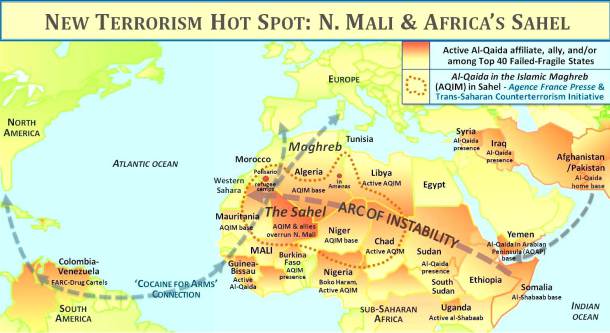
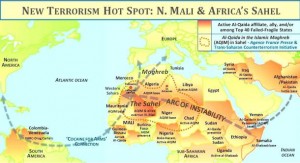 The drug trade in West Africa is tied to Hamas, the Muslim Brotherhood, al-Qaeda and now probably ISIS. This is an ominous discovery because it now opens the possibility that Ebola could be purposely sent to the United States with West African drug couriers. An organization, such as Hamas, could arrange to have a number of West Africans to become exposed to the virus and then fast track them across the southern border under the guise of trafficking in drugs.
In late June of this year, The London Guardian described the West Africans’ role in trafficking drugs into Europe and South America (i.e. SANCHEZ-Peredes cartel). Therefore, this pathway has been established in the media.
Amidst the cries of “conspiracy theorist”, I suppose we should never believe that Hamas or the Muslim Brotherhood would do such a thing. On the contrary, it is likely that this has already happened.
Revelations from Our Government
On Senator Dianne Feinstein’s Senatorial website contains the copy of a 113 page senate report entitled “Eight Steps to Counter the Drug Trade in West Africa“. The report details how prevalent West Africa is both in terms of the United States but also into Europe, transporting drugs into both continents. The Senate report also discusses the terrorist connections between the West African drug trade and known terrorist organizations.
Conclusion
While the country remains fixated on the delivery of Ebola patients to Emory hospital in Atlanta, we are still ignoring the spread of Ebola through air travel as evidenced by the fact that our government is doing next to nothing. Further, when one considers the growing body of evidence which shows that drug couriers coming from West Africa into the United States as part of the drug trade, how could people like Dr. Orient conclude that it is not a matter of if, but when Ebola has a foothold on our country?
The government is fully aware of the threat whether they choose to make press releases to Wolf Blitzer or not!
Source
Don't forget to Like Freedom Outpost on Facebook, Google Plus, Tea Party Community & Twitter.
http://freedomoutpost.com/2014/08/west-africans-streaming-across-u-s-southern-border-carrying-ebola-virus/


 Reply With Quote
Similar Threads
-
Deadly Ebola outbreak in Congo (Coming here soon ?)
By JohnDoe2 in forum illegal immigration News Stories & ReportsReplies: 7Last Post: 10-06-2014, 10:09 PM -
White House: Ebola Outbreak Won’t Stop Obama’s Plans For Summit Of African Leaders
By florgal in forum General DiscussionReplies: 0Last Post: 07-31-2014, 02:15 PM -
Ebola outbreak now most deadly ever
By JohnDoe2 in forum Other Topics News and IssuesReplies: 3Last Post: 07-08-2014, 02:21 PM -
Ebola outbreak in Congo claims three dozen
By JohnDoe2 in forum Other Topics News and IssuesReplies: 0Last Post: 10-03-2012, 11:10 AM -
Outbreak of Ebola virus strikes DR Congo town of Isiro
By JohnDoe2 in forum Other Topics News and IssuesReplies: 0Last Post: 08-18-2012, 03:46 PM


Anti-immigrant terror takes Northern Ireland back to its...
08-22-2026, 07:43 AM in illegal immigration News Stories & Reports