

Results 12,101 to 12,109 of 12109
 227Likes
LinkBacks (?)
-
12-26-2016, 11:32 AM
-
09-02-2016, 05:39 PM
-
whole garden made with pallets!! Love it!! | Pallets | Pinterest | Pallets, Pallets Garden and Wooden Pallets
Refback This thread03-06-2016, 11:30 AM -
10-20-2015, 05:29 PM
-
06-12-2015, 08:00 PM
-
02-26-2015, 01:58 PM
-
01-05-2015, 04:13 PM
-
12-19-2014, 10:19 AM
-
EMERGENCY: HUGE FEMA PANDEMIC EXERCISE IN USA IN NOVEMBER, INTERNET SHUT DOWN PART OF EXERCISE | Prepare4Survival
Refback This thread12-03-2014, 10:39 PM -
Off Grid World ? Ugly Duckling Shipping Container Home Built by Artist Is a Beautiful Swan on the Inside
Refback This thread11-25-2014, 03:10 PM -
11-17-2014, 10:59 PM
-
11-13-2014, 11:18 AM
-
11-09-2014, 02:54 PM
-
10-28-2014, 11:38 PM
-
10-26-2014, 05:54 AM
-
10-16-2014, 11:28 AM
-
10-03-2014, 01:25 PM
-
10-02-2014, 09:16 PM
-
09-26-2014, 07:00 PM
-
09-26-2014, 01:56 PM
-
09-19-2014, 04:46 PM
-
09-13-2014, 05:49 AM
-
09-05-2014, 01:52 PM
-
09-01-2014, 09:39 AM
-
08-30-2014, 06:29 PM
-
08-10-2014, 06:29 AM
-
08-04-2014, 05:07 PM
-
07-23-2014, 11:14 AM
-
New Evidence on Expiration Dates | Medical Preparedness | Doom and Bloom (TM) | Doom and Bloom (TM)
Refback This thread07-22-2014, 10:10 AM -
07-18-2014, 08:37 PM
-
07-15-2014, 04:57 PM
-
07-11-2014, 01:40 AM
-
04-22-2014, 11:14 AM
-
04-18-2014, 12:57 PM
-
04-18-2014, 10:10 AM
-
04-14-2014, 12:18 AM
-
04-12-2014, 02:28 AM
-
03-02-2014, 11:43 PM
-
12-24-2013, 11:59 PM
-
12-07-2013, 11:04 PM
-
kitchen | Cob
Refback This thread11-25-2013, 03:24 PM -
10-22-2013, 10:25 PM
-
Apple Pie Braid | Sweets
Refback This thread09-26-2013, 07:58 AM -
09-02-2013, 04:44 PM
-
5 Reasons Why You May have to Bug Out Even Though You Don’t Want to | The Apartment Prepper's Blog
Refback This thread08-23-2013, 03:20 PM -
06-27-2013, 06:30 AM
-
06-23-2013, 08:11 PM
-
06-17-2013, 11:21 PM
-
05-24-2013, 05:06 PM
-
To Eat / BASIC LIST / SUGGESTED ITEMS FOR LONG TERM SURVIVAL - Page 275 - ALIPAC
Refback This thread05-01-2013, 03:49 AM
Thread Information
Users Browsing this Thread
There are currently 19 users browsing this thread. (0 members and 19 guests)
 LinkBack URL
 About LinkBacks
-
11-18-2026, 07:06 PM #12101Senior Member


- Join Date
- Aug 2018
- Posts
- 99,393
The 50 BMG Can Cannon (The Most Powerful Can Cannon EVER !!!)
The 50 BMG Can Cannon (The Most Powerful Can Cannon EVER !!!)
The 50 BMG Can Cannon (The Most Powerful Can Cannon EVER !!!)

Kentucky Ballistics
183 Subscribers
Scott_DeShields
If you're gonna fight, fight like you're the third monkey on the ramp to Noah's Ark... and brother its starting to rain. Join our efforts to Secure America's Borders and End Illegal Immigration by Joining ALIPAC's E-Mail Alerts network (CLICK HERE)
-
11-18-2026, 09:22 PM #12102Senior Member
- Join Date
- Aug 2018
- Posts
- 99,393
Atlas Survival Sheltersatlassurvivalshelters
 Building A Concrete Bomb Shelter?
#bombshelter #prepper #fallout76 #falloutshelter #preppers #shtf #atlassurvivalshelters #doomsdaypreppers
 World's Largest Fab And Welding Equipment Show
Ron Visits Fabtech 2023, in Chicago, IL.
Fabtech is the World's Largest welding and Steel Fabrication show.
This year welding robots seemed to dominate the floor!
To order your Survival Food visit:
https://beprepared.com/pages/shelter-with-atlas?rfsn=3944244.545f75&subid=atlas.food
 New Bomb Shelter Air System Installs In ONLY 10 Minutes!
Ron visits Israel so he can be shown how they are installing the Safe360 NBC air filtration system inside of a high rise apartment building.
You can buy these now for only $2,999!
 Inside an Israeli Fire Station Bunker
Ron Visits an Israeli Fire Station Bomb Shelter
#bombshelter #fallout76 #atlassurvivalshelters #preppers #shtf #israel

A New Affordable Air System Makes Its Debut In North America
#bombshelter #atlassurvivalshelters #falloutshelter #preppers #shtf #atlassurvivalshelters #bombshelter #doomsdaypreppers

Watertight door for Tsunami
#bombshelter #prepper #atlassurvivalshelters #bunker #tsunami #fallout76

Ron Arm Wrestles a 23-time World Champion Armwrestler Monster Michael Todd
#doomsday #falloutshelter #bombshelter #doomsdaypreppers #atlassurvivalshelter

Tamper Proof Air Pipes Set Atlas Bunkers Apart!
A 10 x 30 shelter is installed under this house. Also shown is our patented tamper proof air pipes.
To order your Survival Food visit:
https://beprepared.com/pages/shelter-with-atlas?rfsn=3944244.545f75&subid=atlas.food
 Secret Bunker Hidden Under Table #bunker #doomsdaypreppers #shtf #bombshelter #doomsday #fallout
This hidden bunker has been under this table for 8 years! It still looks brand new.

Have you been thinking about building your own bomb shelter?
Learn how to build yourself a bomb shelter out of concrete. #doomsdaypreppers #atlassurvivalshelter #FalloutShelter #shtf #bombshelter #preppers #concretebunker

What's a Bomb Shelter Without an Armory?
Build the ultimate man cave today!

The Best Moments of World of Concrete 2024!
Ron goes to Las Vegas to visit the 2024 World of Concrete Show

Build Yourself a Bomb Shelter While You Still Can
Get yourself a bomb shelter before it's too late!

Tate Brother's Hire Atlas To Build Them A Doomsday Bunker!
Ron does an interview with Matthew from Nexus Podcast and talks about billionaires and their bunkers.

She's a prepper!
Anyone can be a prepper!
 Can a 5 year old operate a Bomb Shelter? #shtf #bombshelter #survival #prepper #bunker
Ron shows a five and eight year old little girl trying to operate the air system for one of our nuclear bomb shelters.

LUXURY 10x40 BOMB SHELTER!
See our 12 person Atlas bomb shelter called the Safe Cellar.

WHAT'S NEW AT THE 2024 PRECAST CONCRETE SHOW!?
Ron attends the 2024 precast concrete show in Denver, Colorado. This one hour video highlights everything that Ron found interesting.

We Visited the BEST BBQ Pits in TEXAS!
Ron decides to visit Pitmaker in Houston, Texas, one of the biggest BBQ manufacturers in Texas.

The Amazing Petra in Jordan
Ron takes a tour of Petra a few days before Christmas 2023. Petra is one of the 7 wonders of the world.

A Look Into A Huge Billionaire's Bunker!
Explore with us as we step into a revamped 1960s AT&T Bunker, now a dazzling space complete with a cinema, recording studio, workshop, and multiple cozy bedrooms.

Everything You Wanted To Know About Gas Masks | Mira Safety Tour
Ron takes a trip down to Austin to visit @MIRASafety to check out their flagship gas masks for doomsday preppers.
10% off any order at Mira Safety using code "ATLAS10"

See 100's Of Bomb Dropping Drones On Display At The 2023 Military Police Trade Show "Milipol"
Join in with us as we tour the world's largest military police trade show in Paris, France at the 2023 Milipol show. Drones dominated this years show.


This Man Walked Away From This Wreck!
Ron's recent trip to Canada turned disastrous when he rolled his rental car on a frozen country backroad.

Underground Bunker in Lithuania You Can Tour Yourself
Ron Howard, Owner of Atlas Survival Shelters travels to Lithuania and tours a Cold War Underground Bunker built in 1975 when fear of Nuclear Holocaust was at it's highest!
If you're gonna fight, fight like you're the third monkey on the ramp to Noah's Ark... and brother its starting to rain. Join our efforts to Secure America's Borders and End Illegal Immigration by Joining ALIPAC's E-Mail Alerts network (CLICK HERE)
-
11-18-2026, 09:27 PM #12103Senior Member
- Join Date
- Aug 2018
- Posts
- 99,393
Survival Website Publishes 10-Step Preparedness Guide For Beginners
11/18/2026 // Iva Greene // 90 Views
Tags: bug out, Collapse, disaster, emergency, first aid, food supply, Gear, Home Defense, homesteading, off grid, preparedness, prepper, prepping, resilience, self-defense, SHTF, survival, survival gear, tips, water supply
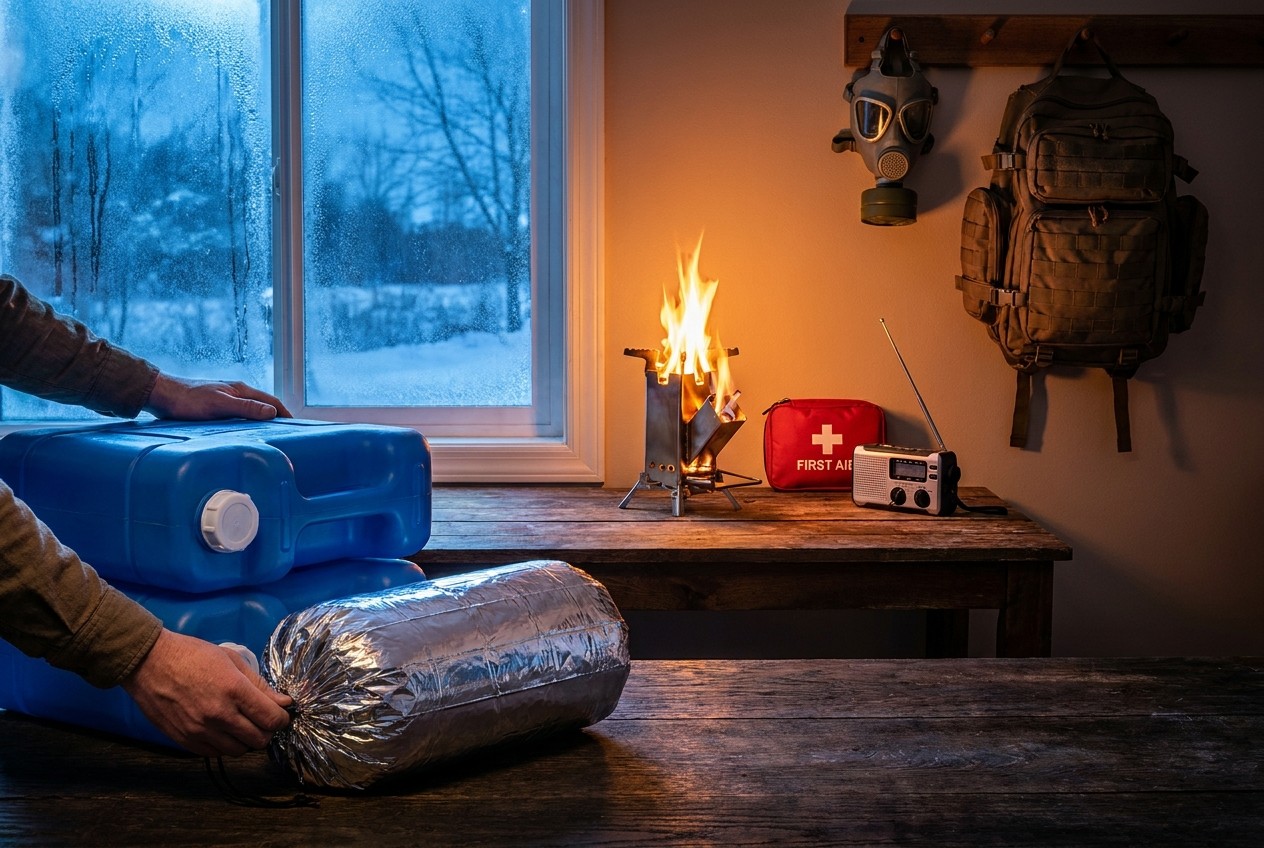
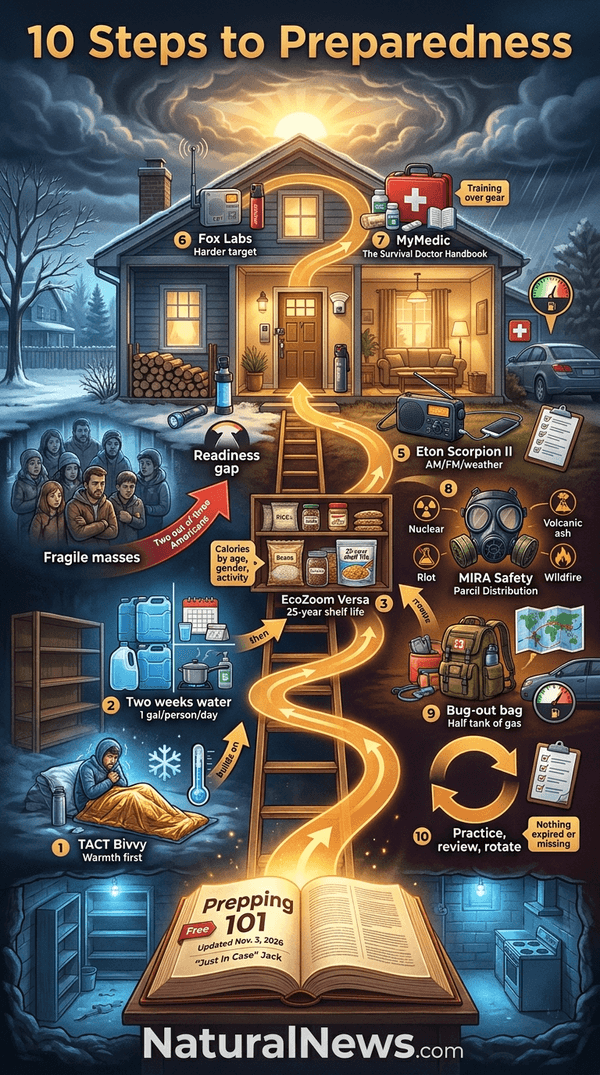
SkilledSurvival.com published a preparedness guide, attributed to co-founder "Just In Case" Jack, that lists 10 steps for beginners [1].The guide says two out of three Americans do not feel prepared for a three-day disaster, citing that figure as evidence of a gap in household readiness. Its purpose is to address contradictory advice circulating in the preparedness space and to help readers avoid what it terms the "fragile masses."
According to the guide, the topics are ordered to move a beginner from a vulnerable starting point toward a base of supplies, tools and confidence for most future disasters. Each step is intended to build on the previous one and completing all 10 steps provides a foundation for short-term disruptions.
Warmth and Water Lead Guide's First Steps
Step 1 of the guide recommends having one emergency sleeping bag per household member for below-freezing power outages. But it notes that this can be skipped by households with a wood stove or fireplace and an adequate wood supply. The guide states that a lack of warmth can be fatal in freezing temperatures, making this step a priority in cold climates.
Step 2 calls for stockpiling two weeks of water at one gallon per person per day. The guide states that half the stored water is intended for drinking and half for cooking and sanitation. It recommends food-grade emergency water containers and cites affordability and attainability as reasons for the two-week target.
Water storage is a common element of preparedness planning. The Prepper's Blueprint, by Tess Pennington, advises assessing existing supplies and then acquiring what is missing while prioritizing nutritional value [2]. Other preparedness resources note that stockpiling food and water reduces the impact of disruptions to normal shopping patterns [3].
Food Storage and Cooking Methods Detailed
Step 3 advises stockpiling two weeks of non-perishable calories, calculated by age, gender and activity level. The guide offers DIY options such as rice, beans, peanut butter and hardtack, or done-for-you freeze-dried meals lasting 25 years or more. Freeze-dried meal suppliers provide an alternative for those who do not want to assemble their own stockpile.
Step 4 recommends a rocket stove to boil water with minimal wood fuel. The guide says users should stock enough firewood to cook two weeks of food and warns against burning wood indoors due to fire and fume risks. It notes that a backyard fire pit is inefficient compared with a rocket stove.
Preparedness literature consistently addresses cooking contingencies. Jim Cobb's Prepper's Long-Term Survival Guide includes checklists for food preservation and storage equipment, including canning supplies and dehydrators [4].
Communications and Defense Steps Included
Step 5 recommends a hand-crank radio to receive AM/FM/weather information when power is out. The guide describes the radio as a lifeline for information during a crisis because televisions, computers and phones may not work without electricity. It notes that some models allow the hand crank to charge a phone.
Step 6 addresses personal defense with pepper spray and home defense with deadbolts, alarms and motion-sensing lights. The guide states renters should request deadbolts in writing and may use door stop alarms or jammer bars. The goal is to make a home a harder target than neighboring homes.
Home security planning is reflected in other preparedness materials. Jim Cobb's Urban Emergency Survival Plan lists tools for bug-out bags and notes that a few tools can make the difference between thriving and surviving [5]. Jim Cobb's Prepper's Home Defense, referenced in a bibliography, addresses security strategies to protect a family [4].
Medical, Gas Mask and Bug-Out Preparations
Step 7 calls for a basic first aid kit and training, citing MyMedic kits and The Survival Doctor Handbook. The guide states that emergency rooms may be full or inaccessible during a widespread disaster and that first responders may prioritize their own families. It recommends that households learn basic first aid and keep the supplies needed to perform it.
Step 8 recommends having at least one quality gas mask and two filters per mask. The guide lists nuclear attacks, chemical attacks, riots, volcanic ash, pandemics and wildfires as scenarios in which a gas mask may be necessary. Having at least one mask provides options for a household.
Step 9 advises building a bug-out bag and keeping at least half a tank of gas. The guide says hunkering down is preferred for most disasters, but evacuation may be necessary for floods or fires. It recommends that residents identify safe travel paths out of their neighborhoods.
The concept of a bug-out bag is tied to military practice. A reference document states that the term is related to the "bail-out bag" carried by military aviators and to the Korean War practice of U.S. Army units preparing to "bug out" when being overrun was imminent [6]. Other guides describe the contents of a get-home bag and note that emergency rations vary in shelf stability [7].
Coalition and Advanced Resilience Advised
Step 10 recommends joining a survival coalition after completing the first nine steps. The guide states the 10 steps cover warmth, water, food, cooking, communications, defense, medical, air and bug-out needs. It also says the basics are not sufficient for long-term disasters and describes advanced measures such as rainwater collection, gardens, debt reduction and side businesses.
The guide concludes that preparedness should reduce fragility and increase resiliency. Readers who complete all 10 steps will be better positioned for future disasters.
Community resilience is a recurring theme in preparedness media. Preparedness advocates often emphasize that a single household's readiness can be strengthened by working with neighbors, sharing resources and coordinating response plans ahead of a disruption. Building local networks and identifying trusted contacts are commonly recommended as complements to the individual steps outlined in the guide.
References
- Prepping 101: How To Easily Prepare For The Future FAST. https://www.skilledsurvival.com/prepping-basics/
- The Preppers Blueprint - The Step-By-Step Guide To Help You Through Any Disaster. Tess Pennington
- Store This, Not That!: The Quick and Easy Food Storage Guide. by Crystal Godfrey & Debbie Kent
- Preppers Long-Term Survival Guide. Jim Cobb
- Urban Emergency Survival Plan. Jim Cobb
- Offtheshelf Red Cross preparedness kit Bugout bag Wikipedia. PScript5dll Version 522
- Building a Get Home Bag. David Nash
Explainer Infographic
Ask BrightAnswers.ai
Survival Website Publishes 10-Step Preparedness Guide For Beginners – NaturalNews.com
If you're gonna fight, fight like you're the third monkey on the ramp to Noah's Ark... and brother its starting to rain. Join our efforts to Secure America's Borders and End Illegal Immigration by Joining ALIPAC's E-Mail Alerts network (CLICK HERE)
-
11-18-2026, 09:41 PM #12104Senior Member
- Join Date
- Aug 2018
- Posts
- 99,393
Systems Are Failing Faster — Why Preparedness Beats Panic
11/18/2026 // Mike Adams // 2.4K Views
Tags: AI, artificial intelligence, Big Tech, chaos, Collapse, current events, cyber attack, cyberwar, global collapse, national security, panic, politics, preparedness, prepping, SHTF, survival, system failure
Systems Are Failing Faster
I keep getting asked the same question in emails, on social media, and in many interviews: is a giant AI cyberattack about to take down everything at once? My answer has not changed. No. The big one is a distraction. Complex systems almost never fail that neatly or that dramatically. They fail in layers, in sequence, and sometimes in overlapping collisions.
What we are actually living through right now is a slow, accelerating unraveling across the infrastructure that modern life depends on. People sense it. That is why mainstream publications are now openly writing about tech paranoia and public trust collapsing [1]. Panic is a natural reaction to that sensation, but panic is useless. What actually shields a family from layered failure is local redundancy, personal preparedness, and the refusal to depend on systems that no longer function reliably.
So yes, I am concerned. But I am not fearful. Those are two very different postures, and the difference is preparation. I have built my life around the assumption that the institutions are failing, that the official explanations will arrive late and dishonest, and that no one is coming to rescue me or my neighbors. That assumption has never once left me worse off.
The Big One Is a Distraction from the Slow Collapse
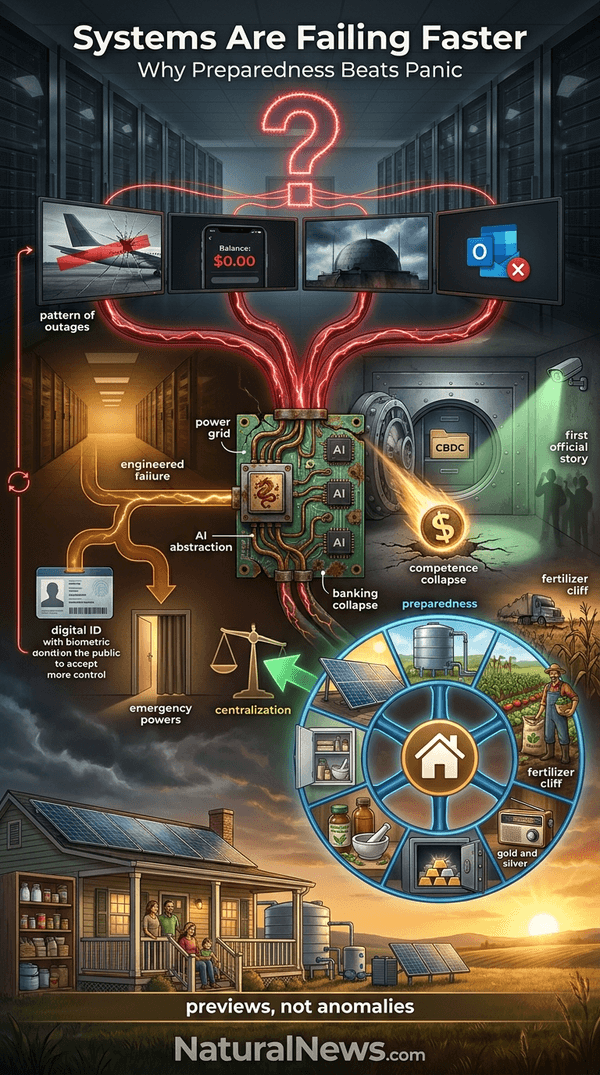
A single apocalyptic AI event makes for dramatic headlines and excellent fear content, but the record shows something far different. When Microsoft Outlook went down, then the FAA grounded flights, then Chase Bank's systems fritzed, then the NSA admitted internal disruptions, the honest reading was not one coordinated cyber-apocalypse -- it was a pattern of fragility finally becoming visible to ordinary people [2][3].
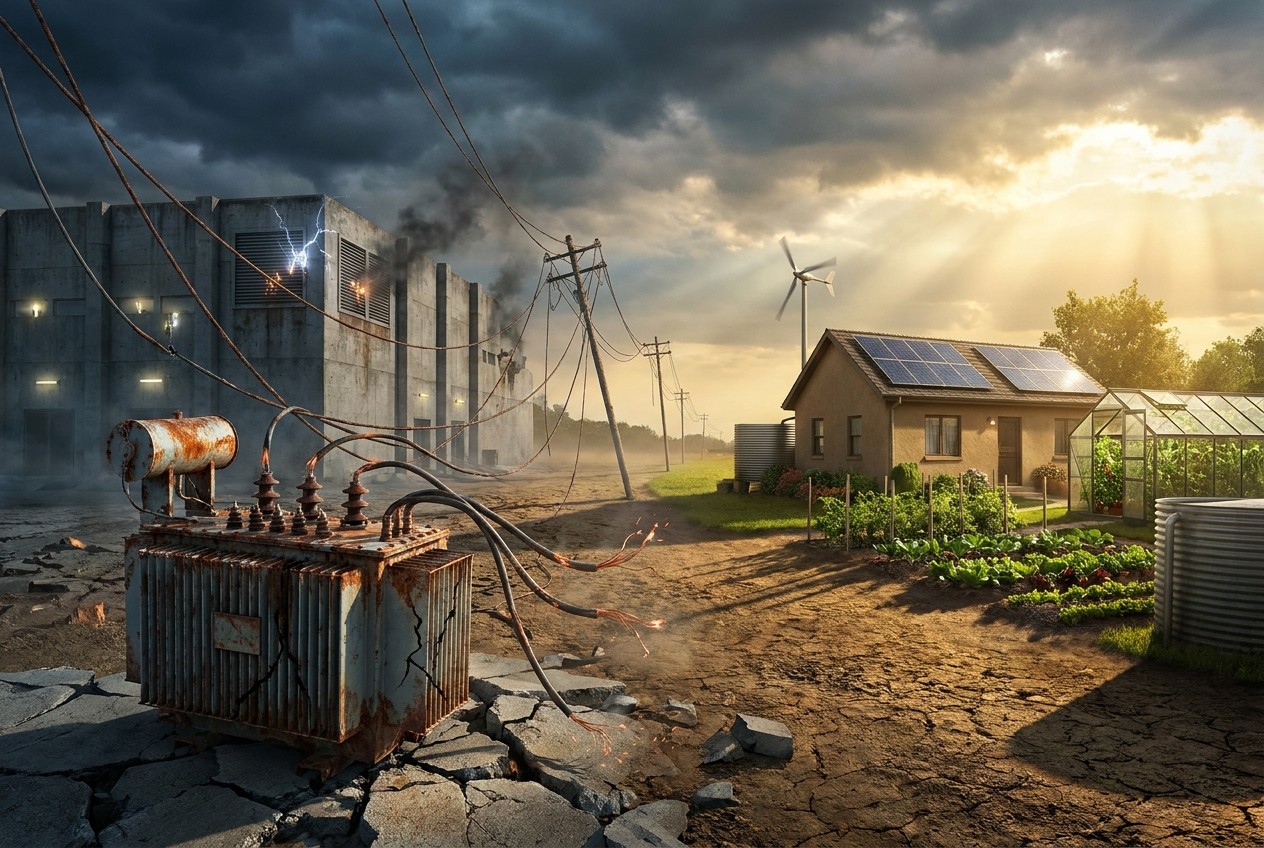
The U.S. power grid is a patchwork nightmare, split across three systems and propped up by transformers, aging copper, and intermittent renewable inputs that were never engineered for the load being demanded of them [4]. Legacy systems are looking increasingly like Frankenstein's monster, with bolted-on parts from AI companies and third-party vendors offering more points of failure [5]. When CNN contributor Jacob Ward described the situation bluntly -- software routed through 1960s-era copper wiring -- he was describing the engineering reality most agencies refuse to admit [6].
The banking system is no more honest about its vulnerabilities. Chase, Bank of America, Wells Fargo, and U.S. Bank have all suffered outages at moments when the public was told everything was fine. I believe the globalist plan for a financial reset and a CBDC surveillance currency is real, but it does not advance through one dramatic switch being thrown. It advances through crisis and confusion, exactly like this -- through outages, bail-ins, and eventually emergency powers that produce a central-bank digital currency nobody actually voted for. The outages are the warning shots, not the event itself.
Idiotocracy, Legacy Code, and the People Who Aren't There Anymore
We are no longer operating at the peak of Western cognition. Short-term thinking dominates every institution that claims to be planning for the future, from corporate boardrooms to federal agencies. A significant chunk of our critical infrastructure still runs on legacy code written by engineers who have retired, died, or refuse to return to consulting work for the agencies that forced them out. When a modern AI routing system gets stacked on top of that code, you cannot call up the original architect and ask what line 42 was supposed to do, because the original architect's phone has been disconnected for fifteen years.
This is the Mike Judge vision playing out in real time. Trash mountains, unfinished highways, decisions made without any long-term consequence -- a society that has quietly stopped maintaining the machines it depends on. As Mike Judge called it in the film, and as we are now living it in the supply chain, infrastructure failures in water, food, electricity, medication, and spare parts are becoming more common, not less. The fertilizer cliff alone should terrify anyone who eats food, because the modern global food system rests on chemical inputs that sustain nearly half of global production, and we have spent the past several years watching that supply chain get surgically disrupted [7][8]. When sulfur runs out, famine is not far behind [9].
And here's the part most people do not want to hear. Some of these failures are being engineered. When a fertilizer plant explosion, a pipeline strike, or a data center cascade happens at exactly the moment when centralized emergency authority is needed to "fix" it, that is not coincidence. It is the built-in invitation for emergency centralized measures -- AI-run air traffic control, AI-managed banking, digital ID to access your own money. The failures serve the centralization agenda. They are not preventing it; they are advancing it.
Preparedness Eliminates Fear: Build Local Redundancy Now
The smart play, and I have said this on every platform I can reach, is to decentralize your life as quickly as humanly possible and stop depending on central control systems for anything you can produce locally. That means redundancy for power, water, food, medicine, and cash. Solar panels, generators, rainwater collection, a well, storage tanks, a real garden, and herbal medicine that actually treats common problems without a pharmacy or a permission slip. We have been building this on my ranch for years, and every time the grid flickers, we barely notice.
The lessons repeat every single time. When a storm knocked the power out for millions across several states, the grid's fundamental vulnerability was demonstrated in hours, and twenty people paid for it with their lives [10]. When fiber optic cables were severed in Louisiana and Mississippi, 911 systems collapsed for hours despite all the backup lines that were supposed to prevent exactly that [11]. When an AT&T outage hit, satellite phones sold out because people suddenly remembered that the only communication that keeps working when the system fails is the communication that bypasses the cell towers [12]. These are not anomalies. They are previews of things to come.
Lower your expectations of system functioning to a realistic level, and you will spend the rest of your life being pleasantly surprised when things work. Buy salt, tanks, pumps, solar gear, and supplies of every kind while the dollar still functions and shelves are still stocked. Buy gold and silver at these levels while you still can. The dollar is not going to survive forever, and the people who stacked metal before the panic are the ones who sleep well during it. Preparedness breeds confidence, and confidence is what lets you navigate layered failures with a clear head instead of windmilling into panic.
And do not believe the first official press conference from the FAA, the Department of Homeland Security, or the White House [13]. The real story almost always emerges days later, after the initial cover narrative has already done its job. If you wait for official confirmation before acting, you will be reacting to yesterday's disaster. Move first. Adjust later.
No One Is Coming to Save You -- But We Can Muddle Through
The government will not save you. That is not cynicism; it is simply an observation of how every disaster of the past several decades has actually gone. Official narratives are constructed to cover incompetence or to push central control, and the pattern repeats with such regularity that believing the first announcement is close to negligent [14]. When I asked a county commissioner candidate in Central Texas how his county would respond to a systemic collapse scenario, the honest answer was that local government has no plan for that. Banks would fail, the grid would go dark, grocery deliveries would halt, and the county itself would be a spectator to its own population's survival [15].
When bad times arrive, desperation shows up in predictable forms: shortages, looting, begging. Community resilience matters enormously in that environment, which is why I have come to believe that building a real community is one of the most critical parts of preparedness. Help neighbors where you can without taking personal risk. Individual resilience strengthens the whole community, and a community that has done the work is a community that can muddle through. Above all, asume the system will crater. Prepare accordingly, and you will be fine.
This is going to be a slow, agonizing, layered collapse -- not everything corrupted at once, but water here, food there, payment systems next, then the grid, then the currency [16]. With preparation, we can make it through. Without it, we are at the mercy of systems that are actively failing. I know which side I have chosen, and I recommend the same posture to every reader: eyes open, pantry stocked, water stored, metals in hand, no illusions, no panic, no belief in the next press conference. That is the recipe for getting through what is already underway.
Check out my free preparedness course streaming for free right now at BrightU.com (streaming all this week).
And if you want to stay informed about honest money, real preparedness, and the collapse of centralized systems, the sources I trust are the ones I built: NaturalNews.com for independent reporting, BrightAnswers.ai for an uncensored AI engine that does not lie about finance, health, or geopolitics, BrightVideos.com as a free speech alternative to YouTube, and Brighteon.social as an uncensored alternative to X.
We have work to do, and there is no reason to do it alone. Learn from others and share knowledge to help those you can reach. Together, we can survive the worst that they throw at us.
References
- Tech Paranoia Intensifies After Outages Roil Public Trust. 2026-11-17T00:00:00Z. https://www.bloomberg.com/news/artic...l-public-trust
- Analysis: Paranoid about all of the tech outages? Read this | CNN Politics. 2026-11-18T01:08:26Z. https://www.cnn.com/2026/11/17/polit...theories-trump
- November 2026 outages: Microsoft, FAA, banks and NSA - cleveland.com. 2026-11-01T00:00:00Z. https://www.cleveland.com/news/2026/...-november.html
- Gridlocked: A wake up call for energy independence and grid resilience - NaturalNews.com, December 09, 2025. by NaturalNews.com
- Why Chase, Microsoft and United are facing crippling outages — and why .... 2026-11-16T00:00:00Z. https://nypost.com/2026/11/16/busine...tll-get-worse/
- Old Wires, Fast Software: Why America’s Tech Systems Keep Crashing. 2026-11-17T22:08:26Z. https://www.tampafp.com/old-wires-fa...keep-crashing/
- The Fertilizer Cliff Why Americas Food System Is Nine Meals From Anarchy - NaturalNews.com, April 20, 2026. by NaturalNews.com
- Global Food Supply at Risk: The Silent Collapse Triggered by Fertilizer Shortages. 2026-04-04T19:01:08.565Z. https://www.activistpost.com/global-...zer-shortages/
- The Invisible Bottleneck: Why Your Food Supply Depends on Fertilizers That Can't Be Made Without Sulfur - NaturalNews.com, July 03, 2026. by NaturalNews.com
- 10 things the recent D.C. power outage taught - NaturalNews.com, July 08, 2012. by NaturalNews.com
- Massive 911 outages expose fragile emergency systems after fiber cuts cripple Louisiana and Mississippi - NaturalNews.com, September 26, 2025. by NaturalNews.com
- Bright Videos News - SUICIDE SQUAD - Mike Adams - BrightVideos.com, February 23, 2024. by Mike Adams - BrightVideos.com
- Lawmakers React To Spate Of Recent System Outages | HuffPost Latest News. 2026-11-18T00:08:26Z. https://www.huffpost.com/entry/lawma...b02da00c0335ad
- Governments Are Telling You to Get Ready. Pay Attention.. 2026-11-17T11:08:26Z. https://eddowdbeyondthenarrative.sub...ing-you-to-get
- Health Ranger Report - Why your local government isnt ready - Mike Adams - BrightVideos.com, May 03, 2024. by Mike Adams - BrightVideos.com
- Society Collapse 2040: The Year The World Stops Working And Starts Dying. 2026-08-25T03:25:00.000Z. https://www.zerohedge.com/geopolitic...d-starts-dying
- Tech outages spark fears over AI and cybersecurity - Axios. 2026-11-17T00:00:00Z. https://www.axios.com/2026/11/17/tec...ernet-breaking
Explainer Infographic
Ask BrightAnswers.ai
Systems Are Failing Faster — Why Preparedness Beats Panic – NaturalNews.com
If you're gonna fight, fight like you're the third monkey on the ramp to Noah's Ark... and brother its starting to rain. Join our efforts to Secure America's Borders and End Illegal Immigration by Joining ALIPAC's E-Mail Alerts network (CLICK HERE)
-
11-18-2026, 09:44 PM #12105Senior Member
- Join Date
- Aug 2018
- Posts
- 99,393
“The Health Ranger’s Guide to Surviving Global War, Famine, Plandemics and Grid-Down Scenarios” on BrightU: How one broken link could trigger a food supply catastrophe
11/18/2026 // Belle Carter // 2.2K Views
Tags: agriculture, diesel, economy, electricity, famine, food security, food supply, fuel, manufacturing, preparedness, refrigeration, Shortages, SHTF, starvation, supply, survival, transport
- The Health Ranger Mike Adams warned that fewer than 10 major companies produced much of America's processed food, often relying on single regional facilities with limited backup capacity or inventory.
- The Quaker Oats plant explosion illustrated how damage to a major production facility could interrupt the availability of familiar products for months.
- Farming, harvesting, processing and transportation all depend on diesel, meaning fuel costs or shipment delays could disrupt multiple stages of the food supply chain.
- Refrigerated trucks, warehouse coolers and supermarket freezers depend on continuous power. A failed compressor or prolonged outage could spoil perishable goods, reduce inventory and delay resupply.
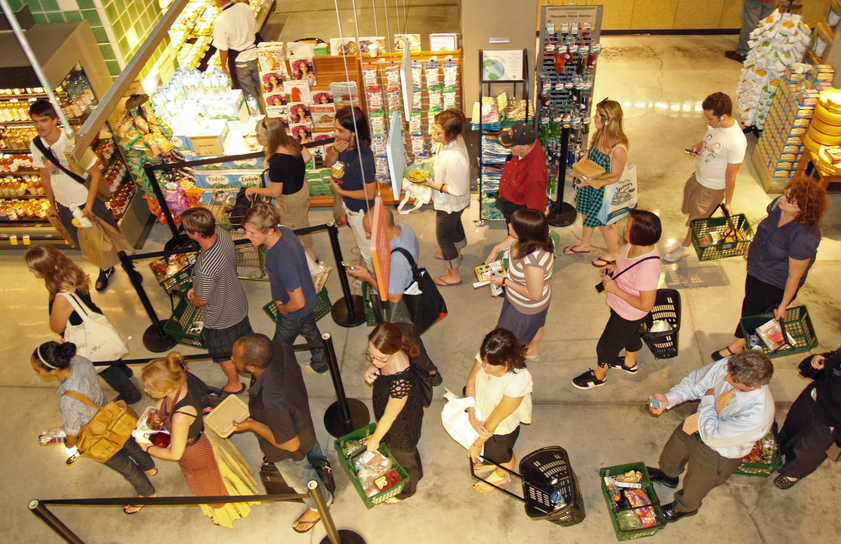
- Adams described a potential progression from panic buying and disputes over remaining food to looting, vandalism and fires. He urged viewers to recognize grocery store activity as an early warning sign of wider supply-chain stress.
What if the first sign of a food crisis was not an empty grocery shelf, but a factory that suddenly stopped producing, a refrigerated truck that failed on the highway or a power outage that turned thousands of dollars' worth of food into waste?
In Episode 3 of "The Health Ranger's Guide to Surviving Global War, Famine, Plandemics and Grid-Down Scenarios," which aired on Nov. 16, Mike Adams examined the vulnerabilities hidden behind the familiar grocery store experience. He described a food distribution system built around centralized production, limited backup capacity, diesel-powered transportation and a cold chain that depended on continuous refrigeration. His central warning was that a disruption at just one point could ripple through the system, affecting products and communities far beyond the original location.
A food system built on single points of failure
Adams explained that a surprisingly small number of major companies manufactured much of the processed food found in American grocery stores. According to his account, fewer than 10 companies produced the vast majority of those products, with regional manufacturing often concentrated in a single facility. Rather than maintaining backup factories or large reserves of inventory, the system prioritized efficiency and competitiveness.
That arrangement left little room for error. Adams pointed to the explosion at the Quaker Oats milling facility in Cedar Rapids, Iowa, which he said had processed approximately two million pounds of oats per day. The incident illustrated how one damaged facility could interrupt the supply of a familiar product for months, even when the company itself remained financially sound.
He then traced the journey from farm to supermarket, showing how diesel fuel powered tractors, harvesting equipment, grain drying, processing and transportation. A farmer unable to afford fuel could leave a crop standing in the field. A trucker facing higher costs could refuse a shipment. Each interruption added pressure to the next stage, potentially increasing costs and delaying deliveries before shoppers noticed anything wrong.
The grocery store, Adams argued, was the final link in a much longer chain – and one of its most exposed points.
When the cold chain breaks, the clock starts ticking
One of the episode's most important warnings concerned refrigeration. Refrigerated trucks, warehouse coolers and supermarket freezers formed a continuous cold chain. If temperatures rose beyond safe limits, an entire shipment could become unsellable. Adams described how a failed refrigerated-truck compressor could spoil a load within hours, while a prolonged power outage could disable store freezers and walk-in coolers.
Even without an initial food shortage, a grid failure could therefore create one. Perishable products might have to be discarded, resupply could stall and stores would be left with dwindling inventory. Dry goods might last longer, but they could not immediately replace everything lost from refrigerated shelves.
Adams also described how public behavior could intensify the disruption. Initial concern could turn into panic buying, followed by arguments over the remaining food. In the most severe scenarios he outlined, looting, vandalism and fires could damage stores, making restocking even harder if deliveries eventually resumed.
The episode presented the grocery store as more than a place to shop: it could become an early indicator of mounting pressure across the food system. Adams urged viewers to recognize warning signs before crowds gathered and shelves emptied.
The larger question raised by the discussion was unsettling: how resilient was a food system that depended on so many links working perfectly – and what happened when even one of them failed?
Want to know more?
Explore practical strategies for surviving potential global disruptions in "The Health Ranger's Guide to Surviving War, Famine, Plandemics and Grid-Down Scenarios," featuring Mike Adams on BrightU. Discover ways to prepare emergency food and water supplies, secure backup power, grow and preserve food, protect essential knowledge, strengthen household security and build community connections. Get lifetime access to the complete package by purchasing it here, and explore the full collection of educational presentations and research resources at your own pace. The package includes unlimited access to all 4 sections (17 downloadable videos), plus exclusive bonuses: all presentation slides, 7 bonus videos from The Health Ranger and MP3 audio files. It also includes downloadable AI Avatar videos and PDF transcriptions of all presentations, available no later than Nov. 30.
Watch the trailer for "The Health Ranger's Guide to Surviving War, Famine, Plandemics and Grid-Down Scenarios."
This video is from the BrightU channel on Brighteon.com.
Sources include:
BrighteonUniversity.com
BrightU.com
Brighteon.com
BrighteonUniversity.com 2
“The Health Ranger’s Guide to Surviving Global War, Famine, Plandemics and Grid-Down Scenarios” on BrightU: How one broken link could trigger a food supply catastrophe – NaturalNews.com
If you're gonna fight, fight like you're the third monkey on the ramp to Noah's Ark... and brother its starting to rain. Join our efforts to Secure America's Borders and End Illegal Immigration by Joining ALIPAC's E-Mail Alerts network (CLICK HERE)
-
11-19-2026, 12:43 PM #12106Senior Member
- Join Date
- Aug 2018
- Posts
- 99,393

How to make your own herbal salves #natural #alaska #livinginalaska #alaskalife #wellness
How to make your own herbal salves #natural #alaska #livinginalaska #alaskalife #wellness
How to make your own herbal salves #natural #alaska #livinginalaska #alaskalife #wellness

Sanity Central
21 Subscribers
defendressofsanIf you're gonna fight, fight like you're the third monkey on the ramp to Noah's Ark... and brother its starting to rain. Join our efforts to Secure America's Borders and End Illegal Immigration by Joining ALIPAC's E-Mail Alerts network (CLICK HERE)
-
11-19-2026, 02:50 PM #12107Senior Member
- Join Date
- Aug 2018
- Posts
- 99,393
“The Health Ranger’s Guide to Surviving Global War, Famine, Plandemics and Grid-Down Scenarios” on BrightU: How a banking collapse could lock millions out of their money
11/19/2026 // Belle Carter // 640 Views
Tags: bank failure, central bank, Collapse, cryptocurrency, depositor protection, digital banking, dollar demise, economy, financial crisis, insolvency, money supply, Paraguay, Pension, public funds, regulation, stability, stablecoins, Ueno Bank
- Paraguay's central bank took control of Ueno Bank on Nov. 2 after its solvency ratio reportedly fell below half the legal minimum, triggering a shutdown of banking services.
- The bank reportedly served 60% of Paraguay's adult population, managed $850 million in public funds and processed pensions for 32,000 retirees. An estimated three million people temporarily lost access to their deposits.
- Paraguay's Deposit Guarantee Fund reportedly covered up to $38,000 per depositor, potentially protecting 97% of depositors, but customers still faced uncertainty and could not immediately use their money.
- The episode argued that bank customers are creditors rather than direct owners of deposited funds, raising concerns about delays, restrictions and access during a bank failure. It also discussed reports of arrests involving eight people, including the bank’s president and founder/CEO.
- The discussion warned that stablecoins and central bank digital currencies could allow issuers or administrators to restrict transactions or freeze wallets. It challenged viewers to consider who truly controls their money and what financial security means when access depends on digital systems and institutions.
What if you woke up one morning, checked your bank account and saw your money sitting right where you had left it – but discovered you could not withdraw a single dollar, use your debit card, transfer funds or access your savings? That frightening scenario became more than a hypothetical talking point in Episode 4 of "The Health Ranger's Guide to Surviving Global War, Famine, Plandemics and Grid-Down Scenarios," which aired Nov. 17, as the discussion turned to the reported collapse of Paraguay’s Ueno Bank and the vulnerability of a financial system increasingly dependent on digital access.
The episode examined what happened after Ueno Bank, described in the interview as Paraguay's largest digital lender, reportedly failed on Nov. 2. According to the account presented, the bank's solvency ratio had fallen below half the legal minimum, prompting Paraguay's central bank to take control. The consequences were immediate and far-reaching: ATMs, debit and credit cards, transfers and other banking functions were shut down, leaving customers unable to reach their deposits.
The scale was staggering. Ueno reportedly served approximately 60% of Paraguay’s adult population, managed $850 million in public funds and handled pension payments for 32,000 retirees. The interview cited an estimated three million people who temporarily lost access to their money. Although Paraguay's Deposit Guarantee Fund reportedly covered up to $38,000 per depositor, with protection expected to cover 97% of depositors, that did not solve the immediate problem: people still could not access the funds they depended on.
Mike Adams also discussed reports of arrests involving eight people, including the bank's president and its founder and CEO, amid suspicions of breach of trust and related offenses. The interviewee offered his own theory about possible insider misconduct, while emphasizing a broader concern: even when deposits had not been permanently lost, customers had been left without access to them.
The difference between a balance and ownership
That distinction became the episode's central financial question. A number displayed on a banking app might look like personal wealth, but what did it actually represent if the account holder could not control or retrieve it?
The episode challenged viewers to reconsider the relationship between depositors and banks. It argued that money deposited in a bank effectively became the bank's capital, leaving the customer as a creditor rather than the direct owner of the funds. In a failure, depositors could face delays, restrictions and uncertainty while waiting for access or repayment.
The discussion then widened to digital currencies, stablecoins and central bank digital currencies. Adams warned that programmable money could introduce another layer of control, allowing issuers or administrators to restrict transactions or freeze wallets. As he put it, "A programmable currency is a permission system." The concern was not simply whether money existed digitally, but who ultimately controlled the ability to use it.
When financial security became a question of control
The episode connected the Paraguay case to broader concerns about inflation, government debt, bank bail-ins and the growing centralization of financial infrastructure. It also explored the possibility that a wider banking crisis could expose weaknesses that deposit guarantees and emergency interventions might not fully address.
Ultimately, the interview left viewers with a provocative question: "do you really own your money?" In an economy where savings could be represented by numbers on a screen and access depended on institutions, networks and permissions, the answer appeared far less straightforward than many people had assumed.
The episode challenged audiences to look beyond account balances and ask what genuine financial security meant when access could disappear overnight.
Want to know more?
Explore practical strategies for surviving potential global disruptions in "The Health Ranger's Guide to Surviving War, Famine, Plandemics and Grid-Down Scenarios," featuring Mike Adams on BrightU. Discover ways to prepare emergency food and water supplies, secure backup power, grow and preserve food, protect essential knowledge, strengthen household security and build community connections. Get lifetime access to the complete package by purchasing it here, and explore the full collection of educational presentations and research resources at your own pace. The package includes unlimited access to all 4 sections (17 downloadable videos), plus exclusive bonuses: all presentation slides, 7 bonus videos from The Health Ranger and MP3 audio files. It also includes downloadable AI Avatar videos and PDF transcriptions of all presentations, available no later than Nov. 30.
Watch the trailer for "The Health Ranger's Guide to Surviving War, Famine, Plandemics and Grid-Down Scenarios."
This video is from the BrightU channel on Brighteon.com.
Sources include:
BrighteonUniversity.com
BrightU.com
Brighteon.com
BrighteonUniversity.com 2
Ask BrightAnswers.ai
“The Health Ranger’s Guide to Surviving Global War, Famine, Plandemics and Grid-Down Scenarios” on BrightU: How a banking collapse could lock millions out of their money – NaturalNews.comIf you're gonna fight, fight like you're the third monkey on the ramp to Noah's Ark... and brother its starting to rain. Join our efforts to Secure America's Borders and End Illegal Immigration by Joining ALIPAC's E-Mail Alerts network (CLICK HERE)
-
11-19-2026, 02:54 PM #12108Senior Member
- Join Date
- Aug 2018
- Posts
- 99,393
Essential survival kit tools: Why every camper and prepper needs the right gear
11/19/2026 // HRS Editors // 510 Views
Tags: bug out, camping, camping gear, EDC, everyday carry kits, first-aid kit, off grid, power grid, preparedness, prepper, prepping, prepping gear, survival, survival gear, survival kit, Survival Tips, survivalist
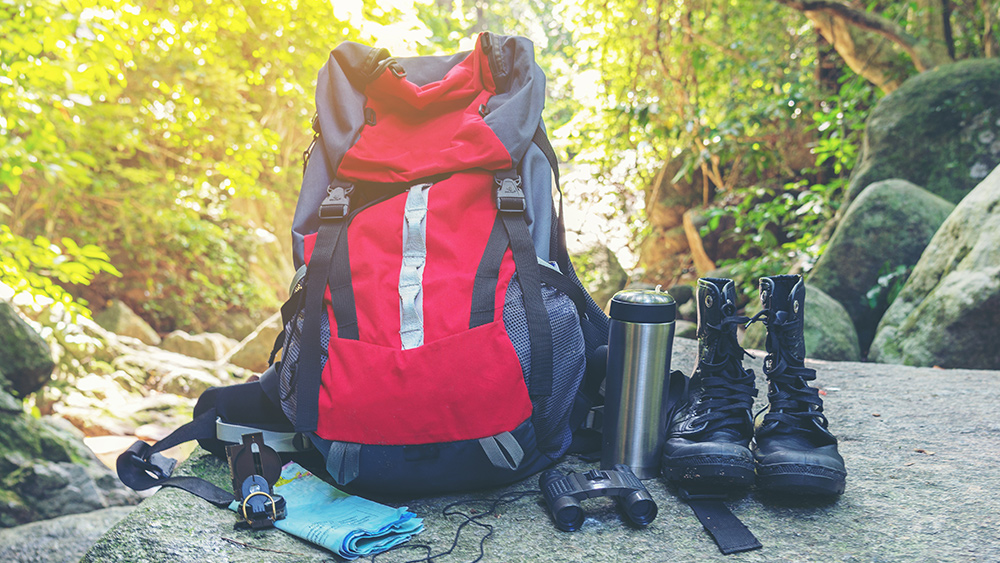
Outdoor adventures can be exciting and rewarding, but unexpected emergencies can quickly turn a camping trip or wilderness excursion into a serious challenge. Getting lost, facing bad weather, running out of water or sustaining an injury can happen even to experienced campers.
Having the right tools in a well-prepared survival kit can make a significant difference in handling these situations.
A good survival kit provides practical equipment for meeting basic needs, staying safe and getting help when necessary. It can also offer peace of mind by helping campers feel more prepared and confident when facing unexpected situations.
Survival kits come in different sizes, from compact pocket-sized containers to large bug-out bags. A practical approach is to keep a small kit in a daypack, a medium-sized kit in a vehicle and a larger collection of emergency supplies at home.
The contents of your survival kit should reflect the environment, climate, available space and outdoor skills of the person using them.
Start with the four basic survival priorities
When assembling a survival kit, campers and preppers should consider four essential needs: shelter, water, fire and food. Each item should ideally serve more than one purpose, and multiple tools should support each major survival priority.
A compass, knife and at least two different fire-starting methods form the foundation of a lightweight survival kit.
Additional equipment can provide greater comfort, flexibility and protection during an emergency.
Essential tools every survival kit should include
For beginner preppers or anyone who wants to stay safe and warm while going camping, you will need all, or at least a combination of these useful items:
Compass and navigation tools
If you're hiking, a compass can help you find your way and avoid becoming lost in unfamiliar surroundings. It works best when paired with a map or a good understanding of the surrounding wilderness.
Knowing how to navigate before heading outdoors can help prevent emergencies from developing in the first place.
Durable cordage
Paracord, also known as 550 parachute cord, is a versatile addition to any survival kit. It can help secure branches when building a shelter, fasten equipment, support a bow-drill fire-starting setup and assist with other outdoor tasks.
Its many uses make it especially valuable when packing limited supplies.
Emergency whistle
A lightweight emergency whistle provides a simple way to signal for help. Its sound can travel farther than an ordinary shout, while requiring much less physical effort.
Three consecutive blasts are commonly used as an SOS signal, making a whistle a useful communication tool when someone becomes lost or needs assistance.
Fire-starting equipment
Fire is essential in many wilderness situations. It provides warmth, helps cook food, can purify water and supports other survival tasks.
Campers should carry at least two ways to start a fire, such as a lighter, waterproof matches or a ferrocerium fire striker. Petroleum-jelly-soaked cotton balls and dry tinder can also make starting a fire easier.
First-aid kit
A basic first-aid kit is another important item for campers, hikers and preppers. It provides supplies for cleaning, covering and managing minor wounds.
It is particularly useful for outdoor guides and people responsible for leading groups. Having basic medical supplies readily available can help address injuries before they become more difficult to manage.
Reliable survival knife
A sturdy knife can perform many essential outdoor tasks, including cutting branches, preparing firewood, shaping wooden tools, gathering plants and helping construct a shelter.
A fixed-blade, full-tang survival knife offers a durable option for demanding outdoor activities. A comfortable handle and a strong blade are also important considerations.
Headlamp or flashlight
A headlamp or compact flashlight makes nighttime activities safer and easier. It helps campers move around the campsite, perform necessary tasks and signal rescuers.
Having a reliable light source can also provide reassurance and improve morale when spending the night outdoors. Extra batteries can help keep lighting equipment ready when needed.
Metal water bottle
A steel water bottle does more than carry drinking water. It can collect and store water and, when designed for heating, can be used to boil water as part of a purification process.
It can also hold warm water that campers can place between clothing layers to help maintain body warmth during cold nights.
Wool or Mylar blanket
A wool blanket provides insulation even when wet and offers some resistance to fire. A lightweight Mylar emergency blanket reflects body heat to help reduce heat loss.
Either option can provide valuable protection when temperatures drop, or unexpected weather conditions make outdoor shelter more important.
Additional supplies for greater preparedness
Beyond the essentials, several additional items can make a survival kit more useful.
Water-purification supplies are especially important because untreated water from streams, lakes and other natural sources may contain harmful bacteria or parasites. Portable filtration devices and water-purification tablets offer practical options.
UV-based purification devices are also available, although they require batteries and relatively clear water.
A lightweight camping tarp is another worthwhile addition. It can protect you from rain and sunlight, serve as a temporary shelter and help collect water or carry supplies. A compact tarp measuring no more than eight feet square can provide useful coverage without adding excessive weight.
Campers should also consider basic fishing gear and eating utensils when preparing for longer outdoor trips. These supplies can support food gathering and preparation while making meals easier to manage. They should complement the core survival equipment rather than replace essential shelter, water and fire supplies.
Build a kit that is practical and portable
The best survival kit is not necessarily the largest or most expensive. Heavy equipment can become inconvenient to carry, increasing the chance that you will leave the kit behind.
Instead, campers and preppers should prioritize versatile, reliable tools that match their surroundings and abilities. Regularly reviewing supplies and understanding how each item works can also make a difference when emergencies arise.
Ultimately, a thoughtfully assembled survival kit helps outdoor enthusiasts prepare for unexpected challenges while enjoying greater confidence in the wilderness.
With the right combination of navigation tools, first-aid supplies, fire starters, water equipment, shelter materials and food-related gear, you can be better equipped to handle difficult situations while camping and make your outdoor adventures safer and more rewarding.
Where to buy an emergency survival kit for camping or prepping
The Health Ranger Store is here to help you prepare for any emergency. That’s why we’re proud to introduce essential camping and prepping gear such as GemGear's 47Pcs Emergency Survival Kit.
When facing an emergency, you need to have the right supplies. In the first 72 hours, the right survival kit can truly make a difference between life and death after a disaster occurs.
GemGear's 47Pcs Emergency Survival Kit contains all the necessary items, such as a rain poncho, flashlight, first aid supplies and more. It's a must-have for hikers, backpackers, mountain bikers, skiers, campers and outdoor enthusiasts who are more likely to find themselves in a survival scenario.
Features:
- Complete survival kit - This 47-piece emergency survival kit contains various items you need for outdoor activities, such as a military knife, multifunctional spoon, tactical pen, flashlight, compass, rain poncho and emergency blanket. It also comes with first aid supplies so you can properly deal with minor medical emergencies when SHTF.
- Practical and widely applied - This survival kit is a must-have for hiking, climbing, camping, fishing and other outdoor adventures. It’s also practical for doctors, military personnel, police, firefighters and first aid personnel who often deal with the wounded.
- Premium quality and durable - Made of premium ABS and aluminum alloy material, certain items in this kit, such as the foldable military knife, are durable, sturdy and sharp enough to penetrate hard surfaces.
- Convenient and portable - All of the survival equipment is packed in a 600D Oxford cloth pouch measuring 8.3 x 5.9 x 4.1 inches. The pouch is wear-resistant and durable, and has a buckle strap design that allows it to be attached to a mountain bike, backpack and more.
- Ideal gift - It is a great gift for family and friends who love camping and other outdoor activities.
Click on this link for the ultimate prepper gear checklist for outdoor survival.
Go to Health Ranger Store and Bright Shop to find more camping and prepping products for your survival kit.
Sources include:
Grit.com
HealthRangerStore.com 1
HealthRangerStore.com 2
HealthRangerStore.com 3
Essential survival kit tools: Why every camper and prepper needs the right gear – NaturalNews.com
If you're gonna fight, fight like you're the third monkey on the ramp to Noah's Ark... and brother its starting to rain. Join our efforts to Secure America's Borders and End Illegal Immigration by Joining ALIPAC's E-Mail Alerts network (CLICK HERE)
-
11-20-2026, 12:46 AM #12109Senior Member
- Join Date
- Aug 2018
- Posts
- 99,393

Survival hacks -- Make a fire with a spent lighter
Survival hacks -- Make a fire with a spent lighter
Survival hacks -- Make a fire with a spent lighter

Mith Chronicler
5,283 Subscribers
Mith Chronicler
If you're gonna fight, fight like you're the third monkey on the ramp to Noah's Ark... and brother its starting to rain. Join our efforts to Secure America's Borders and End Illegal Immigration by Joining ALIPAC's E-Mail Alerts network (CLICK HERE)


 Reply With Quote


IT WAS STOLEN!… Latest “Truth Is Freedom” Report Reveals Odds of...
11-20-2026, 04:01 PM in General Discussion