

Results 1 to 5 of 5
 1Likes
Thread Information
Users Browsing this Thread
There are currently 1 users browsing this thread. (0 members and 1 guests)
 LinkBack URL
 About LinkBacks
Threaded View


-
02-22-2015, 12:04 AM #5Senior Member


- Join Date
- Aug 2008
- Location
- PARADISE (San Diego)
- Posts
- 99,038
Sonora hostels raided in search for migrants
1 hour ago • By Perla Trevizo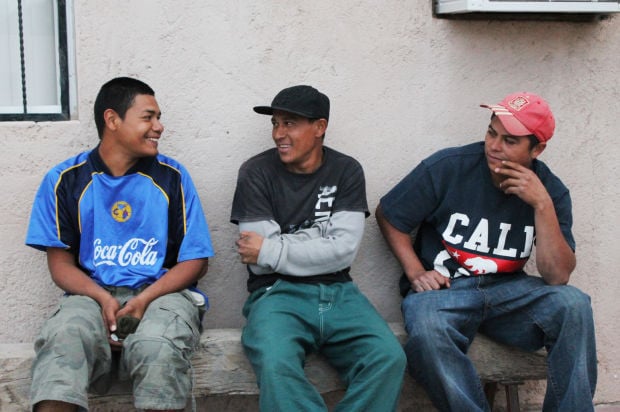
From left, Hondurans Rudy Velásquez, 21, Giovani Pineda, 29, and Marlo Méndez, 25, bide their time in Altar, Sonora.
Mexico deportations
Number of deportations from Mexico 2014
Total: 107,811
Guatemala: 42,808
Honduras: 41,661
El Salvador: 19,800
Minors (unaccompanied/accompanied): 18,169
2013
Total: 80,902
Guatemala: 30,231
Honduras: 33,079
El Salvador: 14,586
Minors (unaccompanied/accompanied): 8,577
ALTAR, Sonora — Mexico’s increased immigration enforcement to stop Central Americans before they reach the United States is being felt here, a small cattle-ranching town and one of the last stops for migrants heading north.
Federal officials are increasingly looking for immigrants, including inside stash houses or hostels that house the border crossers in the Altar area, local residents and migrants said.
Rudy Velásquez, a 21-year-old Honduran, said he barely escaped a raid a few weeks ago.
Government officials entered the hostel where he was staying, but the migrants’ guides had been tipped off, he said, and all of the Central Americans had been moved to another location.
Altar is one of the last staging areas for immigrants trying to cross the border illegally through Arizona. The main square is lined with shops where border crossers can get everything they need for the journey, including backpacks, socks and camouflage clothing. The side streets are full of signs announcing the “casas de huesped” or hostels where they can rent a bed.
Last year, there were more than 104,000 deportations from Mexico of Central Americans from the “Northern Triangle” region — Guatemala, Honduras and El Salvador — representing an increase of 34 percent from 2013.
The government crackdown, which started last year, was triggered by the so-called border surge in the United States, when nearly 140,000 unaccompanied minors and single parents with children were detained in fiscal year 2014.
The vast majority of these immigrants came from the same three Central American countries.
Increased immigration enforcement under pressure from the United States was first felt in the south of the country, said Sonja Wolf, a Mexico-based researcher working on migration, security, street gangs and drug policy in Mexico and Central America.
There’s always an ongoing effort to prevent migrants from going further north, she said, but it has been much more pronounced since July, the peak of what President Obama called a humanitarian crisis.
In Altar, Martha Lanza, a nun who helps run the local migrant shelter, said migrants started talking about government officials going after them earlier this year.
“They would come here and ask, ‘Can migration come get me here?’” she said. “They were scared.”
Lanza doesn’t know which government entity has been involved.
Officially, Wolf said, only federal police or, if requested, the military can assist with migration operations. But in practice, the municipal and state police also play a role, she said.
For Velásquez, the young Honduran, having to run and hide from Mexican immigration officials started as soon as he crossed the Guatemalan border.
He has already been deported from Mexico twice, the last time in December.
“We had been walking all day along the side of the road in Oaxaca when we saw the migration vans,” he said from the migrant shelter in Altar.
He tried to hide, he said, but they caught up with him.
By this point, he had traveled for more than a month, a trip that was taking much longer because immigration agents were “everywhere.”
There were times they had to stay hidden or in the same place for five days because officers were constantly patrolling the area.
“We couldn’t even sleep. It was hard” Velásquez said.
As soon as the bus arrived in Honduras with him and other deportees, he immediately turned around and took another bus to Guatemala City.
The idea behind increased enforcement is that migrants will be deterred and stay in their countries of origin.
“But over the years, it’s been evident that migrants are not deterred,” Wolf said, “simply because the conditions in their countries are very difficult.”
When they find obstacles such as checkpoints or increased operations on the train tracks, they find other routes.
They walk for weeks along the sides of the roads from one city to another, as Rudy and Marlo Méndez, another Honduran at the Altar shelter, did.
Instead of deterrence, Wolf said, Mexican migration controls are pushing immigrants into more isolated and dangerous areas, where it’s easier for criminals and corrupt government officials to prey upon them.
Velásquez has been in northern Sonora for more than a month now trying to get across without success.
His wife and infant son came last year from San Pedro Sula — one of the world’s most violent cities — as part of that surge. Now it’s his turn.
http://tucson.com/news/sonora-hostel...2911a86a3.html
NO AMNESTY
Don't reward the criminal actions of millions of illegal aliens by giving them citizenship.
Sign in and post comments here.
Please support our fight against illegal immigration by joining ALIPAC's email alerts here https://eepurl.com/cktGTn


 Reply With Quote
Similar Threads
-
National Park Service Produces Videos Praising Islam’s Contributions To . . . Women’s
By kathyet2 in forum General DiscussionReplies: 0Last Post: 09-22-2013, 04:49 PM -
While mexican migration has slowed theres work to be done
By AmericanTreeFarmer in forum illegal immigration News Stories & ReportsReplies: 0Last Post: 08-02-2011, 12:57 PM -
Mexican Data Say Migration to U.S. Has Plummeted
By vortex in forum illegal immigration News Stories & ReportsReplies: 9Last Post: 05-15-2009, 06:31 PM -
Mexican-U.S. Migration Could Flow Both Ways
By jimpasz in forum Other Topics News and IssuesReplies: 1Last Post: 07-06-2007, 12:23 PM -
Mexican parties split on migration
By Brian503a in forum illegal immigration News Stories & ReportsReplies: 0Last Post: 01-26-2006, 12:33 PM


TRUMP DOJ Sues New York, Connecticut, and Vermont for Giving...
08-11-2026, 06:55 AM in illegal immigration News Stories & Reports