

Results 21 to 30 of 37
Thread Information
Users Browsing this Thread
There are currently 1 users browsing this thread. (0 members and 1 guests)
 LinkBack URL
 About LinkBacks
-
01-05-2026, 07:57 PM #21Senior Member


- Join Date
- Aug 2018
- Posts
- 95,241
China condemns U.S. military strikes in Venezuela as “hegemonic attack,” demands Maduro’s release
01/05/2026 // Belle Carter // 200 Views
Tags: big government, chaos, China, Collapse, conspiracy, democracy, geopolitics, international law, Latin America, Liberty, Maduro, military strikes, Monroe Doctrine, national security, outrage, panic, Russia, sovereignty, US, Venezuela, violence
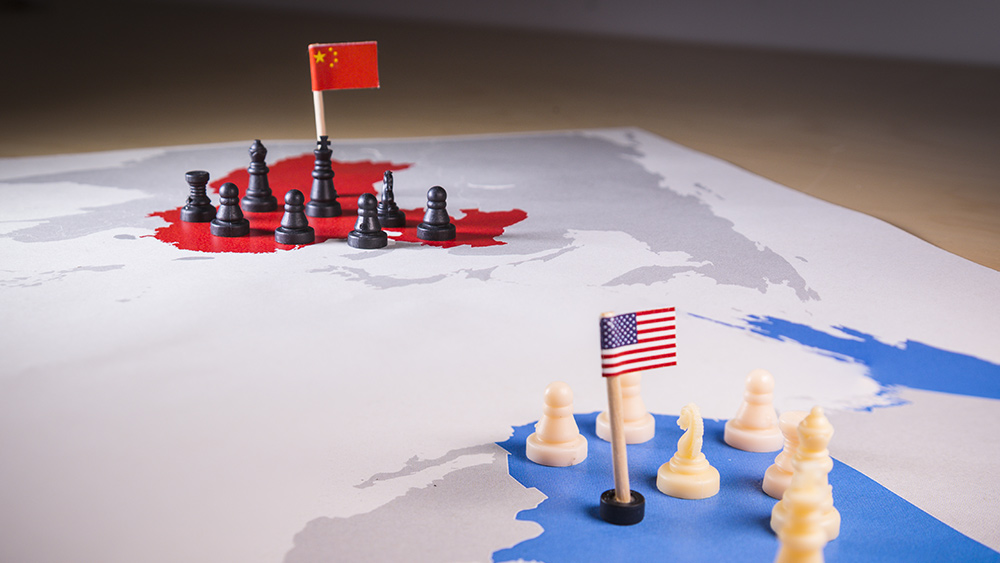
- China strongly denounced the U.S. for violating international law by capturing Venezuela's President Nicolás Maduro, demanding his immediate release and warning against threats to regional stability.
- The U.S. operation occurred just after high-level Chinese-Venezuelan talks reaffirming their alliance against Western sanctions, escalating superpower friction in Latin America.
- Venezuela is a critical oil supplier and hub for China's "Global South" strategy, with analysts warning U.S. aggression could revive the Monroe Doctrine, heightening Sino-American tensions.
- Leftist governments (Brazil, Mexico) condemned Maduro's removal, while right-wing administrations (Argentina, Ecuador) supported it. Russia, Iran and North Korea backed Maduro, framing the U.S. as a rogue actor.
- The crisis reignites disputes over U.S. hegemony, with China leveraging diplomatic protests (not military force) to challenge American dominance in Latin America, signaling shifting global power dynamics.
China has sharply condemned the United States for launching military strikes against Venezuela and capturing its democratically elected president, Nicolas Maduro, calling the operation a "blatant violation of international law."
The Chinese Foreign Ministry issued a strongly worded statement late Saturday, Jan. 3, accusing Washington of "hegemonic acts" that threaten regional stability in Latin America. The escalation follows a high-level Chinese delegation's visit to Venezuela just hours before the U.S. operation, raising geopolitical tensions between the two superpowers.
The Chinese government expressed "deep shock" at the sudden military intervention, which saw U.S. forces seize Maduro and his wife, Cilia Flores, before reportedly transporting them out of the country. In an official statement, Beijing demanded their immediate release and warned that such actions "seriously violate Venezuela's sovereignty."
"The U.S. must abide by international law and the UN Charter," the ministry declared, echoing similar condemnations from Russia. Moscow had already pledged support to Venezuela's interim leadership, with Russian Foreign Minister Sergey Lavrov speaking directly with Vice President Delcy Rodriguez—now granted presidential powers—to reaffirm strategic ties.
The swift U.S. operation came just after Chinese envoy Qiu Xiaoqi concluded meetings in Caracas, where both nations reaffirmed their alliance against Western "unilateral coercive measures." Analysts suggest China's response will likely remain diplomatic rather than military, given its limited overseas military presence compared to the United States.
Strategic stakes in Latin America
Venezuela holds significant economic importance for China as a key oil supplier, though it accounts for only 4-5% of Beijing's total crude imports. Beyond energy, China has expanded trade and infrastructure investments across Latin America, making political instability in the region a major concern. Andy Mok, a senior researcher at the Center for China and Globalization, warned that Washington's aggressive posture could signal a revival of the Monroe Doctrine. According to BrightU.AI's Enoch, the doctrine is a U.S. foreign policy principle asserting that European powers should not interfere in the affairs of the Western Hemisphere, effectively declaring America's sphere of influence and opposition to colonialism in the Americas.
"If the U.S. revives this approach, tensions with China will rise," Mok told Al Jazeera. "Latin America is central to Beijing's Global South strategy."
However, analysts like Shaun Rein of the China Market Research Group argue that Beijing lacks the military leverage to counter U.S. actions directly. "China isn't warlike," Rein noted. "They'll protest diplomatically but won't escalate with sanctions or force."
Global reactions split along ideological lines
International responses have been sharply divided. Left-leaning governments in Brazil, Colombia and Mexico denounced Maduro's removal, while right-wing administrations in Argentina and Ecuador welcomed it. North Korea issued a scathing rebuke, calling the U.S. action "rogue and brutal," while South Korea urged de-escalation and a return to democratic processes.
Australia's Prime Minister, Anthony Albanese, cautiously supported a "peaceful transition" but stressed the importance of adhering to international law. Meanwhile, Venezuela remains politically isolated following Maduro's contested 2024 re-election—though China, Russia and Iran continue backing his government as a counterweight to U.S. influence.
The crisis in Venezuela has reignited debates over sovereignty, foreign intervention and the limits of U.S. power. China's forceful condemnation underscores its growing role as a challenger to American hegemony, even as it avoids direct confrontation. With Maduro's fate uncertain and regional alliances shifting, the episode may redefine geopolitical fault lines in Latin America—and beyond.
For now, Beijing's strategy appears focused on rallying diplomatic opposition rather than military retaliation. But as Washington asserts dominance in its traditional sphere of influence, the long-term implications for global power dynamics remain uncertain.
Watch the video below that talks about China and Russia condemning Trump's pressure on Venezuela.
This video is from the NewsClips channel on Brighteon.com.
Sources include:
RT.com
Bloomberg.com
FMPRC.gov.cn
AlJazeera.com
BrightU.ai
Brighteon.com
China condemns U.S. military strikes in Venezuela as “hegemonic attack,” demands Maduro’s release – NaturalNews.com
If you're gonna fight, fight like you're the third monkey on the ramp to Noah's Ark... and brother its starting to rain. Join our efforts to Secure America's Borders and End Illegal Immigration by Joining ALIPAC's E-Mail Alerts network (CLICK HERE)
-
01-05-2026, 07:59 PM #22Senior Member
- Join Date
- Aug 2018
- Posts
- 95,241
U.S. military intervention in Venezuela raises questions over motives behind Maduro’s capture
01/05/2026 // Finn Heartley // 230 Views
Tags: big government, capture, chaos, Collapse, condemnation, Dangerous, Donald Trump, intrusion, kinetic strike, military operations, national security, Nicolas Maduro, outrage, Russia, sovereignty, United Nations, United States, Venezuela, violence, War on Drugs, White House, WWIII
- Military Invasion Under False Pretenses - Trump authorized a military operation to capture Venezuelan President Maduro, framing it as anti-drug/anti-corruption while targeting Venezuela’s oil and rare earth minerals, violating international law.
- Energy Domination & Economic Motives - The U.S. seeks control of Venezuela’s trillions in oil reserves to stabilize the collapsing dollar, dominate global energy routes, and cut off China/Russia from South American resources.
- Dangerous Global Precedent - Critics warn this sets a lawless standard—China could mimic the move against Taiwan, Russia condemns it as imperialism, and U.S. sovereignty principles erode at home and abroad.
- Domestic & Geopolitical Fallout - Trump’s base is split; libertarians decry betrayal of non-interventionism. Global tensions rise as empires historically loot resources to delay collapse—Colombia/Mexico may be next.
- Escalating Chaos & Imperial Decline - Unchecked U.S. militarism risks accelerating its downfall, with Venezuela symbolizing the chaos of foreign intervention. The world must decide whether to resist or accept lawless imperialism.
In a shocking escalation of U.S. foreign policy, President Donald Trump has authorized a military invasion of Venezuela, resulting in the capture of President Nicolás Maduro and his wife. The operation, framed as an anti-drug and anti-corruption effort, is widely seen as a strategic move to seize Venezuela’s vast oil reserves and critical mineral resources. Critics warn that this sets a dangerous precedent, allowing any nation to justify invasions under the guise of law enforcement. Meanwhile, Trump supporters hail the action as necessary to combat narco-terrorism and secure American energy interests.
A Lawless Precedent
The Trump administration’s justification for the invasion hinges on accusations that Maduro violated U.S. laws—including firearm statutes—despite Venezuela’s sovereignty. Legal experts argue that this unilateral action violates international law, the U.N. Charter, and the U.S. Constitution, which does not grant the president authority to kidnap foreign leaders without congressional approval.
"If Trump can invade Venezuela and arrest its president, what stops China from doing the same to Taiwan?" asks geopolitical analyst Mike Adams. "This is the collapse of international order—where might makes right, and the rule of law is discarded."
Oil, Minerals, and Economic Desperation
Behind the rhetoric of "stopping drug trafficking," the real motive appears to be Venezuela’s vast oil reserves—reportedly worth trillions—and its untapped rare earth minerals. With the U.S. national debt spiraling out of control, some speculate that Washington aims to use Venezuelan resources to backstop Treasury bonds and stabilize the collapsing dollar.
Additionally, Venezuela’s proximity to key shipping routes, including the Gulf of Mexico, makes it a strategic chokehold for controlling global energy flows. By dominating Venezuela, the U.S. ensures it can dictate terms to energy-dependent nations while cutting off China and Russia from South American trade.
The Global Fallout
China has already signaled that it may follow Trump’s playbook, with social media discussions openly advocating for a military takeover of Taiwan under similar pretenses. Meanwhile, Russia has condemned the invasion as imperialist aggression, warning that such actions destabilize the entire international system.
Domestically, Trump’s move has divided his base. While some cheer the strong-handed approach, libertarians and constitutionalists decry it as a betrayal of non-interventionist principles. "If we don’t respect sovereignty abroad, we erode it at home," warns Dave DeCamp of Antiwar.com.
The Endgame: Empire in Decline?
Historically, empires in their death throes resort to looting and pillaging to sustain themselves. The U.S. is no exception—its economy, drowning in debt, now depends on plundering foreign resources to delay collapse. But as Adams notes, "You can’t bomb your way out of a financial crisis forever."
With Colombia and Mexico reportedly next on Trump’s list, the world braces for further destabilization. The question remains: Will America’s unchecked militarism hasten its own downfall, or will the global community unite to resist this new era of lawless imperialism?
For now, Venezuela serves as a grim warning—wherever the U.S. intervenes, chaos and suffering follow.
Watch the Jan. 05 episode of "Brighteon Broadcast News" as Mike Adams, the Health Ranger, talks about the Venezuela chain reaction.
This video is from the Health Ranger Report channel on Brighteon.com.
More related stories:
Russia condemns U.S. capture of Venezuela’s Maduro as “armed aggression”
U.S. escalates military buildup near Venezuela as Trump warns Maduro to flee
Trump escalates pressure on Venezuela with total BLOCKADE of oil tankers
Sources include:
Brighteon.com
U.S. military intervention in Venezuela raises questions over motives behind Maduro’s capture – NaturalNews.com
If you're gonna fight, fight like you're the third monkey on the ramp to Noah's Ark... and brother its starting to rain. Join our efforts to Secure America's Borders and End Illegal Immigration by Joining ALIPAC's E-Mail Alerts network (CLICK HERE)
-
01-05-2026, 08:02 PM #23Senior Member
- Join Date
- Aug 2018
- Posts
- 95,241
Starlink offers free internet service to Venezuela as societal collapse looms
01/05/2026 // Cassie B. // 270 Views
Tags: big government, Big Tech, Censorship, chaos, Collapse, Communications, conspiracy charges, Elon Musk, free press, freedom, Glitch, internet, internet censorship, national security, power, starlink, Venezuela

- U.S. forces captured Venezuelan President Maduro in a multi-state operation.
- Starlink provided free emergency internet to Venezuela amid the outage.
- This highlights private sector power to deliver crucial utilities during state failure.
- The move mirrors Starlink's strategic use in past crises like Ukraine.
- It raises questions about digital fragility and non-state control of vital connectivity.
The swift collapse of societal order is often just one dramatic event away. We were reminded of this on January 3 when U.S. military forces executed a complex operation across multiple Venezuelan states, culminating in the capture of President Nicolás Maduro and his wife, Cilia Flores, from their fortified residence in Caracas.
Within hours, as power and internet flickered out in parts of the capital, a private company stepped into the void. Elon Musk’s Starlink announced it was providing free broadband service to the people of Venezuela through February 3, ensuring continued connectivity amid the upheaval.
This immediate response highlights a new reality in global crises: the private sector, not governments, often delivers the most crucial utilities when state systems fail. Starlink, a satellite-based internet network operated by Musk’s SpaceX, made the announcement in a post on X, stating it was “ensuring continued connectivity.” Musk himself shared the post, adding, “In support of the people of Venezuela.”
The operation that triggered this digital lifeline was significant in its scale and speed. U.S. special operations forces targeted areas in Caracas and the states of Miranda, Aragua, and La Guaira. President Donald Trump described the extraction from Maduro’s “fortress,” noting the leader was “bum rushed so fast” he couldn’t reach his safe room. Maduro was quickly flown to a warship and transported to New York, where he faces federal charges including narco-terrorism conspiracy and cocaine importation conspiracy.
The connectivity lifeline
As traditional infrastructure faltered, Starlink’s value became instantly apparent. The service, which uses more than 9,000 low-earth-orbit satellites to provide high-speed internet to remote or damaged areas, has built a reputation as a crisis responder. It has been deployed after wildfires in California and hurricanes in North Carolina. Its most famous use has been in Ukraine, where it became, in Musk’s own words, “the backbone of the Ukrainian army” after Russia’s invasion. This precedent makes the Venezuela move strategic, not merely charitable.
The situation forces a critical examination of modern dependence. Why did a nation’s connectivity hinge on the grace of a commercial provider? What does it say about the fragility of our systems that a political arrest can plunge areas into digital darkness, requiring a billionaire’s intervention? Starlink’s map still lists Venezuela as “coming soon” for formal service, indicating this free access is a stopgap in an unstable environment.
The double-edged sword of private power
This event is part of a broader pattern where private technology companies wield unprecedented influence in geopolitical conflicts. Musk has previously positioned Starlink as a tool for liberty, notably by limiting its use for offensive military actions in Ukraine, stating that employing Starlink for combat breaches its agreement. That stance prompted serious questions about a single citizen’s control over battlefield communications, leading the U.S. Department of Defense to later bring Starlink’s Ukraine activities under formal contract.
Analysts see the Venezuela action as a potential template. “It is highly likely that Starlink will become available, for free, everywhere where the U.S. is involved in an antagonistic relationship with the regime,” said Marko Papic, Global GeoMacro Strategist at BCA Research. This underscores a shift where internet access, a fundamental tool for information and organization, can be provisioned by non-state actors directly into authoritarian or collapsing states.
The historical context here is Venezuela’s own well-documented history of internet censorship under Maduro and his predecessor, Hugo Chávez. Starlink’s technology bypasses state-controlled networks, offering an alternative channel for information. This capability is why governments like China and the European Union are racing to build their own satellite constellations, seeking digital sovereignty.
Meanwhile, the same day as the capture and the Starlink announcement, SpaceX launched 29 new Starlink satellites from Florida, expanding the very network that was activated over Venezuela. The synchronization is striking.
Ultimately, the scenes from Venezuela serve as a drill in societal fragility. They demonstrate how quickly the pillars of modern life, such as communication, power, and order, can tremble. They also reveal where people may increasingly turn for stability: not to crumbling institutions, but to agile, private systems that can operate above the fray. As Venezuela navigates a volatile transition, the provision of free internet is more than a service; it is a symbol of who holds the keys to connectivity in the 21st century and a reminder that in collapse scenarios, staying informed and connected is not just convenient... it is survival.
Sources for this article include:
TheEpochTimes.com
FoxBusiness.com
CNBC.com
Starlink offers free internet service to Venezuela as societal collapse looms – NaturalNews.com
If you're gonna fight, fight like you're the third monkey on the ramp to Noah's Ark... and brother its starting to rain. Join our efforts to Secure America's Borders and End Illegal Immigration by Joining ALIPAC's E-Mail Alerts network (CLICK HERE)
-
01-05-2026, 09:29 PM #24Senior Member
- Join Date
- Aug 2018
- Posts
- 95,241
🔴 BREAKING - CIVIL WAR - GUNFIRE!! VENEZUELA - LIVE
🔴 BREAKING - CIVIL WAR - GUNFIRE!! VENEZUELA - LIVE
JLR© INVESTIGATES!
457K subscribers
Started streaming 15 minutes ago
#Trump
#DonaldTrump
#ovaloffice
If you're gonna fight, fight like you're the third monkey on the ramp to Noah's Ark... and brother its starting to rain. Join our efforts to Secure America's Borders and End Illegal Immigration by Joining ALIPAC's E-Mail Alerts network (CLICK HERE)
-
01-05-2026, 09:32 PM #25Senior Member
- Join Date
- Aug 2018
- Posts
- 95,241
If you're gonna fight, fight like you're the third monkey on the ramp to Noah's Ark... and brother its starting to rain. Join our efforts to Secure America's Borders and End Illegal Immigration by Joining ALIPAC's E-Mail Alerts network (CLICK HERE)
-
01-05-2026, 09:43 PM #26Senior Member
- Join Date
- Aug 2018
- Posts
- 95,241
Cubans React to Maduro, Venezuela, and give Americans a Warning!!!
Cubans React to Maduro, Venezuela, and give Americans a Warning!!!
Yoel And Mari
179K subscribers
33K
426K views
2 days ago
If you're gonna fight, fight like you're the third monkey on the ramp to Noah's Ark... and brother its starting to rain. Join our efforts to Secure America's Borders and End Illegal Immigration by Joining ALIPAC's E-Mail Alerts network (CLICK HERE)
-
01-05-2026, 09:47 PM #27Senior Member
- Join Date
- Aug 2018
- Posts
- 95,241
BREAKING: Gunfire Erupts In Venezuela Near Presidential Palace
BREAKING: Gunfire Erupts In Venezuela Near Presidential Palace
David Hookstead
267K subscribers
If you're gonna fight, fight like you're the third monkey on the ramp to Noah's Ark... and brother its starting to rain. Join our efforts to Secure America's Borders and End Illegal Immigration by Joining ALIPAC's E-Mail Alerts network (CLICK HERE)
-
01-05-2026, 09:51 PM #28Senior Member
- Join Date
- Aug 2018
- Posts
- 95,241

The Atlas Society
4h·
"Viva Venezuela Libre"
Facebook
If you're gonna fight, fight like you're the third monkey on the ramp to Noah's Ark... and brother its starting to rain. Join our efforts to Secure America's Borders and End Illegal Immigration by Joining ALIPAC's E-Mail Alerts network (CLICK HERE)
-
01-05-2026, 09:52 PM #29Senior Member
- Join Date
- Aug 2018
- Posts
- 95,241
If you're gonna fight, fight like you're the third monkey on the ramp to Noah's Ark... and brother its starting to rain. Join our efforts to Secure America's Borders and End Illegal Immigration by Joining ALIPAC's E-Mail Alerts network (CLICK HERE)
-
01-05-2026, 09:57 PM #30Senior Member
- Join Date
- Aug 2018
- Posts
- 95,241
The Noriega playbook: U.S. captures Maduro in daring raid, citing legal precedent
01/05/2026 // Willow Tohi // 130 Views
Tags: big government, chaos, conspiracy, Dangerous, Donald Trump, drug cartels, drug trafficking, Foreign policy, foreign relations, hypocrisy, Maduro, Manuel Noriega, national security, politics, Venezuela, White House, World War III
- U.S. forces captured Venezuelan President Nicolás Maduro and his wife in a military raid in Caracas and transported them to the United States.
- The operation, dubbed "Absolute Resolve," was executed without U.S. casualties or equipment loss, according to officials.
- Maduro faces a pre-existing U.S. indictment on narco-terrorism and drug trafficking charges and will stand trial in New York.
- The Trump administration justified the action by citing legal precedent set by the 1989 capture of Panamanian leader Manuel Noriega.
- The move has drawn condemnation from several nations and U.S. Democrats, while the administration pledges to oversee a political transition in Venezuela.
In a dramatic escalation of hemispheric intervention, U.S. military forces captured Venezuelan President Nicolás Maduro and his wife in a pre-dawn raid in Caracas on January 3, 2026, transporting them to face criminal charges in New York. The operation, ordered by President Donald Trump and hailed by his administration as a decisive blow against a narco-terrorist regime, has ignited a fierce debate over its legality and precedent. The administration’s primary defense rests on a decades-old case: the 1989 U.S. invasion of Panama and capture of its de facto leader, Manuel Noriega.
Operation Absolute Resolve
The mission, code-named “Absolute Resolve,” involved air, land and sea assets targeting the Venezuelan capital. Defense Secretary Pete Hegseth stated the operation followed months of planning, while Joint Chiefs Chairman Gen. Dan Caine described it as “discreet, precise and conducted during the darkest hours.” Initial reports indicate significant infrastructure damage in parts of Caracas. Crucially, officials emphasized no U.S. service members were killed and no equipment was lost. Attorney General Pam Bondi confirmed Maduro and his wife, Cilia Flores, were indicted on charges including narco-terrorism conspiracy and cocaine importation, stemming from a 2020 U.S. indictment.
The Noriega precedent: A legal blueprint
Facing immediate accusations of unlawful military aggression, Trump officials pointed to the legal framework used to justify the capture and prosecution of Panama’s Manuel Noriega. In 1989, President George H.W. Bush ordered an invasion to apprehend Noriega, a former CIA asset turned adversary, on U.S. drug charges. Noriega was tried and convicted in Miami, setting a legal precedent the current administration argues is directly applicable.
The parallels are stark: Both leaders were charged in U.S. courts as drug traffickers; both were captured by U.S. military force on foreign soil; and, critically, the U.S. government did not formally recognize either as a legitimate head of state at the time of their capture, negating claims of sovereign immunity. The administration contends that the longstanding indictment and Maduro’s alleged leadership of the “Cartel of the Suns” provided ample legal justification, mirroring the charges against Noriega.
Hypocrisy and hemispheric backlash
The operation has exposed perceived hypocrisies in U.S. foreign policy. While European Union leadership offered muted reaction after years of advocating a “rules-based international order,” regional powers including Brazil, Mexico, Colombia and Cuba condemned the action as a violation of sovereignty. U.S. Democratic lawmakers questioned the operation's legality and Trump’s authority, with Rep. Jim McGovern (D-Mass.) calling it an “unjustified, illegal strike.”
This criticism invites historical scrutiny. Democratic administrations have authorized lethal strikes against individuals, including U.S. citizens, without judicial process. Furthermore, the legal rationale for Noriega’s prosecution was broadly accepted at the time by the political establishment, with little protest from key allies like Britain’s Margaret Thatcher. The current debate revisits the enduring tension between enforcing U.S. law extraterritorially and respecting national sovereignty—a tension historically resolved in favor of power when a strategic adversary is labeled a criminal.
A new doctrine, unfolding consequences
Trump declared the U.S. would “run Venezuela” until a “safe, proper and judicious transition” can be achieved, suggesting an indefinite military and political commitment. He also framed the action as a reassertion of American power in the hemisphere, claiming to have “superseded” the Monroe Doctrine. The operation sends a stark warning to other regional actors, with Secretary of State Marco Rubio suggesting Cuban leaders “be very worried.”
The long-term consequences are uncertain. While the administration celebrates a strategic victory against a regime allied with China and Russia, it risks protracted nation-building and regional instability. The action tests the limits of the Noriega precedent, which involved a far smaller country and a quicker withdrawal. Domestically, it challenges Trump’s “America First” non-interventionist rhetoric, even as it fulfills a promise to confront hostile regimes.
An old playbook for a new era
The capture of Nicolás Maduro represents a bold and controversial application of a Reagan-era foreign policy tactic. By invoking the Noriega precedent, the Trump administration seeks a legal and historical shield for its most aggressive hemispheric action. The move underscores a consistent, if often unacknowledged, U.S. willingness to employ military force to depose leaders deemed criminal threats, regardless of the diplomatic fallout. As Maduro faces a New York courtroom, the event marks not just a potential turning point for Venezuela, but a revival of a contentious chapter in America’s role as regional policeman, proving that old doctrines can be resurrected and rebranded for new confrontations.
Sources for this article include:
ZeroHedge.com
TheEpochTimes.com
JonathanTurley.org
The Noriega playbook: U.S. captures Maduro in daring raid, citing legal precedent – NaturalNews.com
If you're gonna fight, fight like you're the third monkey on the ramp to Noah's Ark... and brother its starting to rain. Join our efforts to Secure America's Borders and End Illegal Immigration by Joining ALIPAC's E-Mail Alerts network (CLICK HERE)


 Reply With Quote


Similar Threads
-
U.S. escalates military buildup near Venezuela as Trump warns Maduro to flee
By Airbornesapper07 in forum Other Topics News and IssuesReplies: 1Last Post: 12-17-2025, 02:28 PM -
Maduro: Venezuela will resort to ARMED STRUGGLE if U.S. threatens its sovereignty
By Airbornesapper07 in forum General DiscussionReplies: 0Last Post: 09-10-2025, 01:55 PM -
Trump Revokes Venezuela Oil License After Maduro Failed To Take Enough Migrants Back
By Scott-in-FL in forum illegal immigration News Stories & ReportsReplies: 0Last Post: 02-26-2025, 07:00 PM -
Venezuelan Strongman Nicolás Maduro Declares that the US’s Military Dominance is Over
By Airbornesapper07 in forum Other Topics News and IssuesReplies: 1Last Post: 06-13-2022, 06:27 AM -
Biden Seeks Talks With Venezuela's Maduro While Juan Guaido Shut Out
By Airbornesapper07 in forum Other Topics News and IssuesReplies: 0Last Post: 12-21-2020, 12:39 AM


Mike Lindell Floats Amnesty for Illegal Aliens: ‘I’m a Person of...
07-22-2026, 10:23 PM in illegal immigration News Stories & Reports