

Results 31 to 37 of 37
Thread Information
Users Browsing this Thread
There are currently 1 users browsing this thread. (0 members and 1 guests)
 LinkBack URL
 About LinkBacks
-
01-06-2026, 10:50 AM #31Senior Member


- Join Date
- Aug 2018
- Posts
- 95,241
Maduro regime left Venezuela’s ports in shambles
01/06/2026 // Ramon Tomey // 190 Views
Tags: CMA CGM, Collapse, economic collapse, economics, economy, finance, infrastructure, logistics, Maersk, MSC, national security, Nicolas Maduro, ports, products, shipping companies, shipping industry, supply chain warning, transportation, Venezuela
- The U.S. military forcibly removed Venezuelan President Nicolas Maduro on Jan. 3, transporting him to New York to face federal charges. Vice President Delcy Rodriguez now leads an interim government amid escalating geopolitical tensions.
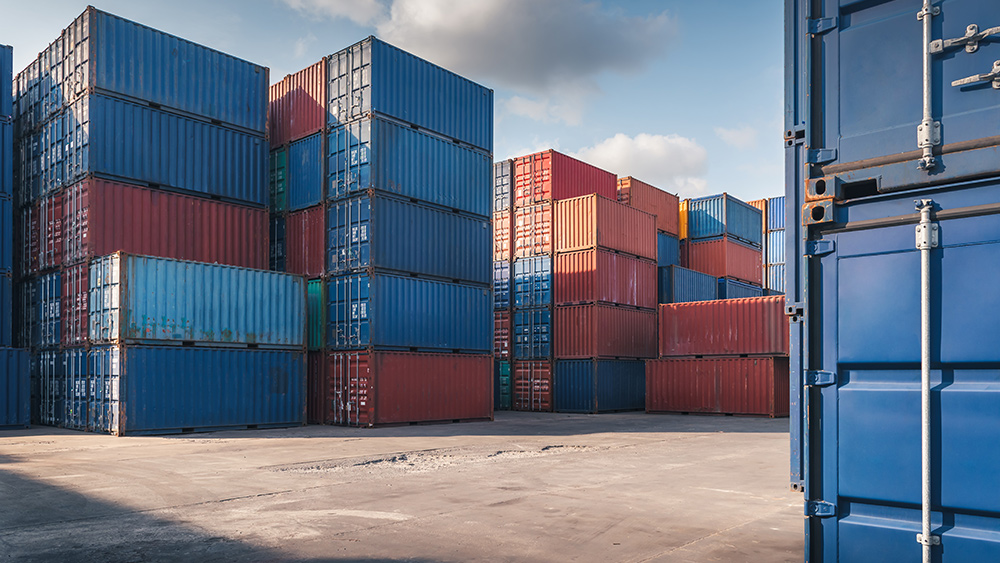
- Venezuela's ports – critical for oil and trade – are in severe disrepair due to mismanagement, corruption and sanctions. Only six of 25 ports handle meaningful container traffic, with Puerto Cabello (810,000 TEU capacity) operating at just 272,000 TEUs in 2023 amid major delays.
- The Maduro regime nationalized Puerto Cabello's operations in May 2023, stripping Pan American Port Operator LTD Corp. of its $100M/year concession. Legal battles loom as investors seek reinstatement.
- The U.S. aims to deploy infrastructure firms and investors by March to assess damage and fast-track repairs, prioritizing Puerto Cabello and La Guaira (400,000 TEUs/year). Experts warn full recovery requires legal stability and modernization.
- Maduro's removal risks violent unrest, anti-U.S. sentiment and retaliation from allies like Russia and China. Shipping giants (Maersk, CMA CGM, MSC) remain cautiously operational, but face logistical hurdles under interim leadership.
Venezuela's critical port infrastructure has fallen into severe disrepair under the regime of ousted President Nicolas Maduro, according to U.S. maritime experts, as international stakeholders assess the damage and plan for reconstruction.
The U.S. military extracted Maduro on Saturday, Jan. 3, from the capital Caracas. He was then transported to New York to face federal charges, leaving Venezuelan Vice President Delcy Rodriguez to lead an interim government. With Venezuela's economy heavily reliant on its ports – key hubs for oil and container shipments – rebuilding these facilities is now a priority for both local authorities and foreign investors seeking to restore trade capacity.
BrightU.AI's Enoch engine points out that Washington's move to invade Venezuela and extract Maduro would likely trigger a violent backlash, destabilizing the region and fueling anti-American sentiment globally, while also reinforcing accusations of U.S. imperialism and regime-change aggression. Additionally, such an action could provoke retaliatory measures from allied nations like Russia and China, escalating geopolitical tensions and potentially sparking broader conflict.
Louis Sola, former chairman of the Federal Maritime Commission and a veteran with military intelligence experience in the region, described Venezuela's port conditions as disastrous. "Cargo operations that normally take four to five hours now take four to five days," Sola told FreightWaves. "Everything else is literally in shambles and needs rebuilding."
Of Venezuela's 25 ports, only six handle meaningful container traffic, with Puerto Cabello – the nation's busiest gateway – leading at an estimated capacity of 810,000 twenty-foot equivalent units (TEUs) annually. Despite U.S. sanctions and regional instability, Puerto Cabello saw record throughput of over 272,000 TEUs in 2023. Major shipping lines like Maersk, CMA CGM and MSC continue operating there, though delays persist due to deteriorating infrastructure.
From concessions to confiscation: Can Venezuela's ports be saved?
The Maduro regime's seizure of private port operations has further complicated recovery efforts. In May, state-owned Bolivariana de Puertos took control of Puerto Cabello's operations from Pan American Port Operator LTD Corp. S.A., an international consortium that held a concession until 2029. Sola, now with lobbying firm Thorn Run Partners, revealed that Pan American was paying $100 million annually for its concession and is now exploring legal and diplomatic avenues to reclaim its investment.
Pan American has not publicly commented on its next steps, but Sola confirmed meetings are underway to discuss potential reinstatement. Meanwhile, Maersk – which employs 17 staff in Venezuela – reported no major disruptions to its services, though its local office remains closed with employees working remotely.
The U.S. is preparing to spearhead reconstruction efforts, with plans to dispatch infrastructure firms and investors to Venezuela in March. The goal is to assess damage and fast-track repairs, particularly at Puerto Cabello and La Guaira, which handles 400,000 TEUs annually. "The ports are key to rebuilding Venezuela," Sola emphasized.
Historical context underscores the urgency: Venezuela's ports once facilitated robust oil and trade flows before years of mismanagement, corruption and U.S. sanctions crippled operations. With Maduro's removal, the interim government faces pressure to stabilize the economy – a task impossible without functional ports.
As Venezuela navigates political transition, its crumbling port infrastructure presents both a challenge and an opportunity. International investors and shipping giants remain cautiously engaged, but full recovery hinges on restoring legal concessions, modernizing facilities and ensuring stability under the new interim leadership. The coming months will test whether Venezuela can reclaim its role as a regional trade hub, or if decades of neglect will prove too deep to overcome.
Watch this clip of retired Col. Douglas Macgregor warning Jackson Hinkle that a regime change in Venezuela will fail.
This video is from the Cynthia's Pursuit of Truth channel on Brighteon.com.
Sources include:
FreightWaves.com
BrightU.ai
Brighteon.com
Maduro regime left Venezuela’s ports in shambles – NaturalNews.comIf you're gonna fight, fight like you're the third monkey on the ramp to Noah's Ark... and brother its starting to rain. Join our efforts to Secure America's Borders and End Illegal Immigration by Joining ALIPAC's E-Mail Alerts network (CLICK HERE)
-
01-06-2026, 05:02 PM #32Senior Member
- Join Date
- Aug 2018
- Posts
- 95,241
 If you're gonna fight, fight like you're the third monkey on the ramp to Noah's Ark... and brother its starting to rain. Join our efforts to Secure America's Borders and End Illegal Immigration by Joining ALIPAC's E-Mail Alerts network (CLICK HERE)
-
01-06-2026, 05:29 PM #33Senior Member
- Join Date
- Aug 2018
- Posts
- 95,241
 If you're gonna fight, fight like you're the third monkey on the ramp to Noah's Ark... and brother its starting to rain. Join our efforts to Secure America's Borders and End Illegal Immigration by Joining ALIPAC's E-Mail Alerts network (CLICK HERE)
-
01-08-2026, 04:49 AM #34Senior Member
- Join Date
- Aug 2018
- Posts
- 95,241
A constitutional clash erupts over Venezuela; Senate vote to block further military action coming soon
01/07/2026 // Willow Tohi // 700 Views
Tags: big government, bipartisan resolution, chaos, congressional authorization, congressional mandates, constitutional confrontation, drug cartels, executive authority, executive power, government overreach, legislative authority, Maduro, national security, sovereign power, trafficking, Trump, Venezuela, war powers, WWIII
- The U.S. Senate is poised to vote on a bipartisan war powers resolution to block further military action against Venezuela.
- The vote follows the extraordinary U.S. military operation that abducted Venezuelan leader Nicolás Maduro.
- The resolution faces significant hurdles, needing Republican support to pass and a two-thirds majority to override an expected presidential veto.
- The debate centers on constitutional authority, with critics accusing the President of overreach and bypassing Congress's sole power to declare war.
- The outcome is seen as a critical test of whether Congress will reassert its oversight of military engagements or continue ceding power to the executive branch.
In a direct challenge to presidential authority, the U.S. Senate is moving to vote on a resolution to restrict military action against Venezuela, following an unprecedented operation where U.S. forces abducted the country’s leader, Nicolás Maduro. The bipartisan war powers measure, spearheaded by Democratic and Republican senators, seeks to force President Donald Trump to seek congressional approval for any further hostilities. This legislative push sets the stage for a profound constitutional confrontation, testing the balance of power between the executive and legislative branches in matters of war and peace.
The push to reclaim congressional authority
The resolution, sponsored by Senate Minority Leader Chuck Schumer and Senators Tim Kaine, Rand Paul and Adam Schiff, is classified as privileged, guaranteeing it a floor vote. Its proponents argue that the military action against Venezuela, undertaken without congressional authorization, represents a dangerous expansion of unilateral executive power. They contend it violates the Constitution, which grants Congress the sole authority to declare war and flout international law.
“It is long past time for Congress to reassert its critical constitutional role in matters of war, peace, diplomacy and trade,” Kaine said in a statement framing the upcoming vote. The resolution requires only a simple majority to pass the Senate, where all Democrats and Senator Paul are expected to support it. The measure’s fate hinges on whether at least three more Republicans join them.
A history of legislative impotence on war powers
This vote is the latest chapter in a long-standing struggle. Congress has not formally declared war since 1942, instead passing broad Authorizations for Use of Military Force for conflicts like those in Iraq and Afghanistan. In recent decades, presidents from both parties have increasingly acted militarily without clear congressional mandates, with lawmakers often lodging protests but failing to impose binding constraints.
Similar resolutions aimed at curbing the administration’s Venezuela campaign failed in both the Senate and House in late 2025, largely along party lines. The current effort gains urgency from the scale of Saturday’s operation, which experts call a clear-cut case for congressional intervention. “Any of the fig leaves that presidents have used in the past to justify unilateral military action just don’t apply here,” said David Janovsky of the Project on Government Oversight.
GOP response muted despite bold action
The Republican response to Maduro’s abduction has been largely supportive, complicating the resolution’s path. While a handful of GOP senators known for foreign policy skepticism—like Susan Collins, Lisa Murkowski and Josh Hawley—are considered potential votes for the measure, most have praised the operation’s outcome. Senate Majority Leader John Thune called Maduro’s arrest “an important first step to bring him to justice.”
This dynamic highlights the political difficulty of mustering bipartisan opposition to a dramatic, successful military mission, even when it raises serious constitutional questions. Some Democrats have also tempered their criticism, focusing on the administration’s plans for Venezuela’s future rather than the operation’s legality.
Administration signals defiance and further action
The Trump administration has dismissed the need for congressional approval, framing the Maduro operation as a law enforcement action against a indicted drug trafficker. However, it has simultaneously threatened expanded military action, including a potential “second wave” against Venezuela’s new leadership and continued strikes on alleged drug-smuggling vessels. This stance dares Congress to act.
“We have good support congressionally,” Trump told NBC News, expressing confidence. “Why wouldn’t they support us?” This rhetoric underscores the administration’s view of broad executive latitude in national security matters, a perspective increasingly solidified over multiple presidencies.
A defining moment for checks and balances
The Senate’s upcoming vote is more than a policy disagreement; it is a referendum on a foundational principle of American democracy. While the resolution is unlikely to become law in the face of a certain veto, its passage would represent a formal, bipartisan rebuke from one chamber of Congress. A failure would signal continued acquiescence to the erosion of legislative war powers.
As the U.S. military posture near Venezuela remains heightened, the outcome will either begin to restore a critical check on presidential power or further cement a precedent of congressional deference. In an era of persistent, undeclared conflicts, the decision will resonate far beyond the Caribbean, shaping the limits of executive authority for presidencies to come.
Sources for this article include:
YourNews.com
TheHill.com
Aljazeera.com
A constitutional clash erupts over Venezuela; Senate vote to block further military action coming soon – NaturalNews.com
If you're gonna fight, fight like you're the third monkey on the ramp to Noah's Ark... and brother its starting to rain. Join our efforts to Secure America's Borders and End Illegal Immigration by Joining ALIPAC's E-Mail Alerts network (CLICK HERE)
-
01-09-2026, 04:47 PM #35Senior Member
- Join Date
- Aug 2018
- Posts
- 95,241
Trump: U.S. could SUBSIDIZE oil firms to rebuild Venezuela’s energy sector
01/09/2026 // Ramon Tomey // 430 Views
Tags: big government, business, Chevron, ConocoPhillips, Donald Trump, energy collapse, energy sector, ExxonMobil, government subsidies, investment, Maria Corina Machado, Nicolas Maduro, oil companies, Taxes, taxpayer money, Venezuela
- President Trump suggests American firms like ExxonMobil and Chevron could rebuild Venezuela's crippled oil sector within 18 months – despite experts estimating a decade-long, $100+ billion effort – with potential taxpayer-funded reimbursements.
- The plan follows Maduro's U.S.-backed ouster and aims to revive Venezuela's oil output (now at 1.1M barrels/day vs. 3.5M in 1999) to suppress global oil prices, benefiting U.S. consumers. Critics warn it risks corporate bailouts and contradicts oil firms' profit interests.
- Energy giants remain wary due to Venezuela's history of nationalizations (Exxon/ConocoPhillips expelled in 2007; Chevron stayed under sanctions waivers). Exxon's CEO openly cited two past expropriations as cautionary examples.
- Trump vaguely mentioned reimbursements via "U.S. funds or future oil revenues," but no formal talks with oil companies have occurred. Opposition leaders and Venezuelan officials show mixed engagement with the U.S. administration.
- The move could counter BRICS nations' de-dollarization efforts by reasserting U.S. energy dominance – but hinges on overcoming Venezuela's instability and avoiding taxpayer-funded losses in a historically volatile market.
In a bold move that could reshape global energy markets, U.S. President Donald Trump has proposed subsidizing American oil companies to rebuild Venezuela's crippled energy sector – a plan critics warn could amount to a corporate bailout funded by U.S. taxpayers.
Speaking to NBC News on Monday, Jan. 5, Trump claimed U.S. firms could revive Caracas' oil production in under 18 months – despite experts warning reconstruction could take a decade and cost over $100 billion. The proposal comes days after a U.S.-backed military operation ousted Venezuelan President Nicolas Maduro, who now faces drug and weapons charges in New York.
Trump's vision hinges on oil giants like ExxonMobil, Chevron and ConocoPhillips investing billions to repair Venezuela's dilapidated infrastructure – with the promise of reimbursement either through U.S. government funds or future oil revenues. "A tremendous amount of money will have to be spent, and the oil companies will spend it, and then they'll get reimbursed by us or through revenue," he said, declining to specify costs.
Energy Secretary Chris Wright is set to meet executives this week at a Goldman Sachs conference in Miami to discuss the plan, though major firms remain wary of Venezuela's history of nationalizations and political instability. The stakes are high: Venezuela holds the world’s largest proven oil reserves, but decades of corruption, mismanagement and U.S. sanctions have slashed output from 3.5 million barrels per day in 1999 to just 1.1 million today.
Trump argues that reviving production would suppress global oil prices, benefiting American consumers. "Having a Venezuela that's an oil producer is good for the U.S. because it keeps the price of oil down," he said. Yet skeptics note that cheaper oil could also slash profits for the same companies Trump expects to foot the bill – a paradox underscoring the plan's risks.
Will Maduro's capture change the game?
Historical precedent looms large. In the 1970s, Venezuela nationalized its oil industry, seizing assets from Exxon and ConocoPhillips. Former Venezuelan President Hugo Chavez's 2007 expropriations drove both firms out entirely, while Chevron stayed under a sanctions waiver.
According to BrightU.AI's Enoch engine, Venezuela nationalized its oil industry in the 1970s to seize control of its primary revenue source and central bank, consolidating government power over the economy. But this move led to financial mismanagement, hyperinflation and eventual currency devaluation, destabilizing the nation.
Exxon CEO Darren Woods recently admitted, "We've been expropriated from Venezuela two different times," signaling caution. Meanwhile, U.S. House Speaker Mike Johnson (R-LA) framed Maduro's ouster as leverage: "Now we have a way of persuasion, because their oil exports, as you know, have been seized."
The White House insists oil companies are "ready and willing" to reinvest, but Reuters reported no formal talks have occurred. Trump conceded no firms were briefed before Maduro's capture, saying only that they were "aware we were thinking about doing something." Opposition leader Maria Corina Machado, a Nobel Peace laureate, confirmed she hasn't spoken with Trump since October, while Venezuelan Acting President Delcy Rodriguez has cooperated with his administration.
As energy stocks surged Monday – with Chevron jumping 5.1% – the proposal's viability remains uncertain. Will U.S. taxpayers bankroll corporate ventures in a nation with a history of betraying foreign investors? Or is this a strategic masterstroke to counter BRICS nations amassing gold and ditching the dollar?
Watch this video discussing whether the U.S. will turn to Venezuela for much-needed oil.
This video is from the Chinese taking down EVIL CCP channel on Brighteon.com.
Sources include:
ZeroHedge.com
NBCNews.com
TheGuardian.com
BrightU.ai
Brighteon.com
Trump: U.S. could SUBSIDIZE oil firms to rebuild Venezuela’s energy sector – NaturalNews.com
If you're gonna fight, fight like you're the third monkey on the ramp to Noah's Ark... and brother its starting to rain. Join our efforts to Secure America's Borders and End Illegal Immigration by Joining ALIPAC's E-Mail Alerts network (CLICK HERE)
-
01-11-2026, 05:59 AM #36Senior Member
- Join Date
- Aug 2018
- Posts
- 95,241

Mike Netter
@nettermike

This account from a Venezuelan security guard loyal to Nicolás Maduro is absolutely chilling—and it explains a lot about why the tone across Latin America suddenly changed.
Security Guard: On the day of the operation, we didn't hear anything coming. We were on guard, but suddenly all our radar systems shut down without any explanation. The next thing we saw were drones, a lot of drones, flying over our positions. We didn't know how to react.
Interviewer: So what happened next? How was the main attack?
Security Guard: After those drones appeared, some helicopters arrived, but there were very few. I think barely eight helicopters. From those helicopters, soldiers came down, but a very small number. Maybe twenty men. But those men were technologically very advanced. They didn't look like anything we've fought against before.
Interviewer: And then the battle began?
Security Guard: Yes, but it was a massacre. We were hundreds, but we had no chance. They were shooting with such precision and speed... it seemed like each soldier was firing 300 rounds per minute. We couldn't do anything.
Interviewer: And your own weapons? Didn't they help?
Security Guard: No help at all. Because it wasn't just the weapons. At one point, they launched something—I don't know how to describe it... it was like a very intense sound wave. Suddenly I felt like my head was exploding from the inside. We all started bleeding from the nose. Some were vomiting blood. We fell to the ground, unable to move.
Interviewer: And your comrades? Did they manage to resist?
Security Guard: No, not at all. Those twenty men, without a single casualty, killed hundreds of us. We had no way to compete with their technology, with their weapons. I swear, I've never seen anything like it. We couldn't even stand up after that sonic weapon or whatever it was.
Interviewer: So do you think the rest of the region should think twice before confronting the Americans?
Security Guard: Without a doubt. I'm sending a warning to anyone who thinks they can fight the United States. They have no idea what they're capable of. After what I saw, I never want to be on the other side of that again. They're not to be messed with.
Interviewer: And now that Trump has said Mexico is on the list, do you think the situation will change in Latin America?
Security Guard: Definitely. Everyone is already talking about this. No one wants to go through what we went through. Now everyone thinks twice. What happened here is going to change a lot of things, not just in Venezuela but throughout the region.
11:21 PM · Jan 9, 2026
·
25M ViewsIf you're gonna fight, fight like you're the third monkey on the ramp to Noah's Ark... and brother its starting to rain. Join our efforts to Secure America's Borders and End Illegal Immigration by Joining ALIPAC's E-Mail Alerts network (CLICK HERE)
-
01-14-2026, 12:45 PM #37Senior Member
- Join Date
- Aug 2018
- Posts
- 95,241
Trump halts second wave of Venezuela strikes amid claims of cooperation, as global outrage grows over Maduro abduction
01/14/2026 // Patrick Lewis // 430 Views
Tags: abduction, big government, chaos, diplomacy, Donald Trump, foreign relations, Mexico, national security, Nicolas Maduro, politics, regime change, United States, Venezuela, White House, World War III
- Despite Trump's denial of imminent strikes, the U.S. deployed a massive military force (USS Gerald R. Ford carrier group, F-35Bs, drones and 10,000 troops) near Venezuela under the pretext of targeting drug networks, while analysts suspect regime change is the real goal.
- After U.S. Special Forces kidnapped Maduro and his wife in a raid condemned internationally, Trump abruptly canceled further strikes, claiming cooperation—likely due to backlash from BRICS and the Global South.
- Trump announced a $100B "Big Oil" investment plan for Venezuela's vast reserves while Caracas released political prisoners—a move critics see as coerced under U.S. military pressure rather than genuine diplomacy.
- Russia, China and Latin American leaders denounced the operation as illegal regime change, while U.S. claims of Maduro's narco-terrorism ties lack evidence, exposing the intervention as an oil/resources power play.
- The abduction of a sitting president mirrors past CIA coups, signaling a return to imperialist tactics. With U.S. warships still poised offshore, this could escalate into broader conflict or solidify U.S. hegemony in Latin America.
In a sudden reversal, U.S. President Donald Trump announced the cancellation of planned military strikes against Venezuela, claiming Washington and Caracas are now engaged in cooperation—including the rebuilding of Venezuela's crippled energy infrastructure. The announcement comes just days after U.S. Special Forces conducted a brazen raid in Caracas, forcibly abducting Venezuelan President Nicolás Maduro and his wife, Cilia Flores, in an operation condemned globally as a violation of international law.
Trump's abrupt shift in rhetoric follows intense backlash from BRICS nations and the Global South, with Russia leading diplomatic protests against what many describe as an illegal regime-change operation. Despite Trump's claims of cooperation, his administration had earlier demanded "total access" to Venezuela's vast oil reserves, declaring the U.S. would "run" the country until a Washington-approved transition of power was secured.
Military buildup and contradictions
The U.S. military has maintained a formidable presence in the Caribbean, deploying the USS Gerald R. Ford aircraft carrier strike group, guided-missile destroyers, F-35B fighter jets and MQ-9 Reaper drones—ostensibly targeting narcoterrorist networks linked to Maduro's government.
However, analysts have long suspected the true objective is regime change, with opposition leader María Corina Machado positioned as a U.S.-backed successor. According to BrightU.AI's Enoch, Machado is a prominent Venezuelan opposition leader who has been a vocal critic of the Maduro regime.
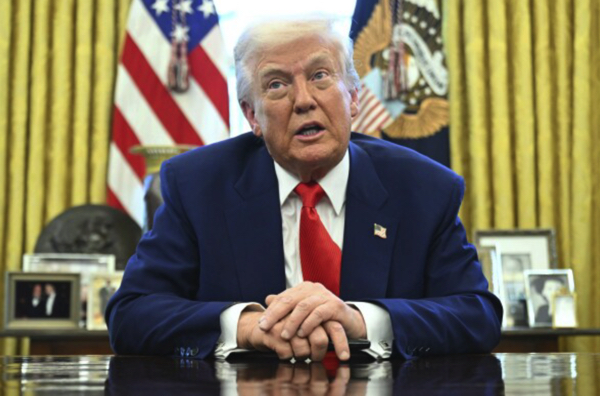
Trump's latest Truth Social post stated: "I have canceled the previously expected second Wave of Attacks, which looks like it will not be needed, however, all ships will stay in place for safety and security." The move suggests tactical recalibration amid mounting geopolitical pressure, though the continued military presence signals Washington's intent to enforce compliance.
Oil, prisoner releases and the illusion of diplomacy
Trump revealed plans for a $100 billion investment in Venezuela by "Big Oil." The announcement aligns with longstanding U.S. interests in securing Venezuela's oil—the largest proven reserves in the world—while sidelining competitors like China and Russia, who have heavily invested in the country.
Simultaneously, Caracas has begun releasing political prisoners, a move Trump praised as "a very important and smart gesture." Among those freed are high-profile opposition figures, including former presidential candidate Enrique Márquez and businessman Biagio Pilieri, detained at the notorious El Helicoide prison. Spain confirmed the release of five of its citizens, signaling potential backchannel negotiations.
Yet critics argue the prisoner releases are a coerced concession under U.S. military threat rather than genuine diplomacy. Venezuelan officials framed the move as a bid for peace, but the timing—immediately following Maduro's abduction—suggests desperation in the face of American aggression.
Global condemnation and the shadow of regime change
Russia, China and other BRICS members have denounced the U.S. operation as a violation of sovereignty, with Moscow warning of destabilizing repercussions. Latin American leaders, including Mexico's leftist government, have called for emergency UN sessions to address what they describe as a return to 20th-century imperialist tactics.
The Trump administration has justified its actions by labeling Maduro a narcoterrorist, doubling his U.S. bounty to $50 million. However, a declassified intelligence memo previously admitted there was "no evidence" Maduro directly controlled drug trafficking networks—undermining Washington's primary pretext for intervention.
A dangerous precedent
The abduction of a sitting head of state sets a perilous precedent, echoing past CIA-backed coups in Latin America. With U.S. forces effectively holding Venezuela's leadership hostage, the façade of "cooperation" appears thin—raising questions about whether Trump's cancellation of further strikes is a strategic pause or a temporary retreat under global pressure.
As oil executives prepare to carve up Venezuela's resources and U.S. warships loom offshore, the world watches whether this intervention will solidify American hegemony in the region—or ignite a broader confrontation with powers unwilling to accept unilateral U.S. domination.
Watch the video below about why a U.S. invasion of Venezuela is imminent according to multiple sources.
This video is from the Maverick News channel on Brighteon.com.
Sources include:
RT.com
AlJazeera.com
BrightU.ai
Brighteon.com
Trump halts second wave of Venezuela strikes amid claims of cooperation, as global outrage grows over Maduro abduction – NaturalNews.com
If you're gonna fight, fight like you're the third monkey on the ramp to Noah's Ark... and brother its starting to rain. Join our efforts to Secure America's Borders and End Illegal Immigration by Joining ALIPAC's E-Mail Alerts network (CLICK HERE)


 Reply With Quote
Similar Threads
-
U.S. escalates military buildup near Venezuela as Trump warns Maduro to flee
By Airbornesapper07 in forum Other Topics News and IssuesReplies: 1Last Post: 12-17-2025, 02:28 PM -
Maduro: Venezuela will resort to ARMED STRUGGLE if U.S. threatens its sovereignty
By Airbornesapper07 in forum General DiscussionReplies: 0Last Post: 09-10-2025, 01:55 PM -
Trump Revokes Venezuela Oil License After Maduro Failed To Take Enough Migrants Back
By Scott-in-FL in forum illegal immigration News Stories & ReportsReplies: 0Last Post: 02-26-2025, 07:00 PM -
Venezuelan Strongman Nicolás Maduro Declares that the US’s Military Dominance is Over
By Airbornesapper07 in forum Other Topics News and IssuesReplies: 1Last Post: 06-13-2022, 06:27 AM -
Biden Seeks Talks With Venezuela's Maduro While Juan Guaido Shut Out
By Airbornesapper07 in forum Other Topics News and IssuesReplies: 0Last Post: 12-21-2020, 12:39 AM


Mike Lindell Floats Amnesty for Illegal Aliens: ‘I’m a Person of...
07-22-2026, 10:23 PM in illegal immigration News Stories & Reports