Results 1 to 7 of 7

Thread Information

Users Browsing this Thread

There are currently 1 users browsing this thread. (0 members and 1 guests)

  1. #1
    Senior Member Airbornesapper07's Avatar
    Join Date
    Aug 2018
    Posts
    95,552

    Trump celebrates Trudeau’s resignation, calls for U.S.-Canada merger | 01/08/2025

    Trump celebrates Trudeau’s resignation, calls for U.S.-Canada merger

    01/08/2025 // Willow Tohi // 1.7K Views


    Tags: big government, Canada, Jagmeet Singh, Joe Biden, left cult, Liberal Mob, liberals, Libtards, national security, progress, resignation, tariffs, Trudeau, Trump, US-Canada merger, White House
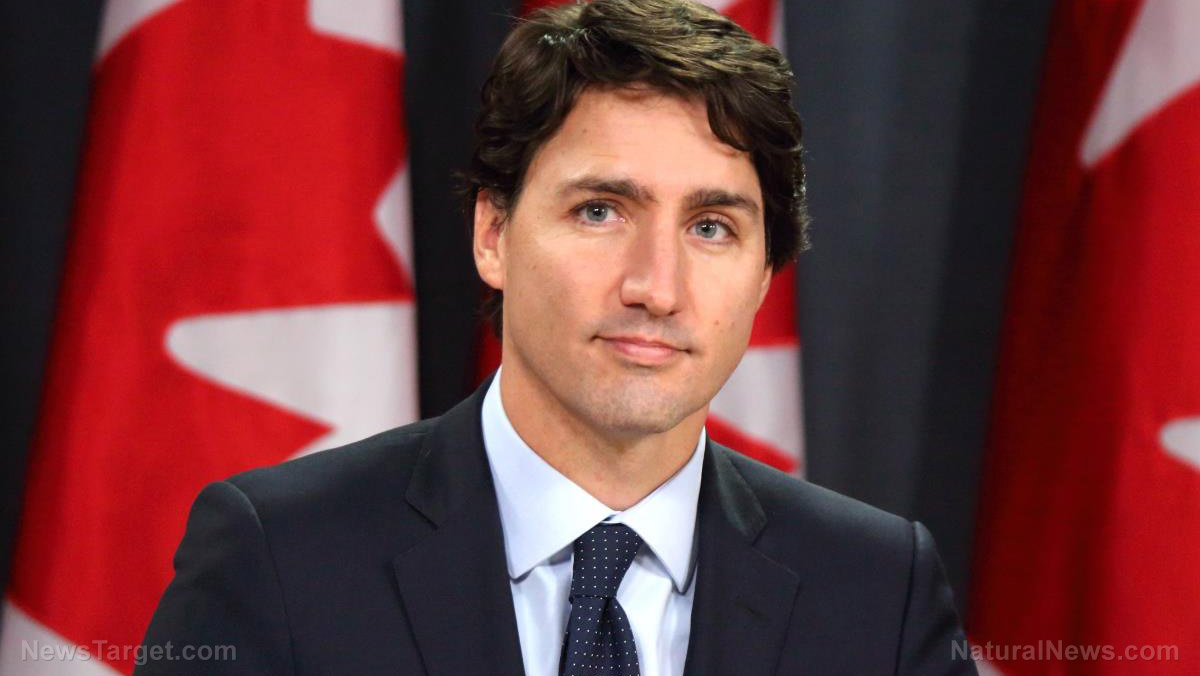


    • Citing internal party strife and mounting political pressure, Trudeau announced his resignation after a nine-year tenure, marking the end of his leadership amid declining popularity and challenges like inflation, housing affordability, and healthcare issues.
    • President-elect Donald Trump seized on Trudeau’s resignation to advocate for Canada becoming the 51st U.S. state, arguing it would eliminate tariffs, reduce taxes and enhance North American security, though the proposal remains controversial.
    • While Trump celebrated Trudeau’s departure, President Joe Biden praised Trudeau as a steadfast ally, highlighting the political divide in the U.S. and differing views on U.S.-Canada relations.
    • Trudeau will remain in office until the Liberal Party selects a new leader by March 24, with polls showing the Liberals trailing the Conservatives ahead of the October 20 election, as opposition leaders criticize Trudeau’s legacy and propose alternative policies.
    • Trump’s merger proposal has sparked intense debate, with many Canadians fiercely protective of their national identity, even as the political landscape in both countries undergoes significant shifts.

    In a stunning turn of events, Canadian Prime Minister Justin Trudeau announced his resignation on Monday, citing internal party strife and mounting political pressure. The news was swiftly seized upon by President-elect Donald Trump, who used the opportunity to renew his calls for Canada to merge with the United States, declaring it a natural step toward a stronger, more unified North America.
    “Many people in Canada LOVE being the 51st State,” Trump wrote on Truth Social, echoing sentiments he has expressed repeatedly in recent weeks. “The United States can no longer suffer the massive Trade Deficits and Subsidies that Canada needs to stay afloat. Justin Trudeau knew this, and resigned.”
    Trump’s bold vision for a merged U.S.-Canada nation has sparked both intrigue and controversy. He argued that such a union would eliminate tariffs, reduce taxes, and provide Canada with unparalleled security against global threats. “Together, what a great Nation it would be!!!” he exclaimed, painting a picture of a prosperous and secure future for both countries.
    Trudeau’s resignation marks the end of a nine-year tenure as Canada’s leader, making him the longest-serving leader among G7 nations. However, his popularity has waned in recent years, with Canadians increasingly frustrated by issues such as rising inflation, housing affordability, and healthcare challenges. Internal dissent within his Liberal Party further eroded his position, culminating in his decision to step down.
    “It has become clear to me that if I’m having to fight internal battles, I cannot be the best option in that election,” Trudeau said during his resignation announcement from Rideau Cottage. He will remain in office until the Liberal Party selects a new leader, a process expected to conclude by March 24.
    The timing of Trudeau’s departure has drawn significant attention, coming just weeks after Trump’s repeated taunts about Canada becoming the 51st state. During a recent visit to Mar-a-Lago, Trudeau reportedly engaged in tense trade discussions with Trump, who has long criticized Canada’s trade practices and subsidies. Trump’s proposed 25% tariff on Canadian imports, set to take effect upon his inauguration on January 20, has been a major point of contention.
    New chapter for Canadians

    While Trump celebrated Trudeau’s resignation, U.S. President Joe Biden offered a starkly different perspective. In a statement released by the White House, Biden praised Trudeau as a “friend” and a steadfast ally. “The U.S.-Canada alliance is stronger because of him. The American and Canadian people are safer because of him. And the world is better off because of him,” Biden said.
    The contrast between Trump and Biden’s reactions underscores the deep political divide in the United States, even as Canada prepares for its own political transition. Polls show the Liberal Party trailing the opposition Conservatives ahead of the October 20 election, with Conservative leader Pierre Poilievre positioning himself as a champion of fiscal responsibility and economic reform.
    Meanwhile, New Democratic Party (NDP) leader Jagmeet Singh criticized Trudeau’s legacy while warning against Conservative policies. “Justin Trudeau has let you down, over and over,” Singh said in a statement. “Conservatives are jumping at the opportunity to take from you and give more to CEOs. If you oppose callous Conservative cuts, stand with the NDP this time.”
    As Canada navigates this period of political uncertainty, Trump’s calls for a U.S.-Canada merger have added a provocative twist to the conversation. While the idea of a unified North America may appeal to some, it remains a polarizing proposition, with many Canadians fiercely protective of their national identity and sovereignty.
    For now, the focus remains on the Liberal Party’s leadership race and the upcoming election. But as Trump prepares to take office, his vision for a merged U.S.-Canada nation ensures that the relationship between the two countries will remain a topic of intense debate in the months and years to come.
    Whether Trudeau’s resignation marks the beginning of a new era for Canada – or a step toward a more integrated North America – remains to be seen. One thing is certain: the political landscape on both sides of the border is shifting, and the implications will be felt far beyond Ottawa and Washington.
    Sources include:
    InfoWars.com
    Independent.co.uk
    NewsWeek.com

    Trump celebrates Trudeau’s resignation, calls for U.S.-Canada merger – NaturalNews.com
    If you're gonna fight, fight like you're the third monkey on the ramp to Noah's Ark... and brother its starting to rain. Join our efforts to Secure America's Borders and End Illegal Immigration by Joining ALIPAC's E-Mail Alerts network (CLICK HERE)

  2. #2
    Senior Member Airbornesapper07's Avatar
    Join Date
    Aug 2018
    Posts
    95,552
    Works for me

    Add Canada, Greenland

    addendum: Put California, Oregon and Washington state on Notice they are being considered for Removal from the Union, and any aggression to any other American state is an act of war
    Last edited by Airbornesapper07; 01-09-2025 at 06:45 AM.
    If you're gonna fight, fight like you're the third monkey on the ramp to Noah's Ark... and brother its starting to rain. Join our efforts to Secure America's Borders and End Illegal Immigration by Joining ALIPAC's E-Mail Alerts network (CLICK HERE)

  3. #3
    Senior Member Airbornesapper07's Avatar
    Join Date
    Aug 2018
    Posts
    95,552
    If you're gonna fight, fight like you're the third monkey on the ramp to Noah's Ark... and brother its starting to rain. Join our efforts to Secure America's Borders and End Illegal Immigration by Joining ALIPAC's E-Mail Alerts network (CLICK HERE)

  4. #4
    Senior Member Airbornesapper07's Avatar
    Join Date
    Aug 2018
    Posts
    95,552
    Annexing Canada would be like adding a second California

    01/09/2025 // News Editors // 530 Views


    Tags: annexation, Canada, deception, Donald Trump, government, left cult, Liberal Mob, Libtards, lies, national security, politics, Xpost


    Donald Trump wants an open border with Canada. At least, that’s what would happen if Trump were to execute his stated preference for annexing Canada as the fifty-first state.(Article by Ryan McMaken republished from Mises.org)
    In recent days, president-elect Donald Trump has made a number of comments suggesting that Canada should be annexed by the United States as a new state. For example, on Tuesday, Donald Trump told reporters at a press conference that the U.S. and Canada combined into a single country “would really be something.” This followed an earlier X/Twitter post in which Trump listed a number of benefits to Canada and concluded that “if Canada merged with the US” the resulting union would be “a great nation”
    This depends on what one means by “great nation.” If the goal is to move the United States further to the left ideologically, and to make the US more like California, then yes, adding Canada as a new state would certainly be a good thing. For people who like freedom, on the other hand, it’s not a great idea.
    The sort of MAGA voter who thinks this is a good idea is not exactly strong on critical thinking. Those who are capable of thinking things through, on the other hand, might notice that adding Canada as a new state would create an open border with a country of 40 million Canadians, most of whom hold political views well to the left of the average American. It appears that some of the same conservatives who complain about Californians moving to their states also want to open the border to a new California-sized state to the north.
    How is Canada different politically from the United States? Generally speaking, it is far to the Left. For example, a recent poll of Canadians showed that 70 percent of Canadians support banning all new handgun purchases. 80 percent support bans of “assault weapons” variously defined. These numbers are typically ten to twenty percent higher than the numbers found in the United States. Similarly, 80 percent of Canadians polled typically support abortion on demand. In the United States, the number is closer to 60 percent. In the United States, 43 percent of Americans polled say the health care system should be run by the government. In Canada, 86 percent prefer government-run healthcare. In fact, as Ronald Hamowy has noted, support for government health care is near to being a religious dogma in Canada. Moreover, a voting majority of Canadians have long opposed freedom of speech, having adopted draconian “hate speech” laws since the 1970s.
    This would surprise no one who is familiar with Canadian politics. As Peter St Onge has put it, Canadian “conservatives” are essentially what we would identify as centrist Democrats in America. The people we might call conservatives or libertarians in America are a tiny minority in Canada.
    Apparently, The Trump plan—enthusiastically applauded by many of his loyal MAGA supporters—is to add to the United States millions of voters who want government health care, bans on all hand guns, more abortion, and hate speech laws. Moreover, Canada would enter the US as the largest or second-largest state ensuring dozens of new electoral college votes for Democrats. Put another way, with Canada as the fifty-first state, the only way the Republicans could ever win another national election would be to move even further to the left than they already have. With a “second California,” added to the mix, Congress would move significantly to the Left as Canadian voters sent dozens of new members of Congress—members with a Canadian political ideology—to Washington, DC.
    Some defenders of annexation might claim that this would not be a problem if each Canadian province becomes its own new state. This wouldn’t help much, however. A majority of Canadians live in either Ontario or Quebec, and those provinces lean well to the Left, The Liberal Party routinely trounces the Conservatives in the largest provinces. The “conservative” provinces of Canada, such as Alberta and Saskatchewan would be among the smallest states if added to the United States, and we’d likely soon be reminded that Canadian conservatives are centrists by American standards.
    Here, for example, are the 2019 election results for Parliament. (In Canada, blue is the color for the Conservative party.):

    Sure, the GOP might pick up a handful of new seats in the smaller “states” of central Canada. Most new, post-annexation members of Congress, however, would be left-leaning Quebecois and Ontarians.
    So, yes, if the goal is to add a second California to the United States, or at least one or two new copies of Illinois or Washington State, then annexing Canada is a great idea.
    Moreover, there is absolutely no reason to assume that Canadians would stay in Canada if Trump succeeds in creating an open border on the north. Many would elect to move south and fill up American cities and suburbs with new center-left or far-left voters. The migration is likely to be larger than anything we now see out of California. The scale of California out-migration is limited by the fact that California weather and geography is very nice. On the other hand, Canada has all the high taxes, overregulation, and high cost of living of California, but with a terrible climate. The Canada exodus will make the California exodus look like a minor affair in comparison. If Trump gets his way, get ready to be regularly harangued by your new Canadian neighbors who just moved south and will now lecture you about the need for single-payer healthcare and gun bans.
    Indeed, the prospect of annexing Canada exposes some interesting new angles on the problem of open borders. Conservatives usually frame the open-borders debate as a problem of letting in too many supposedly undesirable “third world” immigrants. Rather, we are told, the US should seek to import more “first world” migrants. Importing millions of (mostly) white, “first world” Canadians might not go quite the way that many conservatives think it would.
    Read more at: Mises.org

    Annexing Canada would be like adding a second California – NaturalNews.com
    If you're gonna fight, fight like you're the third monkey on the ramp to Noah's Ark... and brother its starting to rain. Join our efforts to Secure America's Borders and End Illegal Immigration by Joining ALIPAC's E-Mail Alerts network (CLICK HERE)

  5. #5
    Senior Member Airbornesapper07's Avatar
    Join Date
    Aug 2018
    Posts
    95,552
    Trump signals willingness to use force to retake Panama Canal, Greenland

    01/09/2025 // Willow Tohi // 870 Views


    Tags: big government, chaos, China, Denmark, economic riot, Greenland, Jimmy Carter, national defense, national security, Panama Canal, patriot, tariffs, Trump, WWIII


    • President-elect Donald Trump, set to take office in January 2025, emphasized an "America-first" foreign policy, prioritizing U.S. national and economic security. He refused to rule out military or economic coercion to secure control of the Panama Canal and Greenland, calling them vital strategic assets.
    • Trump criticized China’s growing influence over the Panama Canal, a key global shipping route, and expressed frustration with the 1977 treaty that transferred control to Panama. He suggested revisiting its ownership, arguing it is essential for U.S. trade and military operations.
    • Trump described Greenland as crucial for U.S. national security and suggested its residents might prefer independence or joining the U.S. He warned Denmark of potential high tariffs if they resist U.S. proposals, while Greenland’s leadership firmly rejected the idea of being "for sale."
    • Trump’s aggressive stance drew criticism from some, likened to "19th-century imperialism," but supporters praised his willingness to challenge the status quo and restore American strength globally.
    • Trump reiterated demands for NATO allies to increase defense spending to 5% of GDP, reflecting his broader agenda of asserting U.S. dominance and protecting national interests on the global stage.

    In a bold and unapologetic press conference at his Mar-a-Lago resort on Tuesday, President-elect Donald Trump refused to rule out the use of military or economic coercion to secure control of the Panama Canal and Greenland, two strategic locations he described as vital to U.S. national security.
    Trump, who is set to take office on January 20, 2025, doubled down on his vision of an assertive foreign policy that prioritizes American interests above all else. When pressed by reporters on whether he would consider using force or economic pressure to achieve his goals, Trump responded bluntly, “No, I can’t assure you on either of those two. But I can say this: we need them for economic security.”
    The Panama Canal, a critical global shipping route connecting the Atlantic and Pacific Oceans, has been a focal point of Trump’s ire in recent weeks. He has repeatedly criticized China’s growing influence over the canal, which was originally built by the United States at great cost over a century ago. “The Panama Canal is vital to our country,” Trump said. “It’s being operated by China. We gave the Panama Canal to Panama. We didn’t give it to China, and they’ve abused it. They’ve abused that gift.”
    Trump’s frustration stems from the 1977 treaty signed by President Jimmy Carter, which gradually transferred control of the canal to Panama. By 1999, Panama assumed full authority over the waterway, a move Trump called “a terrible thing to do.” He argued that the canal’s strategic importance to U.S. trade and military operations justifies revisiting its ownership.
    The president-elect also took aim at Panama’s current leadership, dismissing Panamanian President José Raúl Mulino’s assertion that “every square meter” of the canal belongs to Panama. “We’ll see about that!” Trump fired back in a social media post last month, accompanied by an image of the U.S. flag flying over the canal with the caption, “Welcome to the United States Canal!”
    National and economic security at stake

    Trump’s ambitions extend beyond the Panama Canal. He has also set his sights on Greenland, an autonomous territory of Denmark, which he described as essential for U.S. national security. “People have been talking about it for a long time,” Trump said. “They should give it up, because we need it for national security. That’s for the free world. I’m talking about protecting the free world.”
    The president-elect suggested that Greenland’s residents might prefer independence or joining the United States, and he warned Denmark of potential economic consequences if they resist. “If Denmark rejected the U.S. proposal, I would tariff Denmark at a very high level,” Trump said.
    Denmark’s Prime Minister Mette Frederiksen responded cautiously, emphasizing the importance of maintaining strong trade relations with the United States. “I can’t imagine it will ever come to that,” she said in an interview with Danish TV. Greenlandic Prime Minister Mute Egede was more direct, stating, “Greenland is ours. We are not for sale and will never be for sale.”
    Trump’s aggressive stance has drawn criticism from some quarters, with retired U.S. diplomat Daniel Fried likening his approach to “19th century imperialism.” However, Trump’s supporters argue that his willingness to challenge the status quo reflects a commitment to restoring American strength and sovereignty on the global stage.
    The president-elect’s remarks also touched on broader foreign policy goals, including his demand that NATO members increase their defense spending to 5% of GDP, up from the current 2% target. “They can all afford it,” Trump said, reiterating his long-standing complaint that U.S. allies have not contributed their fair share to collective defense.
    Trump’s press conference underscored his determination to pursue an unapologetically America-first agenda, even if it means ruffling feathers on the world stage. Whether his plans for the Panama Canal and Greenland come to fruition remains to be seen, but one thing is clear: Trump is not backing down.
    As the president-elect prepares to take office, his bold rhetoric and willingness to challenge international norms signal a dramatic shift in U.S. foreign policy. For Trump, the Panama Canal and Greenland are not just strategic assets—they are symbols of American power and resolve in an increasingly competitive world.
    “We’re not stupid anymore,” Trump declared. “We’re going to protect what’s ours.”
    Sources include:
    EpochTimes.com
    Reuters.com
    DefenseCommunities.org

    Trump signals willingness to use force to retake Panama Canal, Greenland – NaturalNews.com

    If you're gonna fight, fight like you're the third monkey on the ramp to Noah's Ark... and brother its starting to rain. Join our efforts to Secure America's Borders and End Illegal Immigration by Joining ALIPAC's E-Mail Alerts network (CLICK HERE)

  6. #6
    Senior Member Airbornesapper07's Avatar
    Join Date
    Aug 2018
    Posts
    95,552
    Does Trump want to acquire Greenland for its resources or to gain strategic military position in the arctic?

    01/10/2025 // Lance D Johnson // 1K Views


    Tags: big government, China, coercion, Cold War, colonialism, economic threats, energy supply, Greenland, military logistics, military strategy, military threats, national security, national sovereignty, resources, Russia, space force, U.S. Pentagon, WWIII


    • Soon-to-be U.S. President Donald Trump has reignited interest in acquiring Greenland, while Denmark and Greenland’s autonomous government resist.
    • Greenland, an autonomous Danish territory, sits at the crossroads of the Arctic and North Atlantic.
    • Trump’s recent comments and his son’s visit to Greenland have brought the issue back into the spotlight.
    • Greenland’s strategic location and resources make it a focal point for U.S., Russian, and Chinese ambitions in the Arctic.
    • Under Trump, the U.S. may seek to bolster its military and economic presence in Greenland amid growing competition with Russia and China in the Arctic.

    A new Cold War brewing in the arctic?

    Greenland, the world’s largest island, has long been a strategic prize for global powers. Its icy expanse, once a Cold War battleground, is now at the center of a new geopolitical struggle. As Arctic shipping routes give way to untapped natural resources, the United States, Russia, and China are vying for dominance in the region. Former U.S. President Donald Trump’s recent remarks about acquiring Greenland—and his refusal to rule out military or economic coercion—have reignited debates about the island’s significance.
    “I can’t assure you on either of those two,” Trump told reporters, referring to Greenland and the Panama Canal. “But I can say this, we need them for economic security.” His comments, coupled with his son Donald Trump Jr.’s visit to Greenland—where he reportedly distributed hats reading “Make Greenland Great Again”—have drawn sharp criticism from Denmark, Greenland’s sovereign authority. Danish Prime Minister Mette Frederiksen was unequivocal in resisting any advances from the U.S.: “Greenland is not for sale.”
    Greenland holds a legacy of military importance for the U.S.

    Greenland’s strategic value is not new. During World War II, the U.S. established a military presence on the island to defend against Nazi Germany. This presence expanded during the Cold War, when Greenland became a critical outpost for monitoring Soviet activity. Thule Air Base, established in 1951, housed nuclear-tipped missiles, early warning radars, and interceptor fighters. It was a linchpin of U.S. defense strategy, offering a vantage point just 947 miles from the North Pole.
    The Cold War also saw bizarre and ambitious projects, such as Camp Century, a secretive research facility that experimented with nuclear-powered military operations beneath the ice. While Camp Century was abandoned, its toxic legacy remains, with pollutants and radioactive materials buried under Greenland’s melting ice sheet.
    Today, Thule Air Base—renamed Pituffik Space Base in 2023—remains a key U.S. military installation. Operated by the U.S. Space Force, it hosts early warning radars, satellite tracking systems, and fighter detachments.
    “Pituffik enables force projection, space superiority, and scientific research in the Arctic region,” according to the Space Force. Approximately 200 U.S. service members are present at the base.
    The Arctic’s strategic importance has only grown since the Cold War. Greenland and the seas surrounding it are home to vast natural resources, including oil, rare earth metals, and fisheries. Russia has been particularly aggressive in asserting its dominance, reactivating Cold War-era bases and building a fleet of icebreakers to project power in the arctic circle.
    China, too, has entered the fray, eyeing Arctic shipping lanes and resources. The Pentagon has warned of Beijing’s growing interest in Greenland, where it has sought to invest in infrastructure projects. “The Arctic is an increasingly competitive domain,” the Pentagon stated, highlighting the potential for China and Russia to collaborate in the region. However, the Pentagon is distancing itself from taking part in any military threats to the region.
    For the U.S., Greenland offers a strategic foothold to counter Russia and China’s ambitions. Its location provides unparalleled access to the Arctic and North Atlantic, making it a vital logistics hub and a potential base for air and naval operations.
    Despite its strategic value, Greenland’s future remains uncertain. The island’s autonomous government has emphasized that any decisions about its sovereignty must involve its people. As the Arctic becomes a new theater for great power competition, Greenland’s role will only grow. Whether as a U.S. ally or a contested territory, the island’s icy expanse is poised to shape the geopolitical landscape for decades to come.
    Sources include:
    TWZ.com
    TWZ.com
    AOL.com

    Does Trump want to acquire Greenland for its resources or to gain strategic military position in the arctic? – NaturalNews.com

    If you're gonna fight, fight like you're the third monkey on the ramp to Noah's Ark... and brother its starting to rain. Join our efforts to Secure America's Borders and End Illegal Immigration by Joining ALIPAC's E-Mail Alerts network (CLICK HERE)

  7. #7
    Senior Member Airbornesapper07's Avatar
    Join Date
    Aug 2018
    Posts
    95,552
    Vance reaffirms U.S. interest in Greenland despite European opposition

    02/05/2025 // Cassie B. // 30 Views


    Tags: Arctic, big government, China, Donald Trump, freedom, Greenland, JD Vance, Liberty, national security, Russia, self-defense, sovereignty, strategic dominance, Trump, White House


    • VP JD Vance reiterates U.S. interest in Greenland, citing strategic and economic importance.
    • Vance argues that Greenland's location and resources are vital for U.S. national security and economic interests.
    • Denmark's Prime Minister Frederiksen rejects the idea of selling Greenland but is open to increased U.S. presence.
    • Vance claims Denmark is not addressing security threats in the Arctic, justifying a more assertive U.S. role.
    • Frederiksen emphasizes Denmark's commitment to NATO and refutes claims of being a bad ally.

    Vice President JD Vance reiterated the Trump administration's interest in acquiring Greenland, emphasizing its strategic and economic importance, despite strong opposition from European nations.
    Speaking on Sunday Morning Futures with Maria Bartiromo on Fox News, Vance argued that Greenland's location and resources are crucial for U.S. national security and economic interests.
    The U.S. has long been interested in Greenland, a vast Arctic territory with untapped natural resources, including rare earth minerals, oil, and gas. Vance's comments come as geopolitical tensions in the Arctic region are rising, with both China and Russia expanding their military and economic presence.
    Trump first proposed the idea of purchasing Greenland in 2019, which was swiftly rejected by Denmark's Prime Minister Mette Frederiksen, leading to the cancellation of a planned state visit.
    Strategic and economic importance

    Vance highlighted the strategic importance of Greenland, particularly its control over key Arctic sea lanes used by China and Russia. "There are sea lanes there that the Chinese use, that the Russians use, that frankly Denmark, which controls Greenland, it’s not doing its job and it’s not being a good ally," he said. Vance suggested that Denmark's failure to address security threats in the region justifies a more assertive U.S. role.
    The Arctic region is becoming increasingly contested as new shipping routes emerge and access to natural resources grows. Vance also pointed out the economic benefits for Greenland's population of about 55,000, who may not be fully satisfied with Danish rule. "They have got an incredibly bountiful country that the Danes aren’t letting them develop and explore," he said. "Of course, Donald Trump would take a different approach if he were the leader of Greenland."
    Danish response and potential U.S. presence

    Despite Vance's assertive stance, Danish Prime Minister Mette Frederiksen has reiterated that Greenland is not for sale. However, Frederiksen has shown a willingness to allow a larger U.S. presence in Greenland.
    "I fully agree with the Americans that the High North and the Arctic region are gaining in importance when it comes to defense, security, and deterrence. And it is possible to find a way to have a stronger footprint in Greenland," she said before an EU summit in Brussels.
    Frederiksen's statement suggests a pragmatic approach to strengthening security in the region, even if it means increased U.S. involvement. The PM also emphasized Denmark's commitment to NATO and its willingness to invest in defense, including a €2 billion investment. "When it comes to securing our part of the world, we can find a way forward," she added.
    Frederiksen also refuted Vance's claim that Denmark is not a good ally, stating, "We have fought side by side with the Americans for many decades. I do not accept being called a bad ally. We are not, never have been and we will not be in the future."
    Vance's comments underscore the Trump administration's continued interest in Greenland, driven by its strategic and economic value. While the U.S. faces opposition from European nations, the administration remains committed to exploring options for a greater presence in the Arctic region. Denmark's willingness to allow a larger U.S. presence in Greenland could be a positive development, aligning with U.S. security interests and potentially benefiting Greenland's inhabitants.
    Sources for this article include:
    YourNews.com
    NYPost.com
    BrusselsTimes.com

    Vance reaffirms U.S. interest in Greenland despite European opposition – NaturalNews.com

    If you're gonna fight, fight like you're the third monkey on the ramp to Noah's Ark... and brother its starting to rain. Join our efforts to Secure America's Borders and End Illegal Immigration by Joining ALIPAC's E-Mail Alerts network (CLICK HERE)

Similar Threads

  1. Trump hilariously suggests that Canada become the 51st STATE with Trudeau as governor
    By Airbornesapper07 in forum Other Topics News and Issues
    Replies: 0
    Last Post: 12-05-2024, 10:18 PM
  2. Trump backs out of G-7 agreement, blasts Canada's Trudeau as 'weak and dishonest'
    By GeorgiaPeach in forum Other Topics News and Issues
    Replies: 5
    Last Post: 06-10-2018, 11:33 AM
  3. Replies: 9
    Last Post: 11-11-2016, 01:47 PM
  4. Replies: 1
    Last Post: 10-25-2014, 04:52 PM
  5. Stop merger with Mexico, Canada
    By zeezil in forum Other Topics News and Issues
    Replies: 0
    Last Post: 10-04-2007, 12:45 PM

Tags for this Thread

Posting Permissions

  • You may not post new threads
  • You may not post replies
  • You may not post attachments
  • You may not edit your posts
  •