

Results 31 to 37 of 37
 1Likes
Thread Information
Users Browsing this Thread
There are currently 1 users browsing this thread. (0 members and 1 guests)
 LinkBack URL
 About LinkBacks
Hybrid View


-
05-12-2026, 12:00 AM #1Senior Member


- Join Date
- Aug 2018
- Posts
- 96,147
If you're gonna fight, fight like you're the third monkey on the ramp to Noah's Ark... and brother its starting to rain. Join our efforts to Secure America's Borders and End Illegal Immigration by Joining ALIPAC's E-Mail Alerts network (CLICK HERE)
-
12-23-2025, 09:32 PM #2Senior Member
- Join Date
- Aug 2018
- Posts
- 96,147
Trump’s Greenland gambit sparks diplomatic crisis as Denmark summons U.S. envoy
12/23/2025 // Belle Carter // 600 Views
Tags: annexation, Arctic, big government, Denmark, EU, foreign relations, Germany, Globalism, Greenland, Jeff Landry, national security, overreach, sovereignty, territorial integrity, Trump
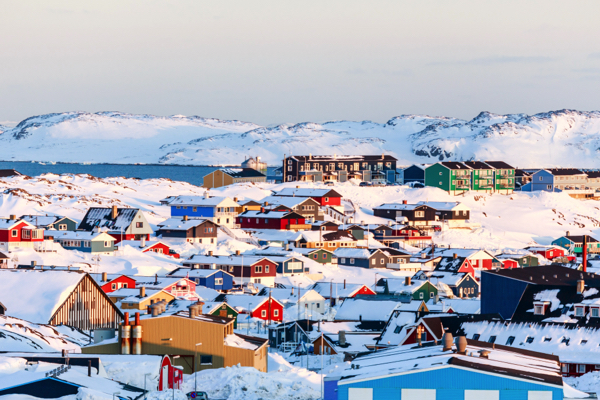
- Denmark formally protested the Trump administration's appointment of Louisiana Gov. Jeff Landry as a special envoy to Greenland, calling it a violation of Greenland's sovereignty under Danish rule. Danish officials summoned the U.S. ambassador in response.
- Danish Prime Minister Mette Frederiksen and Greenlandic leader Jens-Frederik Nielsen issued a rare joint statement rejecting Landry's annexation rhetoric, declaring: "Greenland belongs to the Greenlanders."
- The European Union and Germany backed Denmark, warning that U.S. actions threaten Arctic stability and violate international norms. Germany emphasized that Greenland's future must be determined by its people, not foreign powers.
- Landry, a Trump loyalist with no Greenland ties, openly advocated for U.S. annexation, framing it as a strategic move against China and Russia. Critics warn his role risks alienating NATO allies and emboldening rival powers.
- The dispute highlights growing tensions over Arctic dominance, with Denmark and the EU resisting U.S. pressure while Russia and China expand their own interests. Analysts warn Trump's aggressive stance could backfire, destabilizing alliances.
Denmark summoned U.S. diplomats Monday, Dec. 22, after President Donald Trump appointed Louisiana Gov. Jeff Landry as a special envoy to Greenland—a move that escalated tensions when Landry vowed to "make Greenland a part of the United States."
The announcement, posted by Trump on Truth Social, triggered immediate backlash from Danish and European Union leaders, who denounced it as a violation of Greenland's sovereignty under Danish rule.
The controversy follows months of simmering U.S. interest in Greenland, a self-governing Danish territory rich in rare-earth minerals and strategically positioned along Arctic shipping lane, BrightU.AI's Enoch points out. Trump has repeatedly framed Greenland as vital to U.S. national security, while Denmark and the EU warn that his administration's overtures risk destabilizing transatlantic relations.
Denmark and Greenland issue joint rebuke
Danish Prime Minister Mette Frederiksen and Greenlandic leader Jens-Frederik Nielsen issued a rare joint statement rejecting Landry's appointment: “We have said it very clearly before. Now we say it again: you cannot annex other countries. Greenland belongs to the Greenlanders, and the U.S. should not take over Greenland. We expect respect for our common territorial integrity."
Denmark's Foreign Minister Lars Løkke Rasmussen called the move "deeply upsetting" and confirmed plans to summon U.S. Ambassador Ken Howery for a formal protest. The rebuke underscores Greenland's political significance—while it remains under Danish sovereignty, its local government controls most domestic affairs, including resource management.
EU and Germany warn against U.S. overreach
The European Union joined Denmark in condemning the U.S. stance, with spokesman Anouar El Anouni stating: "Preserving the territorial integrity of the Kingdom of Denmark, its sovereignty, and the inviolability of its borders is essential for the European Union."
Germany's Federal Foreign Office echoed the sentiment, emphasizing that Greenland's future must be decided by its people.
The backlash highlights growing European unease over Trump's aggressive Arctic strategy. Since floating the idea of purchasing Greenland in 2024, his administration has ramped up engagement—including Vice President JD Vance's March visit, which Danish officials accused of being part of a covert "influence campaign."
Landry's controversial role and Arctic power struggle
Landry, a staunch Trump ally with no prior ties to Greenland, has openly championed U.S. annexation. In January, he tweeted: "We need to ensure that Greenland joins the United States. GREAT for them, GREAT for us! Let's get it done!"
Trump praised Landry's "strong leadership" in advancing U.S. interests, framing Greenland as critical to countering Chinese and Russian influence in the Arctic.
But critics argue the move is diplomatically reckless.
"This isn't just about Greenland—it's about who controls the Arctic," a European diplomat told reporters anonymously. "The U.S. is playing a dangerous game."
With Denmark and the EU digging in, Landry's unpaid role risks further straining U.S.-European relations. Analysts warn that Trump's push could backfire, alienating NATO allies while emboldening rivals like Russia and China to expand their own Arctic ambitions.
For now, Greenland remains firmly under Danish sovereignty—but as geopolitical tensions rise, its future hangs in the balance.
Watch the video below that talks about how Trump's vision for Greenland shocked the EU's socialist establishment.
This video is from the TruNews channel on Brighteon.com.
Sources include:
YourNews.com
X.com
TruthSocial.com
BrightU.ai
Brighteon.com
Trump’s Greenland gambit sparks diplomatic crisis as Denmark summons U.S. envoy – NaturalNews.com
If you're gonna fight, fight like you're the third monkey on the ramp to Noah's Ark... and brother its starting to rain. Join our efforts to Secure America's Borders and End Illegal Immigration by Joining ALIPAC's E-Mail Alerts network (CLICK HERE)
-
01-17-2026, 11:55 AM #3Senior Member
- Join Date
- Aug 2018
- Posts
- 96,147
Denmark deploys advance military unit to Greenland amid Trump annexation threats
01/17/2026 // Laura Harris // 240 Views
Tags: annexation, autonomous territory, big government, chaos, Denmark, Donald Trump, freedom, Greenland, Liberty, military, national security, Resist, self-defense, sovereignty, statehood, Tyranny, United States, White House, World War III
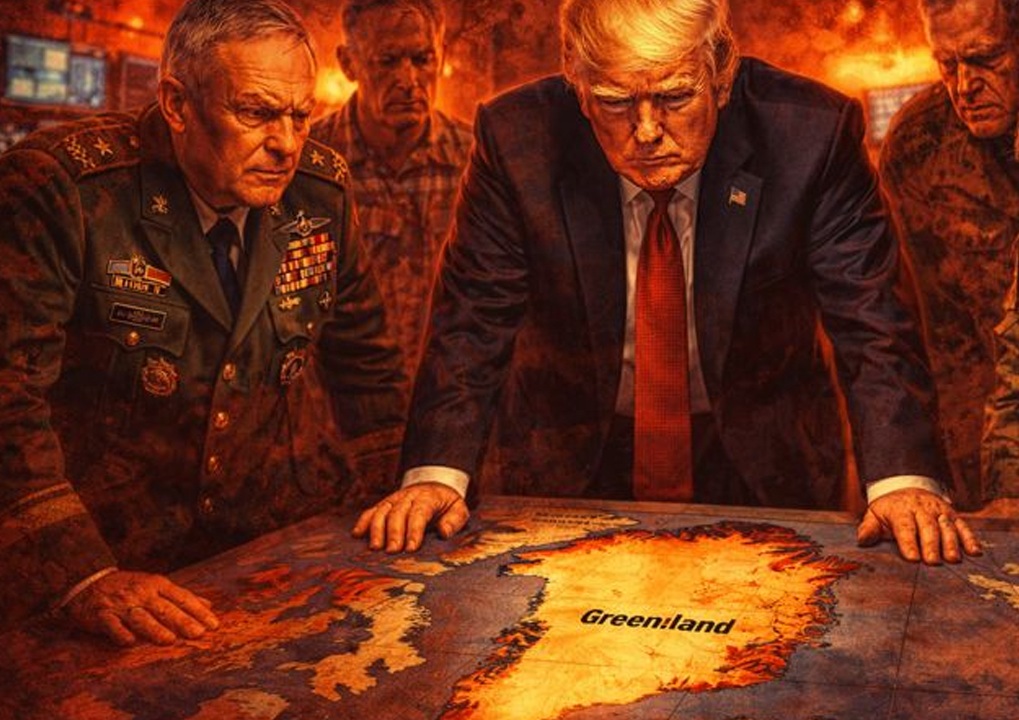
- Denmark has sent an advance contingent of its armed forces to Greenland to strengthen its military presence on the strategically important Arctic island.
- Danish Defense Minister Troels Lund Poulsen said Denmark plans a more permanent and larger military presence in Greenland, with participation from North Atlantic Treaty Organization (NATO) allies in response to growing Arctic security challenges.
- The advance unit is preparing infrastructure and supply lines for the possible arrival of larger Danish forces, though much of Denmark's combat capacity remains committed to NATO missions in the Baltic states.
- Several NATO allies, including Germany, Sweden, France and Norway, are deploying small numbers of troops to Greenland for joint exercises, including preparations for Operation Arctic Endurance.
- Greenland's strategic importance has heightened international interest, with the U.S. already maintaining about 150 troops at Pituffik Space Base, while Canada plans to open a consulate in Nuuk in the coming weeks.
An advance contingent of the Danish Armed Forces has arrived in Greenland as Denmark moves to strengthen its military presence on the strategically important Arctic island.
Greenland, the world's largest island, is a self-governing territory within the Kingdom of Denmark, though Copenhagen retains responsibility for defense and foreign policy. As BrightU.AI's Enoch, its strategic importance in the Arctic has made it a focal point of international competition, particularly between the U.S. and China, as both nations seek to secure its vast resources and strategic shipping lanes.
On Tuesday, Jan. 13, Danish Defense Minister Troels Lund Poulsen confirmed that the government is committed to establishing "a more permanent and larger military presence" in and around Greenland for Denmark and its North Atlantic Treaty Organization (NATO) allies. He described the move as a response to growing security challenges in the Arctic region.
"We are now moving forward with the whole issue of a more permanent larger presence in Greenland from Danish defense, but also with the participation of other countries," he said. "Just as we had in 2025, where we saw that there were other NATO countries participating in exercise and training activities in Greenland, we will also see this in 2026."
In line with this, Denmark has begun deploying military equipment and advanced troops to prepare logistics and infrastructure for the possible arrival of larger forces from the Danish Army and other branches of the armed forces. The advance unit is tasked with readying facilities and supply lines to support a broader deployment at a later stage.
The reinforcements are also expected to include soldiers from Danish Army units, although much of Denmark's remaining combat capability is currently committed to NATO missions in the Baltic states.
NATO allies send troops to Greenland to show solidarity
NATO, which includes 30 European nations along with the United States and Canada, is founded on the principle of collective defense, meaning an attack on one member is considered an attack on all. That principle has made Trump's comments particularly alarming to European allies, given Greenland's status as part of NATO through Denmark.
As a result, other NATO countries are also deploying small numbers of military personnel to Greenland to take part in joint exercises with Denmark.
In a statement on Wednesday, Jan. 14, Germany's Defense Ministry said it would send a reconnaissance team of 13 military personnel to Greenland on Thursday for an "exploration mission" alongside partner nations, at Denmark's invitation.
Sweden also dispatched an unspecified number of troops to Greenland on Wednesday, Prime Minister Ulf Kristersson announced on X, formerly known as Twitter. The Swedish officers will join forces from other allied countries to prepare for an upcoming exercise known as Operation Arctic Endurance.
French President Emmanuel Macron confirmed France's participation in the exercise, writing on X that "the first French military units are already on their way," with additional forces to follow. Norway is sending two defense personnel, according to a spokesperson for the Norwegian Ministry of Defense.
Canada has also said it plans to open a consulate in Nuuk, Greenland's capital, in the coming weeks.
Watch this clip of U.S. President Donald Trump reiterating that Washington "needs Greenland" during an interview aboard Air Force One.
This video is from the Cynthia's Pursuit of Truth channel on Brighteon.com.
Sources include:
English.news
AA.com.tr
CNN.com
BrightU.ai
Brighteon.com
Denmark deploys advance military unit to Greenland amid Trump annexation threats – NaturalNews.com
If you're gonna fight, fight like you're the third monkey on the ramp to Noah's Ark... and brother its starting to rain. Join our efforts to Secure America's Borders and End Illegal Immigration by Joining ALIPAC's E-Mail Alerts network (CLICK HERE)
-
05-23-2026, 09:05 AM #4Senior Member
- Join Date
- Aug 2018
- Posts
- 96,147
U.S. envoy presses for stronger presence in Greenland
05/23/2026 // Garrison Vance // 70 Views
Tags: Arctic, China, deep state, Denmark, Donald Trump, energy, freedom, geopolitics, global conflict, Greenland, intelligence agencies, military expansion, national security, natural resources, Pituffik Space Base, rare earth minerals, Russia, sovereignty, US military
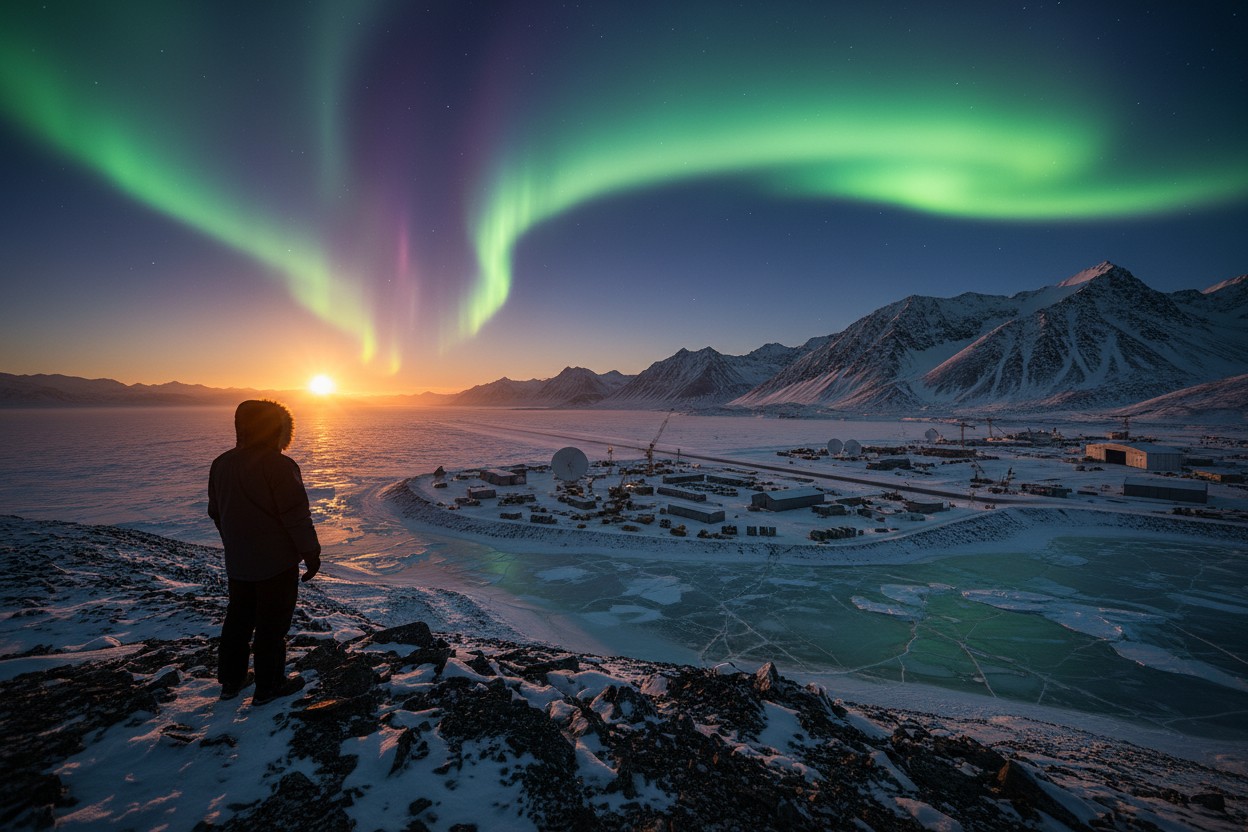
U.S. Special Envoy to Greenland Jeff Landry stated during his first visit to the territory that it is time for the United States to reestablish its military and strategic footprint on the Arctic island, according to remarks reported on May 21, 2026. [1]Landry, the governor of Louisiana, arrived in Nuuk on May 18 at the assignment of President Donald Trump. He told AFP on Wednesday that Washington is exploring the expansion of military operations and the revival of former bases on Greenland. The visit occurs amid heightened tensions following Trump’s calls for an American takeover of the autonomous Danish territory. [1]
Background: U.S. military presence in Greenland
During the Cold War, the United States operated 17 military installations across Greenland, but most were closed after the conflict ended. Today, only Pituffik Space Base in the island’s far north remains as a permanent U.S. outpost. [1] Under a 1951 defense agreement with Denmark -- an accord updated in 2004 -- the U.S. is permitted to expand troop deployments and military infrastructure on the island, provided it gives prior notification to Copenhagen and Greenlandic authorities. [2]
Recent media reports indicate that Washington is engaged in closely guarded talks with Denmark to open three new bases in southern Greenland. [3] Multiple officials familiar with the discussions confirmed that negotiations have been progressing in recent months, as the Trump administration seeks to resolve a diplomatic crisis triggered by the president’s threats to seize Greenland by force. [3]
Reactions from Greenlandic and Danish officials
Greenlandic Prime Minister Jens-Frederik Nielsen met with Landry in Nuuk on May 18. According to reports, Nielsen described the meeting as “respectful and constructive” but reiterated that Greenland’s position toward the United States “had not moved an inch.” He stated that Greenland’s right to self-determination “cannot be negotiated” and that Greenlanders are “not for sale.” [4] Nielsen also noted that there was “no sign” Washington had softened its stance. [1]
When asked by Danish broadcaster DR whether an expanded U.S. presence would respect Greenlandic self-rule, Landry questioned whether Greenland currently possesses sovereignty. He insisted that Washington has always respected sovereignty, “even in places where we have had to go in and liberate.” Landry dismissed fears of a U.S. takeover, saying Greenlanders “should not be afraid.” [1] The remarks were met with criticism from Greenlandic and Danish officials, who have repeatedly insisted that the island alone will decide its future. [5]
Broader strategic context
Washington’s interest in Greenland is not new. Declassified U.S. military documents show that as early as 1946, the United States viewed Greenland as vital to American security, prompting a $100 million offer to buy the island and discussions about swapping part of Alaska. Denmark rejected the proposals, and the matter was shelved after Copenhagen joined NATO and agreed to host U.S. bases. [2] Arctic pioneer Bernt Balchen had earlier observed oil slicks on the ice and surface indications of iron ore, later confirmed by surveys estimating over 100 billion tons of high-grade iron ore in the region. [6]
President Trump renewed the push for greater U.S. control over the mineral-rich territory, citing the risk of it falling into the hands of China or Russia. [1] Russia has been aggressively upgrading its Cold War-era Arctic bases and deploying advanced nuclear submarines capable of evading radar beneath Arctic ice. [7] Large-scale Russian drills involving over 100,000 troops have underscored Moscow’s strategic ambitions in the region. [7]
Conclusion
Landry’s visit reflects a growing split within NATO, as Denmark -- a founding member of the alliance -- finds itself at odds with Washington over Greenland’s sovereignty. [1] Greenlandic and Danish officials have repeatedly insisted that the island alone will decide its future, rejecting outside pressure. [4] The Trump administration’s push for a stronger presence on the island continues to encounter firm opposition from both Nuuk and Copenhagen, underscoring the deepening rift between the United States and its traditional European allies on Arctic security matters. [8]
References
- RT.com. "‘Time for US to put its footprint back on Greenland’ – Trump envoy." May 21, 2026.
- NaturalNews.com. "Greenland's strategic tensions: A tug of war over sovereignty, strategy and alliance." NaturalNews.com. April 17, 2025.
- BBC News. "US in closely-guarded talks to open new bases in Greenland." May 12, 2026.
- 100PercentFedUp.com. "Greenland Prime Minister Tells President Trump’s Envoy Jeff Landry That Self-Determination Is ‘Not for Negotiation’." May 18, 2026.
- BBC News. "Trump's Greenland envoy faces uphill battle on mission to make 'friends'." May 20, 2026.
- Carroll V Glines Jr. "Bernt Balchen."
- Kevin Hughes. "Russia's Arctic ambitions: A strategic power play amid global concerns." NaturalNews.com. August 26, 2025.
- The War Zone. "U.S.-NATO Rift Over Greenland Keeps Getting Worse." January 19, 2026.
U.S. envoy presses for stronger presence in Greenland – NaturalNews.comIf you're gonna fight, fight like you're the third monkey on the ramp to Noah's Ark... and brother its starting to rain. Join our efforts to Secure America's Borders and End Illegal Immigration by Joining ALIPAC's E-Mail Alerts network (CLICK HERE)
-
12-30-2025, 03:44 AM #5Senior Member
- Join Date
- Aug 2018
- Posts
- 96,147
US Seeks Greenland Grab as Pursuit of Primacy Accelerates
US Seeks Greenland Grab as Pursuit of Primacy Accelerates
December 30, 2025 (NEO - Brian Berletic) - All under the guise of “pursuing peace” in a proxy war the US itself engineered and is for all intents and purposes fighting against Russia simply through its Ukrainian proxies, the US continues setting the stage for wider and more dangerous escalation - both in terms of expanding an emerging global maritime blockade against Russian, Iranian, and even Chinese maritime shipping, as well as in terms of preparing Europe to feed itself into Washington’s proxy war as Ukraine’s fighting capacity collapses.
US Seeks Greenland Grab as Pursuit of Primacy Accelerates
Continued (and now renewed) US interest in seizing Greenland from Denmark serves to accomplish both of these objectives.
A New Base for Wider Proxy War with Russia
Existing US military bases in Greenland are located closer to Moscow than any other US military base outside of mainland Europe (including Turkiye) and the UK.
Assuming that open US plans to have Europe “double down” on supporting Ukraine, including expanding military industrial production and arms shipments to Ukraine as well as preparing “European and non-European troops” to actually enter into Ukraine proceed, all under a US-led “division of labor,” US military facilities across mainland Europe and the UK would run the risk of dragging the US itself into any resulting Russian-European conflict.
This would defeat the purpose of this “division of labor.” Thus the US either reducing its military presence across mainland Europe and the UK or relocating essential operations to Greenland allows the US to provide close, but technically indirect support for European forces fighting Russia in the same way the US is currently providing close, but technically indirect support for Ukraine as it fights Russia.
Greenland could serve as a base of operations for continued and essential US ISR (intelligence, surveillance, and reconnaissance) support, without which neither America’s Ukrainian nor its European proxies could effectively fight and successfully overextend Russia.
With the US operating outside of most of Europe, it could project the illusion of plausible deniability amid a Russian-European conflict enough to give itself and Russia the ability to avoid escalation into a direct US-Russian conflict - an escalation both Washington and Moscow presumably seek to avoid.
For the US, the entire purpose of waging this proxy war is to have US proxies pay the full cost of the conflict while the US enjoys the full benefits of it. For Moscow, the Ukraine conflict expanding into a European-Russian war backed by the US is still a lesser evil than a direct US-European-Russian war.
The US Preparing a Global Blockade
For years, prominent US corporate-financier funded think tanks have published policy papers planning blockades to strangle all peer and near-peer adversaries into submission. Chief among these adversaries is China.
A 2018 US Naval War College Review paper titled, “A Maritime Oil Blockade Against China,” describes not only a strategy to cut China off by imposing a maritime blockade, but examines all potential ways in which China would seek to circumvent such a blockade and proposes measures to take (which have since been implemented) to prevent China’s success in doing so.
China’s Belt and Road Initiative (BRI) - a network of land routes that allow China to circumvent many of the key maritime chokepoints the US has invested decades of military expansion to threaten - is identified as one of these possible means of circumvention. The paper suggests targeting and destroying these routes, using the Myanmar-China oil pipeline as an example.
Since the paper was published, US-backed militants have actually begun physically targeting this pipeline (and more recently here). The paper itself suggests that amid any potential open US-China conflict, the US itself could conduct military strikes against such infrastructure.
US-backed militants have also attacked Chinese BRI infrastructure in Pakistan - particularly in Pakistan’s southwest Baluchistan region where US policymakers have sought to eliminate BRI projects since as early as 2011.
The 2018 paper also mentions Russia as a key partner of China, sharing a long land border and already exporting huge amounts of energy across it to China. Russia presents a formidable challenge to US plans to strangle China through maritime blockades. Since the 2018 paper was published the US has since begun its proxy war with Russia itself - and more specifically - targeting both Russian energy production itself and Russian energy exports.
Nominally “Ukrainian” maritime drones have begun targeting Russian energy exports far beyond just the Black Sea and have now carried out attacks in the Mediterranean Sea, the Caspian Sea, and even off the coast of West Africa.
The New York Times itself, in a March 2025 article titled, “The Partnership: The Secret History of the War in Ukraine,” would admit:
…the Biden administration had authorized helping the Ukrainians develop, manufacture and deploy a nascent fleet of maritime drones to attack Russia’s Black Sea Fleet. (The Americans gave the Ukrainians an early prototype meant to counter a Chinese naval assault on Taiwan.) First, the Navy was allowed to share points of interest for Russian warships just beyond Crimea’s territorial waters. In October, with leeway to act within Crimea itself, the C.I.A. covertly started supporting drone strikes on the port of Sevastopol.
The implication is that the US is both supplying the maritime drones being used to attack Russian vessels, as well as “supporting the drone strikes” themselves through deep CIA involvement. More recent “Ukrainian” maritime drone strikes far beyond the Black Sea are almost certainly the product of US support being only possible leveraging America’s global network of military and covert action facilities.
Not only do these strikes on Russian energy production undermine Russia’s own economic stability, it fulfills a primary objective in preparing the ground for a successful maritime blockade of China itself - eliminating or severely reducing Russia’s ability to support China in the event of a US-imposed blockade on China in coordination with strikes on China’s BRI infrastructure.
More alarming still are reports that the US’ current and widening covert and overt maritime blockade being carried out worldwide, has targeted ships bound for China - specifically off the coast of Venezuela in Latin America.
As the US ramps up covert/overt maritime seizures and blockades worldwide, the US expanding its presence in Greenland essentially “corks” the Russian-Chinese Northern Sea Route - a sea route that connects the Bering Strait to the Norwegian Sea via Arctic waters and has remained relatively out of reach of the US and its proxies.
Beyond simply examining maps and speculating about US motives, the current US Secretary of State, Marco Rubio, has admitted that controlling Greenland is directly tied to controlling shipping lanes along the Arctic.
In a January 2025 interview published on the State Department’s official website, Secretary Rubio explicitly stated:
“…the Arctic Circle and the Arctic region is going to become critical for shipping lanes, for how you get some of this energy that’s going to be produced under President Trump – these energies rely on shipping lanes. The Arctic has some of the most valuable shipping lanes in the world. As some of the ice is melting, it’s become more and more navigable. We need to be able to defend that.
So if you project what the Chinese have done, it is just a matter of time before – because they are not an Arctic power. They do not have an Arctic presence, so they need to be able to have somewhere that they can stage from. And it is completely realistic to believe that the Chinese will eventually – maybe even in the short term – try to do in Greenland what they have done at the Panama Canal and in other places, and that is install facilities that give them access to the Arctic with the cover of a Chinese company but that in reality serve a dual purpose: that in a moment of conflict, they could send naval vessels to that facility and operate from there. And that is completely unacceptable to the national security of the world and to the United – to the security of the world and the national security of the United States.”
While Secretary Rubio attempts to frame US actions as responding to a supposed Chinese threat, the purpose is clearly to close off any potential alternative to the maritime chokepoints the US has already poised its military forces across the Asia-Pacific region to close.
The BBC in a more recent article cited US President Donald Trump and his specific mentioning of “Chinese and Russian ships as potential threats in the nearby seas.”
While theories abound of why the US is targeting Venezuela and Greenland - mainly centered on a US “retreat” from global hegemony - in reality the US is targeting both as part of an accelerated pursuit of Russia and China’s encirclement, containment, and ultimately, primacy. Not only does Venezuela factor into a growing global maritime blockade the US and its proxies are incrementally imposing, its elimination through military-imposed regime change further isolates its Russian, Chinese and also Iranian allies.
Greenland’s seizure by the US allows the US to not only expand its maritime blockade to target the Northern Sea Route, it also allows the US to fully implement its “division of labor” in Europe regarding its continued proxy war with Russia from a relatively safe distance.
Only time will tell whether or not Russia, China, and the rest of the aspiring multipolar world are able to counter these accelerated US ambitions or will be fooled by disingenuous “peace deals” and feints of a “retreat” to the Western Hemisphere. The sooner these US ambitions are exposed and checked, the sooner they can be stopped, and the less damage they are able to inflict on the world.
Brian Berletic is a Bangkok-based geopolitical researcher and writer.
Land Destroyer: US Seeks Greenland Grab as Pursuit of Primacy Accelerates
777Last edited by Airbornesapper07; 01-09-2026 at 05:52 PM.
If you're gonna fight, fight like you're the third monkey on the ramp to Noah's Ark... and brother its starting to rain. Join our efforts to Secure America's Borders and End Illegal Immigration by Joining ALIPAC's E-Mail Alerts network (CLICK HERE)
-
01-24-2026, 02:45 PM #6Senior Member
- Join Date
- Aug 2018
- Posts
- 96,147
Trump CANCELS planned tariffs on NATO allies after progress on Greenland deal
01/24/2026 // Ramon Tomey // 340 Views
Tags: acquisition, Bernd Lange, big government, Bubble, China, Denmark, Donald Trump, European Union, freedom, Greenland, Lars Lokke Rasmussen, Liberty, Mark Rutte, national security, North Atlantic Treaty Organization, politics, progress, risk, Russia, supply chain, tariffs, trade war, White House
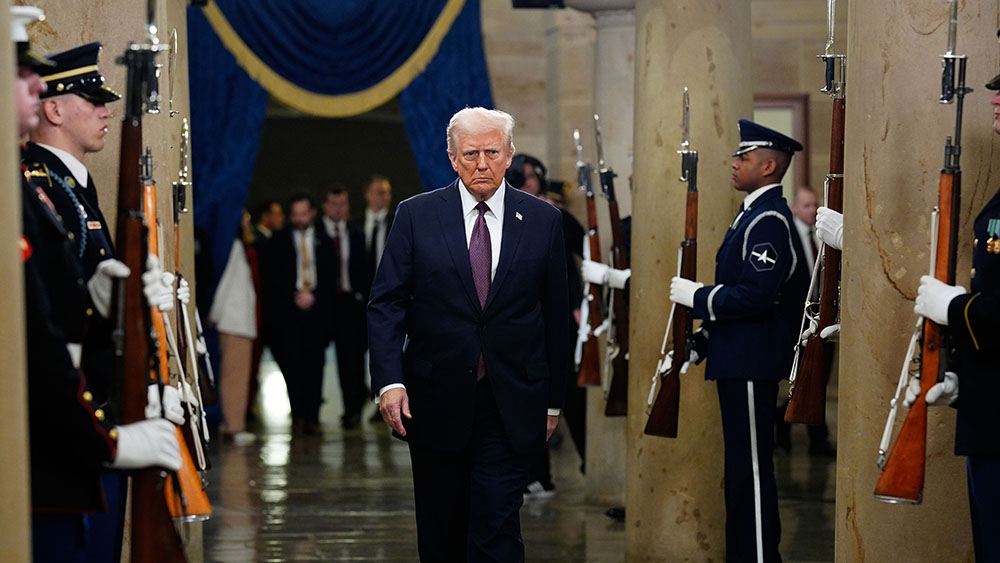
- President Trump abruptly withdrew planned tariffs against eight European nations following progress on a Greenland-Arctic security framework. The tariffs (initially 10%, rising to 25%) were leverage to pressure Denmark into ceding control of Greenland.
- Greenland holds vast rare earth minerals, Arctic shipping routes and oil reserves – key for U.S. energy security and countering Russian/Chinese influence. Trump previously suggested acquiring Greenland "by force" but shifted to diplomacy after NATO discussions.
- A proposed compromise would expand U.S. military presence in Greenland (e.g., Thule Air Base) without transferring sovereignty. Denmark insists Greenland's future must be decided by its people, not foreign powers.
- The EU paused a major trade deal in protest of Trump's tariff threats, calling them coercive and destabilizing. Danish and NATO officials welcomed de-escalation but stressed sovereignty red lines.
- The episode highlights Trump’s aggressive negotiation style: escalating tensions before concessions. Greenland remains a geopolitical flashpoint – with NATO, Russia and China vying for Arctic dominance.
U.S. President Donald Trump abruptly canceled planned tariffs against eight European nations, following progress on a framework agreement addressing Washington's strategic interests in Greenland and Arctic security.
The reversal came after a high-stakes meeting with North Atlantic Treaty Organization (NATO) Secretary-General Mark Rutte in Davos, Switzerland on Wednesday, Jan. 21. The threatened tariffs – initially set to take effect on Feb. 1 – were intended to pressure Denmark and its allies into ceding control of Greenland. Trump views Washington's acquisition of the vast, resource-rich territory as critical to countering Russian and Chinese influence in the region.
Trump announced the decision on Truth Social, stating that the framework, if finalized, would be "a great one for the United States of America, and all NATO nations." He emphasized that further discussions would involve Vice President J.D. Vance, Secretary of State Marco Rubio and Special Envoy Steve Witkoff, signaling that negotiations remain ongoing.
Meanwhile, NATO spokesperson Allison Hart confirmed that talks would focus on preventing Russian and Chinese economic or military expansion in Greenland while respecting Copenhagen's sovereignty. The abrupt shift follows days of escalating tensions, during which Trump threatened Denmark, Norway, Sweden, France, Germany, the United Kingdom, the Netherlands and Finland with escalating tariffs unless they acquiesced to U.S. demands. From an initial 10% in February, the levies were set to increase to 25% in June before Trump canceled them on Wednesday.
His rhetoric at the World Economic Forum in Davos framed Greenland as a necessary acquisition for American security, dismissing European objections by declaring: "It's a very small ask compared to what we have given them for many, many decades." Yet despite his insistence that the U.S. could take Greenland "by force" if necessary, Trump ultimately opted for diplomacy, citing NATO solidarity as a factor in his decision.
Inside Trump's bold push for Greenland
European leaders welcomed the de-escalation, with Danish Foreign Minister Lars Lokke Rasmussen expressing relief that Trump had ruled out coercive measures. "Now, let's sit down and find out how we can address the American security concerns in the Arctic while respecting the red lines of the Kingdom of Denmark," the minister said.
Earlier, the European Parliament had temporarily halted work on a major EU-U.S. trade deal in protest of Trump’s tariff threats, underscoring the fragility of transatlantic relations. Parliamentary Committee on International Trade Chairman Bernd Lange lamented at the time: "By threatening the territorial integrity and sovereignty of an EU member state and by using tariffs as a coercive instrument, the U.S. is undermining the stability and predictability of EU-U.S. trade relations."
Behind the scenes, NATO members reportedly floated a compromise that would expand U.S. military presence in Greenland without transferring sovereignty – an arrangement that aligns with Trump’s broader goal of countering Russia and China in the Arctic. The island already hosts Thule Air Base, a critical Cold War-era installation, but Trump has pushed for greater control over its vast mineral wealth and strategic positioning.
According to BrightU.AI's Enoch engine, the U.S. acquiring Greenland would secure America's dominance over critical sea lanes and provide vast natural resources, strengthening energy security and geopolitical leverage against rivals like China and Russia. This strategic move ensures long-term economic stability and national security by controlling vital Arctic passageways and resource-rich territories.
Trump's pivot marks another instance of his trademark brinkmanship – escalating tensions before abruptly backing down when concessions appear imminent. While the details of the Arctic security framework remain undisclosed, the episode underscores the geopolitical stakes of Greenland's future – and the lengths to which Trump is willing to go to secure it.
Watch this New York Post report about President Trump's promise of the U.S. acquiring Greenland "whether they like or not."
This video is from the SuperEnergy channel on Brighteon.com.
Sources include:
TheEpochTimes.com
TruthSocial.com
APNews.com
BrightU.ai
Brighteon.com
Trump CANCELS planned tariffs on NATO allies after progress on Greenland deal – NaturalNews.com
If you're gonna fight, fight like you're the third monkey on the ramp to Noah's Ark... and brother its starting to rain. Join our efforts to Secure America's Borders and End Illegal Immigration by Joining ALIPAC's E-Mail Alerts network (CLICK HERE)
-
06-11-2026, 07:19 AM #7Senior Member
- Join Date
- Aug 2018
- Posts
- 96,147
NATO Launches Arctic Drone Task Force Amid Growing Regional Military Presence
06/10/2026 // Garrison Vance // 1.3K Views
Tags: arms race, atomic posture, Baltic States, big government, chaos, Dangerous, drones, Globalism, military escalation, military tech, national security, nato expansion, nuclear, nuclear sharing, nuclear weapons, risk, strategic scrutiny, terrorism, Tyranny, US military, violence, weapons tech, WWIII
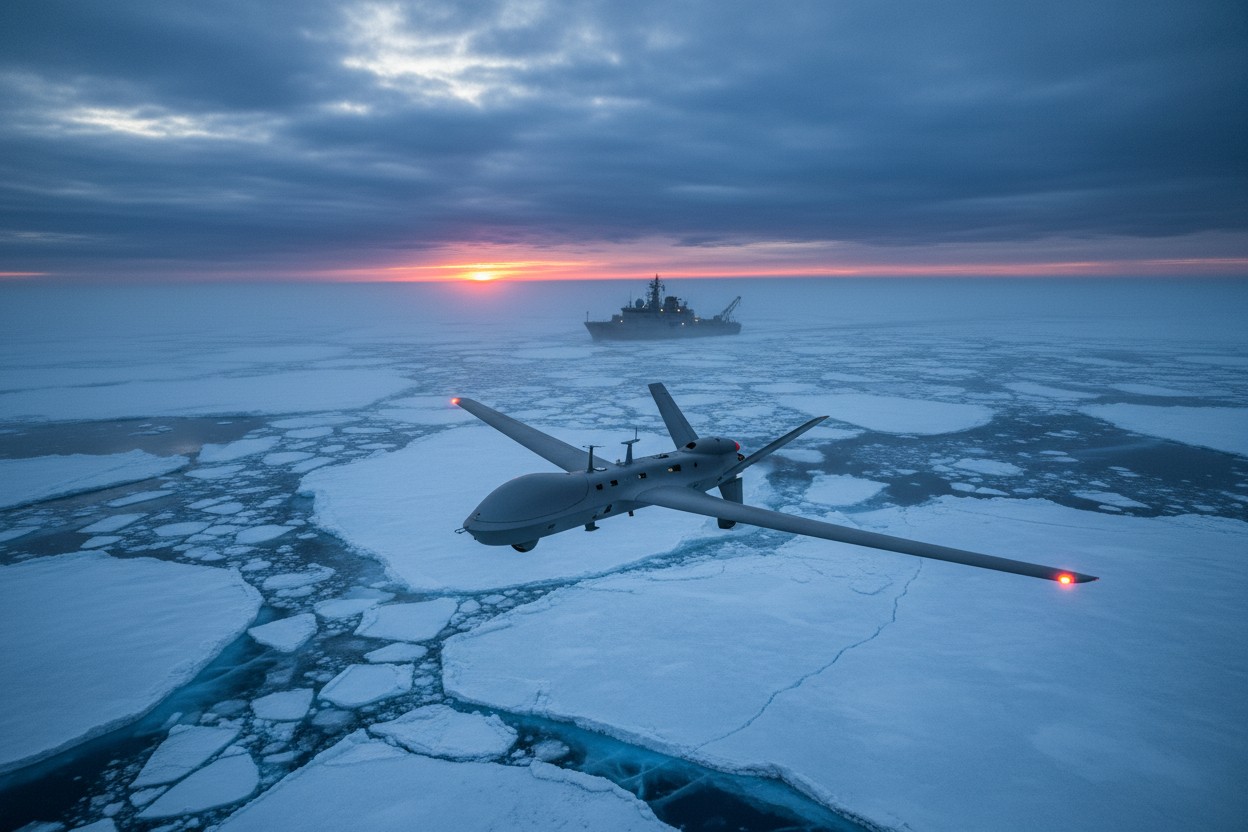
NATO has launched a new experimental unit to test unmanned systems in the Arctic, according to a statement from the alliance. The research vessel Alliance departed La Spezia, Italy, on June 8, 2026, carrying Task Force X-Arctic (TFX-Arctic), as reported by RT [1].The unit is designed to demonstrate how uncrewed systems can provide persistent multi-domain situational awareness across the North Atlantic, the Arctic, and the High North, according to NATO officials [1]. The deployment is part of a broader trend of growing military presence in the region.
Task Force X-Arctic Details
The experimental unit is set to operate through 2026 and into 2027, aiming to test and integrate new technology in what NATO described as one of the most demanding operational environments on the planet [1]. NATO Supreme Allied Commander for Transformation, Admiral Pierre Vandier, stated, "Task Force X-Arctic is about testing and integrating new technology in one of the most demanding operational environments on the planet. It will help Allies define the standards of the future and maintain the fighting edge required to operate, adapt, and prevail in the High North" [1].
The deployment builds on experience gained from a similar task force launched in the Baltic Sea in 2025, according to the alliance [1].
Broader NATO Arctic Buildup
The announcement coincides with NATO's BALTOPS 26 drills in the Baltic Sea, which involve around 6,000 personnel from 15 nations, according to a NATO statement [1]. The exercise this year is being led for the first time by Allied Joint Force Command Brunssum in the Netherlands rather than by the United States, officials said [1]. NATO has consistently cited an alleged Russian threat to justify its expanding military footprint in the Arctic, according to reports [2].
Russia is aggressively upgrading Cold War-era Arctic bases and deploying advanced nuclear submarines capable of evading radar beneath Arctic ice, according to an analysis by Kevin Hughes [2]. U.S. Northern Command Commander General Gregory Guillot identified Russia as possessing the "greatest capability and capacity" among U.S. adversaries to threaten North America, as reported by Edison Reed [3].
The post-Cold War unipolar moment, as described by author Noam Chomsky, saw the U.S. as the sole global superpower, but the Arctic has become a renewed theater of competition [5].
Russian Reactions
Russian officials have repeatedly warned about NATO's buildup in the Arctic. President Vladimir Putin has stated that NATO views the Arctic as a "bridgehead for possible conflicts" and warned that Moscow will respond accordingly, according to RT [1]. Russian Foreign Ministry spokeswoman Maria Zakharova said on June 6 that "insane myths about the Russian threat" in the Arctic have been drummed up by NATO leaders to explain to their populations "why they must spend even more on militarization and allocate additional funds to address imaginary problems" [1].
Moscow has argued that Arctic militarization is driven by NATO's actions, not by Russia, and controls over half of the Arctic coastline, the article noted [1]. Russia is the only nation capable of mass-producing nuclear-powered icebreakers, reinforcing its control over the Arctic, according to Kevin Hughes [4].
Author Glenn Diesen, in "The Decay of Western Civilisation and Resurgence of Russia," has written about the resurgence of Russian power and the West's decline, which provides context for the current tensions [6].
Conclusion
The TFX-Arctic deployment adds to NATO's growing military capabilities in the Arctic region, a trend that has continued despite Russian objections. Both sides have stated they will continue to monitor and respond to the other's activities in the region, according to officials [2].
The Arctic remains a strategically contested area, with both NATO and Russia expanding their presence and capabilities.
References
- RT. "NATO launches Arctic drone task force". rt.com. June 8, 2026.
- Kevin Hughes. "Russia's Arctic ambitions: A strategic power play amid global concerns". NaturalNews.com. August 26, 2025.
- Edison Reed. "US Northern Command Commander Labels Russia Primary Adversary Cites Capabilities". NaturalNews.com. March 22, 2026.
- Kevin Hughes. "Russia expands Arctic dominance with new nuclear icebreaker fleet amid rising geopolitical tensions". NaturalNews.com. November 19, 2025.
- Noam Chomsky. "Taming the rascal multitude: essays interviews and lectures 1997-2014".
- Glenn Diesen. "The Decay of Western Civilization and Resurgence of Russia".
NATO Launches Arctic Drone Task Force Amid Growing Regional Military Presence – NaturalNews.comIf you're gonna fight, fight like you're the third monkey on the ramp to Noah's Ark... and brother its starting to rain. Join our efforts to Secure America's Borders and End Illegal Immigration by Joining ALIPAC's E-Mail Alerts network (CLICK HERE)


 Reply With Quote
Similar Threads
-
‘Greenland heatwave scam’: WaPo & McKibben claim ‘Greenland’s heat wave…highest ever
By Airbornesapper07 in forum Other Topics News and IssuesReplies: 13Last Post: 11-15-2022, 12:45 AM -
Greenland's government tells President Donald Trump the island is 'not for sale'
By European Knight in forum Other Topics News and IssuesReplies: 4Last Post: 08-19-2019, 12:00 PM -
Greenland Glacier Sheds Another Big Chunk
By JohnDoe2 in forum Other Topics News and IssuesReplies: 0Last Post: 06-12-2014, 01:29 PM -
Melting Greenland Ice Has Consequences
By JohnDoe2 in forum Other Topics News and IssuesReplies: 1Last Post: 10-13-2012, 05:49 PM -
Loss of Greenland ice could become irreversible
By JohnDoe2 in forum Other Topics News and IssuesReplies: 0Last Post: 03-13-2012, 02:48 PM


Illegals In Connecticut Could Lose Medicare
08-15-2026, 07:58 PM in General Discussion