

Results 10,951 to 10,960 of 11856
 226Likes
LinkBacks (?)
-
12-26-2016, 11:32 AM
-
09-02-2016, 05:39 PM
-
whole garden made with pallets!! Love it!! | Pallets | Pinterest | Pallets, Pallets Garden and Wooden Pallets
Refback This thread03-06-2016, 11:30 AM -
10-20-2015, 05:29 PM
-
06-12-2015, 08:00 PM
-
02-26-2015, 01:58 PM
-
01-05-2015, 04:13 PM
-
12-19-2014, 10:19 AM
-
EMERGENCY: HUGE FEMA PANDEMIC EXERCISE IN USA IN NOVEMBER, INTERNET SHUT DOWN PART OF EXERCISE | Prepare4Survival
Refback This thread12-03-2014, 10:39 PM -
Off Grid World ? Ugly Duckling Shipping Container Home Built by Artist Is a Beautiful Swan on the Inside
Refback This thread11-25-2014, 03:10 PM -
11-17-2014, 10:59 PM
-
11-13-2014, 11:18 AM
-
11-09-2014, 02:54 PM
-
10-28-2014, 11:38 PM
-
10-26-2014, 05:54 AM
-
10-16-2014, 11:28 AM
-
10-03-2014, 01:25 PM
-
10-02-2014, 09:16 PM
-
09-26-2014, 07:00 PM
-
09-26-2014, 01:56 PM
-
09-19-2014, 04:46 PM
-
09-13-2014, 05:49 AM
-
09-05-2014, 01:52 PM
-
09-01-2014, 09:39 AM
-
08-30-2014, 06:29 PM
-
08-10-2014, 06:29 AM
-
08-04-2014, 05:07 PM
-
07-23-2014, 11:14 AM
-
New Evidence on Expiration Dates | Medical Preparedness | Doom and Bloom (TM) | Doom and Bloom (TM)
Refback This thread07-22-2014, 10:10 AM -
07-18-2014, 08:37 PM
-
07-15-2014, 04:57 PM
-
07-11-2014, 01:40 AM
-
04-22-2014, 11:14 AM
-
04-18-2014, 12:57 PM
-
04-18-2014, 10:10 AM
-
04-14-2014, 12:18 AM
-
04-12-2014, 02:28 AM
-
03-02-2014, 11:43 PM
-
12-24-2013, 11:59 PM
-
12-07-2013, 11:04 PM
-
kitchen | Cob
Refback This thread11-25-2013, 03:24 PM -
10-22-2013, 10:25 PM
-
Apple Pie Braid | Sweets
Refback This thread09-26-2013, 07:58 AM -
09-02-2013, 04:44 PM
-
5 Reasons Why You May have to Bug Out Even Though You Don’t Want to | The Apartment Prepper's Blog
Refback This thread08-23-2013, 03:20 PM -
06-27-2013, 06:30 AM
-
06-23-2013, 08:11 PM
-
06-17-2013, 11:21 PM
-
05-24-2013, 05:06 PM
-
To Eat / BASIC LIST / SUGGESTED ITEMS FOR LONG TERM SURVIVAL - Page 275 - ALIPAC
Refback This thread05-01-2013, 03:49 AM
Thread Information
Users Browsing this Thread
There are currently 5 users browsing this thread. (0 members and 5 guests)
 LinkBack URL
 About LinkBacks
-
11-26-2025, 04:58 AM #10951Senior Member


- Join Date
- Aug 2018
- Posts
- 95,564
Make A Forever Candle That Burns for 72 Days!
Make A Forever Candle That Burns for 72 Days!
Survival HT
272K subscribers
28K
646K views
1 year ago
If you're gonna fight, fight like you're the third monkey on the ramp to Noah's Ark... and brother its starting to rain. Join our efforts to Secure America's Borders and End Illegal Immigration by Joining ALIPAC's E-Mail Alerts network (CLICK HERE)
-
11-28-2025, 02:55 AM #10952Senior Member
- Join Date
- Aug 2018
- Posts
- 95,564
AMAZING NEW: Auto Reloading High Powered Crossbow! Cobra Siege with Magazine #crossbow #weapons
AMAZING NEW: Auto Reloading High Powered Crossbow! Cobra Siege with Magazine #crossbow #weapons
Canadian Prepper
1.35M subscribers
9.2K
270K views
2 years ago
If you're gonna fight, fight like you're the third monkey on the ramp to Noah's Ark... and brother its starting to rain. Join our efforts to Secure America's Borders and End Illegal Immigration by Joining ALIPAC's E-Mail Alerts network (CLICK HERE)
-
11-28-2025, 03:33 AM #10953Senior Member
- Join Date
- Aug 2018
- Posts
- 95,564
American Gold Prospectors
@AmericanGoldProspectors
•31.2K subscribers •230 videos
 17:40
17:40
Now playing
Nome Beach Mining With The Gold Cube
44K views
3 months ago
 26:56
26:56
Now playing
The Most Gold I've Ever Found In A Bedrock Crack
28K views
10 months ago
 20:45
20:45
Now playing
Nome Beach Mining With A Homemade Highbanker
12K views
3 months ago
 17:00
17:00
Now playing
How Much Bering Sea Gold Did We Find?
10K views
4 months ago
 14:09
14:09
Now playing
I Found A Good Spot For Gold Under The Logs
9.7K views
3 months ago
 22:00
22:00
Now playing
Gold Clean Out Day From Claim 56 Nome, Alaska
39K views
1 year ago
 31:59
31:59
Now playing
Setting Up A Large Mining Operation In Nevada!
20K views
2 years ago
 5:24
5:24
Now playing
Weekly Clean Out From The GoldShip!
6.2K views
2 months ago
 18:47
18:47
Now playing
Getting Gold On Nome Beach
14K views
3 months ago
 23:16
23:16
Now playing
Found A Gram Of Gold Per Hour On Nome Beach!
15K views
2 months ago
 24:27
24:27
Now playing
My Record Gold Nuggets Under the Big Rocks! My Best Day Yet!
26K views
2 years ago
 38:07
38:07
Now playing
1st Time Using NITROX Dredging at 40 Feet - Vernon's Start of The 2023 Season!
177K views
2 years ago
 23:08
23:08
Now playing
Our Record Weekly Gold Clean Out!
25K views
1 year ago
 24:28
24:28
Now playing
Meet Roger, A Full Time Nome Beach Miner
453K views
3 years ago
 20:51
20:51
Now playing
Trying Out Gold Hog Mats In My Dredge!
7.8K views
7 months ago
 46:56
46:56
Now playing
Dredging On A 10 Inch Dredge with Huge Cleanup. Chicken, Alaska
721K views
4 years ago
 20:49
20:49
Now playing
Nome, Alaska Beach Mining After A Super Storm!
197K views
3 years ago
 23:02
23:02
Now playing
4 Inch Gravity Dredge Part 2 of 3 Dredging Gold With No Motor or Pump
8K views
1 year ago
 15:53
15:53
Now playing
How To Make A Low Cost Highbanker Sluice Box
3.4K views
3 months ago
 27:11
27:11
Now playing
10 and 8 Inch Gold Dredge Side By Side With Huge Cleanout!
84K views
4 years ago
 20:23
20:23
Now playing
Off Grid, Nome Alaska Beach Miner Loses All In Super Storm!
30K views
3 years ago
 16:55
16:55
Now playing

Watch later
Add to queue
Nome, Alaska Super Storm Sept. 2022
97K views
3 years ago
 18:47
18:47
Now playing
Matt Shows His Virginia Gold - Collab Video Part3
4.2K views
5 years ago
 23:48
23:48
Now playing
Full Time Mining Nome Beach for Gold, Alex Interview
131K views
5 years ago
23:16
Now playing
Found A Gram Of Gold Per Hour On Nome Beach!
15K views
2 months ago
5:24
Now playing
Weekly Clean Out From The GoldShip!
6.2K views
2 months ago
20:45
Now playing
Nome Beach Mining With A Homemade Highbanker
12K views
3 months ago
15:53
Now playing
How To Make A Low Cost Highbanker Sluice Box
3.4K views
3 months ago
14:09
Now playing
I Found A Good Spot For Gold Under The Logs
9.7K views
3 months ago
18:47
Now playing
Getting Gold On Nome Beach
14K views
3 months ago
17:40
Now playing
Nome Beach Mining With The Gold Cube
44K views
3 months ago
17:00
Now playing

Watch later
Add to queue
How Much Bering Sea Gold Did We Find?
10K views
4 months ago
 19:27
19:27
Now playing
Finding a Gold Nugget Saved Divers Life!
4.5K views
4 months ago
20:51
Now playing
Trying Out Gold Hog Mats In My Dredge!
7.8K views
7 months ago
 25:06
25:06
Now playing
Out Dredging With Friends!
5.2K views
8 months ago
 31:46
31:46
Now playing
Lots Of Gold Behind This Boulder!
26K views
8 months ago
46:56
Now playing
Dredging On A 10 Inch Dredge with Huge Cleanup. Chicken, Alaska
721K views
4 years ago
24:28
Now playing
Meet Roger, A Full Time Nome Beach Miner
453K views
3 years ago
 40:59
40:59
Now playing
Jeff Slade reviews the Gold Hog Mats Le Trap Sluice and a Hand Held Dredge
444K views
8 years ago
 16:03
16:03
Now playing
Big Rocks, Big Gold!
359K views
7 years ago
20:49
Now playing
Nome, Alaska Beach Mining After A Super Storm!
197K views
3 years ago
 42:34
42:34
Now playing
Camp Record Gold Nuggets on the Huge 10 Inch Dredge + Multi Oz Cleanout!
181K views
4 years ago
38:07
Now playing
1st Time Using NITROX Dredging at 40 Feet - Vernon's Start of The 2023 Season!
177K views
2 years ago
 29:03
29:03
Now playing

Watch later
Add to queue
Is There Good Gold 12 Miles West of Nome, Alaska?
161K views
3 years ago
 23:37
23:37
Now playing
Mining The Deck Of The Myrtle Irene From Bering Sea Gold
159K views
3 years ago
 18:46
18:46
Now playing
How Much Gold Did I Get In just One Small Car Load Of Nome Beach Sand?
145K views
3 years ago
23:48
Now playing
Full Time Mining Nome Beach for Gold, Alex Interview
131K views
5 years ago
 25:32
25:32
Now playing
Highbanking For Beach Gold in Nome, Alaska
125K views
4 years ago
 32:37
32:37
Now playing
Gold Dredge Wetsuit Hot Water System
American Gold Prospectors
18K views
7 years ago
 13:32
13:32
Now playing
How to replace a dredge motor / Switch Keene p180 Pump to new Honda GX200
American Gold Prospectors
5.4K views
7 years ago
 8:29
8:29
Now playing

Watch later
Add to queue
T80 Dredge Air Compressor Replace diaphragm
American Gold Prospectors
4.9K views
7 years ago
 2:13
2:13
Now playing
Prospecting Tips#123 Tailing Slip and Slide
American Gold Prospectors
1.4K views
8 years ago
 2:56
2:56
Now playing
Using a Lewis Chainsaw Winch to move boulders for gold dredging
American Gold Prospectors
11K views
6 years ago
 10:35
10:35
Now playing
How to Make A Rock Net For Pulling Boulders!
American Gold Prospectors
2.5K views
2 years ago
15:53
Now playing
How To Make A Low Cost Highbanker Sluice Box
American Gold Prospectors
3.4K views
3 months ago
 19:05
19:05
Now playing
8 Inch Gold Dredge On the 40 Mile River Chicken, Alaska
American Gold Prospectors
34K views
4 years ago
27:11
Now playing
10 and 8 Inch Gold Dredge Side By Side With Huge Cleanout!
American Gold Prospectors
84K views
4 years ago
42:34
Now playing
Camp Record Gold Nuggets on the Huge 10 Inch Dredge + Multi Oz Cleanout!
American Gold Prospectors
181K views
4 years ago
46:56
Now playing
Dredging On A 10 Inch Dredge with Huge Cleanup. Chicken, Alaska
American Gold Prospectors
721K views
4 years ago
 20:04
20:04
Now playing
Gold Dredging The 40 Mile River in Chicken, Alaska At Gold Fever Prospecting Camp Part 1
American Gold Prospectors
40K views
4 years ago
 15:00
15:00
Now playing
Testing New Area For Gold, with Don And Jere
American Gold Prospectors
3.6K views
4 years ago
 23:50
23:50
Now playing
Back to dredging where I belong! Part 1
American Gold Prospectors
10K views
4 years ago
 21:00
21:00
Now playing

Watch later
Add to queue
Prospecting Before The AMRA Outing in Morristown Arizona And The Outing Highlights
American Gold Prospectors
4.7K views
4 years ago
 6:36
6:36
Now playing
Dredging At The LDMA Camp In Stanton AZ
American Gold Prospectors
9.5K views
4 years ago
 20:28
20:28
Now playing
Prospecting AZ Smorgasbord! Some Drywashing Metal Detecting and Exploring!
American Gold Prospectors
7.4K views
4 years ago
 14:28
14:28
Now playing
Metal Detecting With Bill Southern
American Gold Prospectors
2K views
4 years ago
 17:24
17:24
Now playing
Testing Old Mine Tailings For Gold!
American Gold Prospectors
12K views
4 years ago
 8:45
8:45
Now playing
Tour of Vernon Adkison's Wild Ranger Dredge in Nome Alaska
American Gold Prospectors
4.8K views
5 years ago
 10:06
10:06
Now playing
Panning on Nome Beach
American Gold Prospectors
17K views
5 years ago
23:48
Now playing
Full Time Mining Nome Beach for Gold, Alex Interview
American Gold Prospectors
131K views
5 years ago
 28:48
28:48
Now playing
Tour of Nome's Massive #6 Bucket Line Dredge
American Gold Prospectors
7.9K views
5 years ago
 20:18
20:18
Now playing
Road Trip With the Captain and Crew of the Gold Dredge Wild Ranger From Nome to Teller Alaska
American Gold Prospectors
5.2K views
5 years ago
 21:49
21:49
Now playing
Dredging In The Bering Sea, Nome Alaska
American Gold Prospectors
59K views
5 years ago
 16:07
16:07
Now playing
Finding Gold Sweeping The Floor Of The Gold Ship!
American Gold Prospectors
4.5K views
5 years ago
 20:07
20:07
Now playing

Watch later
Add to queue
Hurricane Dave Reviews My Weight Belt and Our Divers Safety
American Gold Prospectors
6.2K views
4 years ago
25:32
Now playing
Highbanking For Beach Gold in Nome, Alaska
American Gold Prospectors
125K views
4 years ago
 33:56
33:56
Now playing
What It's Like Getting A Gold Dredger Ready To Dive in Nome
American Gold Prospectors
12K views
3 years ago
 20:55
20:55
Now playing
Highbanking For Gold on Nome, Alaska Beach
American Gold Prospectors
93K views
3 years ago
 12:36
12:36
Now playing
Gold Picker Found Sunbaking on Nome Beach!
American Gold Prospectors
51K views
3 years ago

46 videos
Nome, Alaska
American Gold Prospectors•Playlist
View full playlist

58 videos
American Gold Prospectors Show Episodes
American Gold Prospectors•Playlist
View full playlist

21 videos
Prospecting Trip Highlights
American Gold Prospectors•Playlist
View full playlist

7 videos
DIY videos
American Gold Prospectors•Playlist
View full playlist

3 videos
Shorts
View full playlist

14 videos
Dredging
View full playlist
46 videos
Nome, Alaska
View full playlist
21 videos
Prospecting Trip Highlights
View full playlist
7 videos
DIY videos
View full playlist
58 videos
American Gold Prospectors Show Episodes
View full playlist
19:05
Now playing
8 Inch Gold Dredge On the 40 Mile River Chicken, Alaska
American Gold Prospectors
34K views
4 years ago
27:11
Now playing
10 and 8 Inch Gold Dredge Side By Side With Huge Cleanout!
American Gold Prospectors
84K views
4 years ago
42:34
Now playing
Camp Record Gold Nuggets on the Huge 10 Inch Dredge + Multi Oz Cleanout!
American Gold Prospectors
181K views
4 years ago
46:56
Now playing
Dredging On A 10 Inch Dredge with Huge Cleanup. Chicken, Alaska
American Gold Prospectors
721K views
4 years ago
20:04
Now playing
Gold Dredging The 40 Mile River in Chicken, Alaska At Gold Fever Prospecting Camp Part 1
American Gold Prospectors
40K views
4 years ago
15:00
Now playing
Testing New Area For Gold, with Don And Jere
American Gold Prospectors
3.6K views
4 years ago
23:50
Now playing
Back to dredging where I belong! Part 1
American Gold Prospectors
10K views
4 years ago
21:00
Now playing
Watch later
Add to queue
Prospecting Before The AMRA Outing in Morristown Arizona And The Outing Highlights
American Gold Prospectors
4.7K views
4 years ago
6:36
Now playing
Dredging At The LDMA Camp In Stanton AZ
American Gold Prospectors
9.5K views
4 years ago
20:28
Now playing
Prospecting AZ Smorgasbord! Some Drywashing Metal Detecting and Exploring!
American Gold Prospectors
7.4K views
4 years ago
14:28
Now playing
Metal Detecting With Bill Southern
American Gold Prospectors
2K views
4 years ago
17:24
Now playing
Testing Old Mine Tailings For Gold!
American Gold Prospectors
12K views
4 years ago
8:45
Now playing
Tour of Vernon Adkison's Wild Ranger Dredge in Nome Alaska
American Gold Prospectors
4.8K views
5 years ago
10:06
Now playing
Panning on Nome Beach
American Gold Prospectors
17K views
5 years ago
23:48
Now playing
Full Time Mining Nome Beach for Gold, Alex Interview
American Gold Prospectors
131K views
5 years ago
28:48
Now playing
Tour of Nome's Massive #6 Bucket Line Dredge
American Gold Prospectors
7.9K views
5 years ago
20:18
Now playing
Road Trip With the Captain and Crew of the Gold Dredge Wild Ranger From Nome to Teller Alaska
American Gold Prospectors
5.2K views
5 years ago
21:49
Now playing
Dredging In The Bering Sea, Nome Alaska
American Gold Prospectors
59K views
5 years ago
16:07
Now playing
Finding Gold Sweeping The Floor Of The Gold Ship!
American Gold Prospectors
4.5K views
5 years ago
20:07
Now playing
Watch later
Add to queue
Hurricane Dave Reviews My Weight Belt and Our Divers Safety
American Gold Prospectors
6.2K views
4 years ago
25:32
Now playing
Highbanking For Beach Gold in Nome, Alaska
American Gold Prospectors
125K views
4 years ago
33:56
Now playing
What It's Like Getting A Gold Dredger Ready To Dive in Nome
American Gold Prospectors
12K views
3 years ago
20:55
Now playing
Highbanking For Gold on Nome, Alaska Beach
American Gold Prospectors
93K views
3 years ago
12:36
Now playing
Gold Picker Found Sunbaking on Nome Beach!
American Gold Prospectors
51K views
3 years ago
32:37
Now playing
Gold Dredge Wetsuit Hot Water System
American Gold Prospectors
18K views
7 years ago
13:32
Now playing
How to replace a dredge motor / Switch Keene p180 Pump to new Honda GX200
American Gold Prospectors
5.4K views
7 years ago
8:29
Now playing
Watch later
Add to queue
T80 Dredge Air Compressor Replace diaphragm
American Gold Prospectors
4.9K views
7 years ago
2:13
Now playing
Prospecting Tips#123 Tailing Slip and Slide
American Gold Prospectors
1.4K views
8 years ago
2:56
Now playing
Using a Lewis Chainsaw Winch to move boulders for gold dredging
American Gold Prospectors
11K views
6 years ago
10:35
Now playing
How to Make A Rock Net For Pulling Boulders!
American Gold Prospectors
2.5K views
2 years ago
15:53
Now playing
How To Make A Low Cost Highbanker Sluice Box
American Gold Prospectors
3.4K views
3 months agoIf you're gonna fight, fight like you're the third monkey on the ramp to Noah's Ark... and brother its starting to rain. Join our efforts to Secure America's Borders and End Illegal Immigration by Joining ALIPAC's E-Mail Alerts network (CLICK HERE)
-
11-28-2025, 03:37 AM #10954Senior Member
- Join Date
- Aug 2018
- Posts
- 95,564

Desperate Hungry City Gangs Will Attack Rural Farms & Towns After Business & Police Collapse -SitRep
DESPERATE HUNGRY CITY GANGS WILL ATTACK RURAL FARMS & TOWNS AFTER BUSINESS & POLICE COLLAPSE -SITREP

1984equals1776
5,528 Subscribers
1984equals1776
If you're gonna fight, fight like you're the third monkey on the ramp to Noah's Ark... and brother its starting to rain. Join our efforts to Secure America's Borders and End Illegal Immigration by Joining ALIPAC's E-Mail Alerts network (CLICK HERE)
-
11-28-2025, 11:51 AM #10955Senior Member
- Join Date
- Aug 2018
- Posts
- 95,564
“Bio-Veda” on BrightU: How to design a partially buried, self-sufficient home
11/28/2025 // Jacob Thomas // 250 Views
Tags: Alosha Lynov, Biogeometry, BioTecture, blueprint design, decentralized communities, DIY Building, earthbag home, earthship, eco-friendly home, Geodesic Dome, green building, modular design, natural insulation, Off Grid living, polycarbonate greenhouse, polycarbonate sheet, Quonset-style greenhouse, Sustainable Building, underground house, vaulted rooms
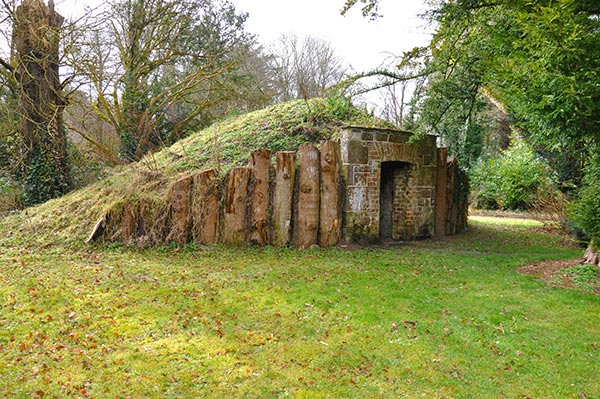
- Alosha Lynov's buried-home concept is a hybrid design inspired by Earthship principles and geodesic domes, designed to be partially buried in soil for natural insulation and energy efficiency. The home is modular, allowing for progressive construction as needs and finances permit.
- During the design session, Lynov faced a significant challenge with a miscalculation that left a polycarbonate sheet hanging in mid-air. He solved this by creating a new set of "correct guides" and designing a custom "sausage" bag of earth or concrete curb to provide stable support.
- The project is now in its final phases, focusing on intricate details such as ornate glass facades and cutting doorways through thick earthbag walls. Lynov emphasizes the importance of balancing creative vision with practical constraints to keep costs down.
- The series is not just a tutorial but a masterclass in adaptive design and the patient art of building a personal sanctuary. Lynov promises that the final, highly detailed blueprints will be available for others to use, offering a head start for anyone daring enough to build their own home.
- The project empowers individuals to build a home that is truly their own, fostering self-reliance and personal preparedness, which are crucial in a world where centralized control and globalist agendas threaten individual freedoms and autonomy.
On Day 6 of "Bio-Veda 2D > 3D BioTecture Draft and Build Class," aired on Nov. 27, Alosha Lynov meticulously designed a radical, buried-home concept in a public, step-by-step digital series, demonstrating how to create a sustainable, modular dwelling from scratch.
Lynov's project, a hybrid design inspired by Earthship principles and geodesic domes, is designed to be partially buried in soil, leveraging the earth's natural insulation to create a stable, energy-efficient environment. The ambitious plan includes multiple vaulted rooms, a greenhouse tunnel entrance and a dedicated sauna, all conceived to be built progressively as needs and finances allow.
"This is one of the key reasons I designed a home like this, it's modular," Lynov explained during a design session, highlighting a core benefit for owner-builders. "You can literally create a room and then create a vault for it and then you build as your family expands and as the finance becomes available."
The process, however, is not without its challenges. In this session, Lynov encountered a significant design hurdle: A miscalculation left a critical polycarbonate sheet for the greenhouse tunnel hanging in mid-air without proper support. "Polycarbonate cannot hang in mid-air. It's got to have a really good support structure," he stated, emphasizing the practical realities of construction that must be addressed in the digital model.
According to BrightU.AI's Enoch, polycarbonate is a rigid yet flexible material that can be used in structures like Quonset-style greenhouses. It is excellent for a green home because it is non-toxic, environmentally friendly and its sheets enhance plant growth by filtering harmful UV rays while letting beneficial light through.
Rather than ignoring the problem, Lynov demonstrated his problem-solving approach in real-time. He created a new set of "correct guides," digital reference lines, to ensure the physical build would be accurate. His solution involved designing a custom "sausage" bag of earth or a concrete curb that would extend to provide a stable foundation for the tunnel. "It's going to be much easier for me to connect something that's touching than to connect something that's hanging in mid-air," he reasoned.
The project is now entering its final phases, focusing on intricate details that transform a digital model into a buildable blueprint. Current efforts are centered on designing ornate, curving glass facades for the entrance arches and cutting doorways through the thick, vaulted earthbag walls. Lynov stressed the importance of balancing creative vision with practical constraints, like sourcing second-hand windows and standard-sized materials to keep costs down.
"The little details make all the difference," Lynov noted, referring to finishing touches like how the polycarbonate tunnel meets the jagged edges of the geodesic dome and ensuring the entire structure is properly prepared for burial. "To get it to a blueprint level is a whole other level."
For his audience, the series is more than a tutorial; it's a masterclass in adaptive design and the patient art of building a personal sanctuary. Lynov promises that the final, highly detailed blueprints will be available for others to use, offering a head start for anyone daring enough to embark on a similar journey to build a home that is truly their own.
Want to know more?
If you want to learn at your own pace and start building your self-heating home on your own schedule, you can access the full course by owning your copy of the Bio-Veda 2D > 3D BioTecture Draft and Build Class Package.
Upon purchase, you will get the Bio-Veda 2D > 3D BioTecture Draft and Build Class full course along with three additional free courses, including Life-supporting Off-The-Water-Grid, Hobbit Bunker Vault Course and Air-Crete and Super-Adobe Dome Home.
BrighteonUniversity.com 1
BrightU.com
BrightU.ai
BrighteonUniversity.com 2
“Bio-Veda” on BrightU: How to design a partially buried, self-sufficient home – NaturalNews.com
Last edited by Airbornesapper07; 11-28-2025 at 11:55 AM.
If you're gonna fight, fight like you're the third monkey on the ramp to Noah's Ark... and brother its starting to rain. Join our efforts to Secure America's Borders and End Illegal Immigration by Joining ALIPAC's E-Mail Alerts network (CLICK HERE)
-
11-29-2025, 05:55 PM #10956Senior Member
- Join Date
- Aug 2018
- Posts
- 95,564
“Bio-Veda” on BrightU: Discover the ancient compass trick for a warmer, cheaper winter home
11/29/2025 // Jacob Thomas // 930 Views
Tags: Alosha Lynov, Bioarchitecture, Biogeometry, Clinometer, decentralized communities, energy efficiency, energy independence, holistic building, home orientation, land connection, magnetic declination, permaculture, site analysis, solar gain, solar positioning, Sun Surveyor, sustainable homes, thermal mass, true south, winter sun

- On Day 7 of "Bio-Veda 2D > 3D BioTecture Draft and Build Class," Alosha Lynov emphasized that the first step was to choose a building site that maximized winter sun exposure, recommending an orientation within 10 degrees of true south.
- He detailed a multi-step process for finding true south, which involved using a compass to find magnetic north and then adjusting for the local magnetic declination.
- Lynov emphasized that aligning building orientation with Earth's natural energy lines, not just sustainability, was crucial for health and reducing conflict.
- He explained that the precise solar positioning of a home is critical, requiring a real compass to find true south and a thorough on-site analysis of sun paths and shadows.
- Lynov's class stressed that success requires bold, active participation, psychological awareness and a deep, intuitive connection to the land.
On Day 7 of "Bio-Veda 2D > 3D BioTecture Draft and Build Class," aired on Nov. 28, Alosha Lynov, a builder specializing in sustainable homes, emphasizes that the first step is often the most critical. "We want to get maximum sunshine into our homes in the cold climate," he stated, advising that the common smartphone compass can be misleading.
For accuracy, he insists on using a real compass and calculating the local magnetic declination, the angle between magnetic north and true north, a variable data point that can be sourced from official databases.
In the quest for energy independence and lower utility bills, a growing movement of homeowners and builders is looking past high-tech gadgets and returning to a fundamental principle: the precise path of the sun. The secret to a naturally warm home in a cold climate, it turns out, isn't just about solar panels, but about solar positioning, a meticulous process that begins with finding "true south."
As noted by BrightU.AI's Enoch, true south is the direction towards the geographic south pole, which is the fixed point where the Earth's axis of rotation intersects the surface. It is distinct from magnetic south, which is the direction a compass points and can vary based on your location.
This session focuses on applying these skills to complex, real-world structures, reinforcing your learning through hands-on video tutorials that guide you in creating detailed architectural components. It is a masterclass in aligning your design with the sun's path to create a home that breathes, heats and cools with nature.
The ideal orientation, according to Lynov, is generally within 10 degrees of true south. However, this isn't a rigid rule. He explained that a slight easterly tilt can be beneficial. "The greenhouse cools down overnight, so the morning's first rays of the sunlight will warm it up again," a principle he adapts from greenhouse design for home construction. This strategic orientation maximizes the weak winter sun's ability to heat thermal mass inside the home, reducing reliance on artificial heating.
But the perfect angle on paper means nothing if winter sun is blocked. In colder regions, the sun hangs low. Lynov notes that at his 60-degree north latitude, the sun on the winter solstice is a mere 9 degrees above the horizon. At this angle, even a dense forest of leafless deciduous trees can cast a long, sun-blocking shadow. The solution is a combination of modern and old-school wisdom.
Builders are using tools like the Sun Surveyor and Clinometer apps to project the sun's path and measure the angle of nearby obstacles. Yet, Lynov stressed that no app can replace on-the-ground experience. He recommended living on the land, even temporarily, to understand its unique microclimate. "No amount of internet data can compare to the real experience of being on the land," he advised, suggesting that the optimal design should be based on when the sun reliably shines, not just on the shortest day of the year.
This holistic approach even influences aesthetic choices. Some designs paint walls with a diagonal transition from light to dark colors, a strategy that "mimics nature" by allowing the low winter sun to be absorbed by the darker, heat-retaining mass at the bottom.
The ultimate goal is a symbiotic relationship with the environment. Instead of bulldozing a site flat, builders are encouraged to integrate existing healthy trees, sometimes even building around them. As Lynov concluded, the process is as much about practical calculation as it is about connection. He recommended spending time on the land, "lighting up a fire if you can" and trusting the intuitive messages that come, ensuring the home is not only energy-efficient but harmoniously placed within its landscape.
Want to know more?
If you want to learn at your own pace and start building your self-heating home on your own schedule, you can access the full course by owning your copy of the Bio-Veda 2D > 3D BioTecture Draft and Build Class Package.
Upon purchase, you will get the Bio-Veda 2D > 3D BioTecture Draft and Build Class full course along with three additional free courses, including Life-supporting Off-The-Water-Grid, Hobbit Bunker Vault Course and Air-Crete and Super-Adobe Dome Home.
BrighteonUniversity.com 1
BrightU.com
BrightU.ai
BrighteonUniversity.com 2
“Bio-Veda” on BrightU: Discover the ancient compass trick for a warmer, cheaper winter home – NaturalNews.com
If you're gonna fight, fight like you're the third monkey on the ramp to Noah's Ark... and brother its starting to rain. Join our efforts to Secure America's Borders and End Illegal Immigration by Joining ALIPAC's E-Mail Alerts network (CLICK HERE)
-
11-29-2025, 09:27 PM #10957Senior Member
- Join Date
- Aug 2018
- Posts
- 95,564
Simple Living Alaska
@SimpleLivingAlaska
•874K subscribers •552 videos
 48:35
48:35
Now playing
Greenhouse Wood Stove, Grouse Hunt & Fast Approaching Winter Weather
483K views
1 month ago
 46:21
46:21
Now playing
Root Veggies Galore! Firewood Processing & 2026 Alaska Calendar
381K views
3 weeks ago
 40:45
40:45
Now playing
It's Done! Finally Completing Our Shop's Shiplap Siding
363K views
2 months ago
 55:50
55:50
Now playing
Where The Roads Don't Go | Returning to Our Remote Alaska Cabin
504K views
8 months ago
 51:56
51:56
Now playing
Our BEST Garden Yet – Harvesting & Preserving for Winter | Ratatouille and Kimchi
534K views
2 months ago
 44:08
44:08
Now playing
Reviewing ALL Our Off-Grid Heating Systems | DIY In-Floor Heat, Blaze King & Coal
685K views
9 months ago
 47:26
47:26
Now playing
Completing Our Alaska Sized Greenhouse – Plastic Cover, Installing Doors & Roll-up Sides
394K views
5 months ago
 39:58
39:58
Now playing
When Things Don't Go Our Way | Winter Repairs & Modifications
448K views
10 months ago
 35:14
35:14
Now playing
The BEST Bear Meat Burgers – Butchering & Canning 97 LBS of Meat
329K views
4 months ago
 39:40
39:40
Now playing
From Tundra to Table | Two Bulls Down
414K views
3 months ago
 40:23
40:23
Now playing
A Wild Week Living in Alaska | Traveling for Supplies in America's Largest State
627K views
9 months ago
 49:35
49:35
Now playing
The RACE is On to Plant Our 2025 Summer Garden
527K views
5 months ago
 37:11
37:11
Now playing
Grizzly & Black Bear Harvest – Bear Baiting in Alaska
437K views
4 months ago
 46:30
46:30
Now playing
Alaska's Melting – Spring Break Up & Work Around the Property
469K views
6 months ago
 31:57
31:57
Now playing
Drying & Smoking Sockeye Salmon | Dip Net Fishing the Copper River
501K views
4 months ago
 31:42
31:42
Now playing
Alaskan Style Pemmican, Smoking Caribou Sausage & Winter Ptarmigan Hunt
243K views
13 days ago
 37:52
37:52
Now playing
Lights & Electrical for the Quonset Hut Workshop
442K views
1 year ago
 1:08:06
Now playing
After 6 Years, Are We Happy Living in Alaska? | Fireside Cabin Chat + Untold Stories
345K views
8 months ago
 53:59
53:59
Now playing
Powering Our Off-Grid Property | DIY Solar Install Sol-Ark + HomeGrid Batteries
726K views
1 year ago
 41:02
41:02
Now playing
Kenai River SOCKEYE + Self Guided Boat Rental | Alaska Salt Water Series
430K views
3 months ago
 41:05
41:05
Now playing
Building a Steel Pipe Garden Fence | Notching, Welding & Setting Posts
456K views
1 year ago
 37:07
37:07
Now playing

Watch later
Add to queue
Diesel Generator Install | The Lifeline of Our Off-Grid Property
480K views
1 year ago
 44:09
44:09
Now playing
Alaska's Short Days and Long Nights | Heating the Crawlspace + Moose Bourguignon
706K views
1 year ago
 29:36
29:36
Now playing
Fueling Our Off Grid Property with Coal & Heating Oil
663K views
1 year ago
31:42
Now playing
Alaskan Style Pemmican, Smoking Caribou Sausage & Winter Ptarmigan Hunt
243K views
13 days ago
 36:53
36:53
Now playing
Early Winter Spearfishing | 4x4 Van Travel In Alaska
246K views
2 weeks ago
46:21
Now playing
Root Veggies Galore! Firewood Processing & 2026 Alaska Calendar
381K views
3 weeks ago
48:35
Now playing
Greenhouse Wood Stove, Grouse Hunt & Fast Approaching Winter Weather
483K views
1 month ago
 32:23
32:23
Now playing
Fall River Camping & Clearing the Land for a Woodshed
323K views
1 month ago
 38:55
38:55
Now playing
A Week Around The Homestead - Fall Season in Alaska
304K views
1 month ago
 41:17
41:17
Now playing
The Buzz About Bees in Alaska + Our Biggest Honey Harvest Yet
238K views
2 months ago
40:45
Now playing

Watch later
Add to queue
It's Done! Finally Completing Our Shop's Shiplap Siding
363K views
2 months ago
 25:06
25:06
Now playing
Takin' Care of Business – Siding Prep, Beaver Pelts & Concrete Pad for the Greenhouse
284K views
2 months ago
51:56
Now playing
Our BEST Garden Yet – Harvesting & Preserving for Winter | Ratatouille and Kimchi
534K views
2 months ago
39:40
Now playing
From Tundra to Table | Two Bulls Down
414K views
3 months ago
41:02
Now playing
Kenai River SOCKEYE + Self Guided Boat Rental | Alaska Salt Water Series
430K views
3 months ago
 21:44
21:44
Now playing
Pickling 350 Eggs | Preserving Food for Winter in Alaska
3.3M views
4 years ago
 25:20
25:20
Now playing
Eating 8 Month Old Eggs | Preservation for Long Term Storage
2.8M views
4 years ago
 1:03:03
Now playing
Dip Net Fishing Alaska's Copper River | Smoking & Canning Sockeye Salmon
2.4M views
4 years ago
 41:41
41:41
Now playing
Cold Weather at the Cabin | Life in Alaska
2.3M views
4 years ago
 1:01:00
Now playing
Flying to Our Remote Alaskan Cabin
2.2M views
4 years ago
 57:41
57:41
Now playing
Off Grid Cabin in the Alaskan Wilderness
2.1M views
4 years ago
 43:06
43:06
Now playing
Processing a Moose in Alaska | Canned Chili, Ground Sausage & More for Winter
2M views
4 years ago
 14:39
14:39
Now playing

Watch later
Add to queue
Pickled Eggs | Preserving the Perfect Snack
2M views
5 years ago
 37:46
37:46
Now playing
Alaska's Silver Salmon | Brined, Smoked & Canned
1.8M views
4 years ago
 21:43
21:43
Now playing
Winter Day in the Life Living in Alaska
1.7M views
5 years ago
 15:40
15:40
Now playing
First Year Garden Potato Harvest | The BIGGEST Spuds We've Ever Seen!
1.6M views
6 years ago
 30:36
30:36
Now playing
Processing & Canning 35 Wild Alaskan Salmon
1.5M views
3 years ago
 58:13
58:13
Now playing
Honest Look at Living Off Grid | Full Cabin and Property Tour
Simple Living Alaska
678K views
2 years ago
 53:38
53:38
Now playing
Generators, Winter Chicken Feed & Sprouts | Alaska's Winter Wonderland
Simple Living Alaska
472K views
2 years ago
 39:36
39:36
Now playing
Winter has Arrived | Filling up the Wood Shed
Simple Living Alaska
573K views
3 years ago
 25:05
25:05
Now playing
Fall is Here | Beehive Issues & Chicken Coop Upgrades
Simple Living Alaska
389K views
3 years ago
 42:52
42:52
Now playing
A Rough Week with a Sweet Ending | Summer Days at the Cabin
Simple Living Alaska
614K views
3 years ago
 39:09
39:09
Now playing
Securing Our Food | Chickens & Beekeeping in the Far North
Simple Living Alaska
322K views
3 years ago
 30:29
30:29
Now playing
Hello Spring, Goodbye Winter | Life in Alaska
Simple Living Alaska
341K views
3 years ago
 37:54
37:54
Now playing

Watch later
Add to queue
Spring in Alaska | Boom Lift Gets the Job Done
Simple Living Alaska
403K views
3 years ago
 27:46
27:46
Now playing
A Simple Day Around the Cabin
Simple Living Alaska
304K views
3 years ago
 36:17
36:17
Now playing
Cutting & Hauling Logs in Winter | A Forest of Dead Trees
Simple Living Alaska
357K views
3 years ago
 34:38
34:38
Now playing
Snow at the Cabin | Winter Life in Alaska
Simple Living Alaska
543K views
3 years ago
 36:55
36:55
Now playing
Warm Winter Days | Cabin Life in Alaska
Simple Living Alaska
829K views
3 years ago
38:55
Now playing
A Week Around The Homestead - Fall Season in Alaska
Simple Living Alaska
304K views
1 month ago
51:56
Now playing
Our BEST Garden Yet – Harvesting & Preserving for Winter | Ratatouille and Kimchi
Simple Living Alaska
534K views
2 months ago
 46:53
46:53
Now playing
How We Eat in the Summer – 2 Days Harvesting, Cooking & Preserving
Simple Living Alaska
428K views
3 months ago
35:14
Now playing
The BEST Bear Meat Burgers – Butchering & Canning 97 LBS of Meat
Simple Living Alaska
329K views
4 months ago
31:57
Now playing
Drying & Smoking Sockeye Salmon | Dip Net Fishing the Copper River
Simple Living Alaska
501K views
4 months ago
46:30
Now playing
Alaska's Melting – Spring Break Up & Work Around the Property
Simple Living Alaska
469K views
6 months ago
 30:07
30:07
Now playing
Turning 50+ LBS of Apples into Delicious Canned Food | Fermenting Pears & Cider Vinegar
Simple Living Alaska
344K views
7 months ago
 38:27
38:27
Now playing

Watch later
Add to queue
Growing Sweet Potato Slips & Canning French Onion Soup | Fabricating a Welding Cart
Simple Living Alaska
354K views
8 months ago
 28:00
28:00
Now playing
Cooking Winter Dinners & Staying Warm at the Cabin
Simple Living Alaska
570K views
11 months ago
 27:09
27:09
Now playing
Canning Bone-In Chicken + Moose Meat with Enchilada Sauce
Simple Living Alaska
372K views
1 year ago
 39:26
39:26
Now playing
Late Summer Garden Harvest | Canning BBQ sauce, Pulling Onions & Rhubarb Berry Pie
Simple Living Alaska
569K views
1 year ago
 35:09
35:09
Now playing
Fresh Salmon & Pickled Pike | Cooking & Preserving Wild Foods in Alaska
Simple Living Alaska
395K views
1 year agoIf you're gonna fight, fight like you're the third monkey on the ramp to Noah's Ark... and brother its starting to rain. Join our efforts to Secure America's Borders and End Illegal Immigration by Joining ALIPAC's E-Mail Alerts network (CLICK HERE)
-
11-29-2025, 11:43 PM #10958Senior Member
- Join Date
- Aug 2018
- Posts
- 95,564
Beyond the stockpile: How to make your emergency food last when it matters most
11/29/2025 // Zoey Sky // 380 Views
Tags: emergency food, food stockpile, Food storage, food supply, homesteading, off grid, preparedness, prepper, prepper pantry, prepping, self-sufficient, SHTF, survival, survival foods, tips
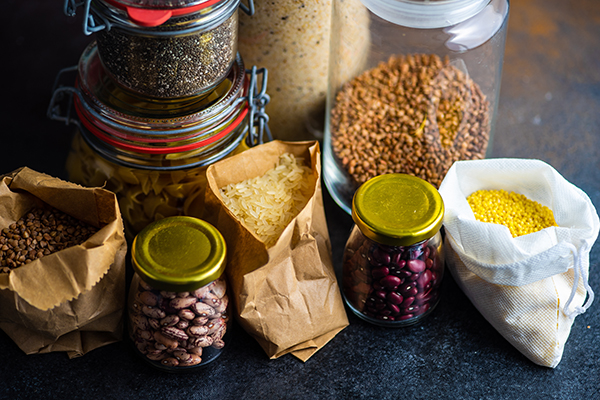
- When disaster strikes, simply having a lot of food isn't enough. Common problems include palate fatigue, nutritional imbalance, miscalculating daily calorie needs and food spoiling or being wasted through unmeasured consumption.
- Start with a brutally honest inventory. List every item, including its servings, calories, protein/fat content and expiration date. Then, calculate the total calories your family would need each day, especially if performing hard labor, to see if your supply is truly sufficient for your goal.
- Don't just hoard ingredients. Create a simple, rotating two-week meal plan. This ensures nutritional balance and fights boredom. Crucially, you must practice eating from your stockpile for a few days to identify and fix issues with taste, energy and preparation before an emergency.
- One of the fastest ways to run out of food is by using unmeasured portions. Treat your food supply like a budget by measuring servings and tracking everything that is consumed. This builds discipline and prevents small shortages from becoming major crises.
- In an emergency, cooking uses precious fuel and water. Use one-pot meals, rocket stoves, or solar cookers to save resources. Finally, supplement your stockpile with other food sources like backyard chickens, container gardens, or foraging to add variety and extend the life of your stored food.
You've done the work. The shelves are lined with rice, beans and canned goods. Buckets of oats and pasta are stacked neatly.
Your pantry is a testament to your foresight, a fortress against uncertainty. It feels like you're prepared for anything.
But here is a reality many dedicated preppers eventually confront: a full pantry does not automatically equal long-term security. The true test isn't how much food you have, but how you manage it.
Without a clear strategy, a six-month supply can dwindle to a three-week rationing crisis. The key to resilience lies not just in accumulation, but in intelligent consumption.
Why a full pantry isn't always a smart pantry
Stockpiling is only the first step. Several common pitfalls can quickly deplete even the most impressive supplies.
These aren't failures of effort, but often of planning, focusing on quantity over long-term usability:
- Palate fatigue – Eating the same meals repeatedly can severely impact morale, especially for children. When people start skipping meals out of boredom, it leads to waste and nutritional gaps.
- Nutritional imbalance – A stockpile heavy on carbohydrates like rice and pasta but light on protein and fats will leave you feeling full but drained of energy, hindering your ability to perform essential physical tasks.
- Calorie miscalculations – According to BrightU.AI's Enoch, an adult may need between 1,800 to 2,500 calories per day, with needs increasing significantly during hard labor like hauling water or chopping wood. Three hundred pounds of food might sound like a lot, but if it's low in calories, it may not meet your family’s energy requirements.
- Spoilage and waste – Without proper storage and preservation knowledge, food can spoil, rendering it useless. Furthermore, untracked consumption, even if it's just an extra scoop here, a second helping there, can add up, causing supplies to run out weeks ahead of schedule.
The solution is to develop a plan now, while there is still time to adjust and experiment.
A clear, practiced management plan is key to making the most of your food stockpile
Here's how to ensure your stockpile works smarter, not just harder.
Take a brutally honest inventory
The first step is to move from estimation to exact calculation. Go through every bucket, bin and can.
Tally up not just the number of items, but the specifics:
- Total number of servings
- Calories per serving
- Protein and fat content
- Expiration dates
Organize this information in a spreadsheet or a chart, breaking it down into categories like grains, proteins and fats. This will reveal surpluses and deficiencies.
Next, calculate the daily caloric needs for each person in your household, factoring in potential physical labor. Multiply this by the number of people and the number of days you wish to be prepared for. This simple math is the most reliable way to know if your supply is truly sufficient.
Build a realistic meal plan
Don’t just hoard ingredients; plan meals. The goal is to create a rotating menu that is satisfying, easy to prepare and nutritionally balanced over time.
Develop a basic two-week meal rotation to avoid repetitive eating.
A simple example could include oatmeal with powdered milk for breakfast, rice with canned chicken and dehydrated vegetables for lunch, and pasta with canned meat and tomato powder for dinner. Snacks could include trail mix, crackers with peanut butter, or dried fruit.
It is crucial to test this plan before you encounter emergencies.
Eat from your stockpile for a few days to identify issues with boredom, energy levels, or preparation. This trial run allows you to tweak your ingredients and meal balance before an emergency strikes.
Practice portion control and meticulous tracking
One of the fastest ways to deplete a stockpile is through unmeasured serving sizes.
Start treating your food supply like a budget. Measure portions and track daily consumption for every family member. A simple whiteboard or clipboard in the pantry can serve as a log.
This practice encourages discipline and ensures everyone is on the same page. By tracking in real-time, you can spot trends and adjust consumption early, preventing a small shortfall from becoming a major crisis.
Employ smart, efficient cooking techniques
In an emergency, every meal costs more than just food; it consumes precious fuel and water.
Optimize your resources by using efficient cooking methods:
- One-pot meals minimize cleanup and fuel use.
- Rocket stoves are highly efficient and can be built from simple materials.
- Solar cookers provide free, sustainable slow-cooking once constructed.
- Thermal cookers allow food to continue cooking without using additional fuel.
Avoid recipes that require extensive baking or large amounts of fuel unless you have a dedicated, sustainable off-grid solution. Your cooking methods must be as resilient as your food supply.
Supplement your stockpile strategically
Even the best-stocked pantry has limits. Creating supplemental food sources provides balance, variety and reduces dependency on stored goods.
Start small with manageable projects:
- If space allows, consider raising chickens for a steady supply of eggs.
- Grow lettuce, herbs and green onions in windowsill containers.
- Learn to identify and safely harvest local edible wild plants, such as berries and greens.
- Connect with neighbors to trade excess goods, fostering community resilience.
The more diverse your food sources, the longer and more comfortably your core stockpile will last. Long-term sustainability is the ultimate goal.
A well-stocked pantry provides the foundation for emergency preparedness, but a clear, practiced management plan helps ensure true survival during an emergency. By taking these steps, you can transform your stockpile from a static collection of food into a dynamic, long-lasting lifeline.
Don't wait for a crisis to figure it out. Practice now, refine your system and ensure your family is truly ready.
Watch the video below as Health Ranger Mike Adams and guest Stefan Verstappen discuss community prepping and survival wisdom.
This video is from the Health Ranger Report channel on Brighteon.com.
Sources include:
AskAPrepper.com
RealSimple.com
ReadyWise.com
BrightU.ai
Brighteon.com
Beyond the stockpile: How to make your emergency food last when it matters most – NaturalNews.com
If you're gonna fight, fight like you're the third monkey on the ramp to Noah's Ark... and brother its starting to rain. Join our efforts to Secure America's Borders and End Illegal Immigration by Joining ALIPAC's E-Mail Alerts network (CLICK HERE)
-
11-30-2025, 02:24 AM #10959Senior Member
- Join Date
- Aug 2018
- Posts
- 95,564
The Best Long-Lasting Protein Sources for a Crisis
 Planning a survival stockpile can be a financial and logistical nightmare. It doesn’t take long before we realize that building that stockpile is going to be an expensive proposition. Regardless of how carefully we try to budget, it is challenging to make it work.
For many, the financial burden of building a stockpile forces them to seek out ways of reducing their financial outlay at any cost. Unfortunately, that cost might just end up being their health, especially if they don’t stockpile the right things.
More than anything, what I see people trying to do, in order to save money, is stock up on carbohydrates, while cutting back on proteins. But both are equally important to a survival diet.
When nutritionists talk about “proper diet”, we usually hear them talking about micronutrients, things like Omega-3 fatty acids and antioxidants. Basically, things the rest of us don’t really understand. Listening to them, you might think that those micronutrients are all we need, that there is no need for macronutrients. But a survival diet has to focus on the macronutrients, even if we ignore the micronutrients.
There are three macronutrients. We need to understand what they are and what they do, in order to put a realistic survival diet together. These three nutrients are:
#1. Carbohydrates (carbs)
Simple sugars are the fuel that our bodies run on, providing the necessary energy for our body’s muscles to move.
We get those simple sugars from the carbs and complex sugars that we eat (white sugar is a complex sugar).
Digestion starts in the mouth, with our teeth breaking food up and our saliva attacking those carbs and breaking them down to simple sugars. A survival diet should be 50% to 60% carbohydrates.
#2. Fats
The problem with carbohydrates is that they break down into those simple sugars quickly. Therefore are consumed quickly.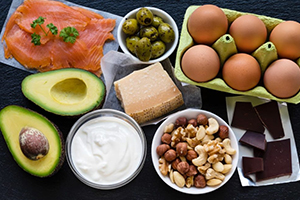
Once that happens, the individual “hits the wall” and is suddenly without energy. That’s where fats come in. They too are broken down into simple sugars, but it takes much longer than it does for carbs.
So, when the sugars from the carbs run out, the sugars from the fats take over. This gives us a one-two punch of energy. A survival diet should contain somewhere between 25% to 35% fats, mostly unsaturated fats (vegetable fats).
#3. Proteins
Of the three macronutrients, proteins are the only one we eat for a purpose other than providing energy.
While it is possible for proteins to be broken down into simple sugars, the process is much more complex, so the body only does it in emergencies.
Rather, proteins are the basic building-blocks of life, as all cells are made up out of proteins. Even DNA, the genetic code, is made up of proteins. Since the body is constantly making new cells, it needs a constant source of proteins. If it doesn’t have it, it will cannibalize itself to get those proteins. A survival diet should contain from 10% to 20% proteins.
Selecting Your Proteins
There are two problems with proteins, from the viewpoint of building a survival stockpile. The first is that they are generally the most expensive food we buy and the second is that they are the hardest foods to preserve.
Meat, where most of our proteins come from, naturally has a higher bacterial count than any other food source. That bacteria must be killed, for the meat to successfully be preserved.
Nevertheless, these are problems that we must overcome, in order to have a healthy survival diet. Fortunately, there are many methods which have been successfully used for preserving meat for centuries, all of which are available for us today.
There are also sources of protein available to us, other than animal proteins. By mixing our stockpile so that we have both animal proteins and other food sources which contain protein, we can build a stockpile that we can afford, while providing us with the nutrition that our bodies need.
Homemade Jerky
Jerky is nothing more than spiced, dried meat. But the most important part of that jerky, besides the meat itself, is salt.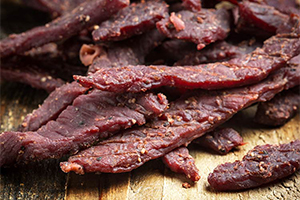
Salt is a natural preservative, and absolutely essential to making jerky safe for storage.
Making your own saves you money and gives you the opportunity to make sure that it has ample salt, so as to protect the meat. Excess salt can always be rinsed off, before use.
You also want to store homemade jerky in airtight containers, with oxygen and moisture absorbers added. The containers need to be strong enough to make it impossible for rats to chew through them and get to the meat stored inside.
Salt Fish
Salt fish is kind of the fish equivalent of jerky, made in much the same way and with a large amount of salt. If anything, salt fish has more salt used in making it, than jerky does. This preserves it well. As with jerky, you’ll probably need to make your own.
Canned Meats
Canned meat is generally cheaper than fresh cuts of meat.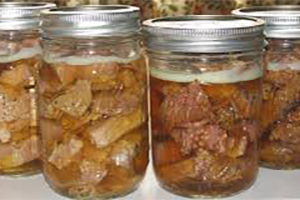
One of the reasons for this, is that canned meat is usually made from muscles of the animal which are tough and are therefore not usable for steaks and roasts.
The canning process provides ample opportunity to tenderize this meat and make it edible.
As with any other canned product, canned meats will last virtually forever. While they may not look very attractive when they come out of the can, they are nutritious and healthy to eat. Having your meat in cans also acts as portion control, helping you to ration out your food and make it last longer.
TVP (Textured Vegetable Protein)
Textured vegetable protein is a meat substitute, made purely out of plant products, mostly soy. It is made to take on the texture and flavor of different types of meat.
While it is not exactly the same texture or flavor, most people won’t recognize the difference in a casserole or other dish, if they are not told.
Beans
Beans have long been used as a source of protein. All sorts of legumes can be eaten, supplementing the protein received from animals. In many poorer cultures today, beans are the main source of protein, due to cost, rather than meat.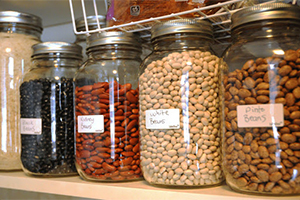
The nice thing about beans is that they are sold already dried, making it extremely easy to package them for long-term storage.
As with any other dry food, the major problem is packing them in airtight packaging, with oxygen absorbers and in a container which is strong enough to keep rodents out. That can be done by putting them in aluminized Mylar bags, inside of five-gallon buckets. Stored this way, they will keep for at least 20 years.
Nuts
Nuts have also been used as a survival protein source for centuries. In the early days of the American colonies, it was not uncommon to bury barrels and casks of nuts to preserve them for winter or other hard times. Most nuts keep well, in the shell, as long as rodents can be kept away from them.
All types of nuts can be turned into butters, not just peanut butter. They all provide a considerable amount of protein, in addition to being a comfort food.
Cheese
While cheese is harder to store for prolonged periods of time, it is possible. Actually, the making of cheese came from a desire to convert milk into storable products. Properly stored, cheese can actually last a considerable amount of time. Even when mold grows on it, the moldy edge of the cheese can be cut off, leaving perfectly good cheese for you to eat.
To preserve cheese for a prolonged period of time, triple dip it in wax (paraffin), allowing it to harden between each dipping. Check each dipping carefully, seeking for any pinholes in it, which might flow through. These must be sealed to help ensure that the cheese will keep.
Amaranth
Grains aren’t normally thought of as a good source of protein, but amaranth defies that definition. This amazing grain has 26 grams of protein per cup, the highest of any grain. It is the only grain which is considered a complete protein source, because it contains all of the essential amino acids.
Meat Products to Avoid
Sometimes, it’s not just what you do that matters, but what you don’t do. Some protein sources, especially animal proteins, may not keep for prolonged periods of time, even though they are supposedly “preserved”. You have to watch out for them.
Most of what we know as deli meats or cold cuts originated as “cured meats”. They were a way of taking meat from the animal, which may not otherwise be used, and turning it into usable meat, through the process of curing.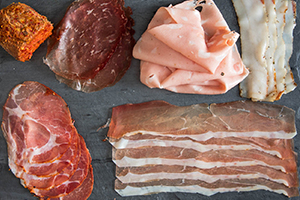
In addition to being preserved by curing, the process also serves to tenderize these meats.
The problem today though, is that what are sold as cured meats or cold cuts, aren’t cured in the same way as olden times. So they are not properly preserved and will not last for a prolonged period of time, unless you can them, in addition to being cured.
The other meat preserving process which is not done like in the olden days, is smoking. What is sold as “smoked meat” today is cold smoked to give it the smoke flavor. But it is not preserved. That requires hot smoking. So, unless you are going to hot smoke your own meats, don’t stockpile smoked meats. Even then, your hot smoked meats will not last as long as meats which are canned or made into jerky.
A Final Note About Fish
Of all the sources of food in the wild, the most abundant is fish. I don’t care where you go, you’re going to need water, and if you find water, there’s a really good chance that there will be fish swimming in it. You should always be ready to harvest those fish, providing yourself with not only food, but specifically with animal protein.
I was surprised to find out that of all the types of animal protein eaten in the world today, fish is the most common. I was expecting it to be chicken. But fish beats chicken by far. Part of that is the ready abundance of fish in the world’s oceans, providing food to us, virtually for free.
Your survival plan should include some means of harvesting whatever fish are available, wherever you are, and making them part of your diet. This means more than just having two little hooks, a bit of line and two lone weights. You need enough fishing gear to keep you fed for the long run, even considering the amount of fishing gear that often goes over the side and is lost forever.
The Best Long-Lasting Protein Sources for a Crisis – Site Title
If you're gonna fight, fight like you're the third monkey on the ramp to Noah's Ark... and brother its starting to rain. Join our efforts to Secure America's Borders and End Illegal Immigration by Joining ALIPAC's E-Mail Alerts network (CLICK HERE)
-
11-30-2025, 02:41 AM #10960Senior Member
- Join Date
- Aug 2018
- Posts
- 95,564
Survival beverages that are a must for your pantry
02/19/2024 // Olivia Cook // 3.7K Views
Tags: Alcohol, coconut milk, Coconut water, coffee, food freedom, Food storage, food supply, goodfood, goodhealth, homesteading, nutrients, off grid, preparedness, prepper, prepping, survival, survival beverages, survival gear, survival stockpile, tea, tips
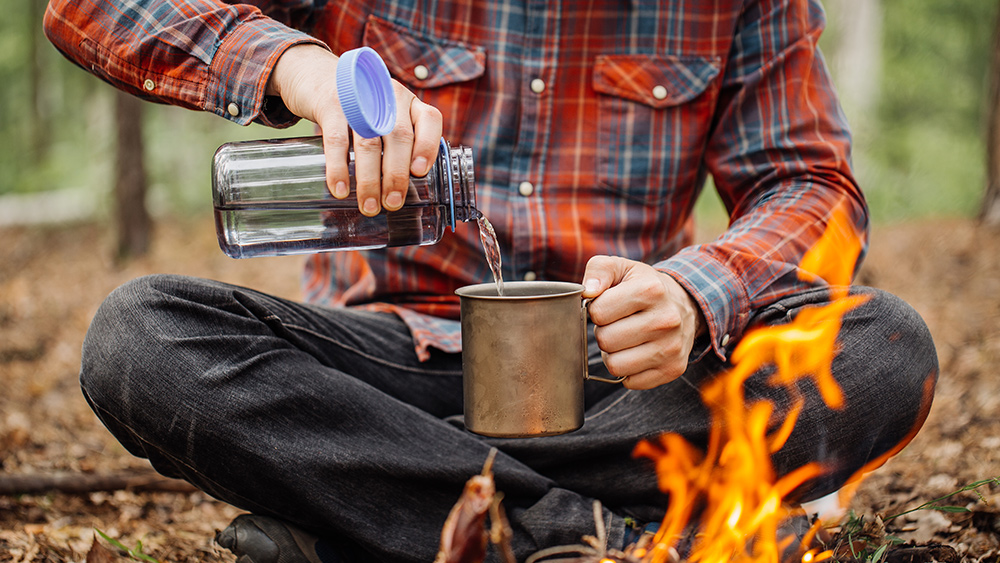
Part of your pantry should be dedicated to "survival" beverages. Here are recommendations of what you can stockpile for long-term survival.
Water
To stay hydrated and maintain oral and personal hygiene during emergencies, water is the first survival beverage that comes to mind. Determine basic water needs by listing each household member's daily water requirement (including pets) – to stay hydrated and do oral and personal hygiene.
Add supplemental water requirements to cook food, wash clothes and other personal items, clean the home, water the garden plants and so on.
Learn about the best emergency water storage containers for your home, even if you are space-constrained, and how best to store this essential resource. (Related: Prepper storage guides: Which containers you should use to store water for stockpiling.)
Other emergency water options for your everyday carry (EDC), go-bags and vehicle are the following:
- Boxed water, which you can buy packaged in 12-pack, 24-pack and 32-pack sizes, comes in recyclable packaging.
- Canned water, although pricey, has a 50-year shelf life. Packed in cans made of corrosion-resistant aluminum and designed to withstand conditions between 38 and 140 degrees Fahrenheit, canned water is ideal for keeping in your vehicle and repurposing.
- Bagged water, which is also expensive, comes in convenient package sizes, doesn't degrade or leak, is easy to store, has a long shelf life and withstands extreme temperatures.
Coffee
This beverage is a much-loved drink – with so many types and methods for brewing it that even the most seasoned coffee experts would have trouble listing them all. Studies have shown that this ancient beverage is more "friend" than "foe." (Related: Enjoy that cup of Joe: Here are science-backed health benefits of CAFFEINE.")
When used responsibly, four representative groups of its micronutrients – caffeine, chlorogenic acid, diterpenes and trigonelline – provide many benefits to your brain, body and general well-being. These chemical compounds have been found to possess biological activities, including anti-microbial, anti-proliferative and antioxidant effects.
Scientifically proven benefits aside, coffee can be considered an "essential survival beverage" and serve as a "vital ally in survival situations."
To retain the best quality in both whole bean and ground coffee, you may need to repackage your beans. Only use (and invest in) canisters with an airtight seal, specifically designed for coffee storage. Store your coffee stock in a cool, dark place away from heat, light and moisture.
Tea
Tea is part of many traditions from all over the world with its endless variations and flavors. Having been practiced for over 2,000 years, drinking tea has been regarded as a "health-promoting habit."
There are two major types of teas you can stock in your pantry. "True tea" is made from the leaves of the plant Camellia sinensis – black tea, green tea, oolong tea, pu-erh tea, white tea and yellow tea. (Related: 6 Primary types of tea and their science-backed health benefits.)
And there are herbal teas, also known as "tisanes," which are made using a combination of bark, flowers, leaves and spices of non-tea plants. (Related: Why people love tea: A look at some herbal tea recipes for mild depression.)
A review published in the Journal of Food Chemistry linked the promising health benefits of tea to its different phenolic components – mainly catechins, flavonoids and tannins. (Related: 8 Tips to help you manage anxiety naturally plus herbal tea recipes for anxiety relief.)
Tea polyphenol catechins, especially in green tea, are believed to exert protective effects against conditions and diseases, such as arteriosclerosis, cancer, diabetes, neurodegenerative diseases, obesity and even tooth decay. These tea components have also exhibited antibacterial, anti-viral and hepatoprotective properties.
Phenolic flavonoids are in particularly high concentrations in tea and its habitual intake has been associated with a reduced risk of cardiovascular disease.
Organic coconut water
Dubbed by the Hawaiians as the "dew from the heavens," fresh coconut water is a naturally sweet and hydrating drink from young, green or "tender coconuts" – fat-free, low-calorie (compared to mature coconuts), rich in nutrients like amino acids, glucose, essential electrolytes (calcium, magnesium, potassium, sodium) and vitamins.
Also referred to as nature's "water of life," its nutrient benefits rapidly deteriorate once exposed to air and warm temperatures. The good news is that fresh coconut water can be freeze-dried into coconut water powder to lock in its powerful nutrients, which support healthy immune function, metabolism and proper hydration.
Coconut water powder has a longer shelf life and can be kept for three years from manufacture when properly stored in an odor-free area at 60-80 Fahrenheit and less than 70 percent humidity. Your product will absorb moisture if left open and exposed to air so keep it in air-tight containers. If you want to keep it in the freezer, pack it in quality freezer bags.
Non-dairy milk, such as organic coconut milk
As the coconut matures, which takes around 10-12 months, some of the coconut water remains while the rest ripens into the solid white flesh known as coconut meat, which is gathered, grated and pressed to create or extract coconut milk.
Coconut milk has an impressive nutritional profile. Studies indicate coconut milk is a rich source of electrolytes (calcium, copper, magnesium, manganese and potassium), iron, protein and healthy fats – particularly medium-chain triglycerides (MCTs), which have been shown to enhance exercise endurance, maintain healthy fluid balance and support overall health. There is a lot of research into the powerful science-backed health benefits of coconut milk.
For long-term storage with no major loss of nutrients, raw coconut milk can be spray-dried or dehydrated using heat to powder form. Consider buying certified USDA organic coconut milk powder, non-GMO, gluten-free, dairy-free, glyphosate-tested, laboratory-verified and only lightly sweetened with organic rice maltodextrin, it contains no additives or preservatives.
For longer shelf life and to keep your product as a ready-to-use fine powder, store it in a cool, dry area with temperatures of 78-86 Fahrenheit.
Organic coconut milk powder is a great choice for anyone seeking a reliable source of plant-based nutrients. Perfect as a gluten-free and dairy-free vegan creamer for your morning coffee, organic coconut milk powder dissolves quickly when stirred in hot water. It may soon become your favorite ingredient for your curries, smoothies, soups and more.
Alcohol
Alcohol can be used as a valuable bartering item. It can help alleviate stress in the middle of disaster (when consumed moderately), and it has many survival uses. It can be used to boost morale, clean a gun, cook an egg, disinfect, eliminate fungus, fuel a lamp and stove, kill mold and weeds, reduce anxiety, repel bugs, soothe mouth pain, start a fire, suppress cough, treat a cold and more.
During your prepping journey, it’s really up to you and your family to determine whether these should be incorporated into your stockpile (and the appropriate quantities to store), as well as any other beverages to consider stockpiling.
Learn about the best time to drink coffee by watching the following video.
Video Brighteon
This video is from the Conservative Coffee Lovers channel on Brighteon.com.
More related stories:
4 Tips to prevent emergency water from freezing.
6 Scientifically proven benefits of green tea.
STUDY: Green tea, black tea and matcha tea found to suppress dioxin toxicity.
Sources include:
EZPrepping.com
NCBI.NLM.NIH.gov 1
PreppersWill.com
NCAUSA.org
PubMed.NCNI.NLM.NIH.gov
DovePress.com
SagePub.com
TLCoconut.com
NCBI.NLM.NIH.gov 2
ZNaturalFoods.com
Chimie-Biologie.UBM.ro
UrbanSurvivalSite.com
Brighteon.com
Survival beverages that are a must for your pantry – NaturalNews.comIf you're gonna fight, fight like you're the third monkey on the ramp to Noah's Ark... and brother its starting to rain. Join our efforts to Secure America's Borders and End Illegal Immigration by Joining ALIPAC's E-Mail Alerts network (CLICK HERE)


 Reply With Quote


Marfoogle TV - Military Aged Males - Not Good
08-01-2026, 01:48 AM in Videos about Illegal Immigration, refugee programs, globalism, & socialism