

Results 9,831 to 9,840 of 11944
 226Likes
LinkBacks (?)
-
12-26-2016, 11:32 AM
-
09-02-2016, 05:39 PM
-
whole garden made with pallets!! Love it!! | Pallets | Pinterest | Pallets, Pallets Garden and Wooden Pallets
Refback This thread03-06-2016, 11:30 AM -
10-20-2015, 05:29 PM
-
06-12-2015, 08:00 PM
-
02-26-2015, 01:58 PM
-
01-05-2015, 04:13 PM
-
12-19-2014, 10:19 AM
-
EMERGENCY: HUGE FEMA PANDEMIC EXERCISE IN USA IN NOVEMBER, INTERNET SHUT DOWN PART OF EXERCISE | Prepare4Survival
Refback This thread12-03-2014, 10:39 PM -
Off Grid World ? Ugly Duckling Shipping Container Home Built by Artist Is a Beautiful Swan on the Inside
Refback This thread11-25-2014, 03:10 PM -
11-17-2014, 10:59 PM
-
11-13-2014, 11:18 AM
-
11-09-2014, 02:54 PM
-
10-28-2014, 11:38 PM
-
10-26-2014, 05:54 AM
-
10-16-2014, 11:28 AM
-
10-03-2014, 01:25 PM
-
10-02-2014, 09:16 PM
-
09-26-2014, 07:00 PM
-
09-26-2014, 01:56 PM
-
09-19-2014, 04:46 PM
-
09-13-2014, 05:49 AM
-
09-05-2014, 01:52 PM
-
09-01-2014, 09:39 AM
-
08-30-2014, 06:29 PM
-
08-10-2014, 06:29 AM
-
08-04-2014, 05:07 PM
-
07-23-2014, 11:14 AM
-
New Evidence on Expiration Dates | Medical Preparedness | Doom and Bloom (TM) | Doom and Bloom (TM)
Refback This thread07-22-2014, 10:10 AM -
07-18-2014, 08:37 PM
-
07-15-2014, 04:57 PM
-
07-11-2014, 01:40 AM
-
04-22-2014, 11:14 AM
-
04-18-2014, 12:57 PM
-
04-18-2014, 10:10 AM
-
04-14-2014, 12:18 AM
-
04-12-2014, 02:28 AM
-
03-02-2014, 11:43 PM
-
12-24-2013, 11:59 PM
-
12-07-2013, 11:04 PM
-
kitchen | Cob
Refback This thread11-25-2013, 03:24 PM -
10-22-2013, 10:25 PM
-
Apple Pie Braid | Sweets
Refback This thread09-26-2013, 07:58 AM -
09-02-2013, 04:44 PM
-
5 Reasons Why You May have to Bug Out Even Though You Don’t Want to | The Apartment Prepper's Blog
Refback This thread08-23-2013, 03:20 PM -
06-27-2013, 06:30 AM
-
06-23-2013, 08:11 PM
-
06-17-2013, 11:21 PM
-
05-24-2013, 05:06 PM
-
To Eat / BASIC LIST / SUGGESTED ITEMS FOR LONG TERM SURVIVAL - Page 275 - ALIPAC
Refback This thread05-01-2013, 03:49 AM
Thread Information
Users Browsing this Thread
There are currently 1 users browsing this thread. (0 members and 1 guests)
 LinkBack URL
 About LinkBacks
-
06-16-2025, 04:09 AM #9831Senior Member


- Join Date
- Aug 2018
- Posts
- 97,635
It All Started With Paint
Our Home. My Canvas.
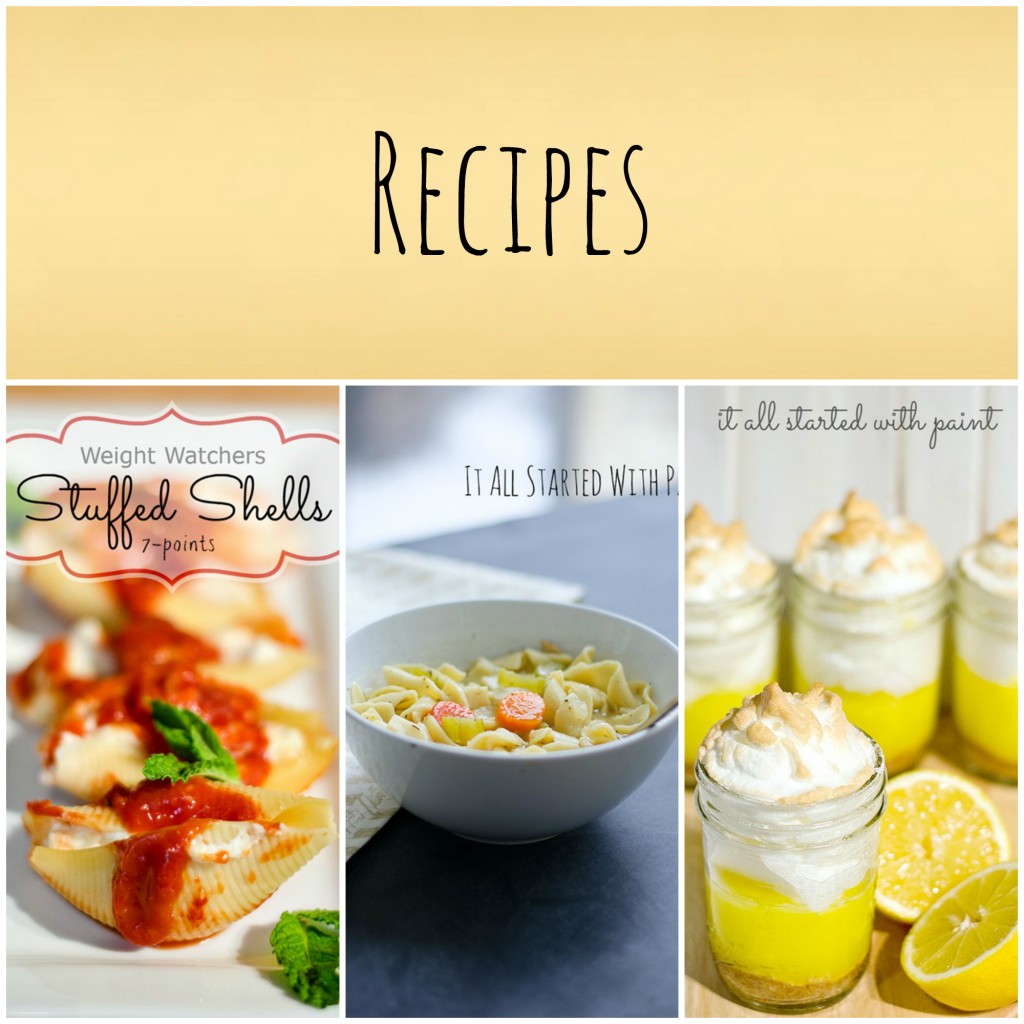
mason jar lemon meringue pies
March 28, 2013 By Linda 134 Comments
Mason jar lemon meringue pies recipe.

MY LATEST VIDEOS
It’s a rare occasion when the family gets excited about a blog post. Okay, that’s not exactly true. They’ve never gotten excited about a blog post. In fact, it’s typically the exact opposite. My blog posts often involves displacement of their things – or them – as I work on a project or a photo shoot.
But this time? This time they were intrigued.
It all started when my son spotted the Jell-O lemon pudding box. I mean, who doesn’t get excited at the sight of a Jell-O box?
That’s right, I told him. I’m making a spring dessert favorite.
Lemon Meringue Pie. With a twist.
And while in the throes of baking, my husband was delighted when I told him, why yes, we will get to eat these …


… Mason Jar Lemon Meringue Pie.
How To Make Mason Jar Lemon Meringue Pies
TO DOWNLOAD (AND PRINT OUT) A FREE COPY OF THIS MASON JAR LEMON MERINGUE RECIPE, click here …
Supplies*
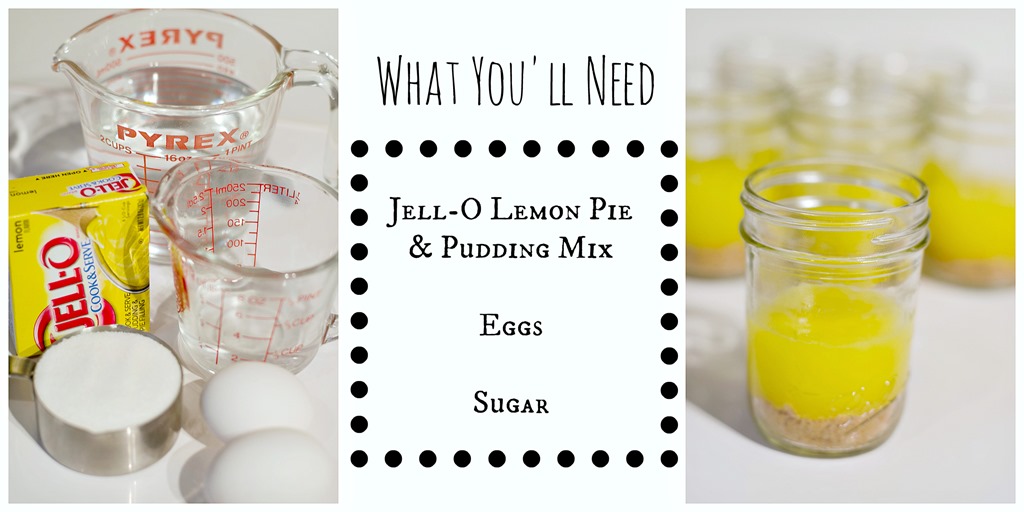
Jell-O Cook & Serve Lemon Pie & Pudding MixGraham CrackersHalf-Pint Ball Mason Jars – 6 jarsEggsSugarButterHand Mixer
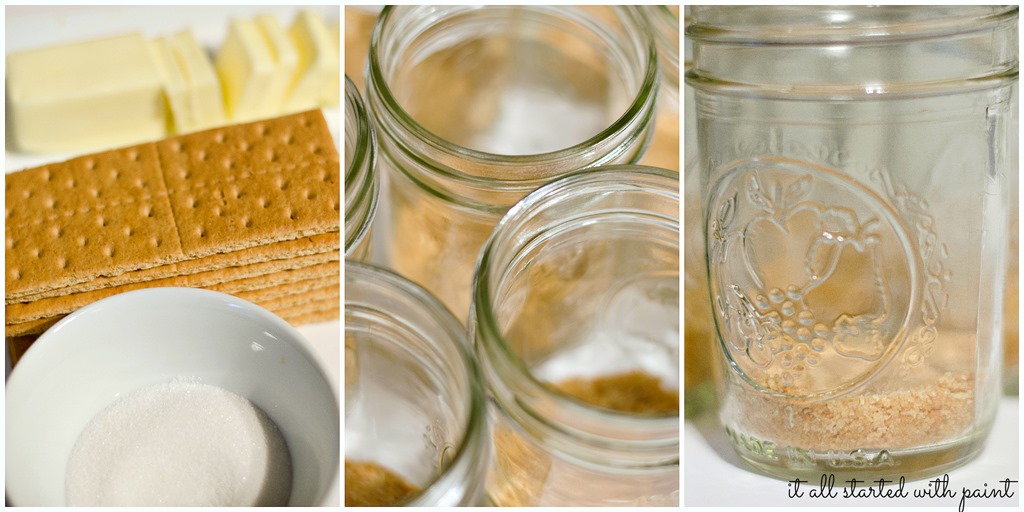
They were simple to make. I started with the graham cracker “crust.” I simply combined one package of graham crackers with 1/3 cup sugar and 4 TBS. of softened butter …
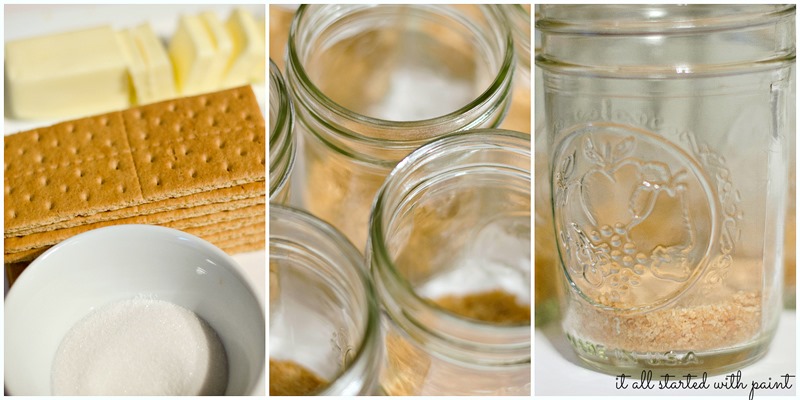
I crumbled the graham crackers in a Ziploc bag and then added in the sugar and softened butter. I mixed it up by hand and pressed into the bottom of the mason jar. I baked at 350 degrees for 10 minutes.
Then came the lemon pudding and meringue …
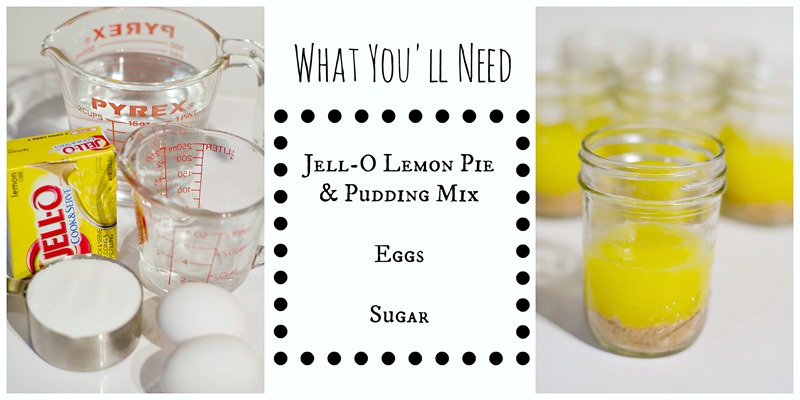
I simply followed the instructions on the Jell-O box for the pudding and meringue. Just be sure to get the “Cook & Serve” variety. This won’t work with the no-bake instant pudding.
{And to answer questions about servings, I used the one 3 oz. Jello box to make 6 servings in 1/2 pint mason jars}
To Make the Meringue: Beat together 4 egg whites and 1/2 cup of sugar. Beat until form peaks. Layer on top of jars and cook at 350 degrees for approximately 10-minutes.
Once cooled, I refrigerated for a few hours before serving …

The best part? My husband thinks I’m some sort of creative genius for putting this recipe in mason jars. Thankfully he’s not on Pinterest.
🙂
*affiliate links included.
TO DOWNLOAD (AND PRINT) A FREE COPY OF THIS RECIPE, click here …
You might also like …
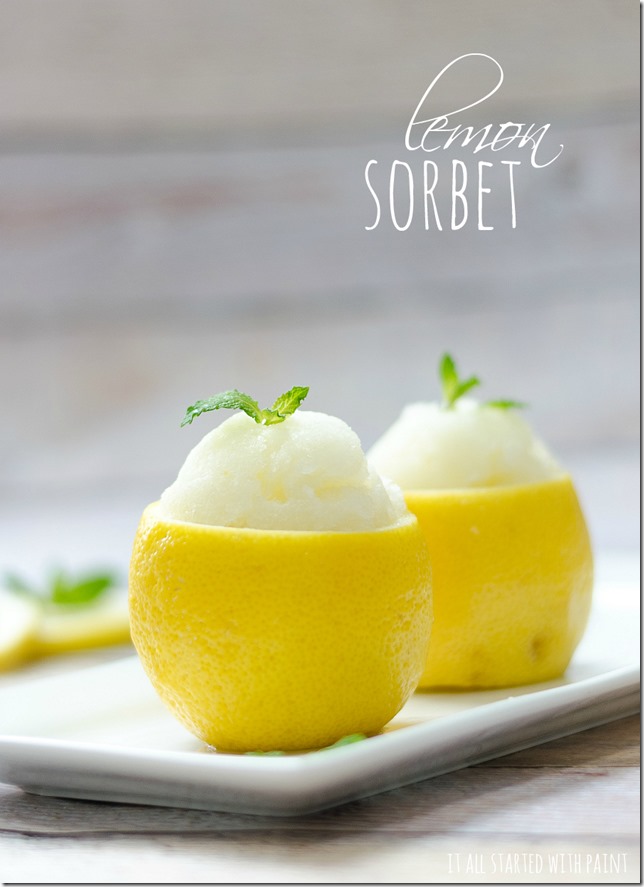
Lemon Sorbet Recipe (no ice cream maker needed) – click here

Mason Jar Lid Mini Cheesecakes (click here)
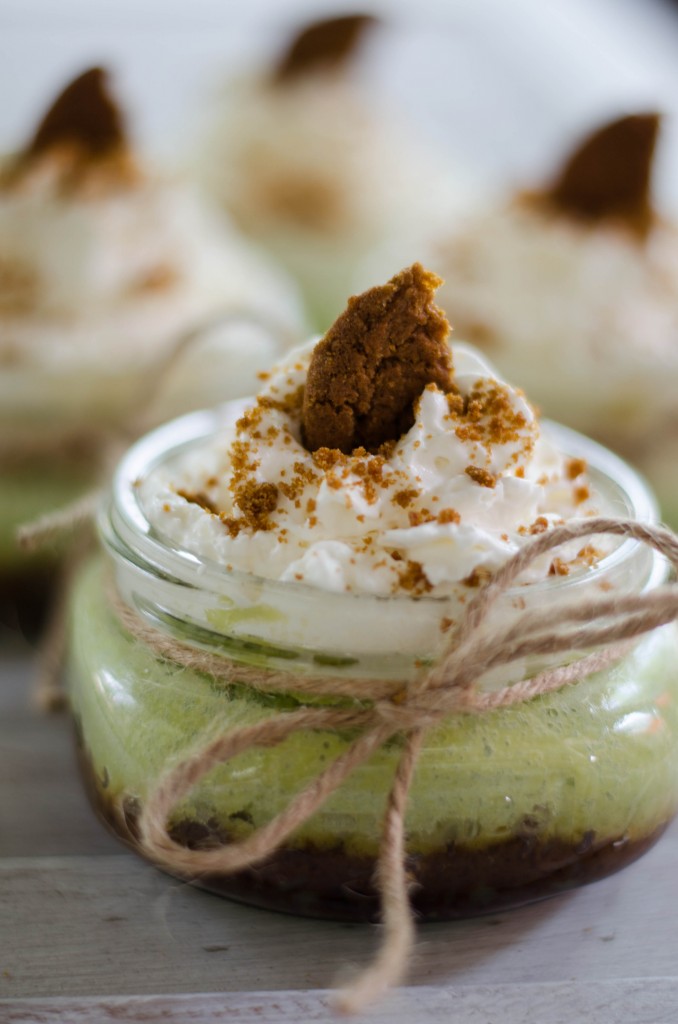
Mason Jar Key Lime Pies (click here)
Looking for more recipe ideas? Just click here …
Looking for more mason jar projects? Just click here …

Want to keep up with my projects? It’s easy. Get it all started with paint delivered to your email inbox:
mason jar lemon meringue pies - It All Started With PaintIf you're gonna fight, fight like you're the third monkey on the ramp to Noah's Ark... and brother its starting to rain. Join our efforts to Secure America's Borders and End Illegal Immigration by Joining ALIPAC's E-Mail Alerts network (CLICK HERE)
-
06-16-2025, 10:37 AM #9832Senior Member
- Join Date
- Aug 2018
- Posts
- 97,635
Health Ranger Report: Alex Mitchell explains how HEIRLOOM SEEDS can secure food future
06/16/2025 // Kevin Hughes // 230 Views
Tags: Alex Mitchell, Ark Seed Kits, crops, currency, emergency food, emergency preparedness, food collapse, food freedom, food independence, food inflation, food supply, Gardener's, gardening, gold, harvest, Health Ranger, Health Ranger Report, heirloom seeds, home gardening, medicinal herbs, Mike Adams, non-GMO seeds, Preppers, silver, survival, trade commodity
- Rising food shortages, supply chain disruptions and inflation make self-sufficiency essential, turning heirloom seeds into a critical survival asset.
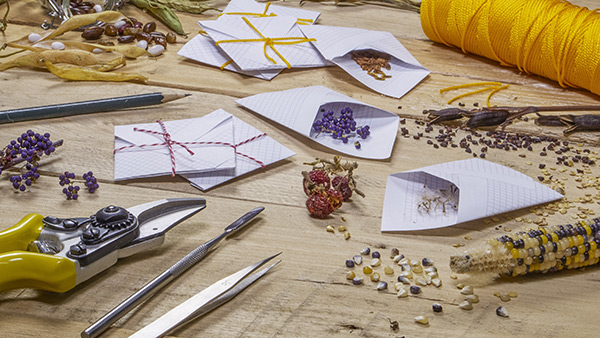
- The All-In-One Vegetable Seed Kit contains 50,000 heirloom seeds (70 varieties) in a durable PVC tube, featuring non-GMO, disease-resistant crops and medicinal herbs with replanting potential.
- In a crisis, seeds may become more valuable than gold or silver, serving as a tradable commodity for food when supply chains collapse.
- Even beginners or urban dwellers can start small (e.g., containers, hydroponics) with easy-to-grow crops like lettuce or beans—no need to wait for a crisis to learn.
- With food instability worsening (5,000 percent sales surge for seed kits), experts urge immediate action. Stockpiling seeds is now about survival, not just sustainability.
In an era of food shortages, supply chain disruptions and skyrocketing grocery prices, self-sufficiency is no longer just a lifestyle choice—it's a necessity.
Ark Seed Kits founder Alex Mitchell joined the Health Ranger Mike Adams on the "Health Ranger Report" to discuss the critical role of heirloom seeds in food security, survival and even bartering in a crisis. The conversation revealed startling insights into the fragility of people's food systems and why owning a sustainable seed supply could be more valuable than gold in the coming years.
Mitchell's company specializes in rugged, long-term seed storage solutions designed for both gardeners and preppers. Their most popular product, the All-In-One Vegetable Seed Kit, is a four-inch PVC cylinder packed with 50,000 seeds across 70 varieties. These include beans, tomatoes, squash, medicinal herbs and nutrient-dense crops like carrots and beets.
Unlike hybrid seeds that are genetically modified and often fail to reproduce, Ark Seed Kits exclusively offers heirloom seeds. This means they can be saved and replanted indefinitely. (Related: Cheaper seeds and better-tasting vegetables: Why you need heirloom seeds for your homestead.)
"All of our varieties are over 100 years old," Mitchell explained. "They've gone through droughts, blights and diseases. These are the hardiest, highest quality non-GMO seeds you can get."
The kit also includes a detailed seed guide with instructions on growing, harvesting and even making homemade tinctures and salves from medicinal plants like echinacea, chamomile and St. John's Wort.
Why seeds could be the ultimate barter currency
Adams and Mitchell emphasized that in a crisis, food will be more valuable than gold or silver.
"You can't eat gold, you can't eat silver and you can't eat lead," Adams remarked, holding up a silver coin next to a seed tube. "But these seeds? This is food potential. Add water, soil and sunlight – and you've got food."
Mitchell noted that 75 percent of their customers buy seeds primarily for emergency preparedness, not just gardening. Financial professionals, doctors and survivalists are stockpiling seeds as a future trade commodity.
They recognize that in a collapse scenario, seeds could become a form of currency. According to Mitchell, history has shown that seeds have been used as money. If supply chains fail, people will trade anything.
For beginners intimidated by gardening, Mitchell offered simple advice: Start small. She said a person doesn't need to plant all 70 varieties at once. First-timers can try a few easy crops like lettuce or beans.
Mitchell stressed that people could learn now, and they don't have to wait until a crisis forces them to figure it out. Adams agreed with her, noting that even urban dwellers can grow food in containers, hydroponic setups, or small raised beds.
The looming food crisis and why seeds are a necessity
Both experts warned that food inflation and supply chain disruptions are worsening. Mitchell revealed that Ark Seed Kits' sales have surged 5,000 percent in the last three years, a clear sign that people are waking up to the risks of relying on grocery stores.
Adams said "the food supply chain is very fragile." He cited instances such as restaurants having a difficult time getting ingredients, food facilities mysteriously catching fire and food prices climbing to back up his point. Growing one's own food isn't just a hobby anymore, because it is about economic survival.
Mitchell urged experienced gardeners to keep growing and saving heirloom seeds while also encouraging new ones to start small. Adams agreed, adding that this isn't just about sustainability but about the survival of human civilization.
"These seeds are miracles from God and Mother Nature," the Health Ranger said. These mere seeds can grow medicine and grow food that could save human life. Adams encouraged listeners to get their own seed vault now and store it properly, because they will be sitting on a goldmine of food when the time comes.
Follow FoodSupply.news for more similar stories.
Watch the full interview between Alex Mitchell of Ark Seeds and the Health Ranger Mike Adams below.
This video is from the Health Ranger Report channel on Brighteon.com.
More related stories:
“Prepare Tribe: Prepare, Protect, Provide” on BrightU: Protecting heirloom crops from corporate extinction.
Home gardening tips: Guide to harvesting seeds from fruits and vegetables for propagation.
Home gardening tips: The pros and cons of using heirloom, open-pollinated and hybrid seeds.
What's missing in your preparedness plan? A way to grow self-replicating food using non-hybrid heirloom seeds.
Sources include:
Brighteon.com
ArkSeedKits.com
Health Ranger Report: Alex Mitchell explains how HEIRLOOM SEEDS can secure food future – NaturalNews.com
If you're gonna fight, fight like you're the third monkey on the ramp to Noah's Ark... and brother its starting to rain. Join our efforts to Secure America's Borders and End Illegal Immigration by Joining ALIPAC's E-Mail Alerts network (CLICK HERE)
-
06-16-2025, 11:50 AM #9833Senior Member
- Join Date
- Aug 2018
- Posts
- 97,635
Paula Bartimeus shares how everyday foods can heal and protect
06/16/2025 // Kevin Hughes // 300 Views
Tags: antioxidants, apple cider vinegar, beans, berries, cruciferous vegetables, curcumin, food cures, food is medicine, fruits, garlic, goodfood, goodhealth, healing, healing foods, Herbs, Hippocrates, honey, immunity, inflammation, legumes, lentils, oats, Paula Bartimeus, Spices, superfood, superfoods, turmeric, vegetables, whole grains
- Cultures worldwide have long recognized food's healing properties, a concept now supported by modern research. Hippocrates' famous quote underscores the idea that natural foods can prevent and treat chronic diseases – often without pharmaceutical side effects.
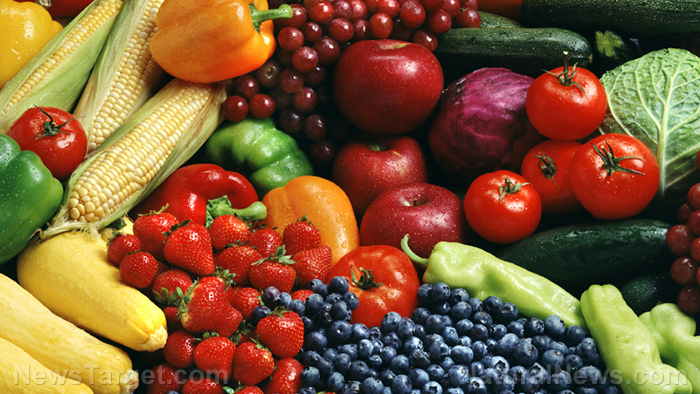
- Whole grains (like oats and quinoa) and legumes (such as beans and lentils) offer benefits beyond basic nutrition, including stabilized blood sugar, heart health support and complete plant-based protein.
- Vegetables (tomatoes, cruciferous greens) and fruits (apples, berries) are rich in antioxidants and bioactive compounds that reduce cancer risks, lower inflammation and support cardiovascular health.
- Nuts (almonds, walnuts), seeds (flaxseeds) and herbs/spices (garlic, turmeric) provide essential nutrients, anti-inflammatory properties and potential cancer-fighting effects. Natural remedies like honey and apple cider vinegar offer antibacterial and digestive benefits.
- Paula Bartimeus' book, "The Top 100 Healing Foods," compiles this knowledge into a practical guide, proving that everyday foods can enhance health and longevity—reinforcing Hippocrates' timeless advice.
For centuries, cultures around the world have revered food not just as sustenance but as medicine – a belief now validated by modern research. From Hippocrates' famous declaration, "Let food be thy medicine and medicine be thy food," to today's scientific studies, evidence continues to mount that natural foods can prevent and even alleviate chronic diseases – often without the side effects of pharmaceuticals.
Paula Bartimeus' book, "The Top 100 Healing Foods: 100 Foods to Relieve Common Ailments and Enhance Health," compiles this knowledge into a practical guide. It reveals how everyday ingredients from oats to turmeric can bolster immunity, fight inflammation and combat conditions like heart disease, cancer and arthritis.
Whole grains and legumes are nutritional powerhouses, offering benefits far beyond basic energy. Oats, for example, contain beta-glucan – a soluble fiber proven to stabilize blood sugar and lower cholesterol. Quinoa, an ancient grain, provides all nine essential amino acids – making it a complete protein ideal for plant-based diets.
Beans and lentils, rich in fiber and protein, support heart health and weight management. Adzuki beans and chickpeas, staples in global cuisines, are versatile additions to soups and salads, delivering sustained energy and digestive benefits.
Vegetables are packed with disease-fighting compounds. Tomatoes, loaded with lycopene, have been linked to reduced risks of prostate, lung and stomach cancers. Celery acts as a natural diuretic, lowering blood pressure and replenishing electrolytes post-exercise.
Cruciferous vegetables – broccoli, cabbage and cauliflower – contain sulforaphane and diindolylmethane. These plant compounds are shown to inhibit cancer growth and strengthen immunity.
Beyond their sweetness, fruits deliver critical nutrients. Apples, high in quercetin, may reduce heart disease and cancer risks, while bananas provide potassium to regulate blood pressure. Berries, such as blueberries and raspberries, are antioxidant powerhouses that combat inflammation and cellular damage.
Almonds, rich in vitamin E, support skin health and immunity, while walnuts offer omega-3 fatty acids to reduce inflammation and boost brain function. Flaxseeds contain lignans, which may protect against breast cancer and ease menopausal symptoms.
Herbs and spices amplify both flavor and health benefits. Garlic, a potent antimicrobial, lowers blood pressure and cholesterol. Turmeric, with its active compound curcumin, fights inflammation and may slow cancer progression.
Apple cider vinegar, a centuries-old remedy, aids digestion and may regulate blood pressure. Honey, more than a natural sweetener, boasts antibacterial properties and antioxidants.
As science confirms ancestral wisdom, the message is clear: A diet rich in whole, nutrient-dense foods can be transformative. Bartimeus' guide underscores that healing doesn't always come from a pharmacy. Sometimes, it's as close as the local grocery store.
By embracing these foods, individuals can take proactive steps toward longevity and vitality, proving that Hippocrates' ancient adage remains as relevant as ever. For those seeking deeper insights, "The Top 100 Healing Foods" offers a roadmap to harnessing nature's pharmacy – one meal at a time.
Watch this video about Paula Bartimeus' book "The Top 100 Healing Foods: 100 Foods to Relieve Common Ailments and Enhance Health."
This video is from the BrightLearn channel on Brighteon.com.
Sources include:
Brighteon.ai
Brighteon.com
Paula Bartimeus shares how everyday foods can heal and protect – NaturalNews.com
If you're gonna fight, fight like you're the third monkey on the ramp to Noah's Ark... and brother its starting to rain. Join our efforts to Secure America's Borders and End Illegal Immigration by Joining ALIPAC's E-Mail Alerts network (CLICK HERE)
-
06-16-2025, 12:32 PM #9834Senior Member
- Join Date
- Aug 2018
- Posts
- 97,635
heirloom seeds
heirloom seeds – NaturalNews.com
heirloom seeds
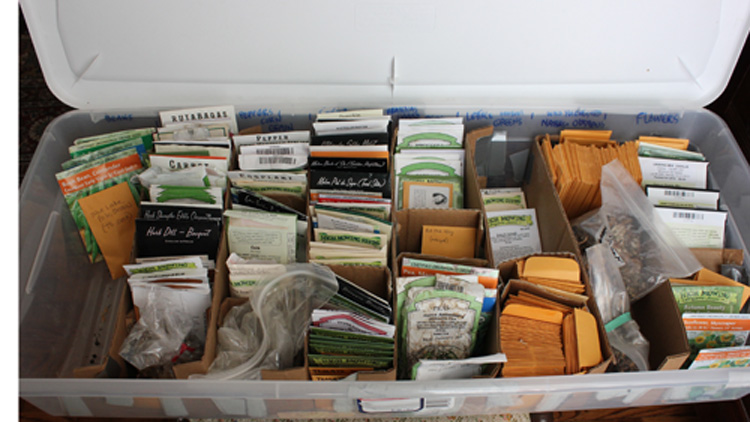 Understanding seed packet information for a successful home garden
March 21, 2022 - Posted by Virgilio Marin
(Natural News) Learning how to read seed packet information is critical to the success of your home garden. Most seed packets contain instructions on how to properly take care of the seeds, but perusing these instructions can be confusing for new gardeners. Here’s how to read seed packet information for a successful home garden: (h/t to MelissaKNorris.com) How to read seed packet information Many […]
in: green living,heirloom seeds,home gardening,homesteading,how-to,off grid,preparedness,prepper,prepping,seed packet information,seeds,survival,sustainable living
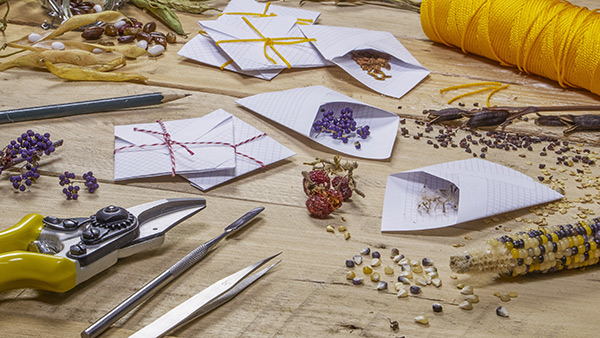 Home gardening tips: The pros and cons of using heirloom, open-pollinated and hybrid seeds
July 26, 2021 - Posted by Zoey Sky
(Natural News) If you’re considering starting a home garden, you have a variety of seeds to choose from. Your options include heirloom, open-pollinated and hybrid seeds. The three kinds of seeds come with their own pros and cons, as detailed below. Read on to learn what kind of seeds will suit your home garden best. (h/t […]
in: crops,gardening tips,green living,harvest,heirloom seeds,home gardening,homesteading,how-to,hybrid seeds,off grid,open-pollinated seeds,Plants,preparedness,prepping,seeds,survival,survival food,sustainable living
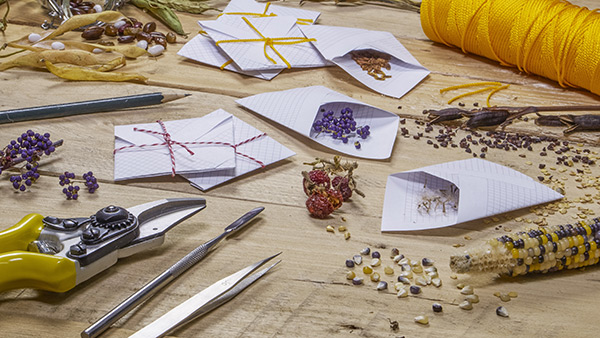 A homesteader’s guide to seed saving
May 28, 2020 - Posted by Zoey Sky
(Natural News) As a home gardener, it’s important to know how to save seeds so you don’t have to rely on buying seeds when SHTF. This also ensures that you always have enough seeds for the next planting season or for trading with fellow gardeners. (h/t to Attainable-Sustainable.net) Seed saving techniques may vary depending on the […]
in: crops,food supply,gardening tips,green living,harvest,heirloom seeds,home gardening,homesteading,how-to,off grid,Plants,preparedness,prepping,seeds,survival,survival food,sustainable living,vegetables,veggie
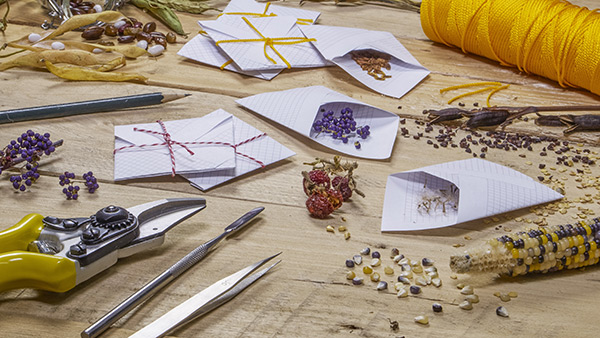 Cheaper seeds and better-tasting vegetables: Why you need heirloom seeds for your homestead
December 29, 2019 - Posted by Grace Olson
(Natural News) When it comes to seeds, most gardeners are familiar with hybrid seeds, but not all know about heirloom seeds. While using hybrid seeds has certain perks and advantages, planting heirloom seeds can become a wonderful addition to your homestead. (h/t to UKSurvivalGuides.com) What are heirloom seeds? Heirloom seeds refer to seeds that have […]
in: cross-pollination,food freedom,food supply,green living,heirloom seeds,home gardening,homesteading,how-to,hybrid seeds,mixed crops,open pollination,preparedness,prepping,seeds,sustainable living,vegetables
 Ditch the expensive GMO seeds, homesteaders! Switch to high-yield, natural, open-pollinated seeds instead
December 12, 2017 - Posted by Tracey Watson
(Natural News) The popularity of organic produce has grown exponentially in recent years. There are several important advantages to choosing organic over conventionally grown produce, including: Organic produce is not doused in the fungicides, herbicides and insecticides commonly used in conventional farming; Since organic food isn’t covered in preservatives to make it last longer, it […]
in: clean food,food independence,fresh vegetables,gardening,heirloom seeds,home gardening,homesteading,hybrid seeds,non-GMO,off grid,open-pollinated seeds,organics,seed saving,seed sourcing,self-reliance
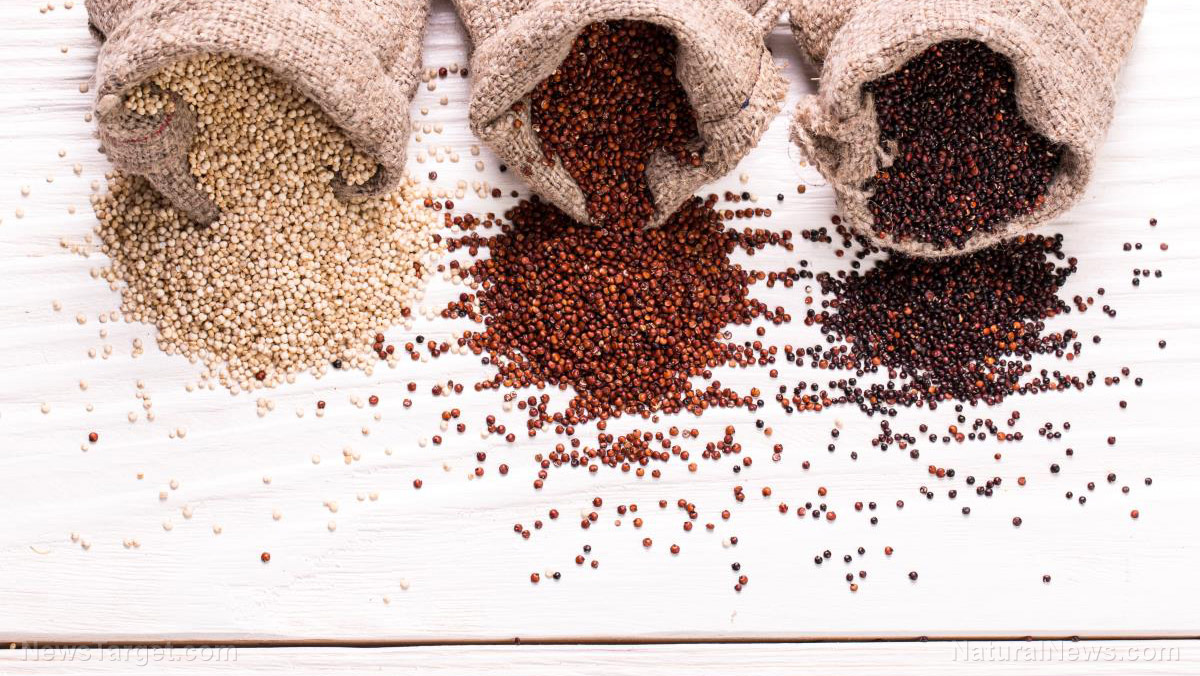 Victory: Seed sharing platform disrupting dangerous companies who control more than 60% of the global seed supply
May 8, 2017 - Posted by Vicki Batts
(Natural News) A new peer-to-peer seed sharing program could turn the agricultural world upside-down. In order to help preserve biodiversity and increase food security, some gardeners and small farmers are focusing on growing and saving seeds from heirloom plants and crops. Heirloom crops and plants that can be open-pollinated and that have adapted to specific […]
in: anti GMO,heirloom seeds,seed sharing
If you're gonna fight, fight like you're the third monkey on the ramp to Noah's Ark... and brother its starting to rain. Join our efforts to Secure America's Borders and End Illegal Immigration by Joining ALIPAC's E-Mail Alerts network (CLICK HERE)
-
06-17-2025, 02:52 AM #9835Senior Member
- Join Date
- Aug 2018
- Posts
- 97,635
The Southern Agrarian
Southern Agrarianism and the culture of the Old South
- • Home
- • Defining Southern Agrarianism
- • Blog Posts
- • Subscribe
- • Southern Culture
- • Grow It and Raise It
- • Links
- • About
- • Contact
- • YouTube Channel
Food Storage Wisdom
December 17, 2013 / Stephen Clay McGehee / 182 Comments
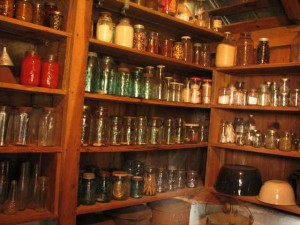 A generation or two ago, families had the good sense to always maintain a good food storage program because they understood that bad things can happen to food supplies. At some point, America became complacent and assumed that there would never be a time when we couldn’t get in the car, drive to the grocery store or restaurant, and find exactly what we wanted in bountiful quantities at cheap prices. That is not a good assumption. Now things are starting to return to a more sane idea that every family should have their own secure food storage plan. Food storage is still viewed as a somewhat quirky, semi-paranoid idea, but anyone reading The Southern Agrarian understands that it is a very wise move.
These are some notes compiled by a relative who spent forty days living entirely off of stored food supplies. I have known him for my entire life. He is a physician, and looks at this from a very analytical and physiological standpoint. I found myself modifying our family’s own food storage program after following his experience during those forty days.
- CANNED GOODS—Canned goods have a limited shelf life and should not be part of a survival food program unless they are rotated as part of one’s regular eating. Older foods may not make a person sick, but they taste funny and stress the digestion.
- FREEZE-DRIED FOODS—Freeze-dried foods have a very long shelf life and are quite palatable and satisfying, both the vegetables and the meats.
- OILS—Oils are not sold as part of a survival package. They must be acquired separately. They are needed for cooking, palatability, and calories. Vegetable oils probably have important essential fatty acid nutrients, too.
- NUTS—Easy to store, and a satisfying supplement to many foods.
- GRAINS—RICE, RICE, RICE. Easy to prepare, easy to store, goes well with other foods. More palatable than freeze-dried potatoes, easier to prepare than breads. (If I had it to do over, I would have bought more rice and less wheat. THIS WAS ONE OF THE BIG LESSONS OF MY EXPERIENCE.)
- LEGUMES—Easy to store, easy to cook, satisfying. (Legumes, along with rice, became the staples to which I added other things.)
- SEASONINGS—Seasonings are critical to making legumes palatable. They are sold as packets in grocery stores next to the legumes (dried beans).
- DIETARY SUPPLEMENTS—Fish oil caps, and hard-coat (i.e. oxygenation-resistant) vitamin pills. Just in case something is missing from the other foods.
- BULK SUPPLEMENTS—Fiber supplements and perhaps mag citrate. Under survival conditions they can make it so you have one less thing to worry about.
- PRESERVATION—Many foods come in large containers and once opened, unused portions are susceptible to spoilage unless properly stored. I use mason jars and evacuate air with a vacuum pump. (Completely filling the mason jar is another way to minimize the amount of oxygen in the jar, too.) Weevils can destroy grain supplies if grains are exposed to oxygen.
- MISC—Salt; sugar; anything you use for cooking. Tincture of iodine, to make drinking water safe. (Think of other supplies.)
- PRACTICE—If you are not experienced, you will neglect supplies that are important and overstock supplies that are unimportant.
- PRESERVATION II—Light, heat, moisture, oxygen. To maximize shelf-life, keep these to a minimum.
MISCELLANEOUS LESSONS LEARNED:
- Old canned goods may taste alright, but leave me feeling slightly queasy for hours.
- Freeze-dried meats and vegetables can be sprinkled onto moist foods and eaten with no additional preparation. This is convenient, and they are more palatable dry than reconstituted.
- Ketchup, mayonnaise, and salad dressings are wonderful for dressing up foods. They have limited shelf life, probably about a year, but they are so good and so familiar it is worth keeping a fresh supply.
- Some freeze-dried fruits are more suitable than others. Raisins are substantial and flavorful, whereas strawberries and blueberries are puffed-up and acidic. The raisins would be more of a staple, and the other berries serve as part of a treat recipe.
- Powdered milk can be sprinkled onto foods (like oatmeal) and taste quite good (add peanut butter and raisins, please) and avoid the nuisance of reconstituting to an insipid, fat-free drink that must be protected from spoilage.
- Beverages will be limited. Coffee, tea, grog, crystallized drinks can be properly stored indefinitely. Liquid concentrates do not have indefinite shelf lives. I favor the fortified orange drink from my supplier.
- #10 cans are much more convenient than 5-gallon pails, unless one has carefully thought out his usage patterns.
- Lots and lots of mason jars will be needed in order to have opened a variety of foods without losing the balance to spoilage.
- The moist, hot, recently prepared rice and legume combo made me feel like I was eating fresh, rather than off-the-shelf survival foods.
- Many “combo-recipe packs” (e.g. beef stroganoff, spaghetti and meatballs, etc.) are very salty and should probably be “cut” with a bowl of rice.
- Pan breads (pancakes, waffles, cornbread) are more practical than firing up an oven to cook loaves or biscuits. Under survival conditions, baked bread will become a luxury item.
Food Storage Wisdom – The Southern AgrarianIf you're gonna fight, fight like you're the third monkey on the ramp to Noah's Ark... and brother its starting to rain. Join our efforts to Secure America's Borders and End Illegal Immigration by Joining ALIPAC's E-Mail Alerts network (CLICK HERE)
-
06-17-2025, 03:02 AM #9836Senior Member
- Join Date
- Aug 2018
- Posts
- 97,635
How to Make Dried Fruit (Using Your Oven)
Share on Facebook Share on Pinterest Share by Email More Sharing Options

By CHEF_MEG, SparkPeople Blogger 6/20/2013
It's summer, and that means fruit trees, bushes, and berry plants are exploding with a bountiful harvest. A healthy goal is to eat a variety of these local and fresh fruits.
If we fast forward to fall, the taste of sweet, juicy strawberries are all but gone. Never fear! With local produce at its peak, think like the animals--harvest and store for winter.
When it comes to fruit, you have three options: can, freeze, or dry.
Learn how to turn summer's freshest fruit into a snack you can enjoy year-round. It's like nature's candy, and it requires no special equipment.
While you could use a dehydrator or old-fashioned drying cabinet, you don't need one. All you need is an oven, parchment paper or silicone liners and sheet pans or pizza screens if you have them.
The method is quite simple. You're simply heating the fruit at a low temperature to allow enough water to evaporate so the chance of bacterial growth is minimized.
How to Dry Your Own Fruits
Prep your fruit
Choose ripe or just overly ripe fruits and berries
Wash in cold water
Remove any blemishes
Remove any pits or stones from stone fruits
Remove any stems from berries
Cut and slice fruits evenly so that they will dry within the same time frame
(Optional) Remove the skins
Some fruits, such as peaches, nectarines, and apples, dry better if the skin has been removed. Score the bottom of each piece of fruit by making a shallow "x" with a paring knife. Bunk into boiling water for 30 seconds, then transfer to a basin filled with ice water. The skins should slip right off.
Soak it
To keep fruit looking pretty and minimize discoloration, soak it in lemon juice and water.
Soak fruit for 10 minutes, drain and blot dry with a lint-free towel.
To the Oven
Preheat the oven to 130-160 degrees F. Use a lower temperature for thin sliced fruits such as apples or peaches. Strawberries and other whole berries love the higher heat.
Place parchment paper onto sheet pans. Arrange fruit in a single layer, and do not allow pieces to touch. Top fruit with a pizza screen or silicone pan liner to keep them from curling up as they dry.
Place fruit into the oven and rotate pans every 2 hours.
How do you know if it's ready? Dried fruit should feel like leather but still be pliable.
General Cooking Times
(We've shared a convenient, pinnable graphic below!)
If you're gonna fight, fight like you're the third monkey on the ramp to Noah's Ark... and brother its starting to rain. Join our efforts to Secure America's Borders and End Illegal Immigration by Joining ALIPAC's E-Mail Alerts network (CLICK HERE)
-
06-17-2025, 03:06 AM #9837Senior Member
- Join Date
- Aug 2018
- Posts
- 97,635
No-Fail Egg Noodles
December 29, 2011
You know those thick yummy home-made noodles in chicken noodle soup. That's what these are. They are so good. I absolutely LOVE them. I made a pot of chicken noodle soup with these and it seriously makes the soup so much better. It is a true comfort food for me. They are really easy to make. You can double them and freeze them for later if you want, too. Or, they can be stored in the fridge for a few days for later use as well.

Homemade Egg Noodles
1 egg
2 egg yolks
3 Tbsp cold water
1 tsp salt
2 c. flour
Beat the eggs until light and fluffy. Add the remaining ingredients. Knead until smooth.

Roll out on a floured surface to about 1/8" thickness. Cut into strips- I just used a pizza cutter. You can store them in the fridge for 2-3 days or in the freezer for 1-2 months. Cook 7-9 minutes in boiling water. Serve any way you like- but they are fabulous in chicken soup!
No-Fail Egg Noodles
If you're gonna fight, fight like you're the third monkey on the ramp to Noah's Ark... and brother its starting to rain. Join our efforts to Secure America's Borders and End Illegal Immigration by Joining ALIPAC's E-Mail Alerts network (CLICK HERE)
-
06-17-2025, 03:18 AM #9838Senior Member
- Join Date
- Aug 2018
- Posts
- 97,635
 Homestead Honey
Homesteading
Animals
Finances
Crafting
Knitting
Out the Front Door
Gardening
Tiny House
Building a Tiny House
Tiny House Living
Off-Grid Living
In the Kitchen
Recipes
Fermentation
Food Preservation
Foraging and Wild Edibles
Homesteading with Kids
Waldorf Education
November 25, 2013 · 30 Comments
Building a Tiny Home :: Winter Water
Building a Tiny House· Off-Grid Living
70shares
 Subscribe to Homestead Honey!
Get updates on the latest posts and more from Homestead Honey straight to your inbox.
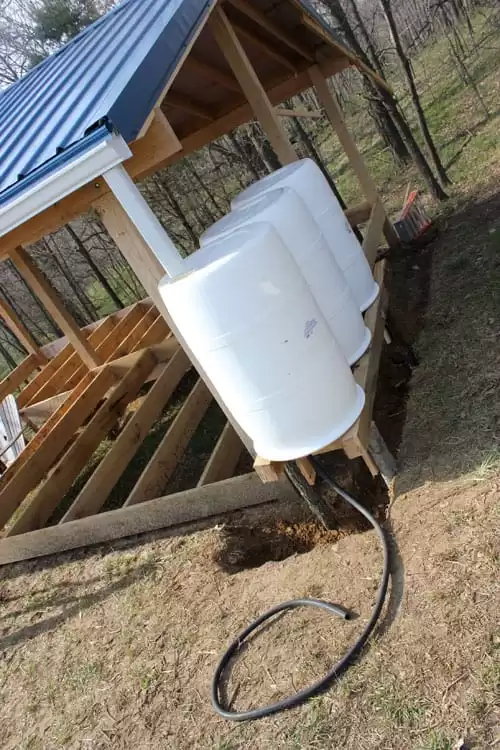
Early on in the process of building our tiny home, we needed to create systems for catching and using water. We purchased these 50 gallon, food grade barrels for $10 apiece from the local Pepsi distributor, hooked them up to the gutter of our metal-roofed home, and proceeded to catch rainwater for drinking, cooking, and dishwashing. We use a Berkey filter to make the rainwater potable, and relied on water from our pond for irrigating the garden and for bathing. With flexible pvc pipes moving the water into the outdoor kitchen, we even had running water in our sink!
This system worked really well, at least until we had an almost two month drought in July and August. Then we had to rely on our community network and fill our barrels with water from their hose. Ultimately, we will need a much larger storage system, such as an underground cistern.
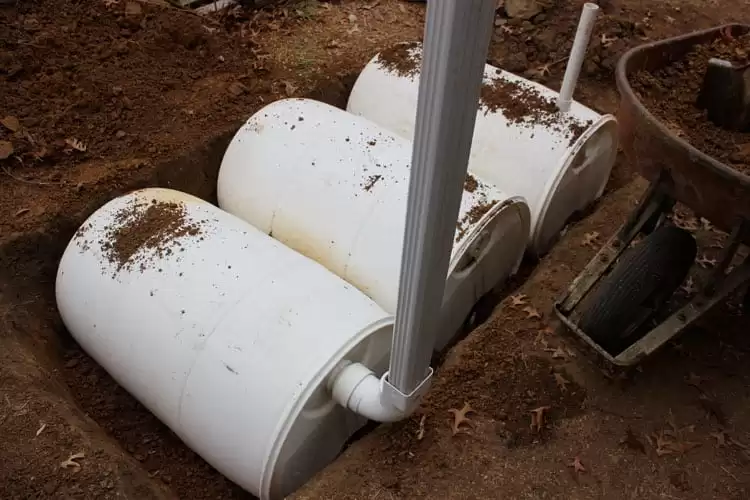
As cold weather set in, we needed to make some changes. Knowing that freezing temperatures and exposed outdoor plumbing do not mix, we decided to bury our water storage underground to insulate the barrels with the heat of the earth.
 A small group of friends and neighbors came over to help dig this shallow grave-like hole. You can see the previous system set up in the upper right of the photo.
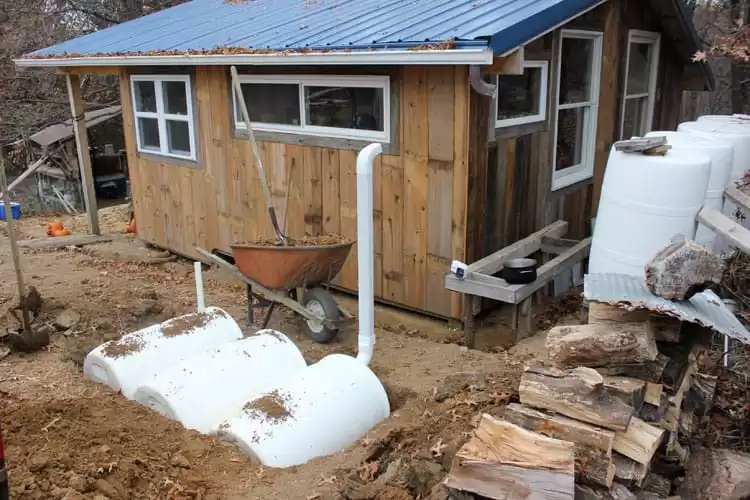
Empty barrels were then placed on their sides into the hole. Brian cut a hole into the top of one of the barrels for the downspout, another hole to extract the water with a pump, and linked the three barrels with a bit of black flexible pvc pipe.
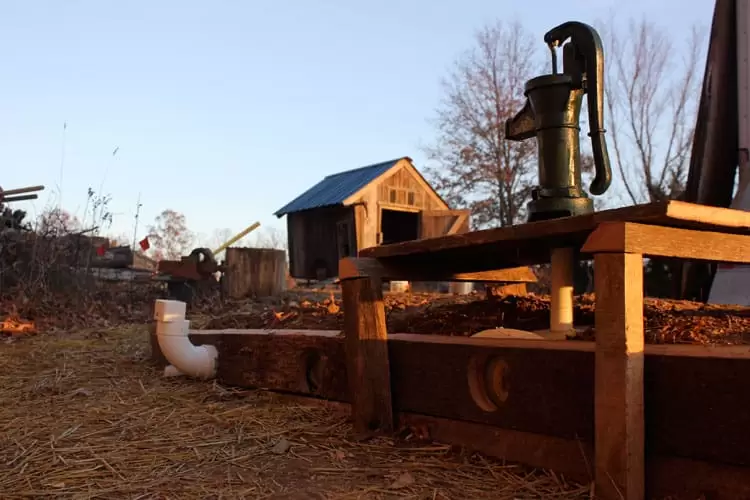
We ended up buying this antique-style, made in China pump from Lehman’s, and it works beautifully. With just a few pumps, the water flows easily into our stainless steel bucket, and when we’re done pumping, the excess flows back into the barrels, thus preventing any frozen or exploded pipes. When we first tried it out, it felt like yet another “Little House on the Prairie” moment. I could just imagine Laura being sent out to the well by Ma to gather a bucket of water.
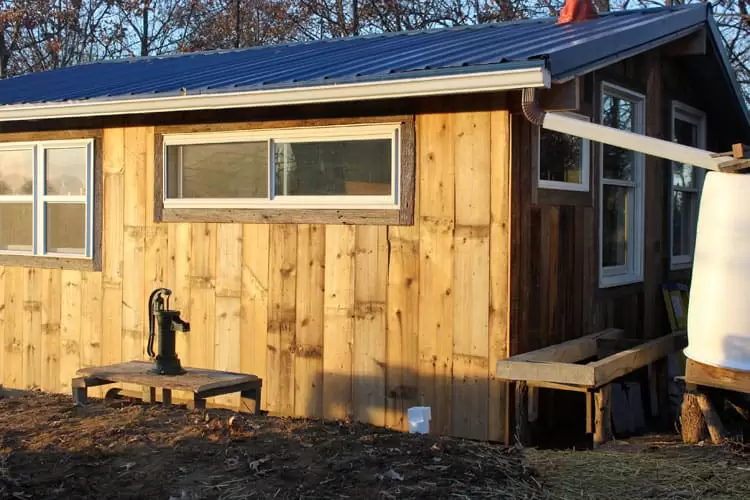 *** Read more about how our water system survived freezing cold temps with this update.
This post was shared at From the Farm Blog Hop
More homesteading inspiration!

Building a Tiny Home :: Bedroom Plaster

Building a Tiny Home :: Insulation

Building a Tiny Home :: Little Details

Building a Tiny House: Framing, Windows and Doors!

Building a Tiny House
Recommended

Nettle Beer Recipe

Lacto Fermented Garlic Scape Recipe

How to Make Homemade Soda :: Three Herbal Recipes
Building a Tiny Home :: Winter Water Catchment
If you're gonna fight, fight like you're the third monkey on the ramp to Noah's Ark... and brother its starting to rain. Join our efforts to Secure America's Borders and End Illegal Immigration by Joining ALIPAC's E-Mail Alerts network (CLICK HERE)
-
06-17-2025, 03:35 AM #9839Senior Member
- Join Date
- Aug 2018
- Posts
- 97,635
How to Make Brown Sugar
This post may contain affiliate links, which means that I may receive a commission if you make a purchase using these links. As an Amazon Associate I earn from qualifying purchases.
Are you out of brown sugar? Here’s how to make your own with only two ingredients.
Have you ever thought about what brown sugar is made from? Neither did I, until today. Brown sugar is something we always, ALWAYS have in our cupboard, but because of some terrible twerk in the universe tonight, we didn’t. I got to thinking, what exactly is brown sugar? I guess I always assumed it was sugar that comes from a different plant. A very special dark plant. Not so much.

[sc name=”AFFILIATE” ]
LATEST VIDEOS
A little research told me that brown sugar is simply white sugar mixed with molasses. THAT IS ALL. That is the whole, 100% truth of brown sugar. How silly. Why have I been spending money on this silly little mixture that I could be making myself, in my own kitchen, with much better ingredients? Well let me tell you, that is exactly what I did tonight, when I ran out of brown sugar and desperately needed it to make a coffee cake. Yes, coffee cake is a desperate need. If you don’t agree, you’ve never had it.
Are you ready to learn how to make brown sugar for yourself? Here we go!
How to Make Brown Sugar
So, you may think making brown sugar at home is ridiculous, but let me tell you, it’s DELICIOUS. The taste doesn’t even come close to that of store bought brown sugar, especially if you use high quality sugar and molasses for your mixture.
I used Natural Cane Sugar, which is very much like white sugar. I like my foods to be as unprocessed as possible. Also, it tastes better than white sugar.
I used Grandma’s Molasses for this, because it was what we had in the cupboard at the time. If you have Blackstrap molasses, I would suggest using that nutritionally dense super food.

Do you have your two ingredients ready? Here we go…
For light brown sugar, use a ratio of one cup of sugar to one tablespoon of molasses. Increase the molasses for dark brown sugar to two tablespoons for every one-cup of sugar.
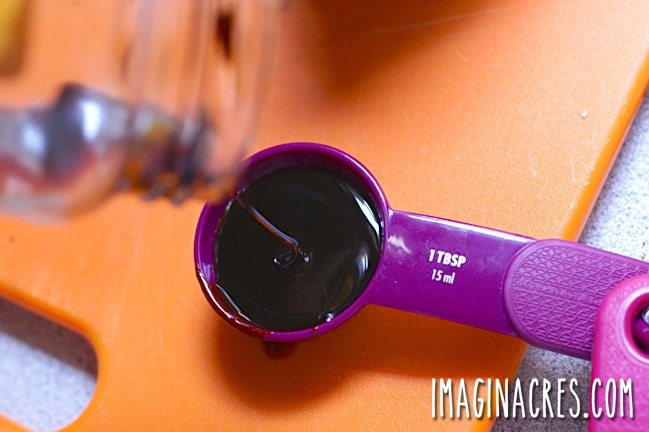
Step 1: Pop ’em in the bowl of your mixer and attach your whisk. If you don’t have a mixer, whisking by hand, or mashing them together with a fork works just fine. We just received this mixer from my amazing brother for our wedding, so I use it for everything ever. I swear I would do my laundry with it if I could!

Step 2: Start it up on low and progressively work your way to medium. Whisk until you can’t identify any little bits of molasses anymore, for me it took about three minutes.

Step 3: Look at that beautiful brown sugar goodness!

Don’t you just want to eat it with a spoon? Well, you probably shouldn’t. Instead put it in an airtight container and save it for tomorrow, when I’ll show you how to make THE BEST CHOCOLATE CHIP COOKIES EVER!!!
I developed this recipe years ago, and up until now it’s been a tightly kept secret. But I’ve decided these cookies are too good not to share with the world, so be prepared for a taste explosion.
Here’s a comparison shot so you can see how delicious my brown sugar looks and how gross the lump of store bought brown sugar looks:

When I finished this little experiment and showed my husband, he asked, “Does it taste like brown sugar?” I responded with, “It tastes like molasses mixed with sugar.” I guess I’ve never straight up eaten a chunk of brown sugar before. Now I can’t say that anymore.
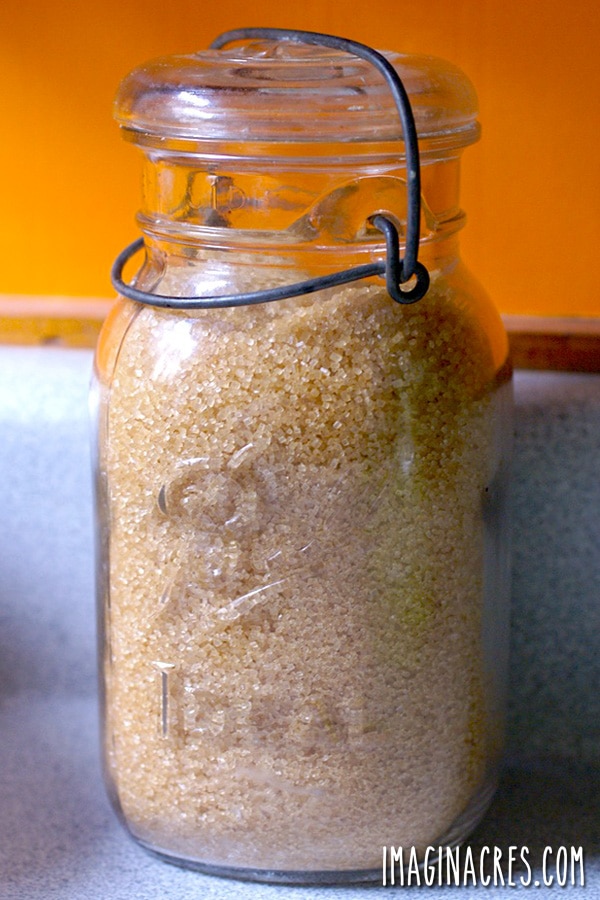
How to Soften Hard Brown Sugar
If you are not using the brown sugar immediately in your favorite recipe, store it in an airtight container with a brown sugar keeper in a cool place. If your brown sugar hardens anyway, here are several ways to soften it.
- Use Bread: Add a slice of bread to the container on top of the brown sugar. Reseal and let it sit for a day or so. The brown sugar will absorb moisture from the bread and soften.
- Use Apples: Add a few slices of apple to the container, reseal, and let it sit for a day or two until the brown sugar softens.
- Use the Microwave: If you don’t have time to wait for the brown sugar to soften, turn to your microwave for help. Place the hard brown sugar in a glass or ceramic bowl, top with a damp paper towel, and microwave on high for 20 seconds. Check the brown sugar with a fork. If it is still hard, go another 20 seconds. Repeat until the brown sugar is soft.
Homemade Brown Sugar
Are you out of brown sugar? Here's how to make your own with only two ingredients.
Course Pantry
Cuisine American
Keyword homemade brown sugar
Prep Time 5 minutes
Total Time 5 minutes
Servings 16
Calories 52kcal
Ingredients
- 1 cup organic cane sugar
- 1 tablespoon molasses for light brown sugar (use 2 tablespoons for dark brown sugar)
Instructions
- Add the sugar and molasses to a bowl and combine together until well blended.
- Use immediately in your favorite recipe or store in an airtight container in a cool place.
Nutrition
Calories: 52kcal
How to Make Brown Sugar - ImaginAcres
If you're gonna fight, fight like you're the third monkey on the ramp to Noah's Ark... and brother its starting to rain. Join our efforts to Secure America's Borders and End Illegal Immigration by Joining ALIPAC's E-Mail Alerts network (CLICK HERE)
-
06-17-2025, 03:44 AM #9840Senior Member
- Join Date
- Aug 2018
- Posts
- 97,635
If you're gonna fight, fight like you're the third monkey on the ramp to Noah's Ark... and brother its starting to rain. Join our efforts to Secure America's Borders and End Illegal Immigration by Joining ALIPAC's E-Mail Alerts network (CLICK HERE)




 Reply With Quote


Email List Changeover & 38 days from disaster
09-27-2026, 11:26 AM in illegal immigration Announcements